Cilantro Essential Oil vs Infused Oil: Which Bottle?
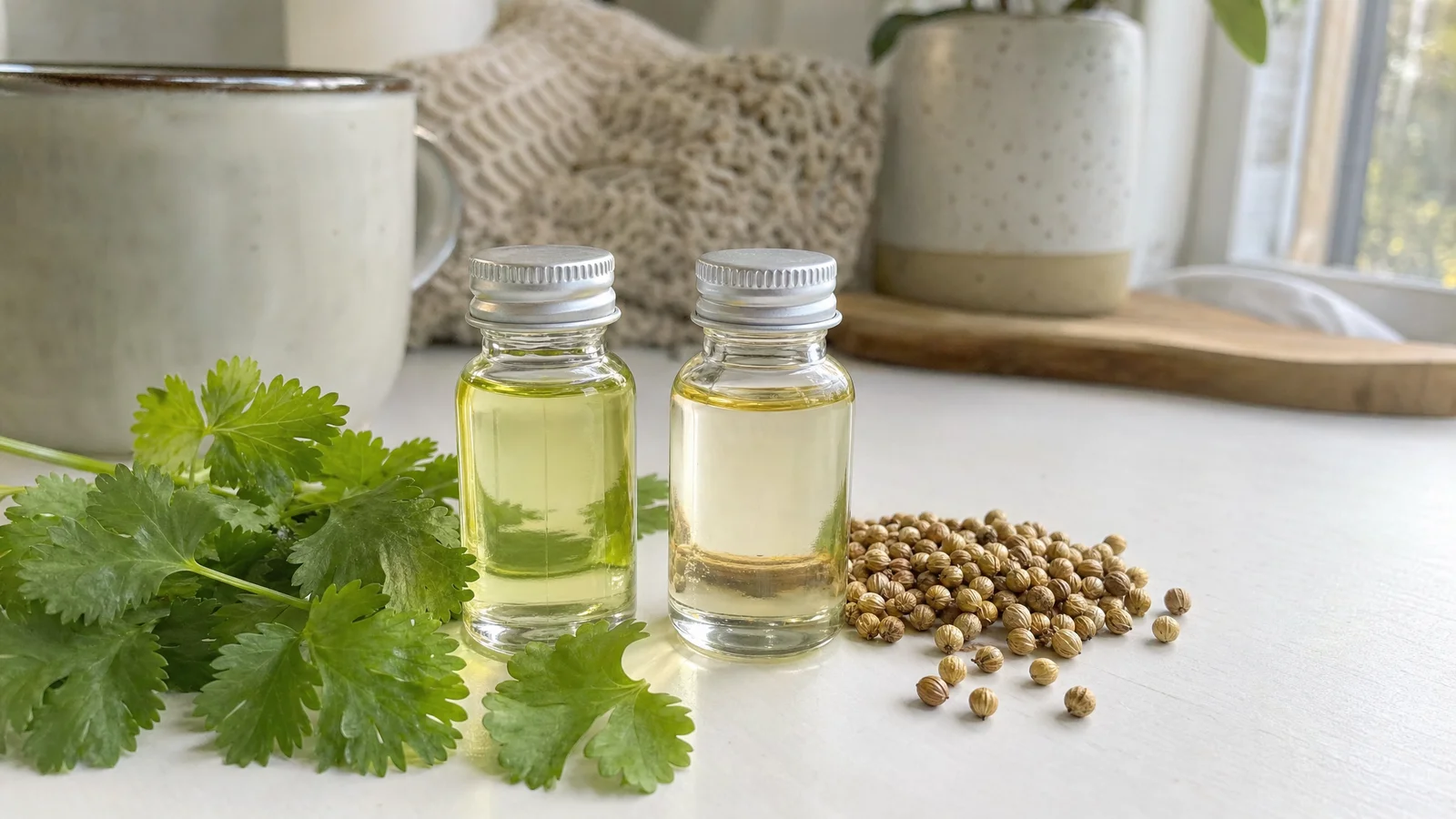
Type "cilantro oil" into a search box and you get two products that share a name and almost nothing else. One is a cooking oil that has soaked up flavor from fresh leaves. The other is a steam-distilled essential oil, concentrated enough that a few drops scent a whole room. We sell the second, and the single most useful thing we can tell you is how to avoid buying one when you wanted the other.
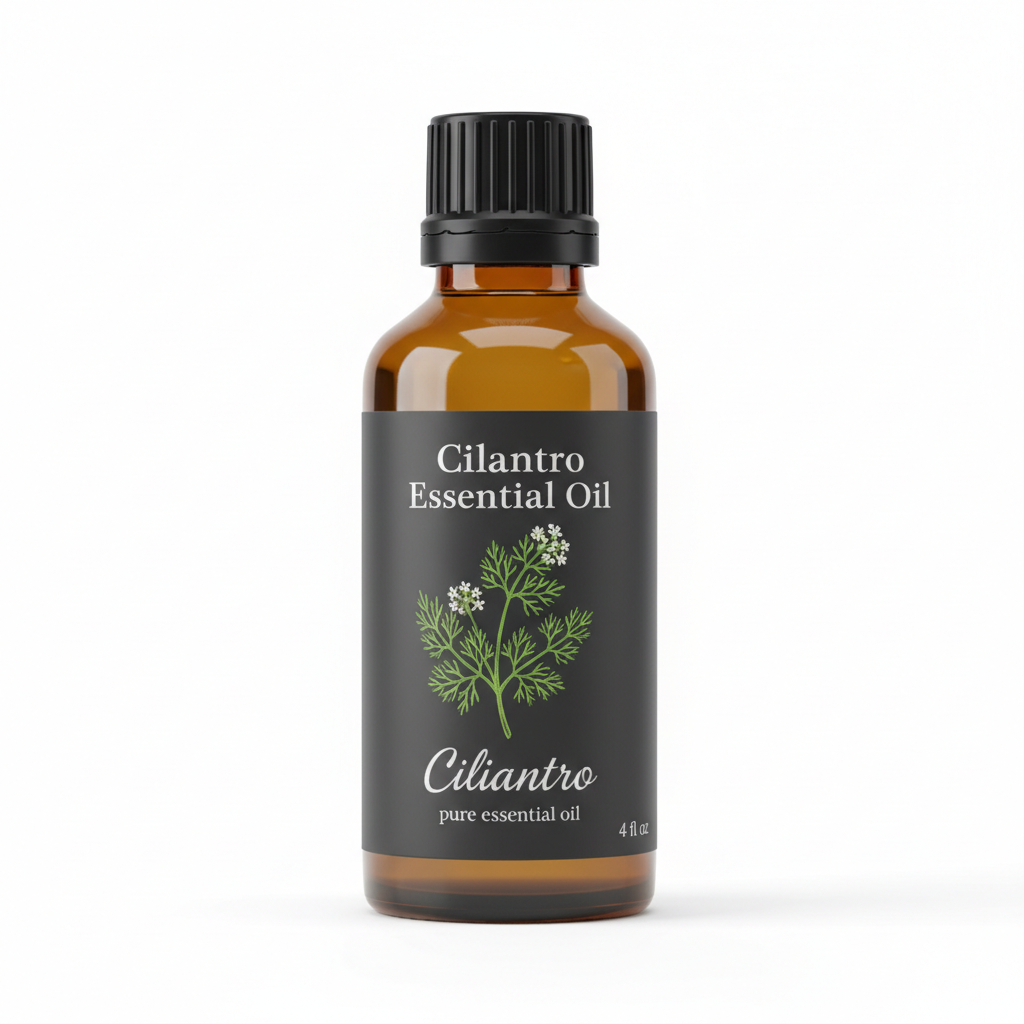
Cilantro Essential Oil
Our own Cilantro Essential Oil, in sizes from 0.5 oz to bulk.
From $13.99
Shop Now →The dinner-plate rule
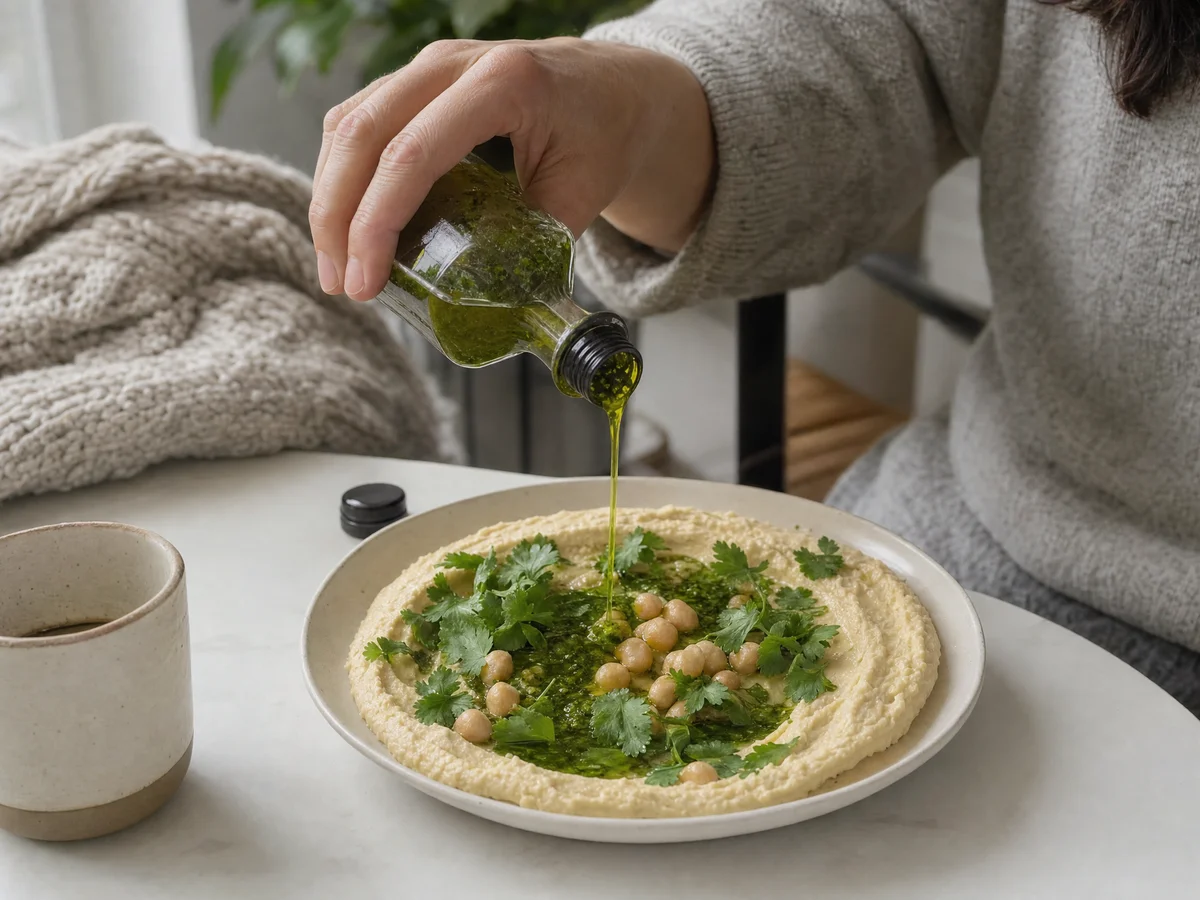
If it is going on food, you want an infused or culinary oil, or simply fresh cilantro. Our essential oil is for aroma and diluted skin use only. We recommend diluting it to 0.5% to 2% in a carrier oil before it touches skin, patch testing first, keeping it away from eyes, children and pets, and never taking it internally. We make no medical claims for it, and we do not suggest cooking with it. The reasons are laid out in our post on ingesting essential oils. Yes, it is a strange thing for an oil seller to say first, but it settles most of the "which one" question in one line.
How the two are made
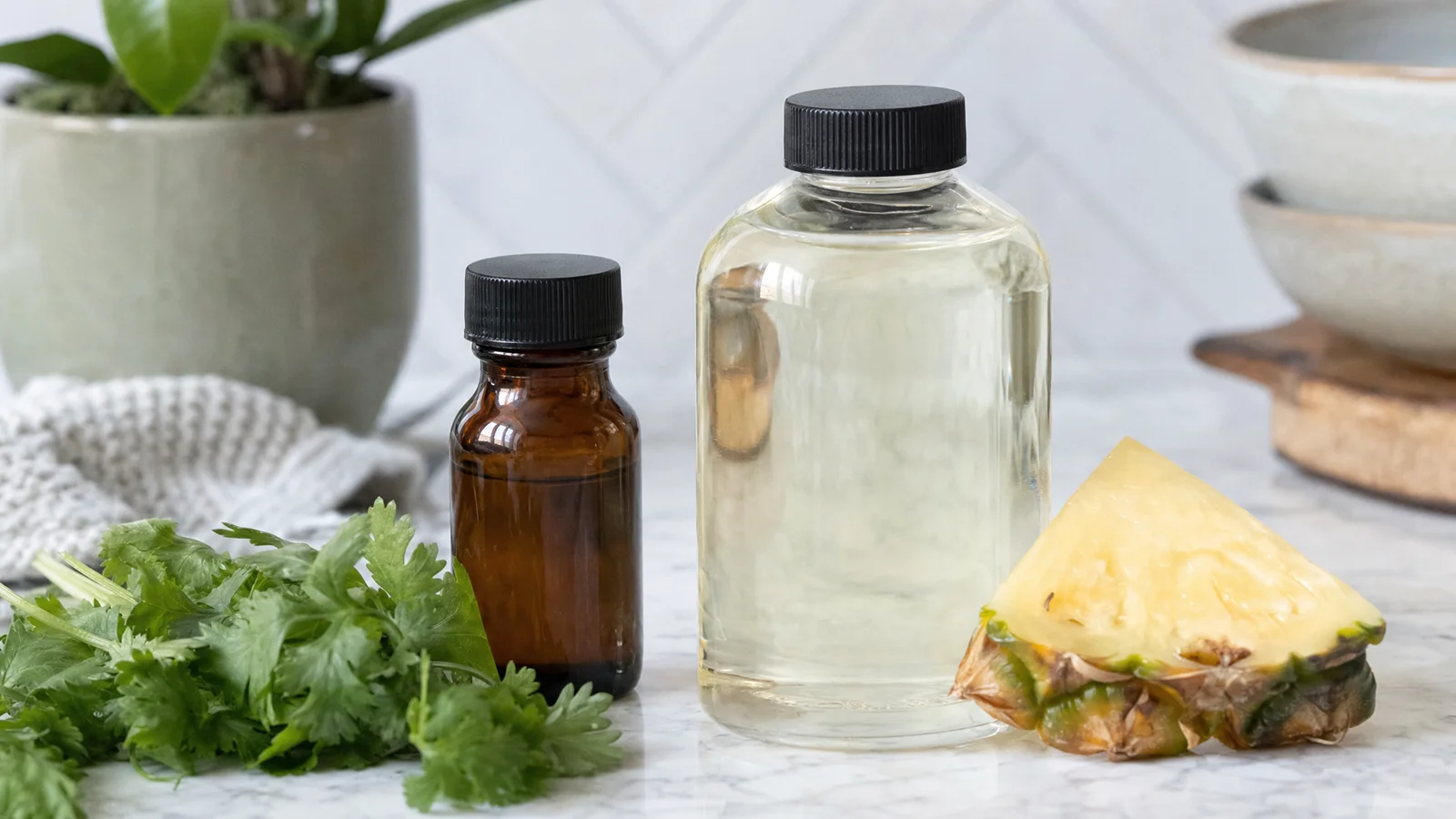
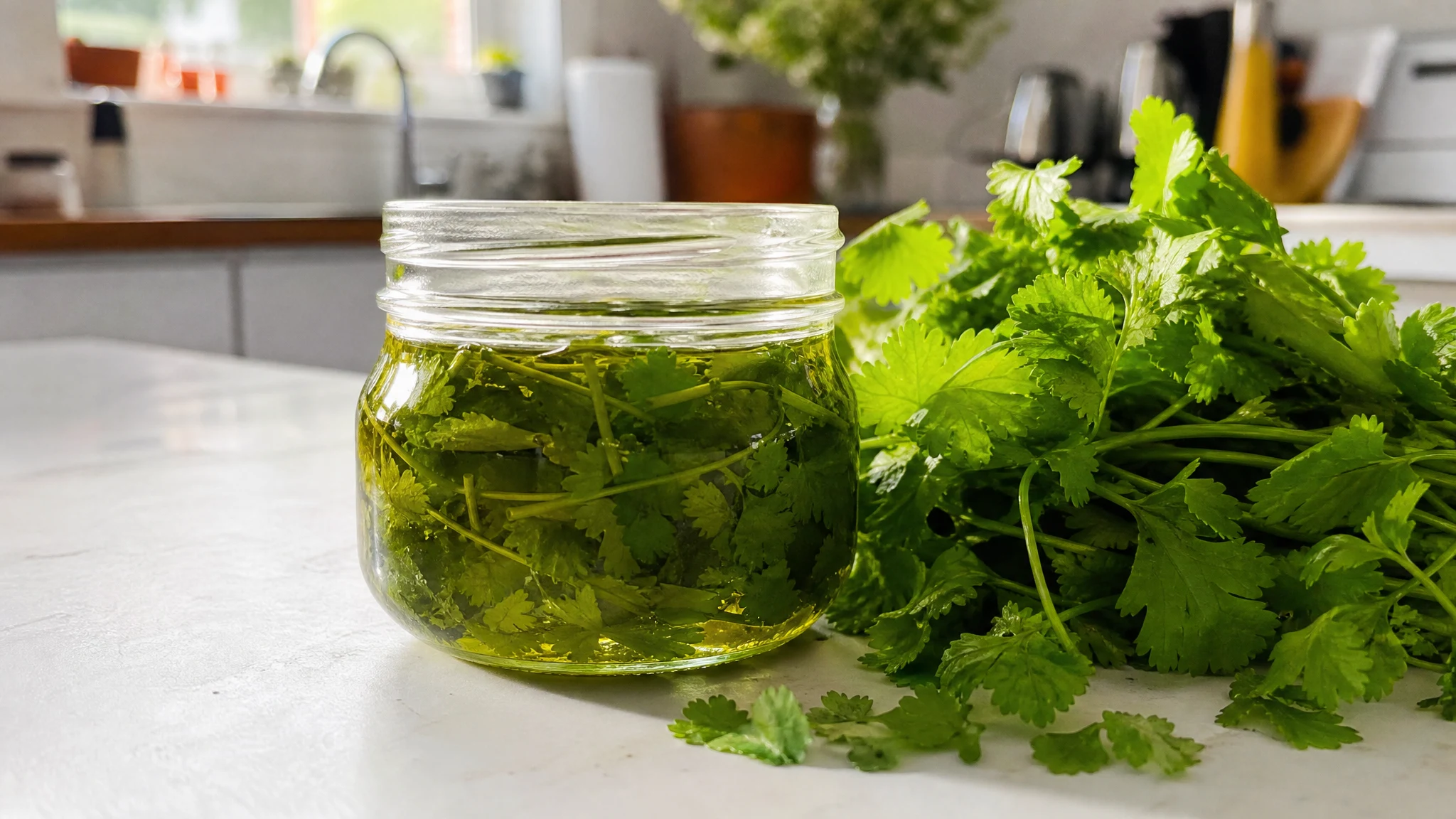
An infused oil is made by steeping or blending leaves in a plain edible oil, usually olive. Whatever dissolves into the fat comes along, so you get green color and a mild herbal taste. Our essential oil is made by passing steam through the fresh leafy tops of Coriandrum sativum, then collecting the volatile fraction that the steam carries off. Nothing is added, and it is sold neat. We describe the aroma as green, bright and herbaceous with a citrusy edge, a top note in perfumery terms. The color is pale yellow to nearly colorless, and the oil is thin and watery rather than viscous like olive oil.
That difference in method is why they behave so differently. A steeped oil holds a modest amount of scent. A distillate packs the volatile part of the leaf into a few drops. That is reasoning from how each is made rather than a head-to-head measurement, but it matches what you would expect when you hold the two bottles side by side.
The infused oil comes with a clock
Many people assume anything that smells like cilantro is shelf-stable. A fresh-leaf infusion is not. The US CDC advises refrigerating homemade oils made with garlic or herbs and throwing unused oil away after 4 days (CDC). Health Canada adds that spoiled herb oil can look, smell and taste normal, so you cannot judge it by sniffing the jar (Health Canada). University of Maine Extension calls dried herbs the safest home route and suggests keeping homemade infused oil no longer than three months (Bulletin 4385). Our infused oil guide walks through the methods.
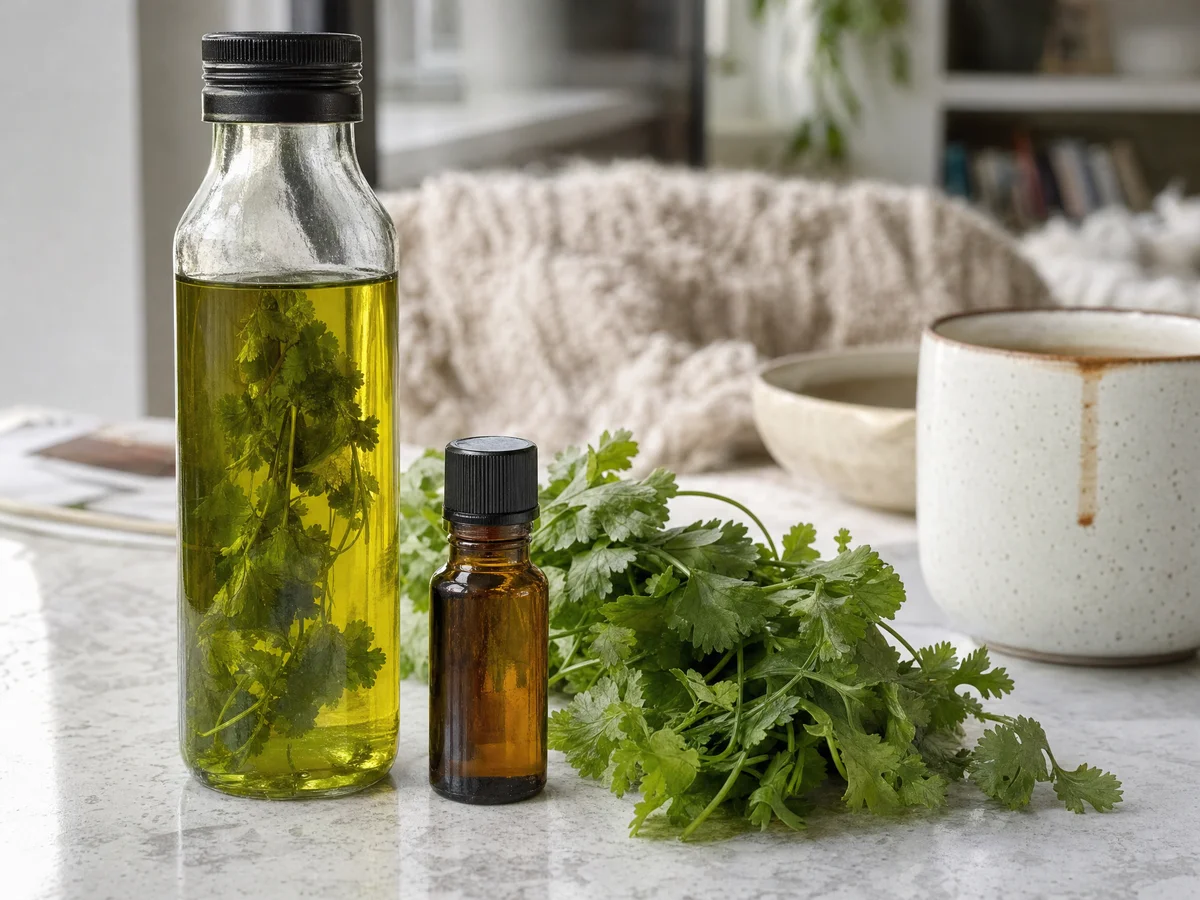
Our essential oil sits at the other end of the scale. We say it typically keeps 1 to 2 years unopened, capped and stored in a cool, shaded spot.
Matching the bottle to the job
- A bright green drizzle for fish tacos: a culinary infusion made fresh, or better still a raw sauce. Try our cilantro olive oil sauce.
- Keeping cilantro for months: neither bottle is a storage method. Freezing is, and freezing cilantro in oil covers it.
- A fresh green note for a diffuser, soap, candle or perfume blend: the essential oil, used in tiny amounts. Infused oil carries almost no airborne scent into a flame or a diffuser.
- Skin: only the essential oil, diluted, and only after a patch test. Our safety guide explains the sensible starting point. Questions about a skin condition belong with a dermatologist.
- Pregnancy, small children or pets: ask your OB-GYN or midwife, pediatrician or veterinarian before using any essential oil around them.
Three easy mix-ups
The first is buying the essential oil for a recipe. It is sold undiluted and is not a food ingredient from us, and adding drops to oil does not turn it into one. The second is expecting a supermarket bottle labeled "cilantro oil" to be an aroma-grade distillate. If the ingredient list opens with an edible oil, it is a food. Our guide to reading cilantro olive oil labels goes through what to look for.
The third is confusing leaf and seed. Our oil comes from the leaf. Coriander seed oil is a separate product that we do not sell, and the two smell remarkably different. Why one plant has two names explains how the confusion started.
If you are still unsure, ask the question the other way round: do you want to smell it or eat it? Smell points to the essential oil, a tiny amount at a time. Eat points to fresh leaves or a food oil made for the kitchen. Most mix-ups disappear once you put it that way.
What to look for on any bottle
Whichever one you are shopping for, the ingredient line tells you the most. An essential oil should name the botanical (Coriandrum sativum) and the plant part. A food oil should name the edible oil first. A lot number and a date are worth having on both. Ours carries a distillation date, a bottling date and a lot reference. If you want the analysis for a lot, ask us in writing through the contact page before you order. The Certificate of Analysis we publish covers one batch, with a best-by of 09/24/2026, and lists density, refractive index and optical rotation.
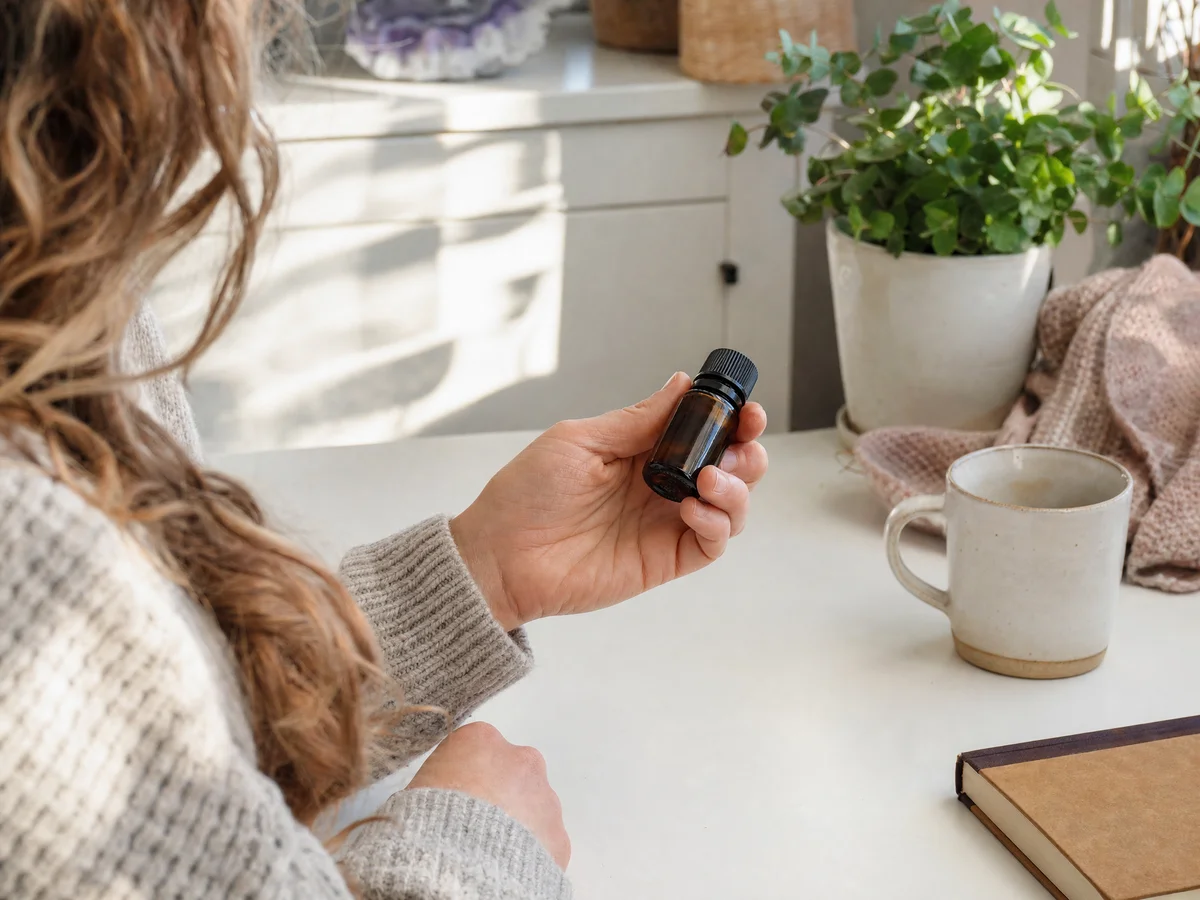
Cilantro divides people, and the essential oil is more intense than the herb, so the smallest bottle is the sensible way to find out which side of the divide you are on. If dinner is what you are planning, though, the freshest bunch from the grocery store is the best answer of all.
Cilantro Essential Oil
Cilantro Essential Oil from our own shop, in sizes from 0.5 oz to bulk.
From $13.99
Shop Now →Sources & Further Reading
- US CDC. Preventing botulism: home-canned foods. cdc.gov/botulism
- Health Canada, 2013. Food safety tips for vegetables and herbs in oil. canada.ca
- University of Maine Cooperative Extension. Bulletin 4385. extension.umaine.edu/4385e