Cilantro vs Parsley Oil: How They Differ
Cilantro and parsley are cousins in the carrot family, and their oils sit side by side in catalogs under "green herbal." Open the lab reports, though, and they look like different materials. Cilantro leaf oil tends to lead with long-chain aldehydes, the waxy, citrusy-green notes. Parsley oils lead with compounds such as myristicin or apiole, which belong to another family of aromatic molecules altogether.
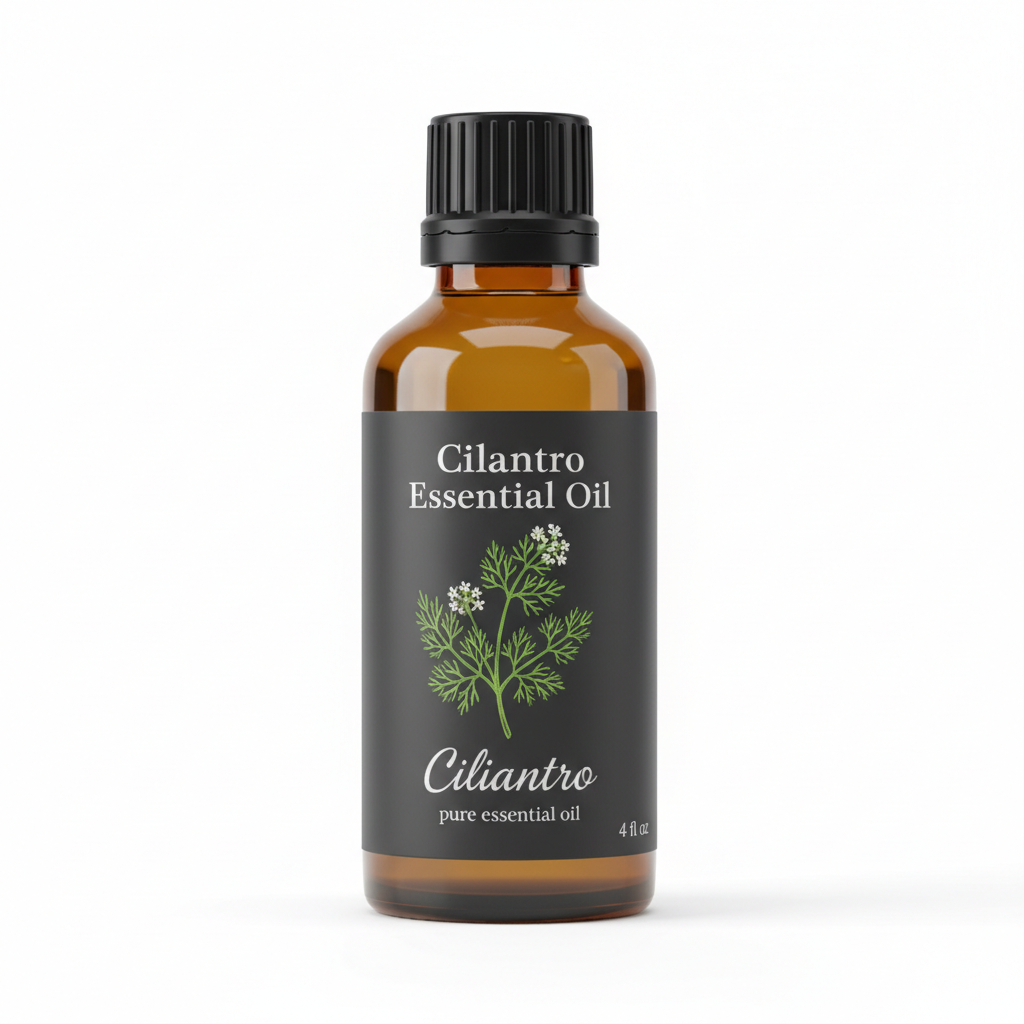
Cilantro Essential Oil
Our own Cilantro Essential Oil, in sizes from 0.5 oz to bulk.
From $13.99
Shop Now →The two analyses, side by side
A single study per oil makes the point. When researchers steam-distilled the aerial parts of 48 coriander accessions grown at one site in Korea, the average oil was about 45% (E)-2-decenal, with 2-dodecenal and decanal making up much of the rest (Kim and Kim, Molecules, 2026). A parsley leaf oil from Saudi Arabia, on the other hand, was led by myristicin at about 41% (Foudah et al., Molecules, 2022), and a steam-distilled parsley seed oil from Peru put a menthatriene and apiole near 22% each (Herrera-Calderon et al., Plants, 2023).
The two herbs do not share a dominant compound. Reasoning from that, you should expect them to smell like different things, not like one scent in two strengths.
What that means for your nose
We describe our cilantro oil as green, bright and herbaceous with a citrusy edge, a top note, pale yellow to nearly colorless and thin. If you love the sharp, waxy, aldehyde-driven green of the leaf, a parsley oil led by myristicin is unlikely to scratch the same itch, and the reverse is just as true. We do not sell parsley oil, so we will leave its character to the supplier's description. What we can say is to plan a blend around what each oil actually is rather than the shared "herb" label, and to smell before committing to a big size. Cilantro in particular divides people, and our post on why some people smell soap explains why.
Think of it like cooking
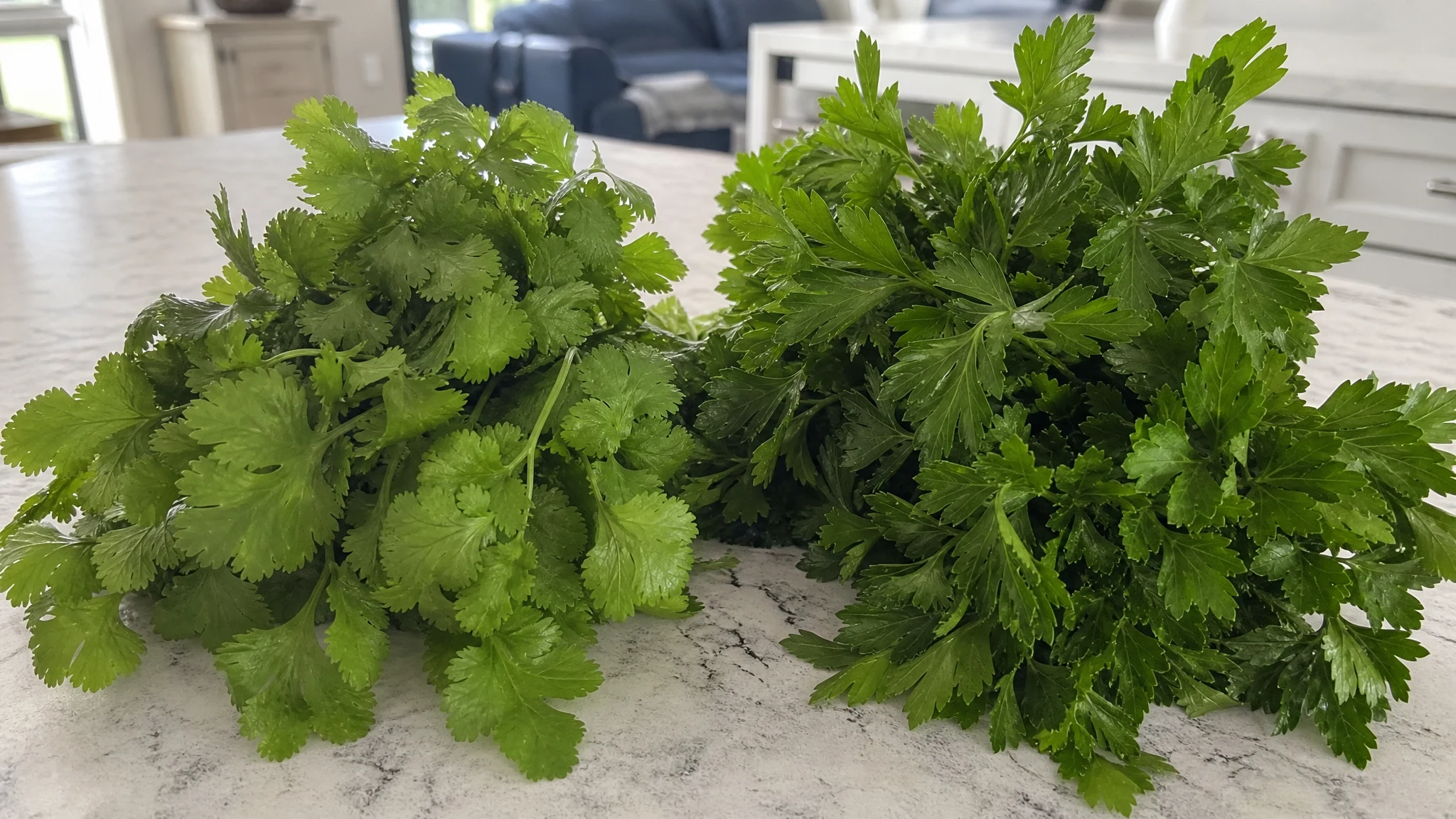
In a kitchen, nobody would swap cilantro for parsley and expect the same dish. Parsley is grassy and a little peppery; cilantro is brighter and more citrusy. The oils follow the same instinct. They share a garden and a family, but each wants its own role in a blend.
It helps to picture the finished room. Cilantro leans toward a sharp, citrusy green. Parsley leans toward a quieter, drier green. Neither is better; they just suit different moods.
A herb name is not a formula
The same herb name can cover a lot of ground. Within one cilantro study, linalool ranged from none at all to over 61% depending on the accession, even though most were decenal-led. Parsley leaf and parsley seed oils have their own leaders, as the numbers above show. Plant part, region, harvest stage and extraction method all change the result. So when a listing says only "cilantro oil" or "parsley oil," it has not told you what you most need to know, and the lot analysis is the document that does.
That is also why any two bottles of the same herb oil can sit differently in a blend. Ask the supplier for the botanical name, the plant part, the method and a dated lot report that matches the bottle.
Using ours
For cilantro oil, we recommend diluting to 0.5% to 2% in a carrier before skin use, patch testing first, keeping it away from eyes, children and pets, and never taking it internally. Our safety guide gives the longer version. If you are pregnant or nursing, ask your midwife or physician first, and for pets ask a veterinarian. For parsley oil, ask the supplier for its plant part, its lot analysis and its own recommended maximum use level, and check with a pharmacist or physician if you have a specific health question. If you have an allergy to either herb, an allergist is the person to ask, and our allergy post sets out what is documented.
Two strips, side by side
If you ever have both bottles in the house, do the simplest comparison there is. Put one drop of each on separate paper strips, wave them gently, and smell them one after the other. Wait ten minutes and smell them again. Notice which one fades first and which one leaves a lingering note. That quiet five-minute exercise tells you more about which oil belongs in your project than any description can.
Since we only sell the cilantro, you will need to find the parsley elsewhere, and a small first bottle there is the same sensible advice we give for ours.
Picking for the job
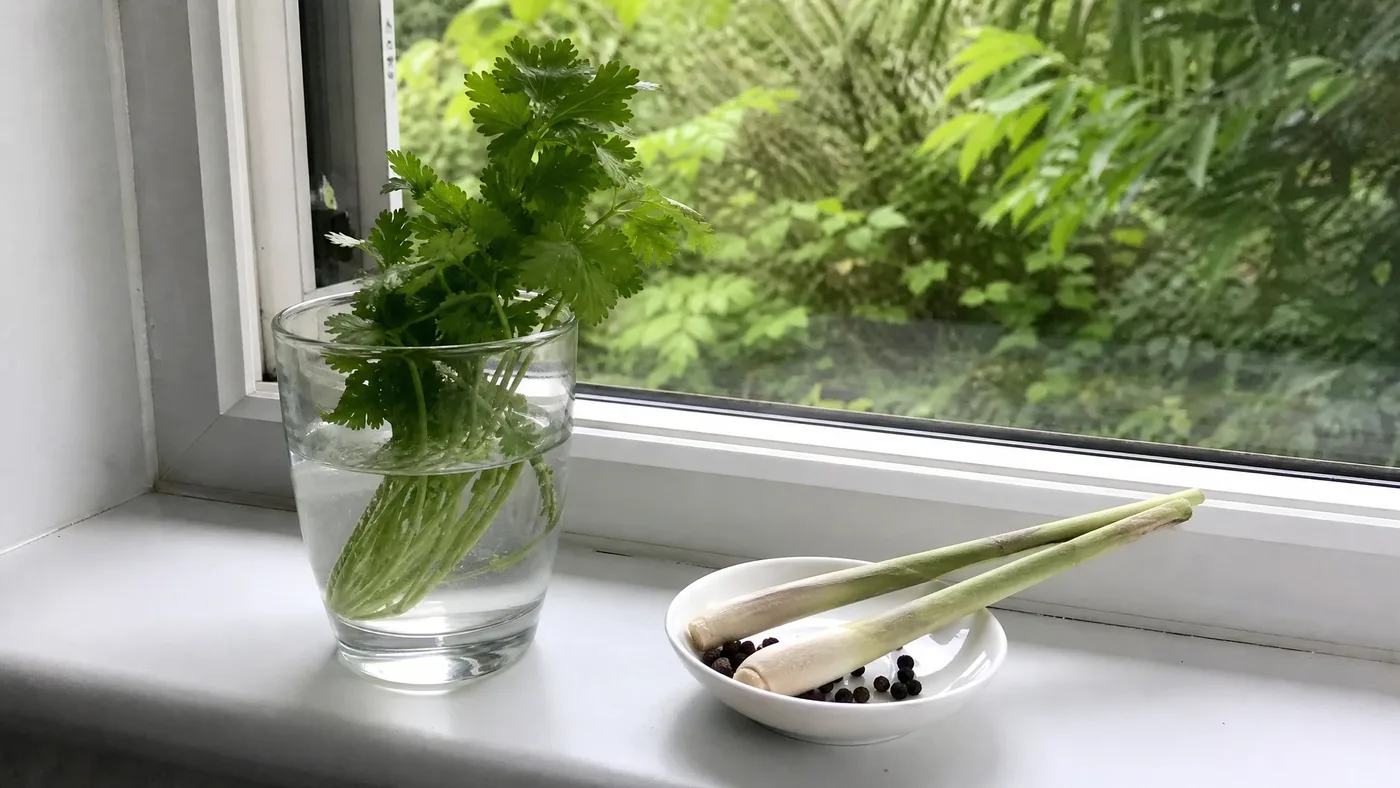
- A green, citrus-edged top note in a diffuser or perfume: cilantro leaf oil, used in tiny amounts. We list lime, lemongrass, black pepper, ginger, petitgrain and bergamot as partners, and our blending shortlist goes further.
- A parsley-type note: buy it from a supplier that names the plant part and provides a lot analysis.
- Either herb as flavor in food: use the fresh herb. Neither oil is a kitchen ingredient from us.
Treat the two as different materials that happen to share a garden bed, choose by the job, and read the lot analysis before you scale up.
Cilantro Essential Oil
Cilantro Essential Oil from our own shop, in sizes from 0.5 oz to bulk.
From $13.99
Shop Now →Sources & Further Reading
- Kim M, Kim S, 2026. Climate Zone of Geographical Origin Associations with Essential Oil Composition, Yield, and Chemotype Distribution in Coriandrum sativum L. pmc.ncbi.nlm.nih.gov/articles/PMC13257553
- Foudah AI et al., 2022. Phytochemical Screening, In Vitro and In Silico Studies of Volatile Compounds from Petroselinum crispum (Mill) Leaves Grown in Saudi Arabia. pubmed.ncbi.nlm.nih.gov/35164196
- Herrera-Calderon O et al., 2023. The Essential Oil of Petroselinum crispum (Mill) Fuss Seeds from Peru. Plants. pubmed.ncbi.nlm.nih.gov/37375914