Cilantro vs Coriander Oil: Why the Names Confuse
Cilantro and coriander are the same species, Coriandrum sativum, and that is exactly why shopping for the oil can be confusing. In the United States, cilantro usually means the leafy part and coriander the seed. Elsewhere, coriander can mean the whole plant. So when a label says only "coriander oil," it has not told you what is inside the bottle.
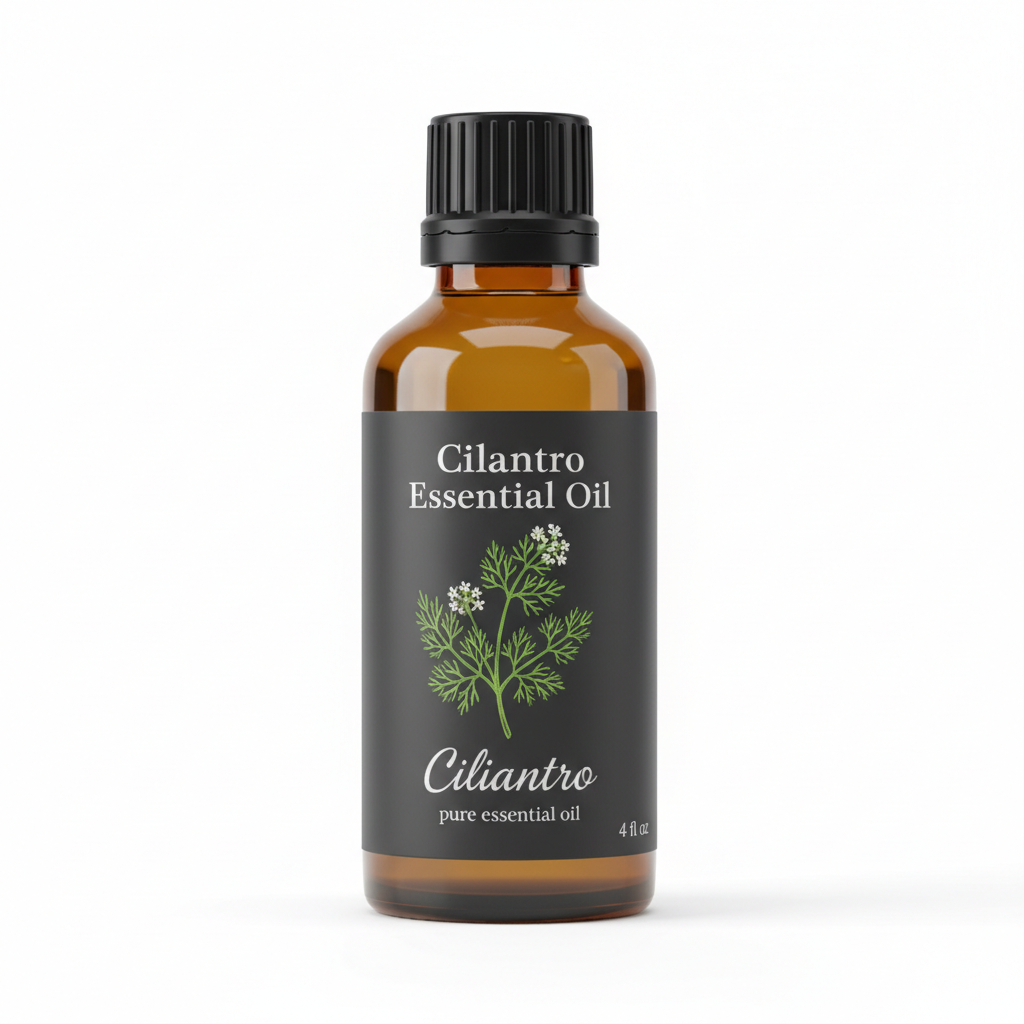
Cilantro Essential Oil
Our own Cilantro Essential Oil, in sizes from 0.5 oz to bulk.
From $13.99
Shop Now →Read the Latin name and the plant part
That is our rule: ignore the common name, find the botanical name and the part of the plant. Our single product is a cilantro leaf oil, steam-distilled from the leafy tops, and it is never blended with or sold as coriander seed oil. Even the regulations do not settle it. The US flavoring list in 21 CFR 182.20 has one entry, "Coriander", with Coriandrum sativum L. as its source, and no separate line for cilantro or for a plant part.
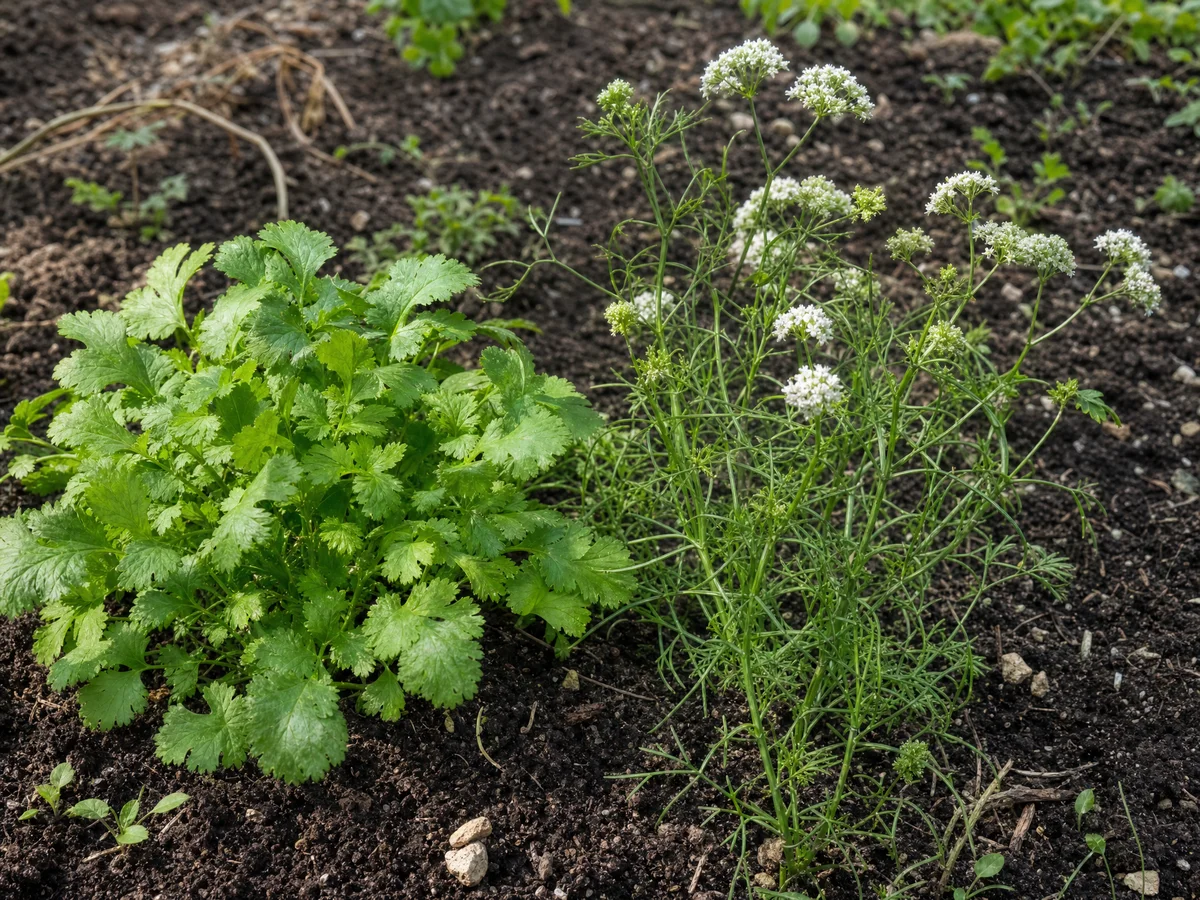
It helps to picture a kitchen. In an American recipe, you chop the leaves of the cilantro bunch and you grind the coriander seeds in a mortar. Same plant, two jars, two smells: the leaf is grassy and bright, and the seed is warm and a little sweet. Essential oil follows exactly the same split, only more strongly, because distillation concentrates what each part has to offer.
Why the same plant smells like two plants
Different parts of the plant make different aroma molecules. In a Korean study of 48 coriander accessions, steam-distilled from the aboveground parts, the average oil was dominated by an aldehyde called (E)-2-decenal at about 45%, with decanal and linalool well behind (Kim and Kim, Molecules, 2026). A Brazilian analysis of oil from the fruit, the seed, found linalool at 58% (Soares and colleagues, 2012).
Linalool is floral and sweet-woody, a familiar note from lavender and many perfumes. The long-chain aldehydes that lead in the leaf are green and waxy. That difference in chemistry is the reason people describe the two oils as hardly related, and it is why the bottle you choose is not a cosmetic detail. Our full leaf versus seed comparison has the numbers, including the cases where leaf oil breaks the pattern.
Method and material matter too. A Bangladeshi study that hydrodistilled both leaf and seed found a leaf oil led by acids, not aldehydes, and a seed oil led by linalool (Bhuiyan and colleagues, 2009). One paper cannot say which variable caused the difference, but it is a good reminder that "cilantro oil" is not one standard material.
What we would ask before buying
- Which part of the plant? The product page should say leaf, aerial parts or seed. If it only says "coriander oil" or "cilantro oil," ask.
- How was it extracted? We steam-distill, and you should be able to learn the method from any serious seller.
- Is there a report for the lot? The Certificate of Analysis we publish for one batch lists parts used (leaves), density, refractive index and optical rotation. If you need a fuller composition report for your lot, ask us in writing through our contact page before you order.
- What is it for? Aroma and diluted skin use. We make no medical claims, and we do not recommend swallowing it.
Reading a recipe that says one or the other
If a craft recipe calls for "coriander essential oil" and you are holding a cilantro leaf oil, you are not holding what the author meant unless the recipe says leaf. The scent contribution differs, and the aldehyde-led oil tends to dominate a blend sooner, which is why we suggest starting with far less than you expect. Reasoning from the chemistry, we would begin with half the drops a seed-oil recipe asks for and adjust by nose. Write the botanical name and plant part in your notes so a later batch is comparable.
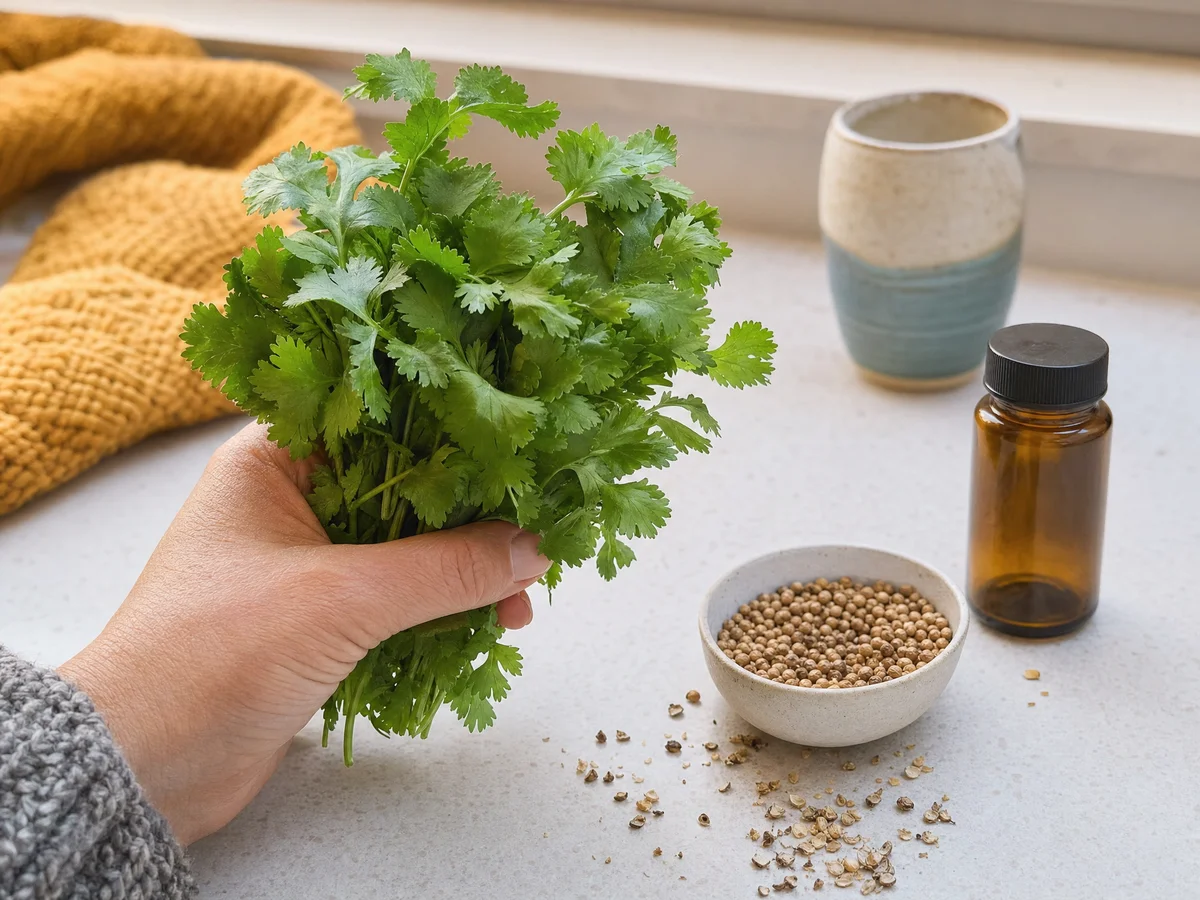
The reverse trap is a recipe written for fresh cilantro in cooking: the essential oil is not a stand-in for the herb, and we do not suggest cooking with it. For a salsa, use the leaves; for an herb-flavored pantry oil, you want an infused oil, which is a different product again, explained in essential oil versus infused oil.
Keeping your own notes straight
If you collect oils, a small habit saves a lot of confusion later. Write the full botanical name, the plant part and the date on every bottle label or in a notebook. Two bottles that say "coriander" on the front can smell nothing alike, and a year from now you will not remember which is which. When you open ours, you will notice a green, bright, waxy aroma with a citrus edge. If a bottle in your cupboard smells soft, sweet and floral, it is the seed.
A note on the soapy-smell crowd
Some people find cilantro leaf tastes or smells like soap. A 2026 Cell paper on the receptor OR6A2, which detects medium-chain aldehydes and belongs to a receptor cluster genetically linked to cilantro perception, supplies the background (Wang and colleagues). Leaf oil is rich in aldehydes, so it is reasonable to expect it to split noses too, although that step is our inference. We take that up in why cilantro tastes like soap to some people. If you have a plant allergy, our allergy post is the place to start.
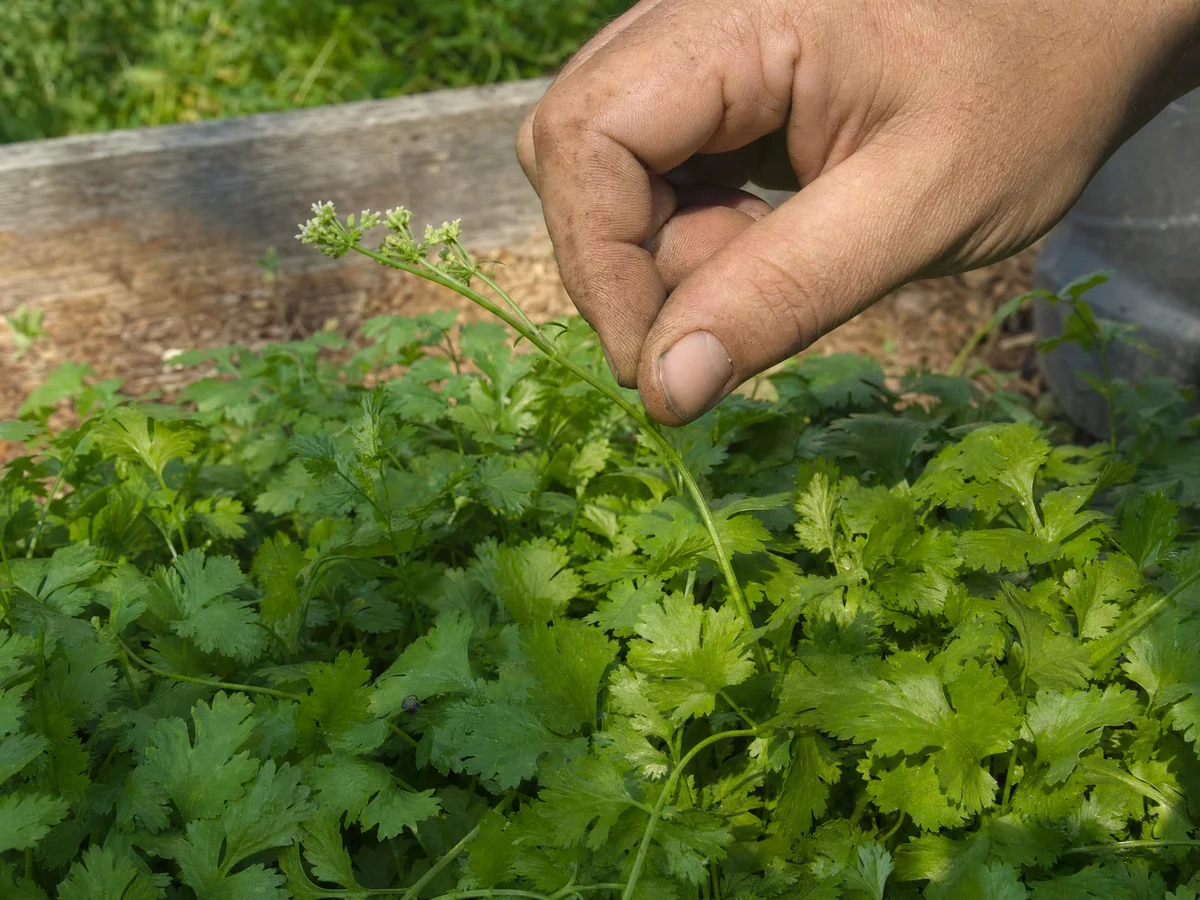
That is the fun of this plant: you can spend an afternoon smelling one species in two different bottles and come away feeling you have met two characters.
Both names are right for the plant and neither is a reliable guide to the bottle. The plant part, the method and a report for your lot are.
Cilantro Essential Oil
Cilantro Essential Oil from our own shop, in sizes from 0.5 oz to bulk.
From $13.99
Shop Now →Sources & Further Reading
- US Government, current. 21 CFR 182.20. ecfr.gov
- Kim M, Kim S, 2026. Climate zone of geographical origin and essential oil composition in Coriandrum sativum L. Molecules. PMC13257553
- Soares BV et al., 2012. Antifungal activity, toxicity and chemical composition of the essential oil of Coriandrum sativum L. fruits. Molecules. PMC6268684
- Bhuiyan MNI et al., 2009. Chemical composition of leaf and seed essential oil of Coriandrum sativum L. from Bangladesh. Bangladesh J Pharmacol. banglajol.info
- Wang T et al., 2026. Structural decoding of reversible covalent linkage of odorants in human olfactory receptor OR6A2. Cell. PubMed 41570822