Cilantro Oil Around Cats and Dogs: What to Know
Cilantro the herb is on the ASPCA's list of plants that are non-toxic to dogs, cats and horses. It is tempting to read that as a green light for the oil, and it is not one. A plant listing describes a leaf; an essential oil is that plant's aroma compounds concentrated into a dropper bottle. Here is how we would think about a home with animals.
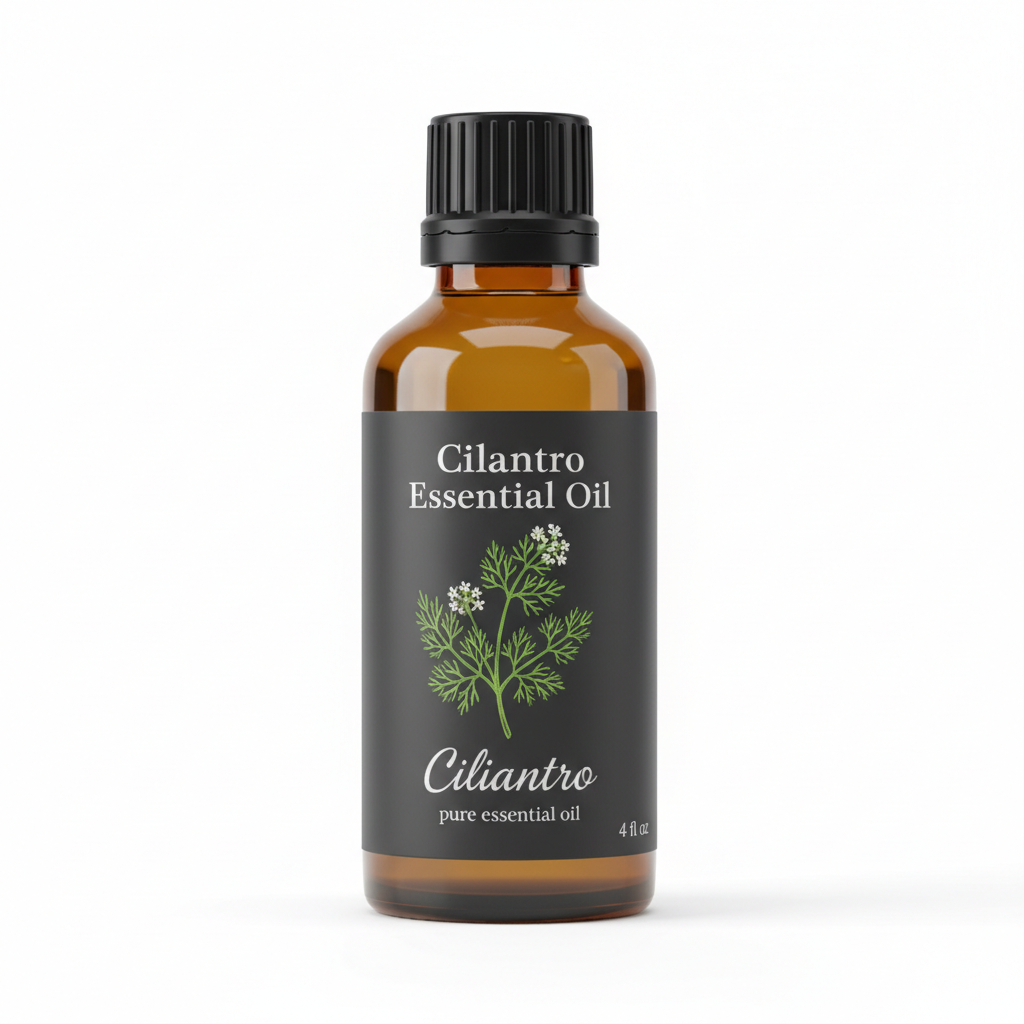
Cilantro Essential Oil
Our own Cilantro Essential Oil, in sizes from 0.5 oz to bulk.
From $13.99
Shop Now →Our own rule of thumb is a short one: if an animal lives in the space, treat the bottle with the same respect you would give cleaning supplies or medication. Closed cabinet, capped bottle, no drips on the floor.
Why the plant listing does not transfer
The ASPCA's entry for cilantro says exactly what it says: non-toxic to dogs, cats and horses. Its article on essential oils and pets is just as direct: in concentrated form, essential oils "can absolutely be a danger for pets," and pets that walk through oil, get it on their coat or have it put on them can show unsteadiness and depression, and low body temperature in severe cases. We found no source that addresses cilantro leaf oil by name in either direction, so we treat it like any concentrated oil.
Think about how a pet lives. They walk across surfaces, sniff everything at nose height, and groom themselves afterward. A spilled drop on a counter or a rug is the kind of thing a cat or a dog finds later, which is why a tidy workspace matters as much as the bottle itself.
Cats are the careful case
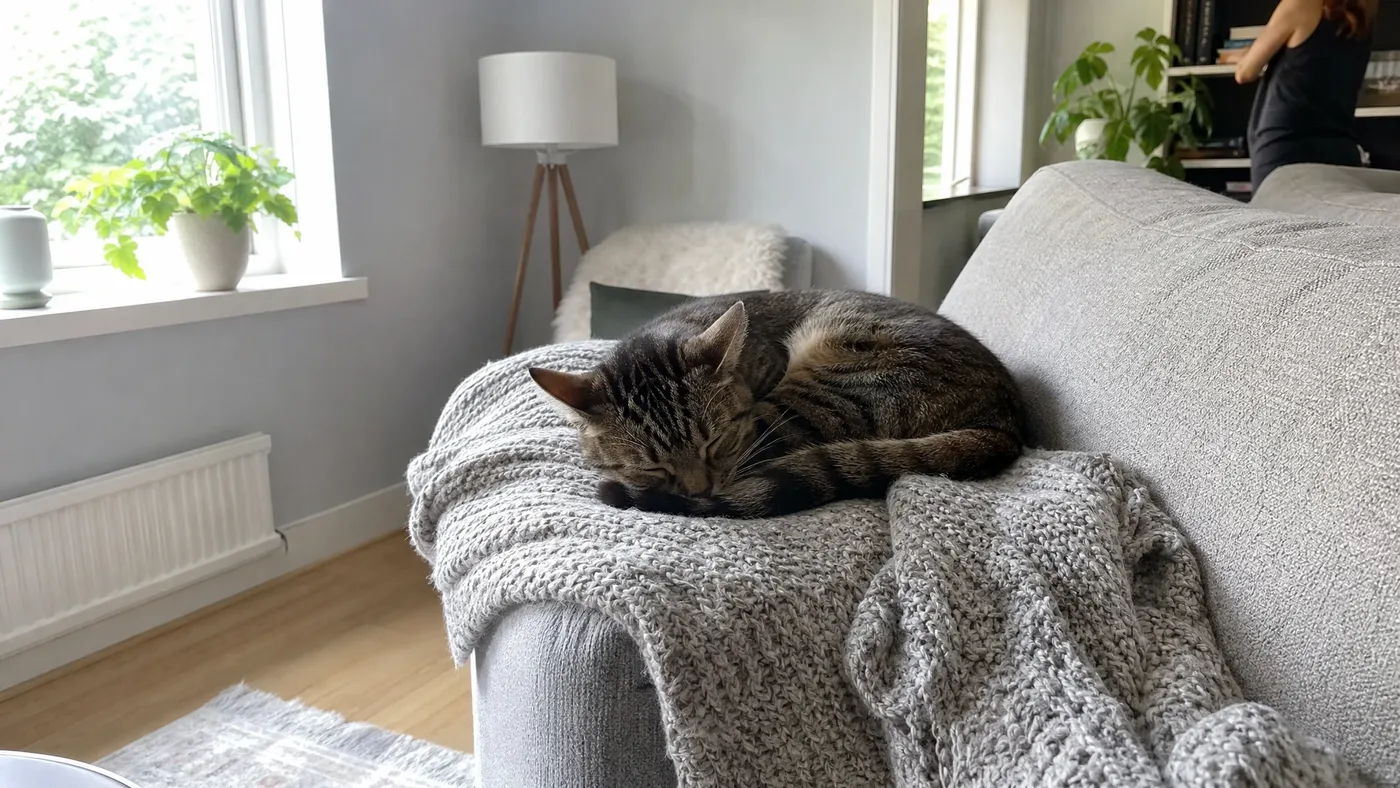
Cats process some chemicals differently from dogs and people. A 2011 PLoS One paper traced their unusual sensitivity to phenolic drugs such as acetaminophen and aspirin to a switched-off gene for a key detoxifying enzyme, and found every living member of the cat family sampled has a nonworking copy. That study did not test essential oils. The step from that finding to caution about essential oils is one that veterinary toxicology groups make, and the Pet Poison Helpline lists oils that have poisoned cats, from wintergreen and tea tree to citrus, pine and peppermint, with signs that include drooling, tremors, wobbliness and breathing trouble.
The honest status for our oil is unknown, and a plausible mechanism is reason enough to be careful. If a cat lives with you, we would not put the oil on the animal or leave it where the cat can reach it.
Dogs
In the same cat-genetics survey, only two of 22 other carnivore species showed the same enzyme defect, so dogs are generally described as less sensitive than cats. The ASPCA still says concentrated oils can harm them, and gives a sobering example: concentrated tea tree oil may cause problems with only seven or eight drops. A 1994 review from the National Animal Poison Control Center of tea tree oil applied to dogs and cats described depression, weakness, incoordination and tremors, mostly after skin application at excessive doses, and recovery in two to three days with supportive care. That concerned a different oil, but it shows how little it can take.
Diffusing around animals
Two sources give slightly different advice. The ASPCA says short diffuser use in a closed-off area the pet cannot get into is not likely to be an issue, that pets with breathing problems should avoid diffusers, and that the same goes for birds and small animals. The Pet Poison Helpline distinguishes between diffuser types: reed and heat diffusers mostly raise airway irritation concerns, while ultrasonic and nebulizing ones put microdroplets in the air that can settle on fur and be swallowed during grooming.
Putting the two together, the difference that matters is between a room your pet never enters and a room it shares. In a shared room, an ultrasonic diffuser is the case that gives us pause, and a floor or counter spray leaves residue where paws walk. If you are weighing it up, our diffusing guide covers the general side of things, and anyone who makes a surface spray, like the one in our room spray post, should keep it off floors and counters a pet walks across.
If you are not sure about a room, ask yourself two simple things: can the animal leave the room whenever it wants, and can it get to the bottle? If the answer to the first is no, or to the second is yes, wait and ask your veterinarian before you diffuse.
If something goes wrong
For a pet that seems unwell, your veterinarian comes first. The ASPCA Animal Poison Control Center lists (888) 426-4435 and the Pet Poison Helpline lists (855) 764-7661, which is open around the clock; both numbers come from the pages we read. The Pet Poison Helpline's advice for inhalation signs is to move the cat to fresh air at once and seek emergency veterinary care if the signs do not quickly clear.
Our oil is made for people, and we do not recommend putting it on animals of any species. If you share a home with a cat, store the bottle shut away and ask your veterinarian before diffusing anywhere the cat lives. Children in the same household are covered in our kids guide, and the wider picture is in cilantro essential oil safety.
If you like making things at a craft table, give yourself a clean-up routine. Wipe the table when you finish, wash your hands, and put the capped bottle away before you let the dog back in. It is a small habit that makes a shared home easier.
A small amount of planning goes a long way here, and your veterinarian is the best judge of what suits your own animals.
Cilantro Essential Oil
Cilantro Essential Oil from our own shop, in sizes from 0.5 oz to bulk.
From $13.99
Shop Now →Sources & Further Reading
- ASPCA. Cilantro, toxic and non-toxic plants. aspca.org
- ASPCA, 2018. Is the latest home trend harmful to your pets? aspca.org/news
- Pet Poison Helpline. Essential oils and cats. petpoisonhelpline.com
- Shrestha B et al., 2011. Evolution of a major drug metabolizing enzyme defect in the domestic cat. PLoS One. PubMed 21464924
- Villar D et al., 1994. Toxicity of melaleuca oil applied topically on dogs and cats. Vet Hum Toxicol. PubMed 8197716