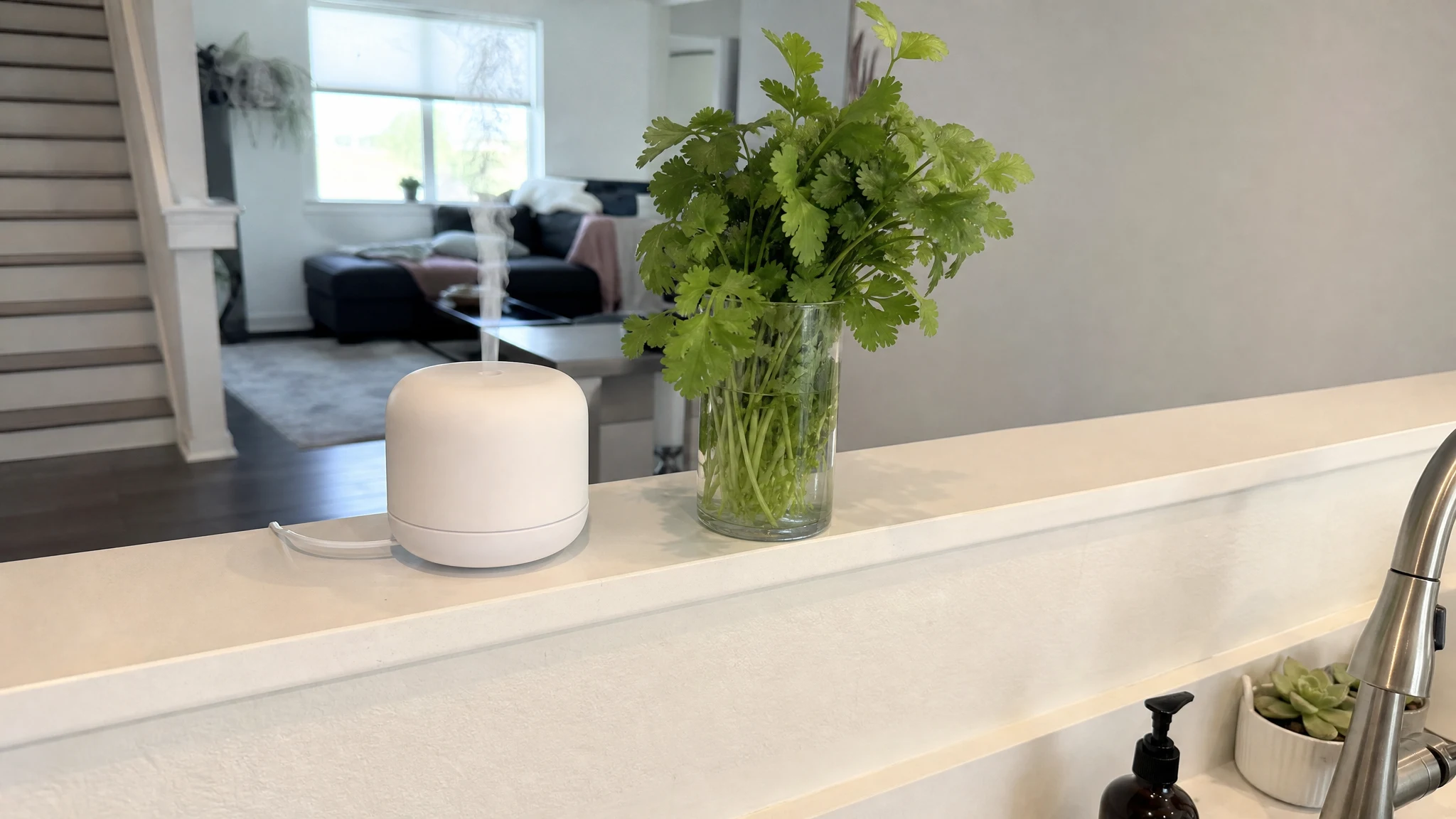
Diffusing Cilantro Oil: How Many Drops to Start
Cilantro oil is easy to overdo in a diffuser, and the fix is simple: start with one or two drops. It is pungent enough to take over a room quickly, so the right first session is short, ventilated and small, and the scent will tell you whether to go further.
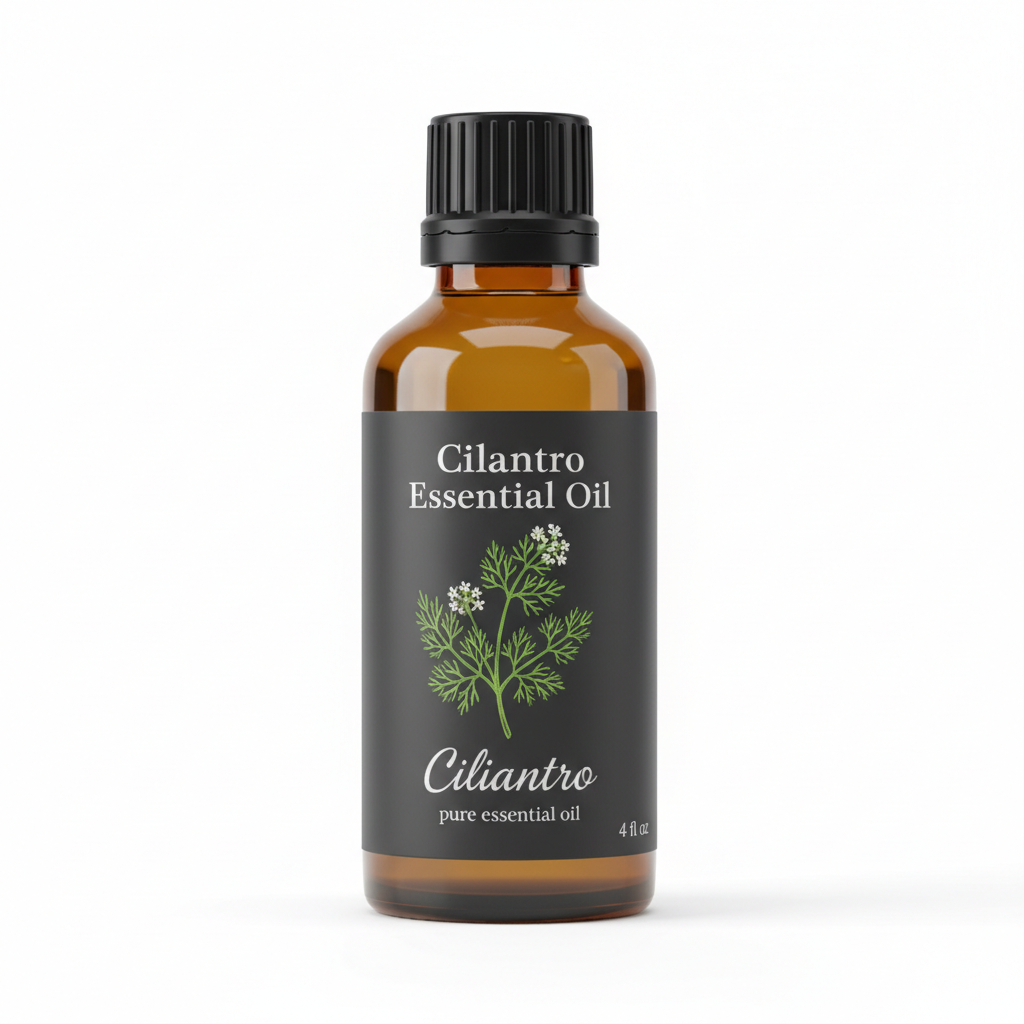
Cilantro Essential Oil
Our own Cilantro Essential Oil, in sizes from 0.5 oz to bulk.
From $13.99
Shop Now →Decide whether you like it in the air
We describe the aroma as green, bright and herbaceous with a citrusy edge, and it is genuinely divisive. The Certificate of Analysis we publish for one batch simply lists the smell as "unique aroma of cilantro". Before you put it in a room other people share, try it on a paper strip (our scent profile describes what to expect) and diffuse it on its own first.
Set the scene first
Before you switch anything on, make the space feel ready. Pick a room with a window you can crack open, a table at about waist height, and nothing precious underneath, since diffusers can drip. Wash the tank and wipe it dry, then fill it from a clean jug. A clean tank gives you a clean first impression of the oil.
Then stand back. Part of the fun of a first session is walking out of the room and returning a few minutes later, as if you were a guest arriving. That is the moment you really smell it.
Your diffuser matters as much as the oil
Two studies on other oils are worth knowing. In a chamber test of an ultrasonic diffuser, lemon oil gave off particulate matter at about 2 mg per hour, against about 0.1 mg per hour for lavender and eucalyptus, and eucalyptus emissions rose about fivefold when tap water replaced deionized water (Schwartz-Narbonne et al., 2021). In a home simulation with tea tree oil, terpene levels stayed below applicable exposure limits with an ultrasonic unit, but with a heat diffuser they were about ten times higher and five terpenes exceeded long-term derived no-effect levels (Zisook et al., 2025). Neither tested cilantro oil.
Reasoning from both, the oil matters, the water matters and heat matters. Our own preference is a cool ultrasonic or nebulizing unit rather than a heated one, distilled water if your manual allows it, and short sessions rather than all day.
A first session
- Fill the tank to its line and add one or two drops. The right count depends on your tank and room, so lean low.
- Run it for 15 to 30 minutes with a door or window open, then switch it off. Noses adapt within minutes, so the first sniff is the reliable one.
- Change only one thing next time, whether drops, time or room.
- Rinse the tank afterward. Leftover oil changes whatever you run next.
Reading the room
Pay attention to how the scent behaves as it fills the room. Near the diffuser it will usually feel stronger; across the room it will be softer. The first few minutes feel sharp and bright, and then the green settles into the background. If you walk away and come back and it still seems loud, that is your sign to use fewer drops next time.
It also helps to match the session to the moment. A short run while you tidy the kitchen or work at a desk feels right. An all-day run in a small room tends to feel like too much of a good thing.
What a small bottle gets you
At the rough convention of 20 drops per ml, a half-ounce bottle (about 14.8 ml) holds nearly 300 drops. At two drops a session that is on the order of 150 sessions, which is why the smallest size is plenty for finding out whether cilantro is your scent. Two drops in a 100 ml tank is about 0.1 ml of oil, or 0.1% by volume, and at that level it is already strong.
If it is too much
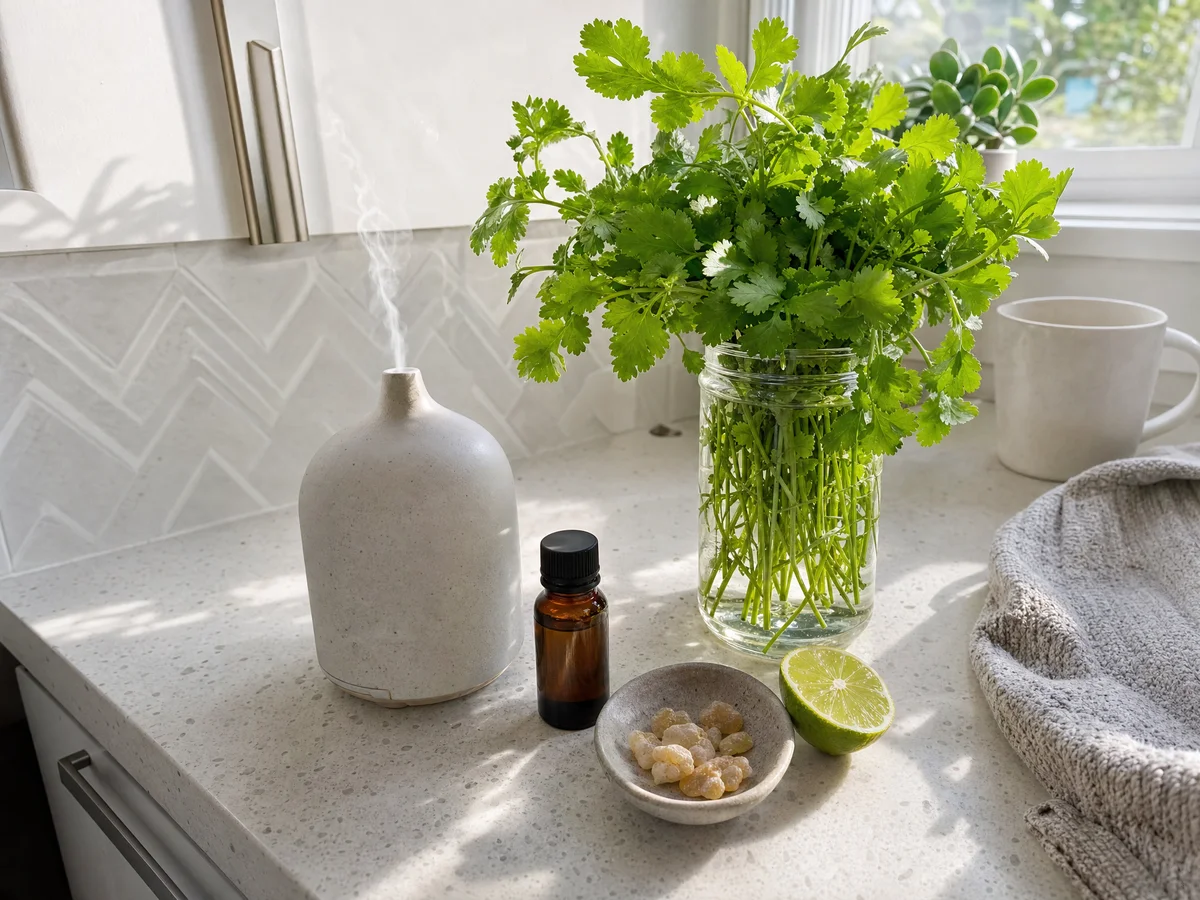
Do not add a second oil to cover it. Switch the unit off, open a window and wait. If anyone gets a headache, cough, watery eyes or trouble breathing, stop diffusing and air the room, and ask a physician if it persists.
Keep a little log
Jot down the drops, the time and the room after each session, plus a word or two about how it smelled. After three or four entries you will know your ideal number without having to think about it, and you will have a handy record if you start experimenting with partners later.
Blending
For partners we recommend lime, lemongrass, black pepper, ginger, petitgrain and bergamot. We sell only cilantro, so you will pick those up elsewhere. Add your chosen partner first at one or two drops, then add a single drop of cilantro last, and stop when cilantro stops being the first thing you smell. Our blending shortlist goes through partners, and green notes explained shows why an aldehydic green behaves differently from a leafy one. A blend is only as suitable as its least suitable oil, so check each ingredient separately.
Who should skip it
Households with cats, birds or small animals should read our pets guide first and ask a veterinarian about any animal with breathing problems. For infants, young children and pregnancy, see the kids post and the pregnancy post, and ask a pediatrician, obstetrician or midwife. Anyone with asthma or a history of reacting to fragrance should check with their physician or allergist. We sell an aroma oil and make no medical claims for it.
If you try it and decide cilantro is a once-a-month scent, that is a perfectly good outcome, and a small bottle kept capped and cool will last a long time.
Cilantro Essential Oil
Cilantro Essential Oil from our own shop, in sizes from 0.5 oz to bulk.
From $13.99
Shop Now →Sources & Further Reading
- Schwartz-Narbonne H, Du B, Siegel JA, 2021. Volatile organic compound and particulate matter emissions from an ultrasonic essential oil diffuser. Indoor Air. pubmed.ncbi.nlm.nih.gov/33905580
- Zisook RE et al., 2025. Volatile organic compound and particle emissions from the use of tea tree oil in essential oil diffusers. pubmed.ncbi.nlm.nih.gov/41004428