Cilantro Leaf Oil vs Coriander Seed Oil: Which One?
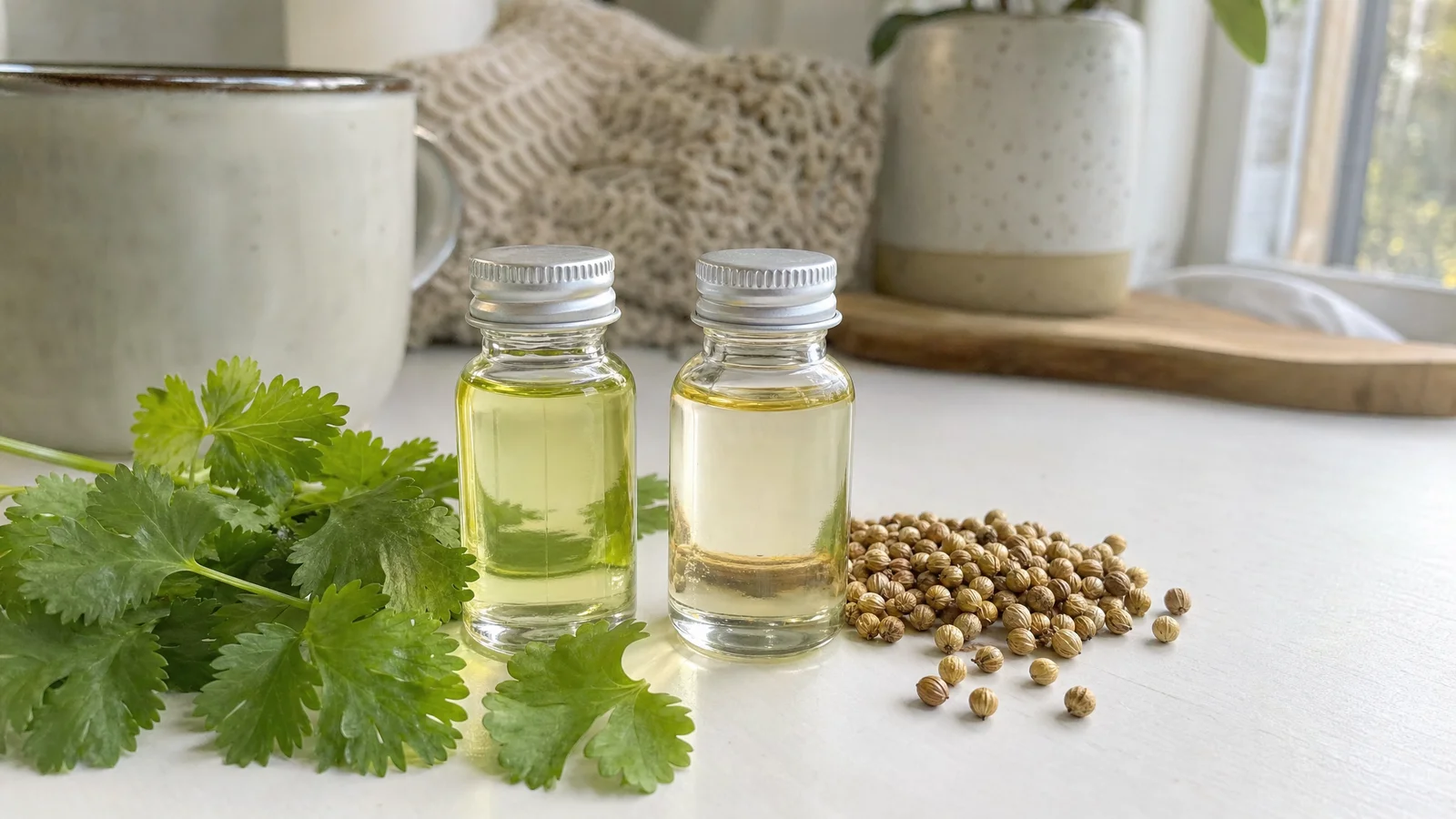
Cilantro leaf oil and coriander seed oil both carry the same Latin name, Coriandrum sativum, which is exactly why they get mixed up. Open the two bottles side by side and you would think you were smelling different plants: one is green, bright and a little citrusy, the other is soft, sweet and floral.
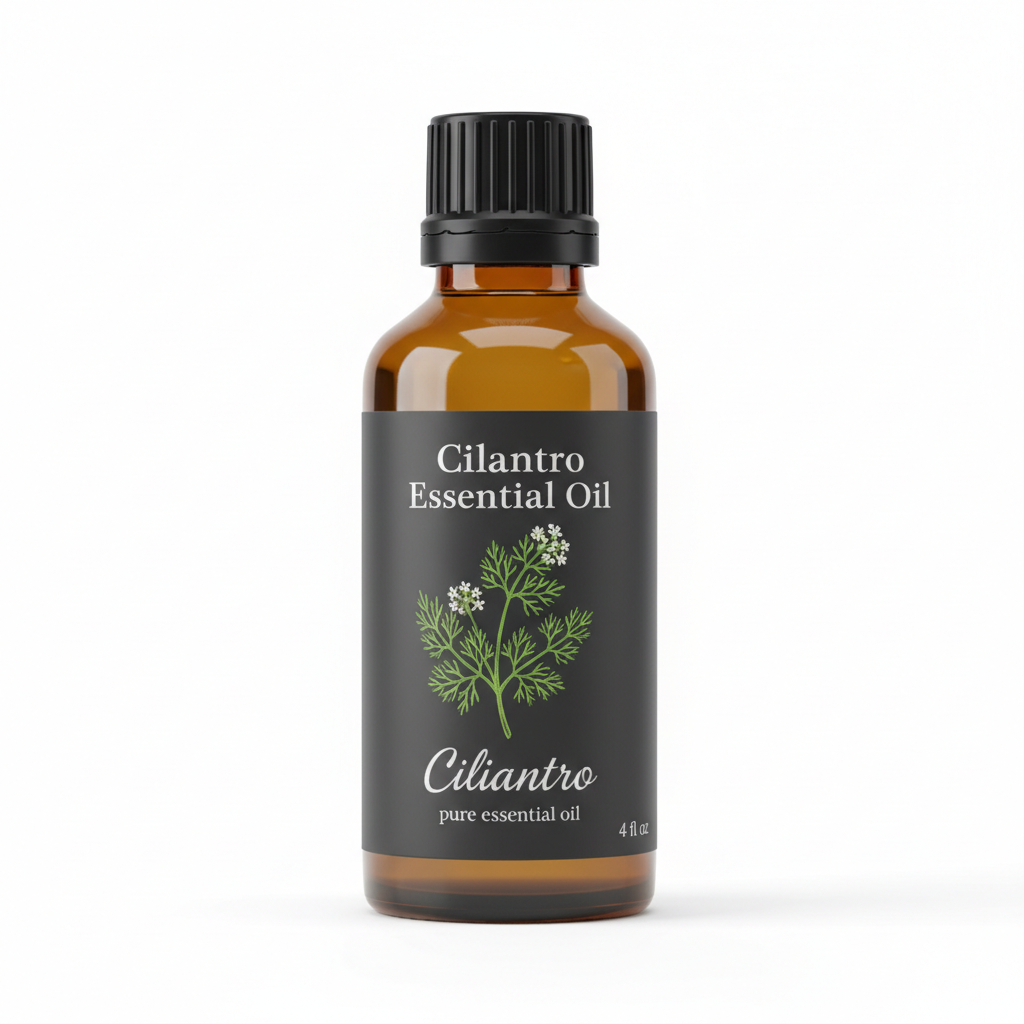
Cilantro Essential Oil
Our own Cilantro Essential Oil, in sizes from 0.5 oz to bulk.
From $13.99
Shop Now →Same plant, different chemistry
What matters is which part of the plant goes in the still. Leaves and tender tops give an oil built mostly from long-chain aldehydes, the compounds behind that fresh-cut, slightly waxy cilantro smell. In one large Korean study of 48 coriander accessions steam-distilled from aerial parts, (E)-2-decenal averaged about 45% of the oil, and only 4 of the 48 were led by linalool instead (Kim and Kim, 2026). Seed oil flips the picture. In a Turkish trial of mature seed, linalool, a floral-smelling compound, made up roughly 47% to 75% of the oil depending on genotype and sowing date (Ali Ali et al., 2026).
In plain terms, the leaf is not the mild version of the seed. They are two different perfumery materials that happen to share a plant.
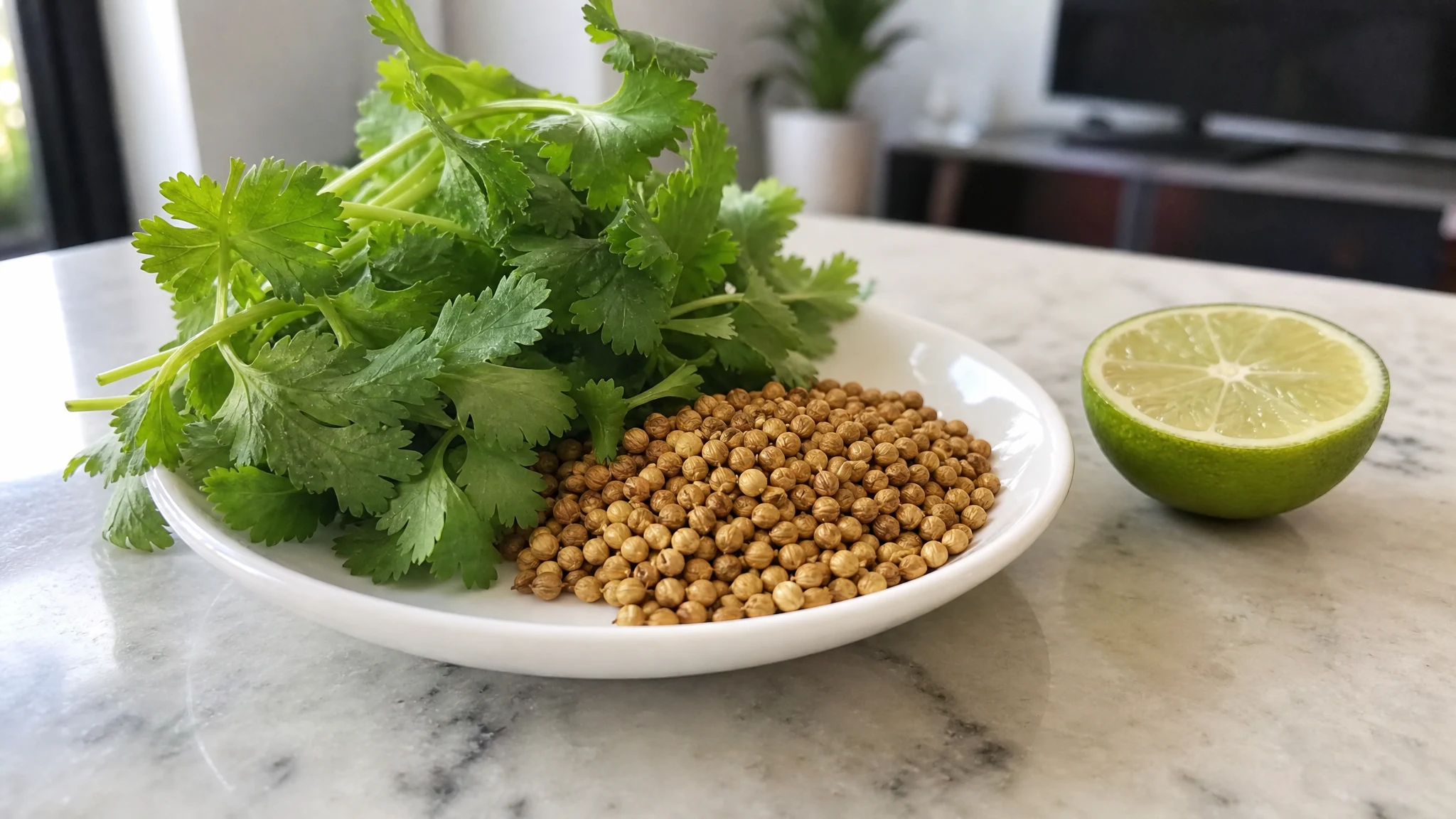
If you have ever wondered why two bottles with almost the same name can feel so different, try thinking of them as a herb and a spice. A pinch of fresh leaves wakes up a dish, while ground seeds give it warmth. Oils behave in the same way, only more intensely.
What each one does in a blend
We sell the leaf oil, steam-distilled from the leafy tops, and we keep it that way: it is never blended with seed oil, and coriander seed oil is a different bottle entirely. We describe our oil as green, bright and herbaceous, with a citrusy edge, a top note that arrives first and fades first. Think of it as the fresh-herb sparkle at the very start of a blend. It pairs naturally with lime, lemongrass, black pepper, ginger, petitgrain and bergamot, which you can explore in our pairing shortlist.
Seed oil sits at the other end of the scale. Its linalool-rich profile is rounder and sweeter, closer to a gentle floral spice, so it works as a supporting note where leaf oil would shout. If a recipe says "coriander oil" and you want warmth rather than green sharpness, the seed is what the author almost certainly meant.
A scent that divides the room
Here is the fun part. Some people adore fresh cilantro and others swear it tastes like soap. A 2026 structural study in Cell found that a human olfactory receptor, OR6A2, picks up medium-chain aldehydes, and it belongs to a receptor cluster genetically linked to the soapy perception (Wang et al., Cell, 2026). That paper is about receptor structure, not about oils, so this next part is our own reasoning: an aldehyde-led leaf oil is likely to split noses in a way a linalool-led seed oil will not. Our soap-smell explainer goes deeper.
That is why we suggest starting with the smallest size, and why our oil is concentrated enough that a little goes a very long way.
A simple side-by-side test
If you own both, set up a little smelling session. Put a drop of each on its own paper strip, mark them with a pencil and wait a minute before you smell. Then come back at five minutes, and again at half an hour. The leaf oil will give you a green, waxy sparkle that fades quickly. The seed oil will feel rounder and sweeter and tends to hang around. Write down a word or two for each, and you will remember the difference for good.

It is also a lovely way to introduce a friend to the world of scent, because the contrast is so clear that nobody needs training to notice it.
How we think about it
We love the leaf oil because it behaves like a flash of green light in a blend. It opens a composition, makes everything around it feel fresher, and then steps back. That is a very particular job, and it is why we gave a whole site to this one bottle. If your project wants a slow, warm, rounded heart note, that is a different job, and the seed will serve it better than we can.
Choosing between them
- You want a fresh, green, herbal top note: leaf oil, which is the one we make.
- You want something soft, sweet and floral-spicy: seed oil, which you will find at a general essential oil supplier.
- You are not sure: smell a drop of each on separate tissues and wait a few minutes. The difference is obvious.
Whichever you choose, treat either as a concentrated aromatic: dilute to 0.5% to 2% in a carrier before it touches skin and patch test first, as we recommend for ours. If you want to know what else can fill the leaf's role in a blend, our substitutes guide matches oils to jobs.
Keep the two bottles apart on your shelf and label them clearly, since a mix-up at the workbench is easy and the recipes behind them are not interchangeable.
One plant, two personalities, and no wrong answer, only the one that suits the scent you are imagining.
Cilantro Essential Oil
Cilantro Essential Oil from our own shop, in sizes from 0.5 oz to bulk.
From $13.99
Shop Now →