Cilantro Leaf Oil: A First-Bottle Guide
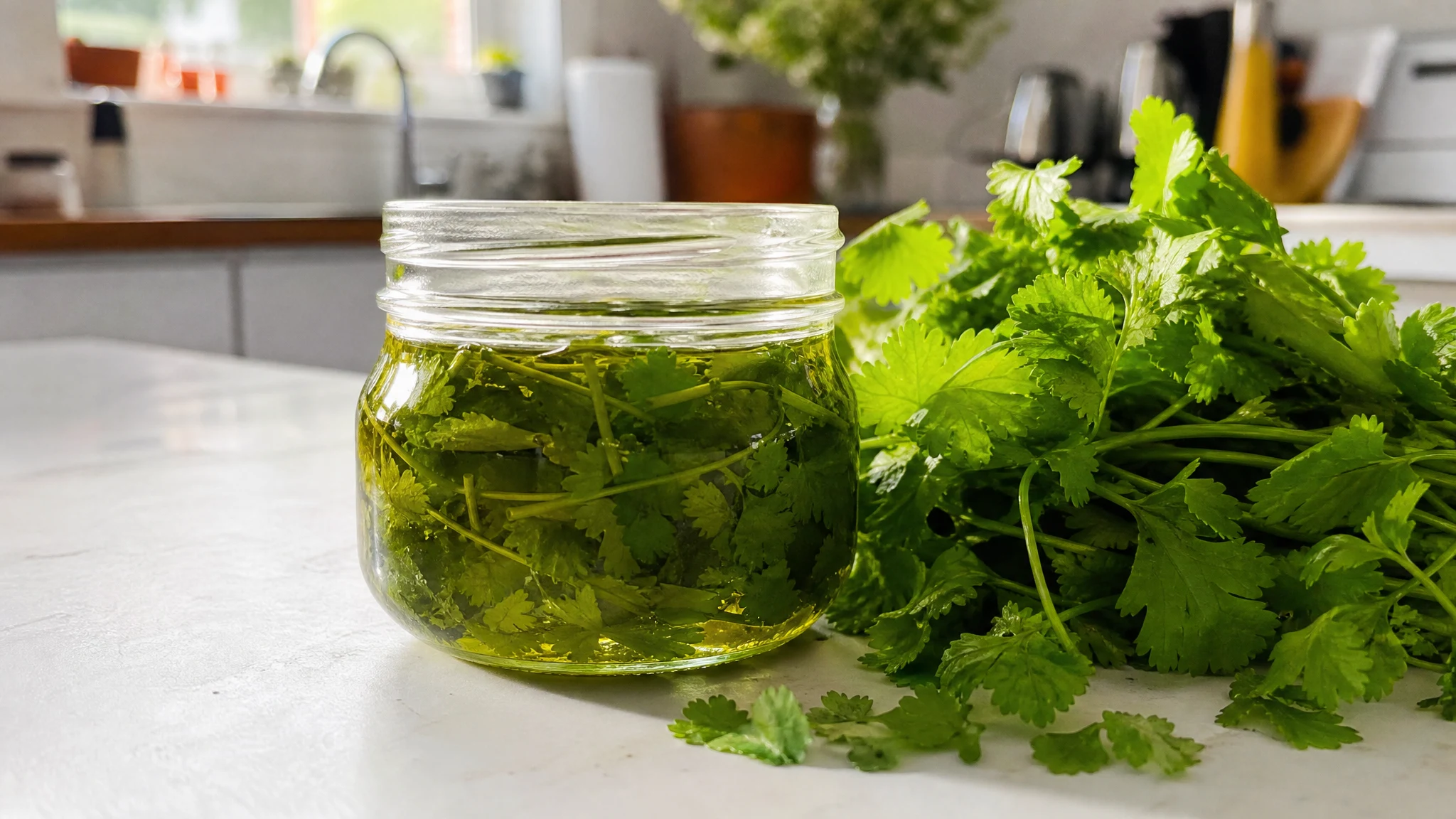
Cilantro leaf oil is one of those ingredients that people either fall for immediately or wrinkle their nose at, and both reactions are completely reasonable. It is bright, green and herbaceous with a citrusy edge, a true top note that arrives first and fades first. If you are curious about it, this is the guide we would hand you across the counter.
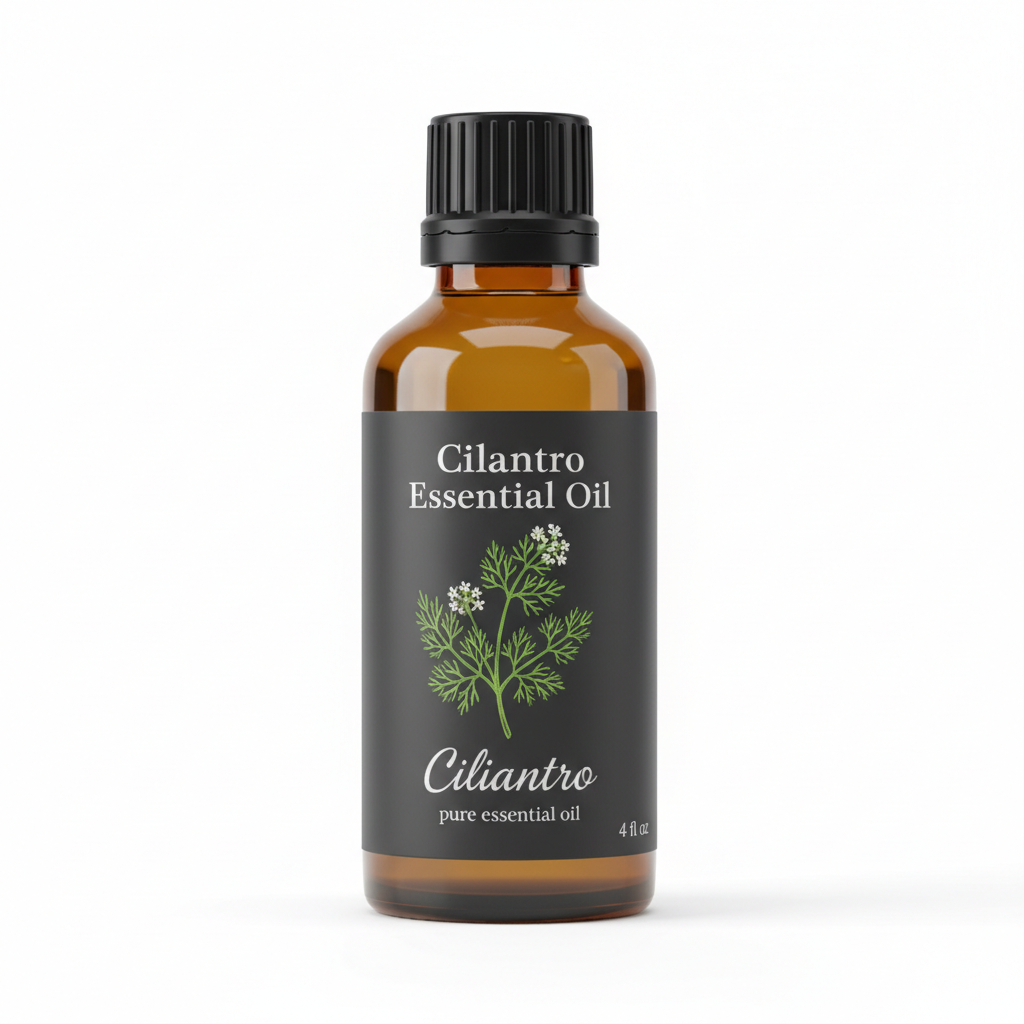
Cilantro Essential Oil
Our own Cilantro Essential Oil, in sizes from 0.5 oz to bulk.
From $13.99
Shop Now →Leaf or seed: check the label
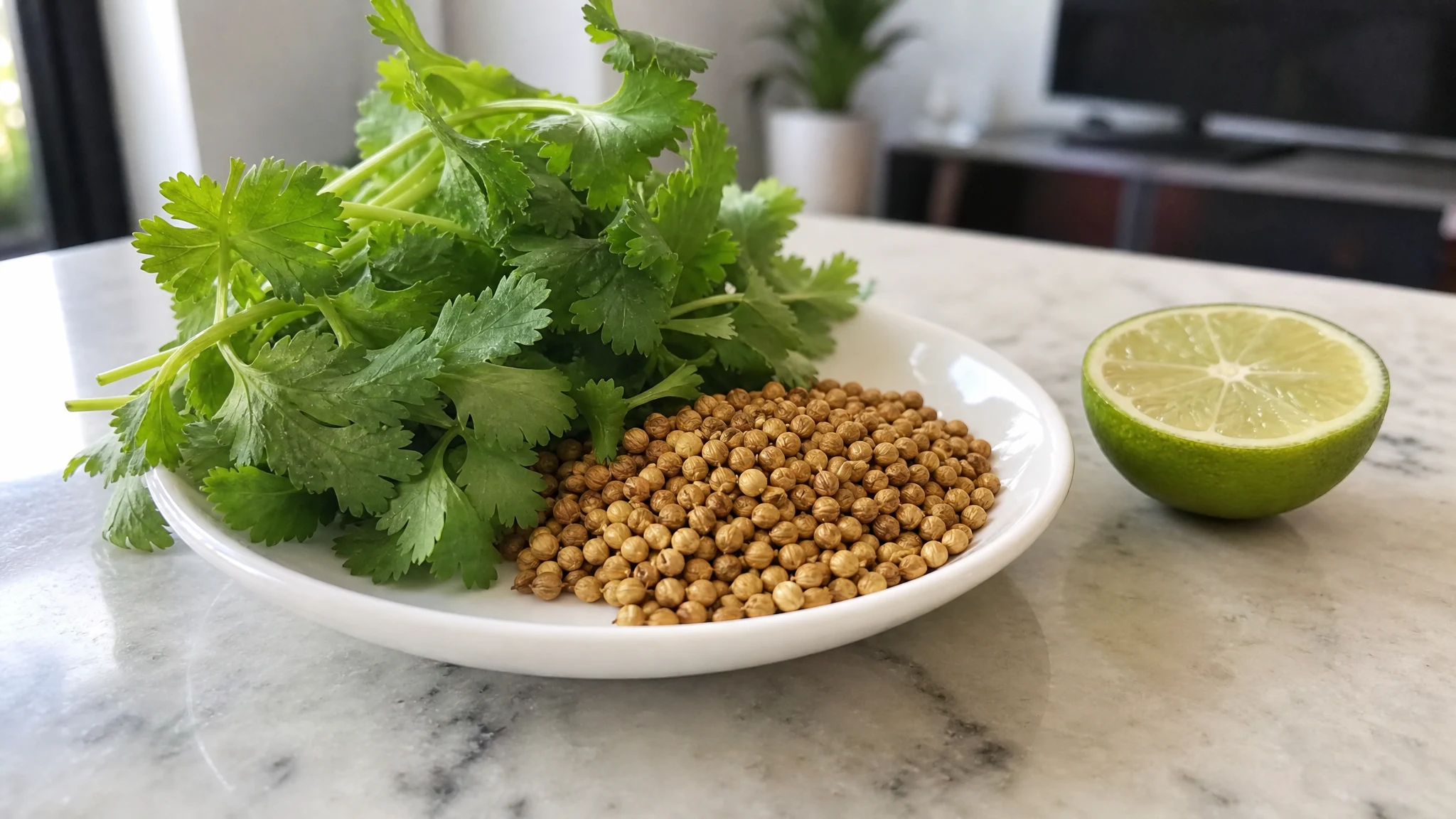
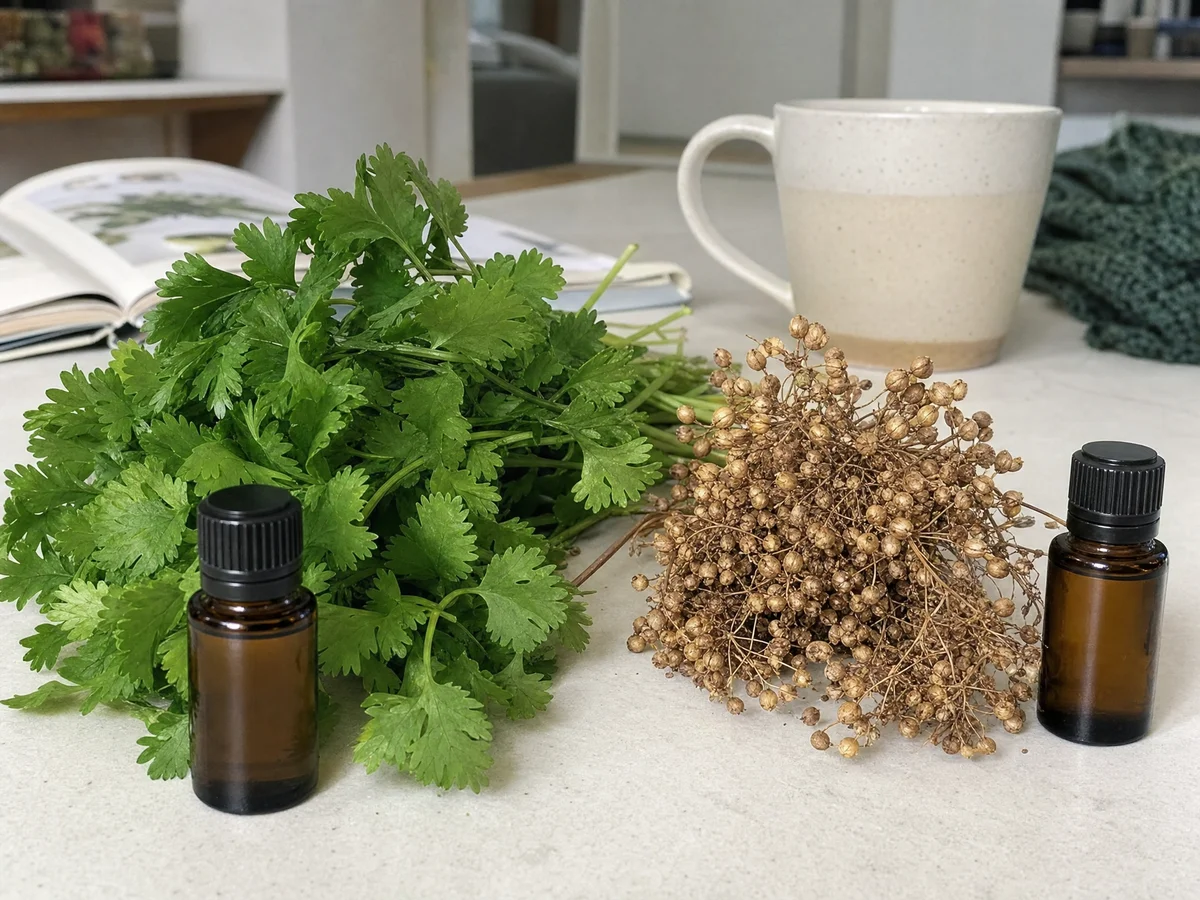
One plant, Coriandrum sativum, gives two quite different essential oils. The only thing on a label that tells them apart is the plant part, so look for the botanical name followed by "leaf" or "aerial parts" for cilantro oil, or "seed" or "fruit" for coriander oil. The US food regulation that lists essential oils names only "Coriander" and the botanical source, with no plant part and no mention of cilantro (21 CFR 182.20). So "cilantro" and "coriander" on a retail listing are trade choices rather than regulated terms.
We sell one cilantro oil, steam-distilled from the fresh leafy tops, and it is never blended with or sold as coriander seed oil. The two smell remarkably different. We compare them in our leaf versus seed article.
Why two bottles of "cilantro oil" can differ
Natural oils carry the fingerprint of their plant, place and method. A Korean study steam-distilled the aerial parts of 48 coriander accessions from 19 countries, grown at a single site. On average (E)-2-decenal made up about 45% of the oil, and most accessions were decenal-led, but four were led by linalool, which ranged from 0% to over 61% across the set (Kim and Kim, Molecules, 2026). A hydrodistilled leaf oil from Bangladesh was led by acids instead, with 2-decenoic acid near 31% (Bhuiyan et al., 2009).
The practical lesson is that the word "cilantro" does not tell you what is in a bottle, and the lot analysis does. That is why we encourage you to ask for the analysis for the lot you are buying.
What you can see for our oil
The Certificate of Analysis we publish is for one batch, identified as CNTQGUCSUSC001A and dated 2026-08-27, with leaves listed as the plant part, steam distillation as the extraction and a best-by of 09/24/2026. It reports a relative density of 0.86719 at 20 C (standard range 0.85 to 0.88), a refractive index of 1.46115 (standard range 1.45 to 1.47) and an optical rotation of -3.28 (standard range -10 to +13), and concludes the batch complies with the pharmacopoeia standard for cilantro oil. Those are physical checks against a pharmacopoeia standard, and they do not describe the oil's composition. If you want the full composition, such as a GC/MS report, ask us in writing through the contact page for the report for your lot, quoting the lot reference printed on the bottle. Our GC/MS reading guide helps when it arrives.
What to expect when you open it
The first sniff is the one that matters, so do it the right way. Put a drop on a paper strip, hold it a hand's width from your nose, and give it a moment. You will notice a sharp, green, waxy opening with a citrus edge, and then it softens as the minutes pass. Our oil is pale yellow to nearly colorless and thin like water, so do not expect anything syrupy. A single drop goes further than you would guess.
Give yourself a day with it before you decide. Some people fall for it on the spot, and some need to come back to it with a fresh nose.
Who it suits
- Blenders and perfumers. A green, citrusy top note with partners such as lime, lemongrass, black pepper, ginger, petitgrain and bergamot. Our blending shortlist goes further.
- Craft makers. It is used in soap, candle and diffuser projects, and our buyer's guide for candle and soap makers covers the practical side.
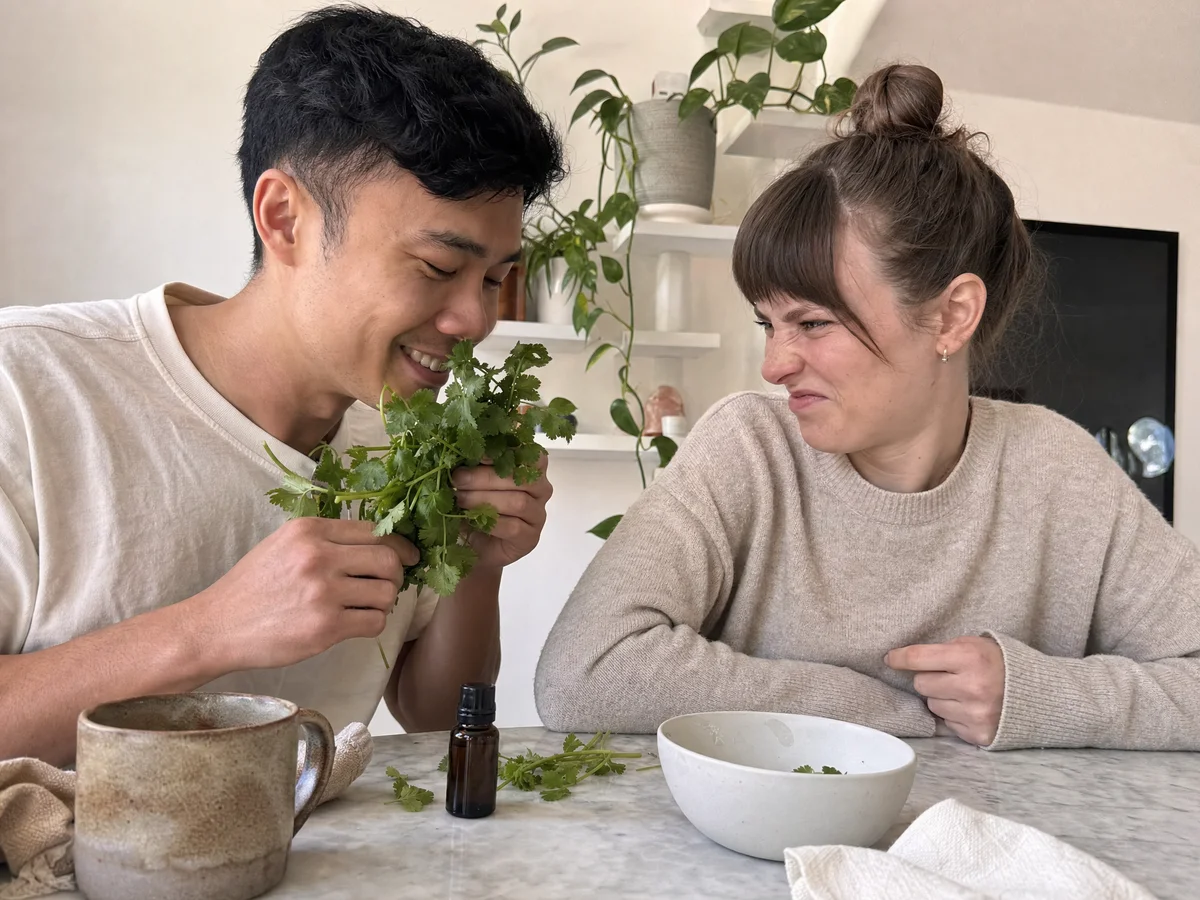
- People who love the smell. It is genuinely divisive, which is why we suggest the smallest size first. Why some people smell soap explains the reason.
It is not a cooking ingredient, since we sell no culinary oil and the oil is not for internal use. For flavor, buy fresh herb or a food-grade infused oil from a food retailer, and ask a physician about any question on swallowing essential oil. We make no medical claims for cilantro oil, and our research roundup shows what the studies did and did not look at.
If you like to experiment, keep a small notebook by the bench. Write the drop count, the date and what you thought of the scent after a few minutes and after an hour. That tiny habit turns a bottle of oil into a craft you get better at.
Getting started
Dilute to 0.5% to 2% in a carrier oil before skin contact, patch test on a small area first, and keep it away from eyes, children and pets. It dominates a blend quickly, so start with far less than you expect. As a rough conversion, 1 ml is about 20 drops, so 1% in a 30 ml bottle of carrier is 0.3 ml, around 6 drops. For anything beyond that, our safety guide is the place to go. If you are pregnant, nursing, under care for a skin condition or choosing for a child or pet, ask the relevant professional first.
Order the smallest bottle from our shop, smell it, and see whether cilantro leaf oil becomes a favorite. The sizing post helps you plan the next step. If it becomes a regular, see our bulk sizes and our guide to buying cilantro essential oil in bulk.
Cilantro Essential Oil
Cilantro Essential Oil from our own shop, in sizes from 0.5 oz to bulk.
From $13.99
Shop Now →Sources & Further Reading
- Kim M, Kim S, 2026. Climate Zone of Geographical Origin Associations with Essential Oil Composition, Yield, and Chemotype Distribution in Coriandrum sativum L. pmc.ncbi.nlm.nih.gov/articles/PMC13257553
- Bhuiyan MNI, Begum J, Sultana M, 2009. Chemical composition of leaf and seed essential oil of Coriandrum sativum L. from Bangladesh. banglajol.info/BJP/2800
- US Government. 21 CFR 182.20, Essential oils, oleoresins (solvent-free), and natural extractives. ecfr.gov, 21 CFR 182.20