How Cilantro Essential Oil Is Made, Leaf to Bottle
It takes a surprising amount of fresh green leaf to make a single bottle of cilantro essential oil. The process itself is old and simple: steam, a cooling coil and patience. The scarcity comes from how little oil a leaf holds, which is the main reason this oil is something of a specialty.
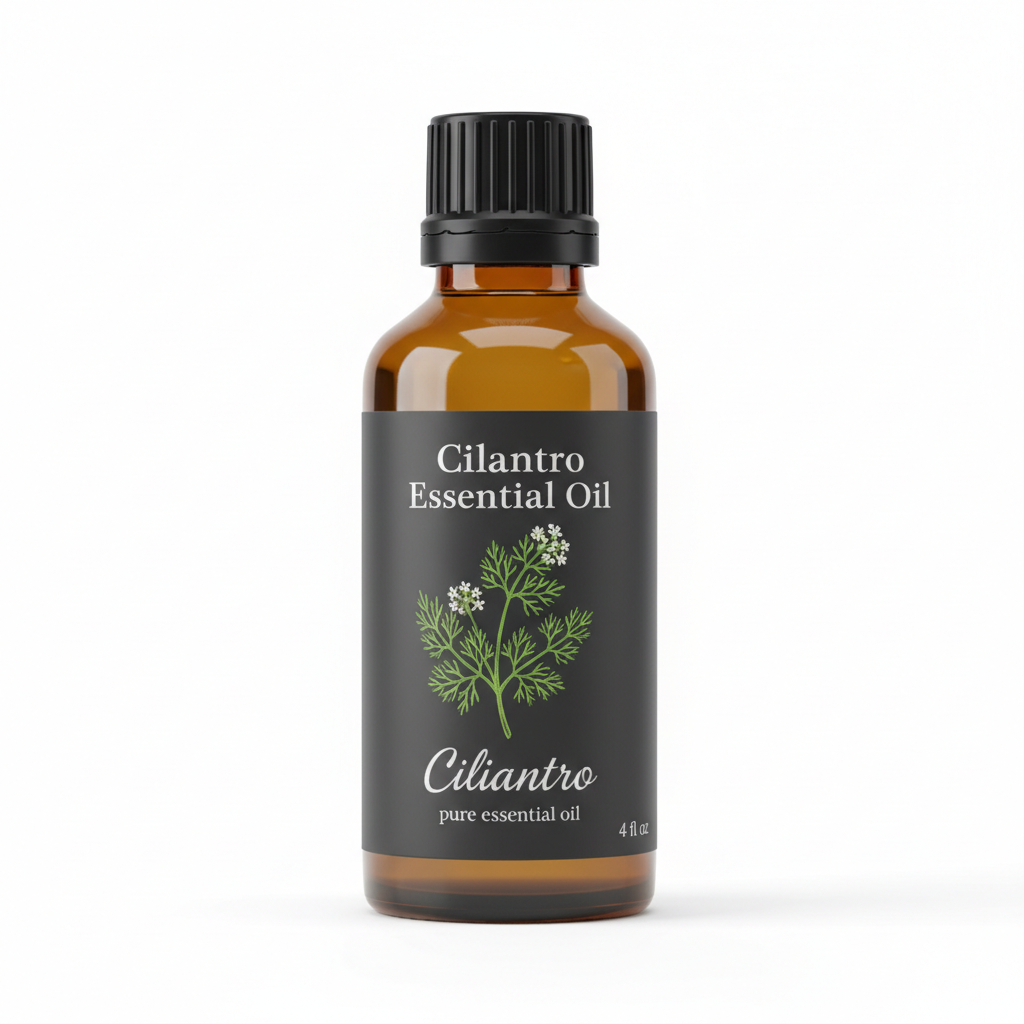
Cilantro Essential Oil
Our own Cilantro Essential Oil, in sizes from 0.5 oz to bulk.
From $13.99
Shop Now →Which part of the plant
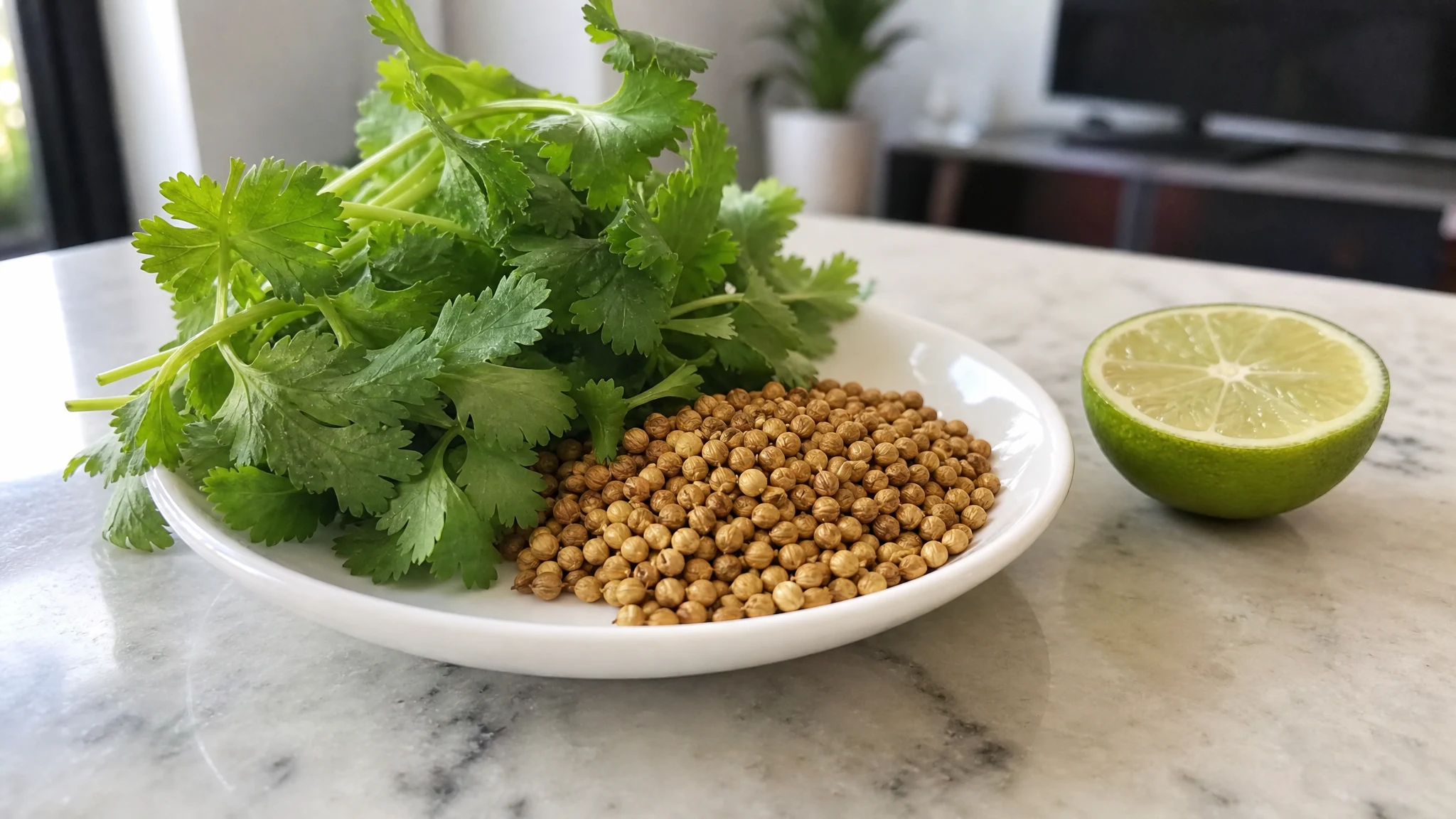
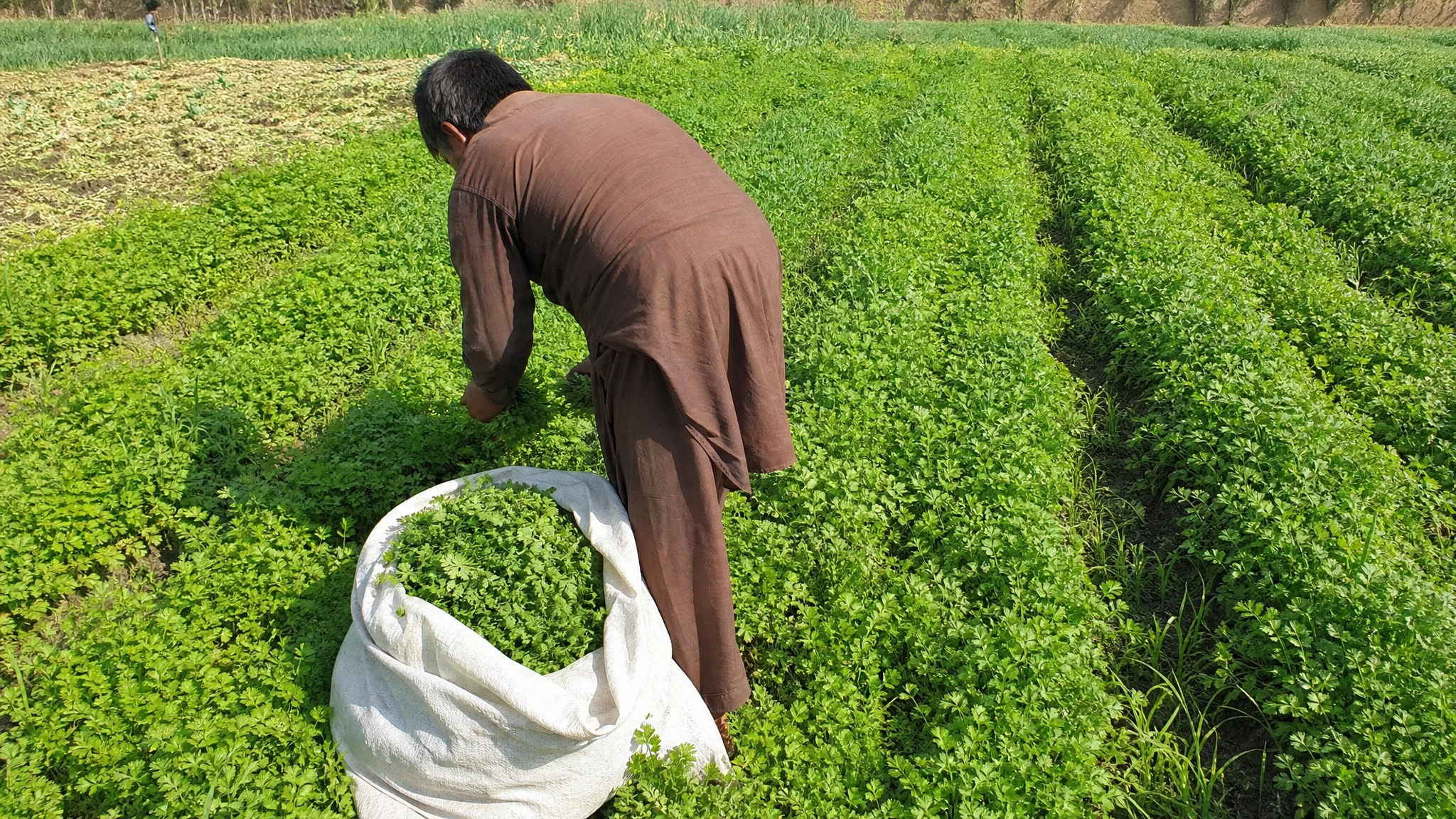
Coriandrum sativum gives two unrelated oils depending on the part used. Ours is steam-distilled from the fresh leafy tops, the leaf and not the seed, from a crop grown in the United States and cut young, before the plant bolts (runs to flower). Seed oil is a different bottle entirely, and we never blend the two. Our cilantro vs coriander oil guide explains how far apart they are.
How steam distillation works
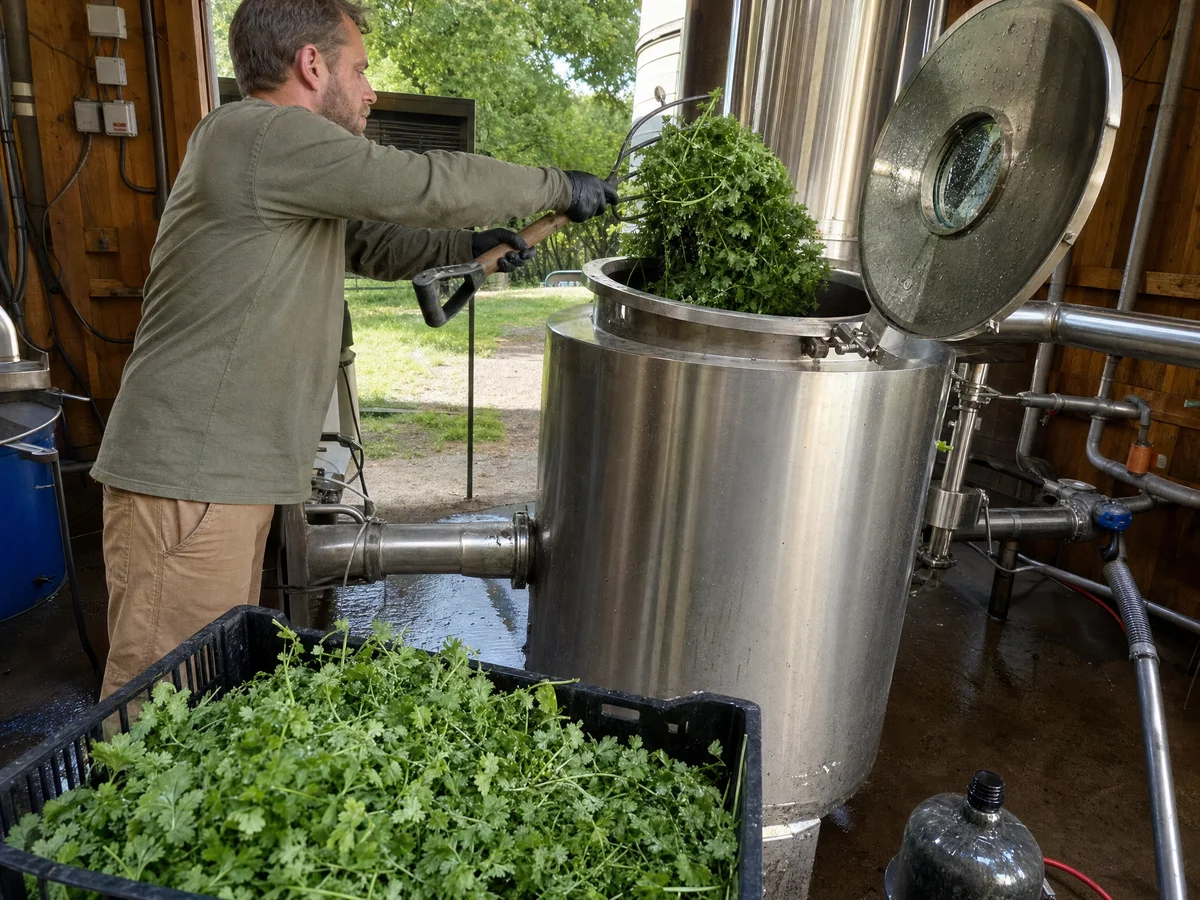
In steam distillation, hot steam passes through the plant material and carries the volatile aromatic compounds with it. The steam is then cooled back to liquid, and because oil and water do not mix, the oil separates into a thin layer that can be collected. It is among the conventional extraction methods, alongside hydrodistillation and solvent extraction (Aziz et al., 2018). Our runs are taken to completion rather than stopped at a set time, and the oil is bottled in amber glass with the distillation date, bottling date and lot reference on the label.
Picture the still
It helps to hold the sequence in your head. Fresh leafy tops go into a vessel. Steam is sent through them, and the steam picks up the aromatic molecules as it passes. The vapor travels into a cooling coil and turns back into liquid. The liquid drips into a collecting vessel, and the oil gathers as a thin layer apart from the water. Then it is separated, bottled and labeled.
None of that is fancy, and that is part of its charm. It is old, patient, physical work: heat, steam, cooling and waiting.
The arithmetic of a tiny yield
The clearest numbers come from a study that distilled 500 g of fresh leaves from each of four coriander cultivars in a steel still for 4 hours. The oil yields were 0.027% to 0.042% of the leaf weight (Kumar et al., 2022). That is about 0.14 to 0.21 g of oil from 500 g of leaf.
Put it in bottle terms. The Certificate of Analysis we publish for one batch gives a relative density of 0.86719, so a 1 oz bottle (29.57 ml) holds about 25.6 g of oil. At those lab yields, that is on the order of 60 to 95 kg of fresh leaf for one ounce. A commercial still will not match a 500 g lab run exactly, so treat this as a sense of scale, not our yield. It does explain why leaf oil is a more modest-volume oil than ones that give a few percent.
What ends up in the bottle
In the same study the oils were dominated by four aldehydes: (E)-2-decenal, decanal, (E)-2-dodecenal and (E)-2-tetradecenal, roughly 59% to 66% of each oil combined, with linalool at just 0.1% to 0.5%. That is the fingerprint of a leaf oil as opposed to a seed oil, and it explains why the bottle does not smell like a chopped leaf; green notes explained goes into that. The results are for four lab batches in one country, so any bottle will differ.
What the paperwork tells you
The Certificate of Analysis we publish is for one batch, with a best-by of 09/24/2026. It lists density, refractive index and optical rotation, and finds them within pharmacopoeia standards for genuine cilantro oil. It does not list aldehyde percentages. If you need GC-MS figures, aldehyde or linalool shares for a specific lot, ask us in writing through the contact page before you rely on them. Our guide to reading a GC-MS report shows what to look for once you have one.
Why freshness matters here
Cut leaves wilt quickly, and a wilted leaf is a poorer starting point than a crisp one. That is why we distill ours fresh, in our own still, and why we like the date on the label to mean something. When you open a bottle, you are smelling a leaf that was alive not long before it was bottled, turned into something concentrated, sharp and green.
Questions worth asking any seller
- Which part of the plant is it, leaf or seed?
- Is there a distillation date on the bottle?
- Can I see a GC-MS report for this lot?
- Is it ever blended with another oil or with fragrance material?
For skin, we recommend diluting to 0.5% to 2% in a carrier oil, never using it undiluted, and not taking it internally; the safety guide covers the details, and the storage guide explains how to keep a bottle fresh.
A little leaf goes a very long way, and a very small bottle holds a lot of green.
Cilantro Essential Oil
Cilantro Essential Oil from our own shop, in sizes from 0.5 oz to bulk.
From $13.99
Shop Now →