How to Store Cilantro Essential Oil So It Stays Fresh
A fresh bottle of cilantro oil smells like a handful of crushed leaves with a bright, citrusy edge, and that sparkle is the first thing to go when a bottle is stored badly. The good news is that keeping it is simple: cap it, keep it cool and dark, keep it nearly full, and let your nose and the dates on the label guide you.
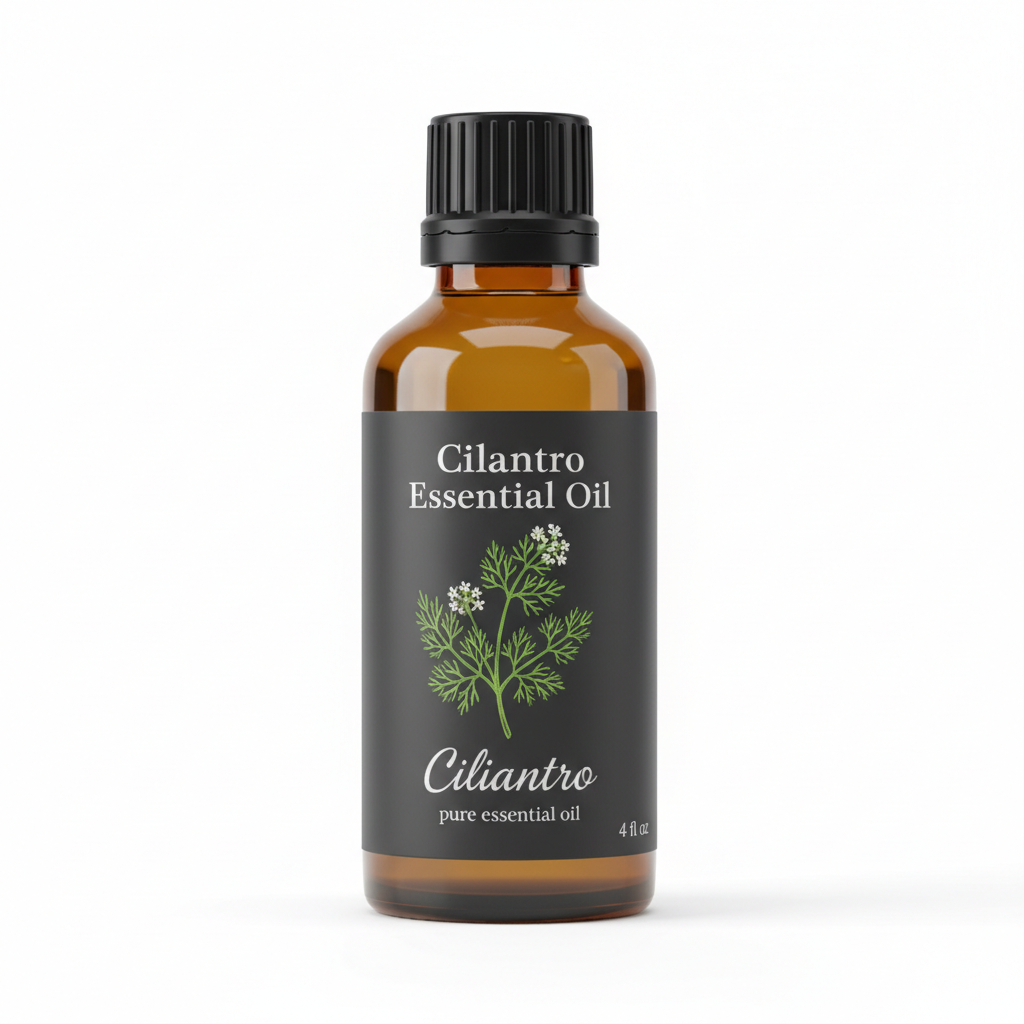
Cilantro Essential Oil
Our own Cilantro Essential Oil, in sizes from 0.5 oz to bulk.
From $13.99
Shop Now →What is happening in the bottle
Essential oils are mixtures of small, volatile molecules, and many of them react with oxygen over time. Coriander leaf oils are rich in long-chain aldehydes and alcohols, and their exact makeup varies with the plant variety, growth stage and region, as a 2023 review of coriander oil points out. A top note like cilantro is also the part of a scent that escapes first, so an uncapped or half-empty bottle loses its freshness before anything else.
Oxidation matters for more than aroma. Dermatology research on linalool, a common fragrance molecule, shows that when it is exposed to air it forms oxidation products, and the hydroperoxides among them are far stronger sensitizers than linalool itself (de Groot, 2019). In a study of 103 patients already suspected of fragrance allergy, 19 of 96 patch-tested reacted to linalool hydroperoxides (Nath et al., 2017). That is a selected group and a single purified compound, so it is not a rate for the general public. The practical takeaway is gentle: oil you plan to put on skin is best used while it is young and still smells the way it did on day one.
Our storage routine
- Cap it every time. Air in, top notes out.
- Buy the size you will use. A half-empty bottle holds a lot of air. We offer ten sizes from 0.5 oz up in our shop, and because this oil is bold and divides opinion, the smallest bottle is a sensible first purchase. Our size guide helps you choose. If you go through a lot, bulk sizes and our guide to buying cilantro essential oil in bulk cover the larger end.
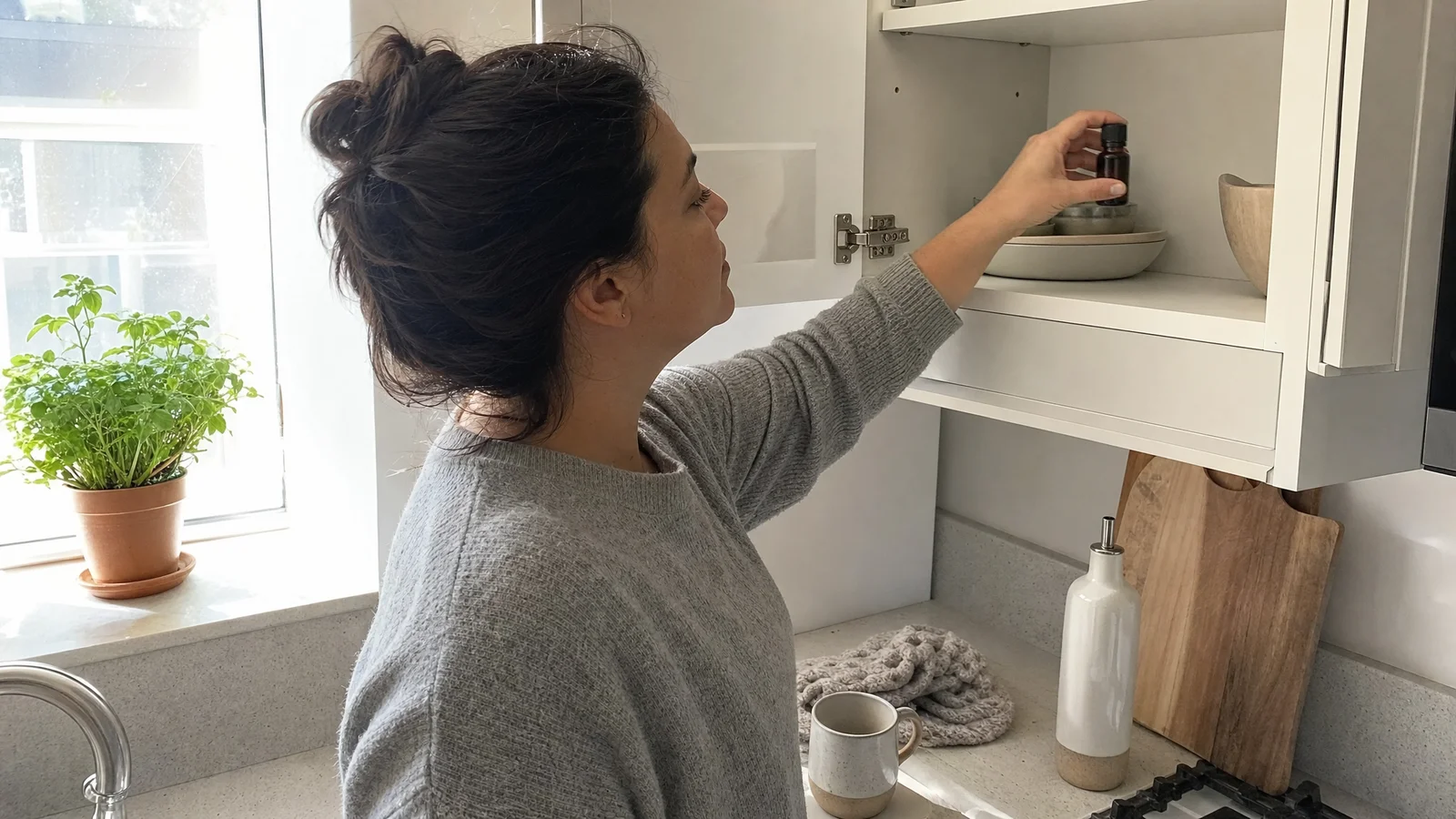
- Keep it out of light and heat. Our bottles are amber glass, and we suggest a cool, shaded spot. Windowsills, cars and shelves above a stove are the usual traps.
- Do not dip. A dropper that has touched a blend should never go back into the stock bottle.
- Decant working amounts. If you diffuse or blend often, move a little to a small clean vial and leave the stock alone.
- Write the date you opened it. Every bottle of ours carries a distillation date, a bottling date and a lot reference, so your opening date completes the set.
We say an unopened bottle typically keeps for 1 to 2 years. That is an estimate rather than a promise, and how you treat the bottle after opening counts for more than the calendar.
Where in the house
Walk through the rooms and think about heat, light and humidity. A bathroom is damp and warm after every shower, a windowsill gets sun, and a shelf over the stove cooks slowly all day. A bedroom drawer, a closet shelf or a cupboard away from appliances is usually kinder. A small lidded box keeps light out and keeps your bottles together, which also makes it easier to find them when you want them.
Fridge or no fridge
Cooler temperatures slow chemical reactions in general, and our guidance is simply a cool, shaded spot with the cap on tight. If you choose the refrigerator, put the bottle inside a sealed container away from food, and let it warm to room temperature before opening so condensation stays out.
Make a smell habit
Memory for scent is shaky, so give yourself something to check against. When you open a new bottle, put a drop on a paper strip and write down a few words, such as green, bright, citrus edge. Keep the strip in a small envelope. Months later, smell a fresh strip beside the old one and compare the notes with what you wrote. It takes a minute and tells you more than guessing from memory.
Judging an older bottle
Trust your nose first. Smell it against your memory of it, or against a newer bottle. A flat, musty, sharply sour or rancid note means it has changed, and so does a bottle that has gone noticeably darker than the pale yellow to nearly colorless we describe. A cloudy or separated oil usually means water or a carrier has crept in, which is contamination rather than age. Retire a changed bottle from skin use, and do not try to rescue it by blending it into a product, because oxidized material stays oxidized.
If you want to know what is in your particular lot, ask us in writing through the contact page for the lot report. Our guide to reading a GC/MS report will help you make sense of it. Keep bottles out of reach of children and pets, and see our pets post for more.
Cap it, date it, keep it cool, and the last drop will smell a lot like the first.
Cilantro Essential Oil
Cilantro Essential Oil from our own shop, in sizes from 0.5 oz to bulk.
From $13.99
Shop Now →Sources & Further Reading
- Al-Khayri J.M. et al., 2023, Essential oil from Coriandrum sativum: a review on its phytochemistry and biological activity
- de Groot A., 2019, Linalool hydroperoxides, Reviews in Dermatitis
- Nath N.S. et al., 2017, Contact allergy to hydroperoxides of linalool and d-limonene in a US population, Dermatitis