Growing Cilantro Before It Bolts: Cool-Season Tips
Cilantro has a short, bright season, and the whole art of growing it is catching that season before the plant runs to flower. It is a cool-weather annual that bolts quickly in heat, so almost every good decision, from when you sow to where you plant, comes back to keeping it cool and cutting it young.
Cilantro Essential Oil
Our own Cilantro Essential Oil, in sizes from 0.5 oz to bulk.
From $13.99
Shop Now →A plant that wants spring and fall
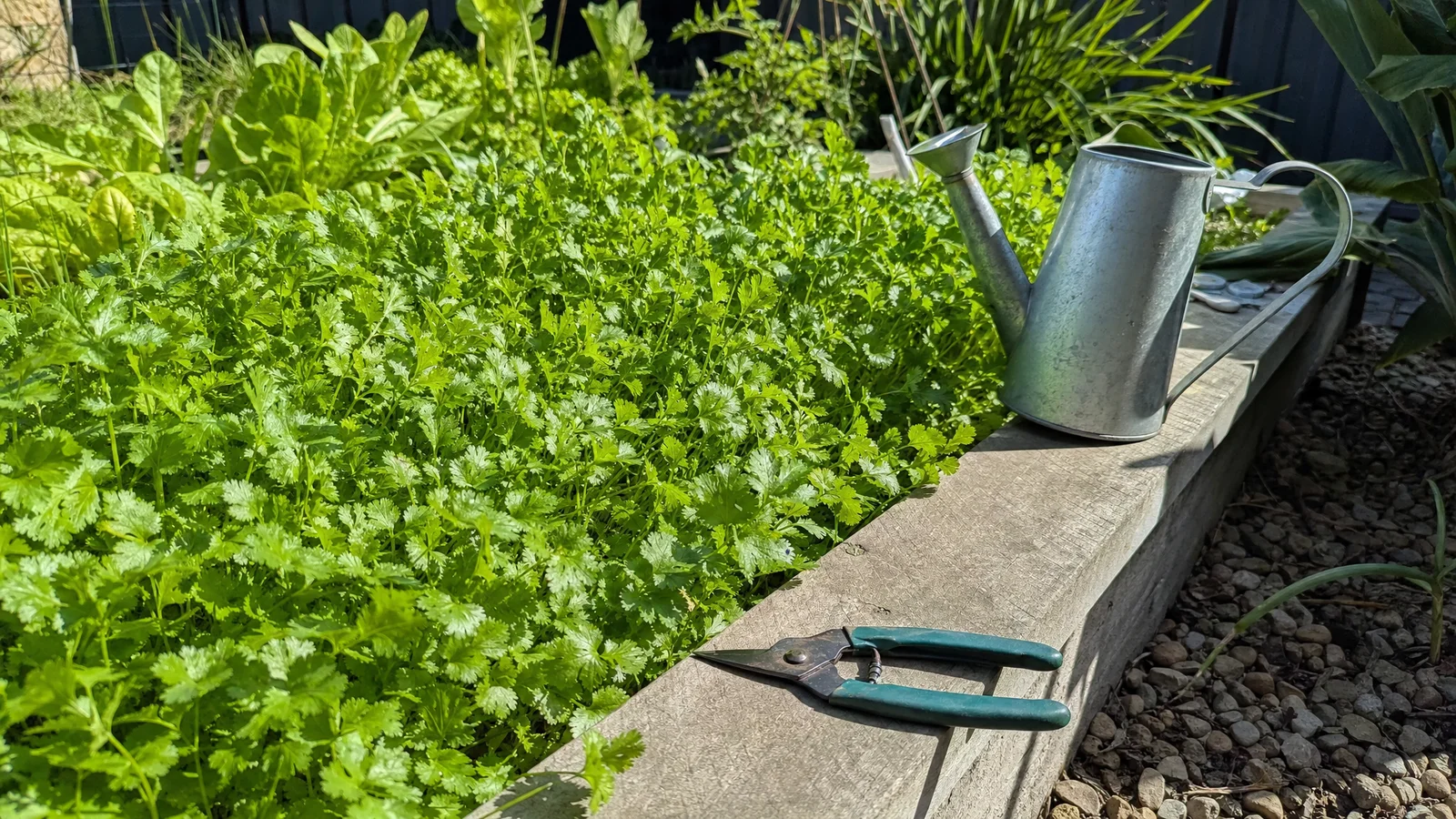
The NC State Extension plant database describes Coriandrum sativum as an annual that does best in cool weather, in spring and fall, and bolts easily where it gets hot. It likes full sun to light shade and a medium-moisture, well-drained loam, and each plant ends up roughly one to two feet tall and wide. That is a useful short list. It tells you to skip midsummer sowing, to give the bed a little afternoon shade if your summers are fierce, and to avoid soggy ground.
Exact sowing dates depend on your frost dates, so your local extension office is the right place for those. What we can say is that a plant that bolts fast rewards small, repeated sowings better than one big bed. Sow a short row every few weeks while the weather stays cool and you will always have something young to cut.
A small-space plan
You do not need a garden bed. A wide, shallow pot on a balcony works nicely, especially because you can move it. Start it in a sunny spot in cool weather and slide it into afternoon shade as the days warm up. Keep the soil evenly moist but never soggy, and let the pot drain well. Sowing a little in a second pot every couple of weeks keeps young leaves coming.
Leaf, seed, or both
Cilantro and coriander are the leaf and the seed of one plant (the naming story is in why one plant has two names), and you manage them in opposite ways.
- For leaves, you are fighting the flower. Keep plants cool, harvest from the outside so the center keeps producing, and re-sow when the first planting starts sending up a stalk.
- For seed, you want the flower. Let a few plants bolt, and the seeds ripen in yellow-brown pods, which is when you collect them as the spice called coriander.
- For both, stagger two beds and let one run to seed while you cut the other.
As the plant approaches flowering, the foliage typically shifts from broad lobed leaves near the base to finer, feathery growth on a rising stem. Once you see that stem, the leaf harvest is mostly over, and the choice is to pull the plant or let it set seed.
Why we care about the pre-bolt leaf
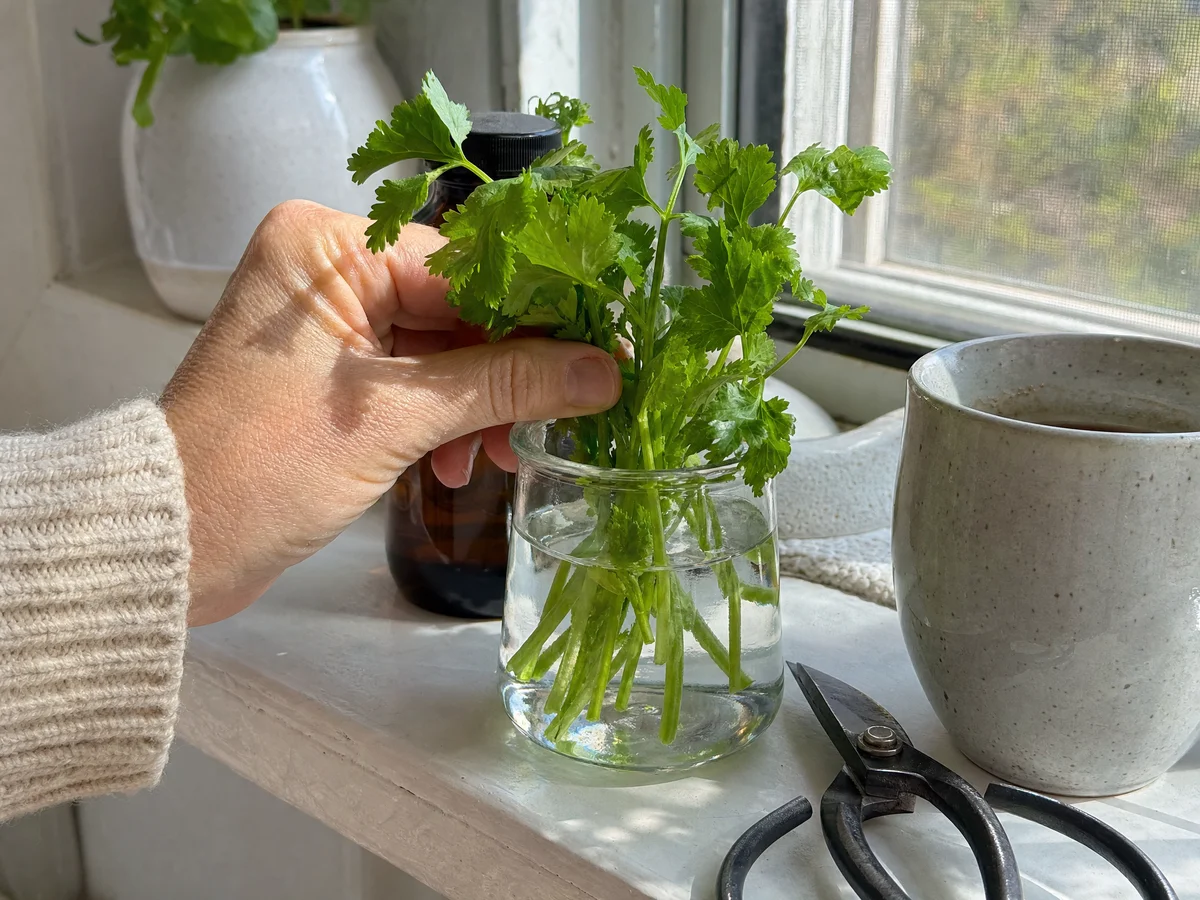
The oil we sell is steam-distilled from young leafy tops that are cut before the plant bolts, so leaf-stage cilantro is the whole point for us, too. It is also why a garden bed and a bottle of essential oil are not really substitutes for each other. Making oil takes a still and a very large amount of leaf, and a pot on the windowsill gives you the fresh smell of a rubbed leaf and nothing more. We explain the process in how cilantro essential oil is made. If what you want is that green, bright, herbaceous scent with a citrusy edge in a room or a blend, the bottle is the realistic route, and a cut bunch in a jar is the other.
And if cilantro smells like soap to you, no variety will change that; there is a genetics story behind it in why cilantro smells like soap to some people.
Smell it as you go
Whenever you are out with the plants, brush a hand across the leaves and smell your fingers. It is a soft, green, garden smell, quite different from the bottle on our shelf. That difference is part of the fun, and green notes explained is a good place to read about why. Growing the plant makes you a better judge of the oil, because you know what the living leaf smells like.
What to do with a bumper harvest
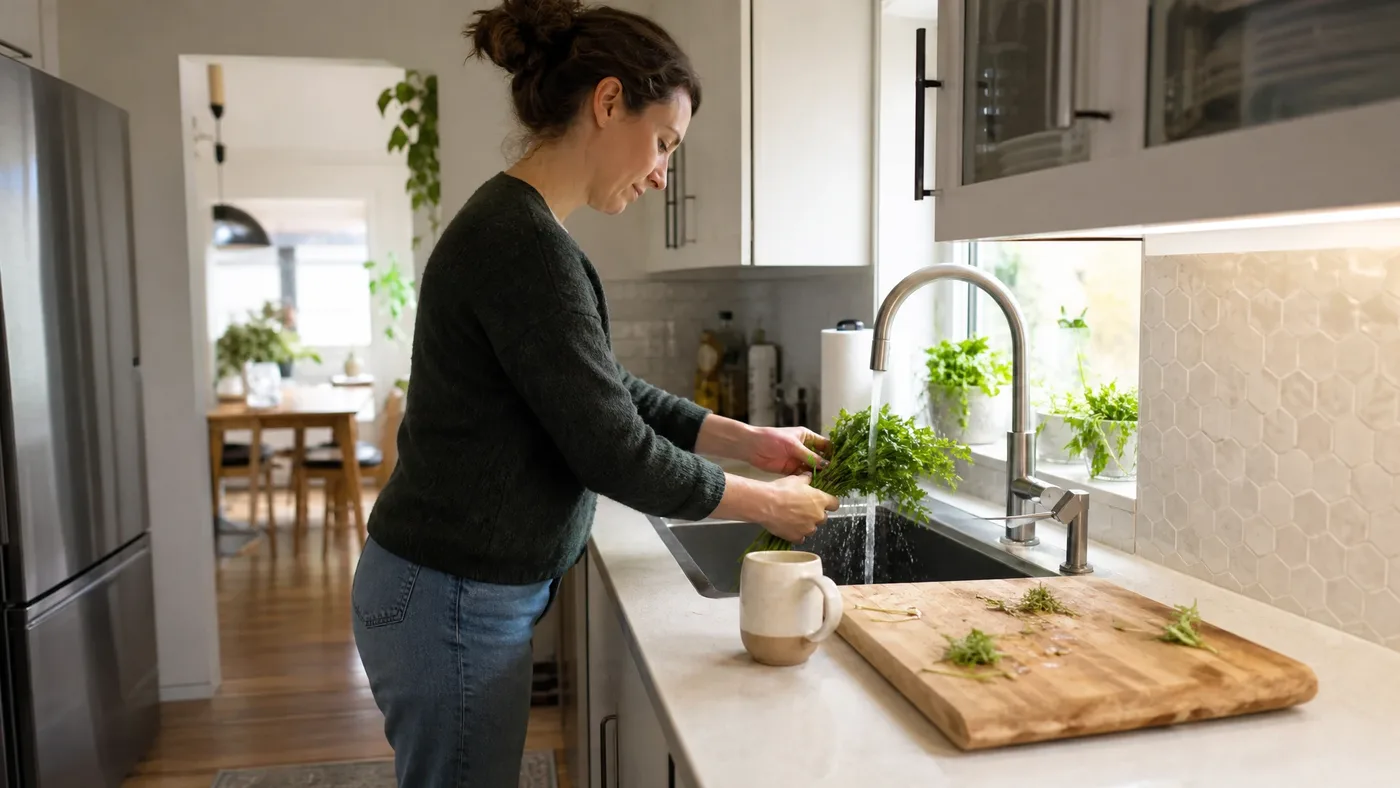
Fresh is best the day you cut it. If you have more than you can use, freezing works well for cooked dishes, because frozen herbs go limp and are better in a pan than on a plate, according to the National Center for Home Food Preservation. Our guide to freezing cilantro in oil covers the cube method.
One firm rule: do not leave chopped fresh herbs sitting in oil on the counter. The CDC advises refrigerating homemade oils made with garlic or herbs and throwing away any unused oil after four days. And keep any food projects separate from our essential oil, which is an aroma product and is not for the kitchen.
So sow cool, cut early, sow again, and decide before you plant whether you are growing for the leaf or for the seed.
Cilantro Essential Oil
Cilantro Essential Oil from our own shop, in sizes from 0.5 oz to bulk.
From $13.99
Shop Now →