Cilantro Oil for Hair: What the Famous Study Covers
Search for essential oils and hair and you will find confident claims everywhere, almost always resting on one or two studies that were not about the oil you are holding. Cilantro leaf oil has not been tested on hair or scalp by anyone we could find, so we do not make hair claims for it. What we can do is show you what the famous study really covers, and where our oil does fit.
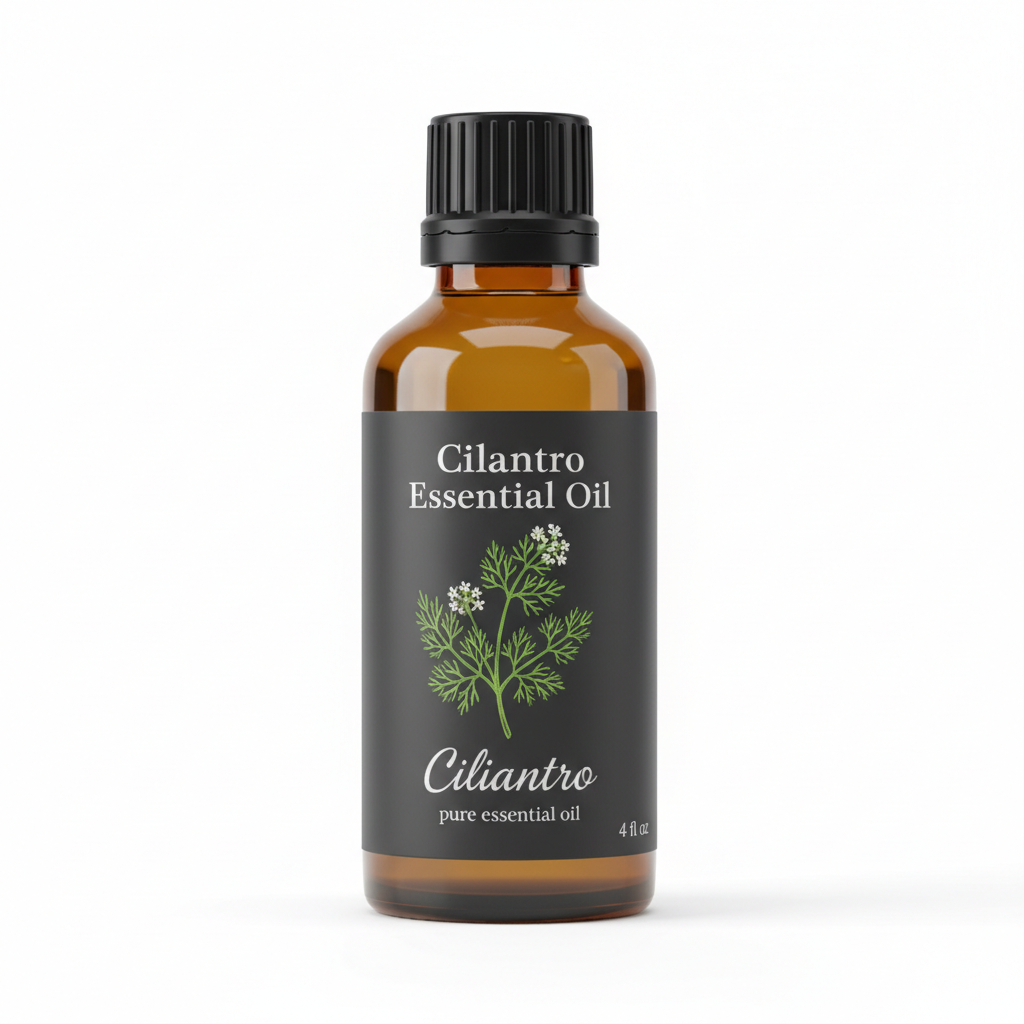
Cilantro Essential Oil
Our own Cilantro Essential Oil, in sizes from 0.5 oz to bulk.
From $13.99
Shop Now →The trial everyone cites
The study behind most hair-oil articles is a 1998 randomized trial in 86 people with alopecia areata, a specific patchy hair-loss condition. The treatment group massaged a mixture of four essential oils (thyme, rosemary, lavender and cedarwood) in jojoba and grapeseed carrier oils into the scalp daily, while the control group used carrier oils alone. After seven months, 19 of 43 people (44%) in the treatment group showed improvement on photographs scored by two dermatologists, against 6 of 41 (15%) in the control group.
It is a real study, and it is worth reading about it carefully. It tested a blend of four oils, so it cannot tell you what any single oil did, and cilantro was not among them. It involved a medical condition treated in a dermatology clinic, not everyday hair care. And the carrier-oil-only group improved too, which is a reminder that this condition varies on its own. For a patchy hair-loss concern, a dermatologist is the right first call.
A later review of complementary treatments for alopecia noted that only a few options are backed by multiple randomized trials, that these products are not regulated by the FDA, and that the active ingredients in herbs and supplements are not standardized. In plain English, the field needs better evidence before anyone should promise anything.
If you enjoy reading studies, there is a pleasant side effect to all this. Once you see how many different things get lumped together as "essential oils for hair," you start spotting the gaps yourself: which oil, which carrier, which condition, which people, how long. Asking those questions is the best protection against a confident headline.
Natural does not mean automatic on the scalp
The scalp is skin, and a hair oil is a leave-on product with repeated, long contact. The National Cancer Institute's aromatherapy summary notes that allergic reactions and skin irritation may occur when essential oils stay in contact with skin for long periods. Cilantro leaf oil is rich in aldehydes and has a strong, pungent presence, so we suggest going lighter on the scalp than you might on the body: start at the bottom of our 0.5% to 2% range, patch test first, keep it clear of the eyes, and wash your hands after applying. Our patch test guide and sensitivity guide are worth a read before you put any new oil near your hairline.
Scalp aside, think about everything else that touches your hair day to day. Pillowcases, hats, towels and hands all pick up scent. A strongly aromatic oil can follow you around for longer than you planned, so a light touch is kinder to you and to anyone sitting next to you on the bus.
A simple way to try it
If you want to try the scent in a routine you already have, do it at arm's length first. Put a single drop on a cotton pad, tuck it into a drawer with your brushes and combs, and see how the drawer smells tomorrow. You will learn how strong the oil really is before any of it goes near your head, and you can simply stop there if the green edge is not for you.
Where we think it fits
Cilantro oil is green, bright and herbaceous with a citrusy edge, a top note that dominates a blend quickly. That makes it a fragrance accent, not a hair product on its own. Our oil is sold neat, and we do not sell carriers, shampoos or conditioners, so any hair product you scent with it would be one you mix or choose elsewhere, from a carrier-oil supplier or a pharmacy. Because it is so assertive, a drop or two in a product you already like goes further than you would expect, and you can find the maths in our dilution guide.
Smell it before you decide
Before you scent anything you care about, open the bottle and smell it on its own. Take a breath, wait a few seconds, then smell again. You will notice the bright, citrus-edged green arrive first and then drop away quickly. Some people love that crispness, and some find it sharp, even a little soapy. If you are unsure, start with the smallest size and a single drop on a tissue, and see how you feel about it after an hour.
If you are curious about the other oils that blend well with it, our blending shortlist is a friendly place to start.
Enjoy it for what it does best, which is smell wonderfully green, and leave hair-loss questions to a dermatologist.
Cilantro Essential Oil
Cilantro Essential Oil from our own shop, in sizes from 0.5 oz to bulk.
From $13.99
Shop Now →