Cilantro Oil Research: What Studies Actually Cover
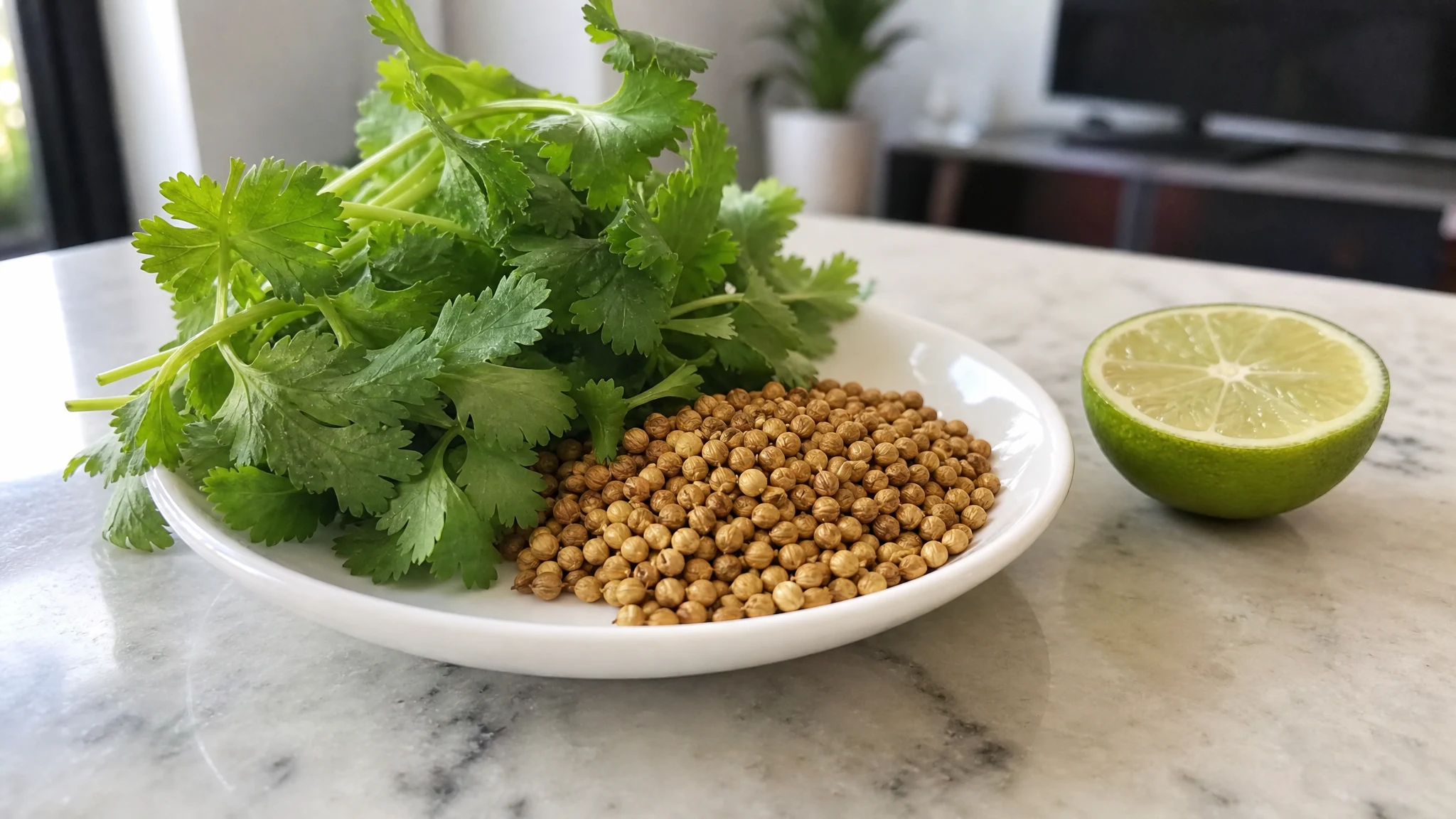
Search the research on "coriander oil" and you will find hundreds of papers, which sounds like a mountain of evidence for the bottle on your shelf. Look closer and most of them are about a different oil. Coriander seed and cilantro leaf come from one plant, but they are distilled into two quite different products, and the science has mostly followed the seed.
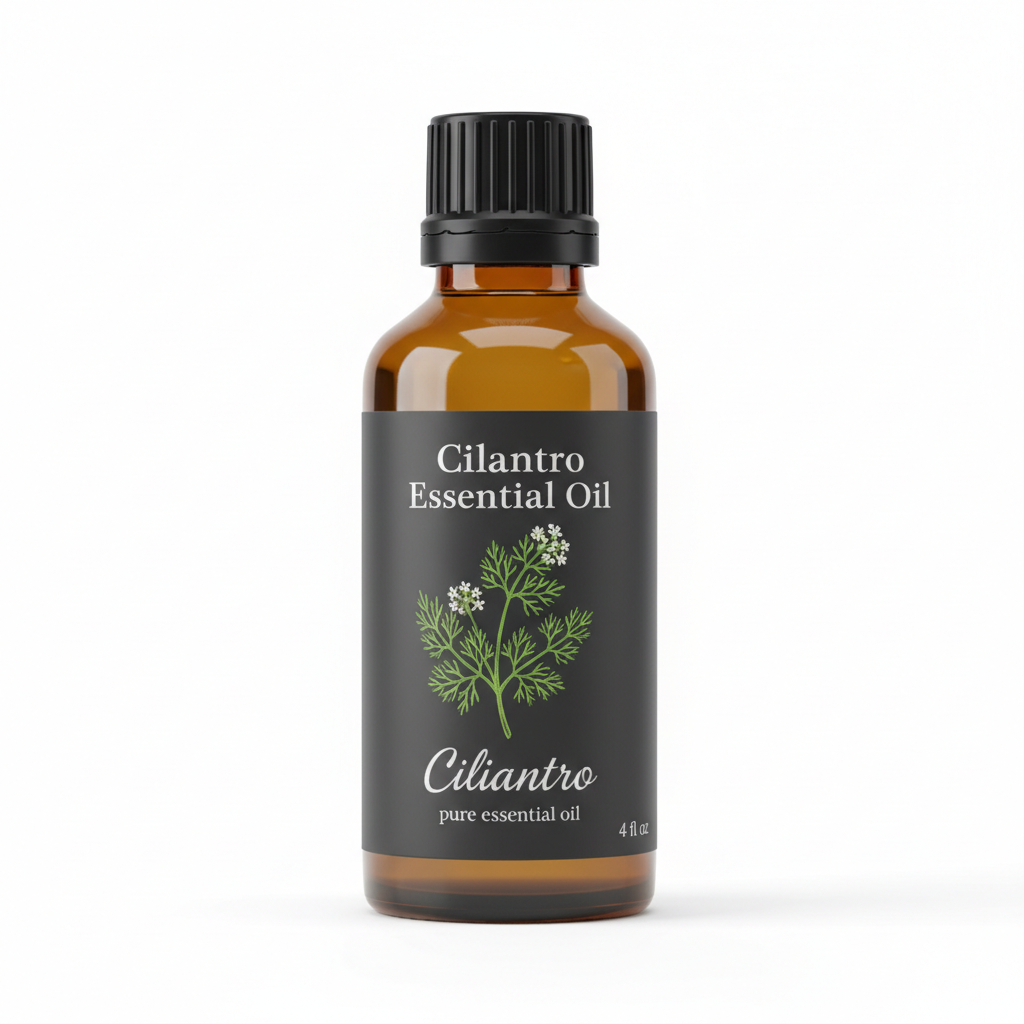
Cilantro Essential Oil
Our own Cilantro Essential Oil, in sizes from 0.5 oz to bulk.
From $13.99
Shop Now →Two oils, one plant
A 2026 scoping review of 30 studies, written about coriander oil and Candida, noted a clean split in chemistry: linalool is the main component of oil from seeds, fruits and flowers, while 1-decanol, decanal and 2E-decenol lead in leaf oil (Veras et al., 2026). That matches what we sell: a leaf oil, with the green, bright, herbaceous aroma and citrusy edge that go with those aldehydes. It also means a result for one oil should not be quietly handed to the other. Our seed versus leaf comparison walks through the difference as a buyer would see it.
Even within leaf oil, there is no single recipe. One leaf oil from Saudi Arabia had 46 compounds led by 1-decanol, decanal and trans-2-dodecen-1-ol (Foudah et al., 2021), and a review of the whole field says composition shifts with variety, growth stage and region (Al-Khayri et al., 2023). So the percentages in any one paper describe that batch, not a specification for every bottle.
Where the studies cluster
| Topic | What has been done | How to read it |
|---|---|---|
| Bacteria | Plate and broth tests; a 2025 systematic review kept 7 studies on foodborne bacteria | Real lab results, none about use. See our bacteria post |
| Yeast (Candida) | Test tubes and biofilms; the 2026 scoping review found no clinical or animal studies | Interesting chemistry, early stage. See our Candida post |
| Calm and mood | Mouse studies of seed extracts | Not an inhaled oil, not leaf. See our sleep and stress post |
| Chemistry | Many GC-MS profiles from many countries | The most reliable part of the literature |
How we read a headline
We love a good headline as much as anyone, and cilantro has had its share. When one crosses your screen, three small questions help. Which oil did the paper actually use, the seed or the leaf? What was it tested on, a dish, an animal or a person? And did anyone smell the thing, or just measure it? Most of the time the answers are a seed oil, a dish and a measurement, which makes for a fine chemistry paper and a poor shopping guide.
None of this makes the research dull. It is a bit like reading a travel guide for a country you may never visit: fascinating, well written, and not quite the same as standing in the street. We enjoy it for what it is.
What a lab result can and cannot say
Most of what you will read comes from "in vitro" work, meaning microbes or cells in a dish. That is a sound way to learn whether a material does anything under controlled conditions, and a poor way to predict what happens on skin, in air or in food. When researchers do move from dish to animal to person, results often shrink or vanish. The honest reading of this literature is that it is a promising list of questions, which is a good thing for chemists and a thin basis for any promise about a retail oil.
That is why we keep this shop's claims modest. We sell cilantro essential oil for its aroma, for diffusing, for diluted skin use at our recommended 0.5% to 2% in a carrier, and for crafting. We make no medical claims for it, and the studies above are interesting background, not a use. Our post on cosmetic versus drug claims explains where that line sits in the United States.
What we would rather you do with your bottle
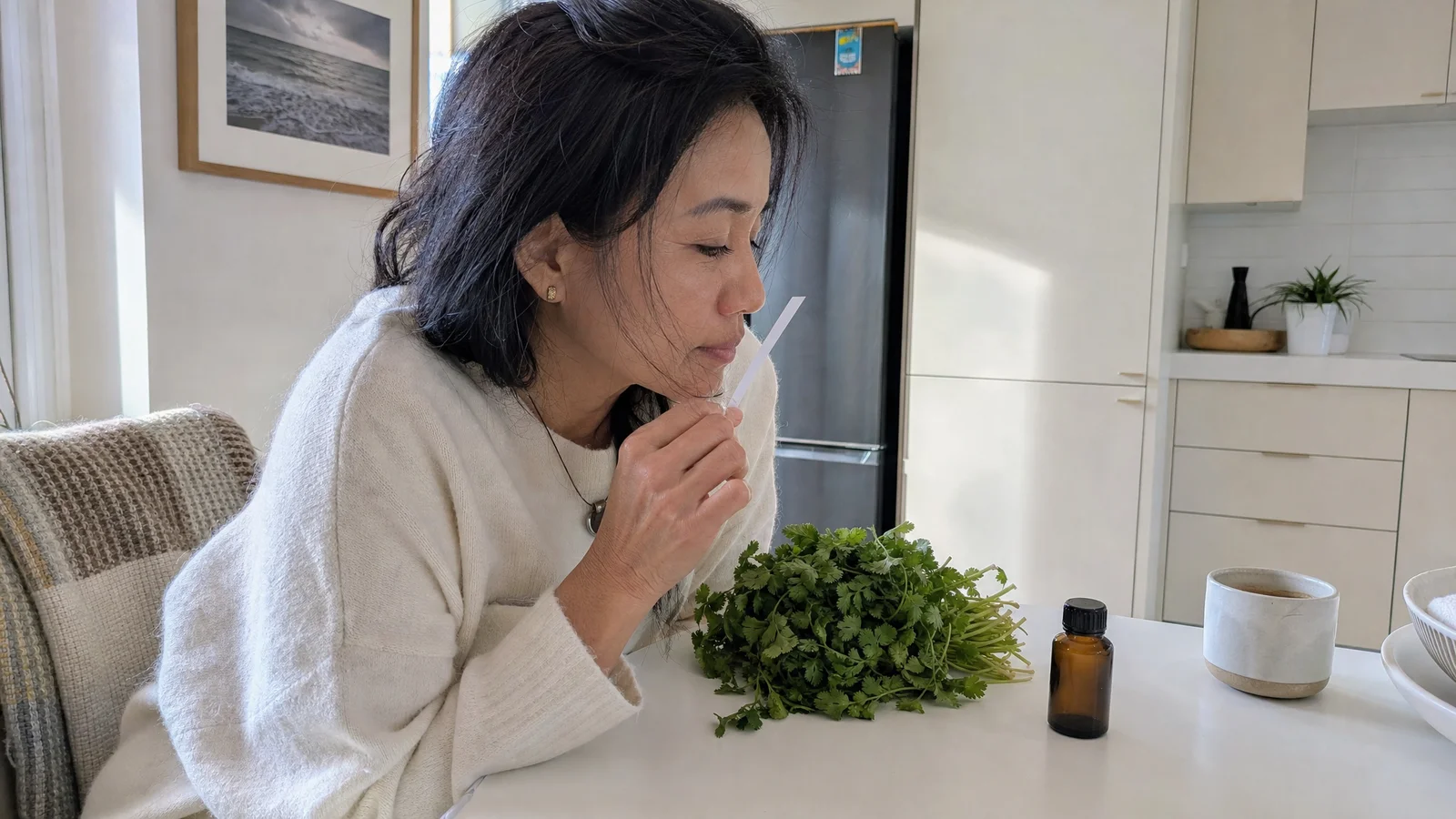
If you own a bottle of cilantro oil, the most rewarding research is the kind you do with your own nose. Put a drop on a paper strip. Smell it now, in ten minutes and tomorrow morning. Notice where the green turns waxy and where the citrus edge shows up. Write a line or two in a notebook, because scent memory is slippery and a note beats a hunch.
That small habit teaches you more about leaf oil than a stack of abstracts, and it keeps your expectations honest. It also leaves you with a vocabulary of your own for when you start blending.
The most useful thing to read next
If you want to engage with the chemistry yourself, start with a GC-MS report. It shows what is actually in a bottle, which is more useful than any single paper about a different batch. Our guide to reading a cilantro oil GC-MS report explains the columns, and the Certificate of Analysis we publish for one batch lists density, refractive index and optical rotation. If you need GC-MS figures for a specific lot, ask us in writing through the contact page before you rely on it.
Good science on cilantro leaf oil is still being written, and we will happily read the next paper along with you.
Cilantro Essential Oil
Cilantro Essential Oil from our own shop, in sizes from 0.5 oz to bulk.
From $13.99
Shop Now →