Cilantro Oil on Skin: Irritation vs Allergy
Skin can react to an essential oil in two quite different ways, and the difference matters because the right response is different too. One is irritation: a direct, dose-related reaction that tends to show up quickly and settle. The other is allergy, where the immune system has learned to recognise a molecule and may react again, even to small amounts, on a later use. Cilantro leaf oil is rich in aldehydes, so it is a good oil to understand before you use it on skin.
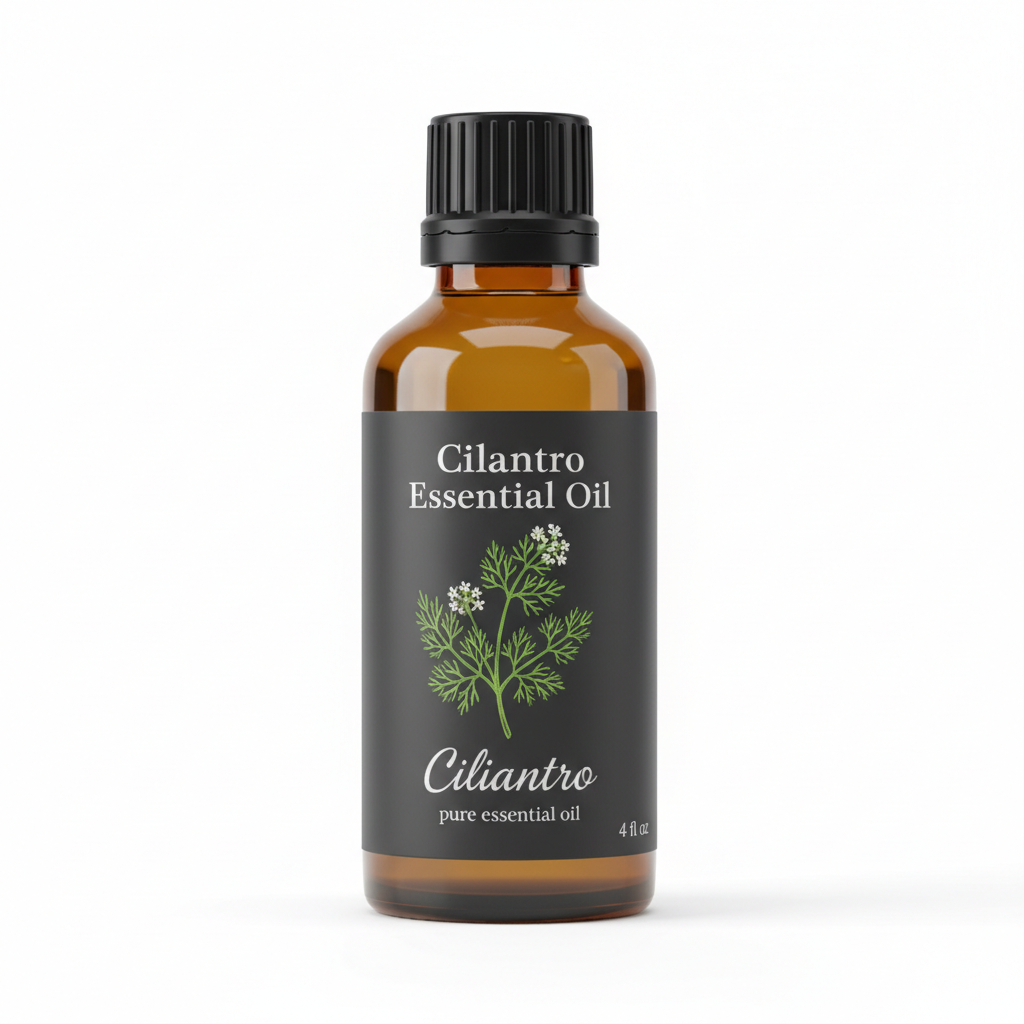
Cilantro Essential Oil
Our own Cilantro Essential Oil, in sizes from 0.5 oz to bulk.
From $13.99
Shop Now →Two clocks, two mechanisms
The Tisserand Institute describes irritation as the milder of the two, usually passing within hours, while allergic reactions can last days or weeks, and it makes a point about vocabulary that is worth repeating. "Sensitization" is the quiet priming of the immune system, not the reaction itself (Tisserand Institute, irritation and allergic reactions). Nobody feels themselves becoming sensitized. The first sign is usually the first reaction, on a later use, in a spot that looked fine before. That is why patch testing is a habit and not a one-off.
What it feels like in real life
Most of us only think about this after something goes wrong, so it is worth picturing it in advance. A quick, stinging warmth that fades is the kind of thing people usually describe when they have used too much, too strong. A reaction that appears the next day or the day after, in a spot that felt fine, is a different story and deserves more caution.
Either way, the habit that helps is the same: change one thing at a time. New oil, new carrier and a new spot on the body all at once leaves you guessing about the cause.
Why dilution is where we start
The dose logic for irritation is easy: the more dilute the oil, the lower the risk. Our guidance is to dilute to 0.5% to 2% in a carrier oil before it touches skin, which is roughly 3 to 12 drops per ounce of carrier such as jojoba or sweet almond, and to patch test first on a small area. For comparison, the Tisserand Institute's general bands run from 0.2% to 1% for sensitive or damaged skin, 0.5% to 1.2% for facial products, 1% to 3% for body oils and massage, and 2% to 4% for bath and wash-off products. They describe these as guidelines, not rules, and they apply to oils without specific restrictions (Tisserand Institute, dilution guidelines).
Reasoning from those bands, the sensible reading for a strongly aromatic leaf oil is to begin at the low end. A weak blend that smells right is often better than a strong one anyway, since this oil announces itself so quickly. Dilution does not undo an allergy that has already formed, so if you have ever reacted to a fragrance, ask a pharmacist or dermatologist before adding a new one.
Why aldehydes get a mention
Cilantro leaf oil is mostly aldehydes such as decanal and 2-decenal, and the main reference compilation for decanal records that many safety notifications list it as an eye irritant and some as a skin irritant (PubChem, decanal). That is a statement about the pure compound in its raw form, not about a diluted oil on skin, but it is a good reason to take the dilution and patch test seriously. The fragrance industry's own safety assessments for decanal (Api et al., 2025) are designed for single ingredients in finished products, and we do not have a published cilantro-specific skin limit to give you, so our 0.5% to 2% line is where we suggest starting for general use.
Keeping a simple record
A small notebook or a note on your phone is enough. Write the date, which bottle, which carrier, how many drops, and where you put it. It sounds like overkill for a few drops of oil, but if you ever need to describe what happened to a pharmacist or dermatologist, a dated line beats memory every time.
Keep the notes short and use the same format each time, so patterns are easy to spot later.
Freshness counts too
Oxidation is the quiet variable. Linalool, for example, reacts with air to form products that are far stronger sensitizers than linalool itself (de Groot, 2019). Leaf oil has very little linalool, so the point is a general one about aging oils, not a statement about ours. The practical habit is the same either way: keep the bottle capped, cool and out of light. We say typically 1 to 2 years unopened, and our storage guide has the details. An old, much-opened bottle is not the one to put on your skin.
Habits that make this oil easier
Measure rather than guess, and write the dilution on the bottle you mix it in. Mix small batches so nothing sits around for months. Wash your hands after handling it, and keep it away from your eyes. These are ordinary kitchen-table habits, and they do more than any single rule on this page.
If you do react
Wash the area with mild soap and water and stop using the oil. If the rash is painful, spreading, or lasts more than a day or two, see a physician. Keep the oil away from eyes, out of reach of children and pets, and do not take it internally. Our patch test guide walks through the steps, and the safety overview covers the rest.
A little care at the start means this lively green oil is one you can enjoy for a long time.
Cilantro Essential Oil
Cilantro Essential Oil from our own shop, in sizes from 0.5 oz to bulk.
From $13.99
Shop Now →