Cilantro for Digestion? Herb, Seed and Oil Compared
When people say cilantro or coriander is good for the stomach, they are almost always talking about the herb in a meal or the seed as a spice. The essential oil steam-distilled from fresh cilantro leaf is a different material, and we sell it as an external cosmetic oil and aroma, not as something to swallow.
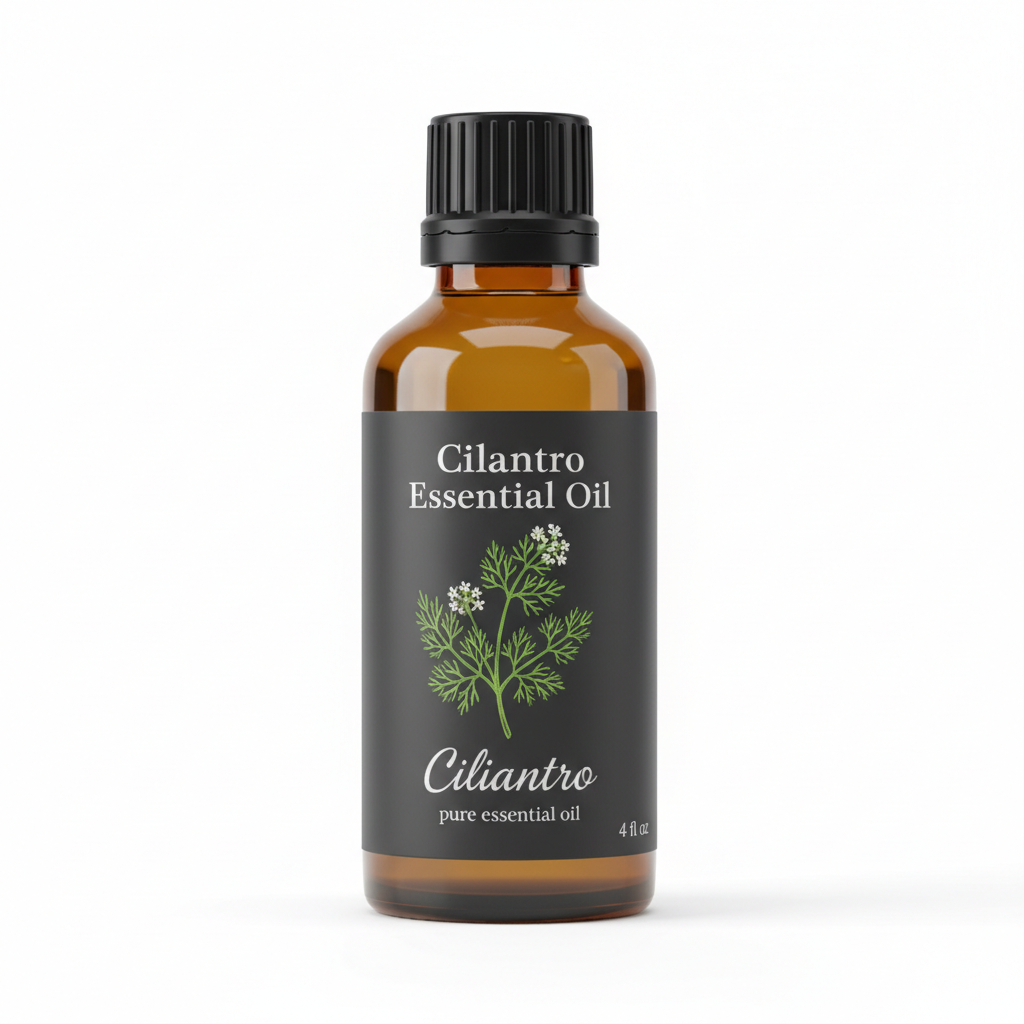
Cilantro Essential Oil
Our own Cilantro Essential Oil, in sizes from 0.5 oz to bulk.
From $13.99
Shop Now →Three things with one name
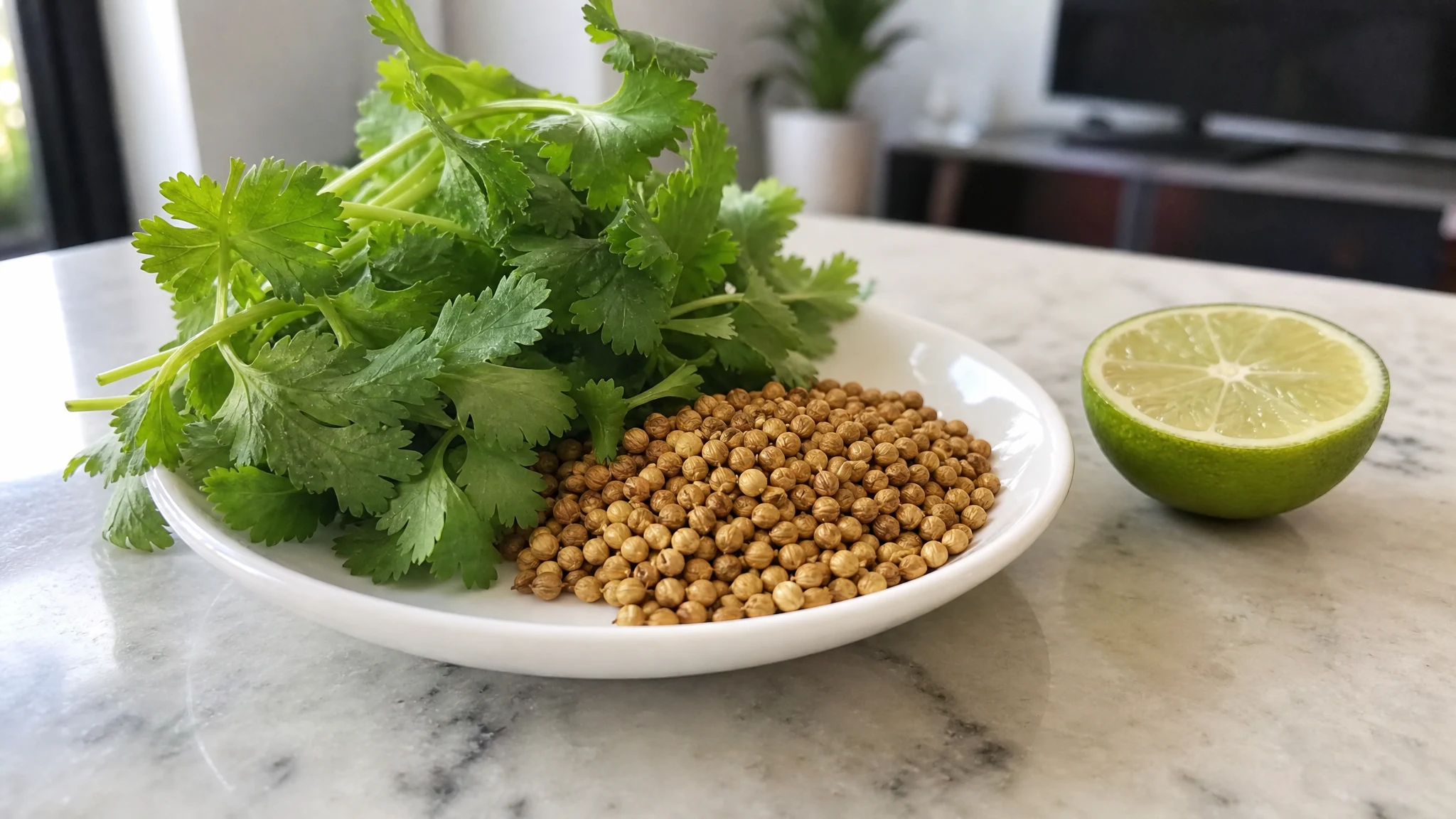
The leaves, the seeds and the oil from each are separate products with different chemistry. Leaf oil is dominated by long-chain aldehydes, while seed oil is rich in linalool (analyses of seed oil report it as the main component), and the two smell remarkably different. We cover the naming in why one plant has two names. The practical point is that research on one of them tells you little about another, and we know of no trial of cilantro leaf oil for digestion.
It helps to picture three jars on a shelf. One holds fresh leaves, soft and grassy. One holds dried seeds, warm and a little sweet. The third is a small amber bottle of leaf oil, which smells like neither: green, waxy and bright, with a citrusy edge. Three jars, three different jobs, and only the first two belong near a dinner plate.
If you cook with coriander, you already know how much the herb changes with how you treat it. Leaves go in at the end because heat flattens them. Seeds get toasted in a dry pan until the kitchen smells wonderful. Both are food, judged by how they taste on a spoon. An essential oil sits outside that world entirely, which is worth remembering whenever a page blurs the three together.
What research on herbs and digestion looks like
The most useful big-picture source is a 2023 Cochrane review of non-Chinese herbal medicines for functional dyspepsia, which pooled 41 trials with 4,477 participants testing 27 herbal medicines. The headline lesson is that results vary by herb. A peppermint and caraway oil combination probably improved global symptoms compared with placebo at four weeks, with moderate certainty, and several other herbs showed benefit in small studies. Coriander is not among the headline findings in the abstract.
These were named preparations used as medicines in clinical trials, so they say nothing about a perfumery oil or about aroma. They also show why "essential oils help digestion" is not a safe general statement: each herb has to be tested as itself.
Smelling it or rubbing it on
A systematic review of aromatherapy trials from 2000 found twelve randomized trials, half of them without independent replication, and concluded that aromatherapy massage seems to have a mild, transient relaxing effect, with no digestive use holding up. It is an older review, so newer trials may exist, but it is a fair calibration point. We have not seen a trial of a coriander oil used this way.
If you simply enjoy the scent of a diluted body oil, our guidance is 0.5% to 2% in a carrier, roughly 3 to 12 drops per ounce, after a patch test, and we would begin at the low end. Our dilution guide shows the arithmetic.
If you just want to enjoy the scent, keep it simple. One drop on a tissue held at arm's length gives you a fair sense of the oil without filling a room. If you like it, try a small amount in a diffuser in a space with good airflow, and let your nose tell you when to stop. This oil gets loud quickly, and most people find they want less than they first reached for.
Why a drop in water is not the answer
The National Cancer Institute's aromatherapy summary states that swallowing large amounts of essential oils is not recommended. It also notes that many oils are approved as food and fragrance ingredients, but that status belongs to specific materials at tiny flavoring amounts, not to a bottle sold for aroma. Our oil is not labeled as a food or flavoring and is not for internal use. Our post on ingesting cilantro essential oil goes into it further.
When it is a doctor's question
Persistent, severe, new or worsening stomach or bowel symptoms, blood in the stool, or unexplained weight loss are medical matters, and a physician, or a gastroenterologist if your doctor refers you, is the right person to talk to. A bottle of oil is not a stand-in for that conversation.
Keep the dinner table and the diffuser separate
A tidy habit makes this easy: let the kitchen be for food and the craft shelf be for oils. Store the bottle capped, in a cool, shaded spot, away from the spice rack, so nobody grabs it by mistake because it has the name of an herb on the label. Cooking is one of the great pleasures of cilantro, and it is best left to the fresh leaves.
If you love cilantro on your plate, enjoy it there. If you love the scent in a room, that is the job we built our oil for.
Cilantro Essential Oil
Cilantro Essential Oil from our own shop, in sizes from 0.5 oz to bulk.
From $13.99
Shop Now →