Cilantro Oil and Candida: How to Read the Lab Studies
"Natural antifungal" is a phrase that gets attached to coriander and cilantro oil with great confidence. The lab results behind it are genuine, and they are also all test-tube results. A 2026 scoping review that went looking for anything beyond the dish came back empty-handed, and the doses in the leaf oil study are the clearest way to see why.
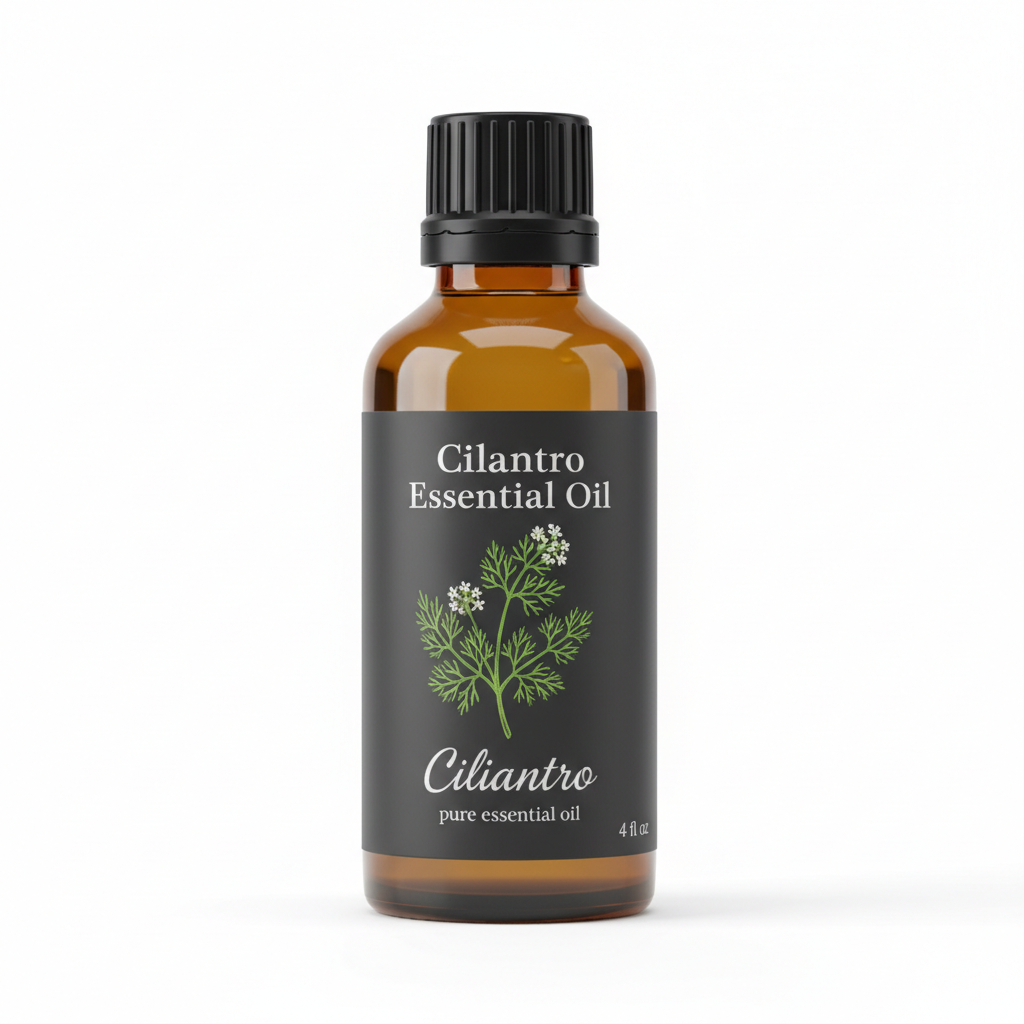
Cilantro Essential Oil
Our own Cilantro Essential Oil, in sizes from 0.5 oz to bulk.
From $13.99
Shop Now →What the scoping review found
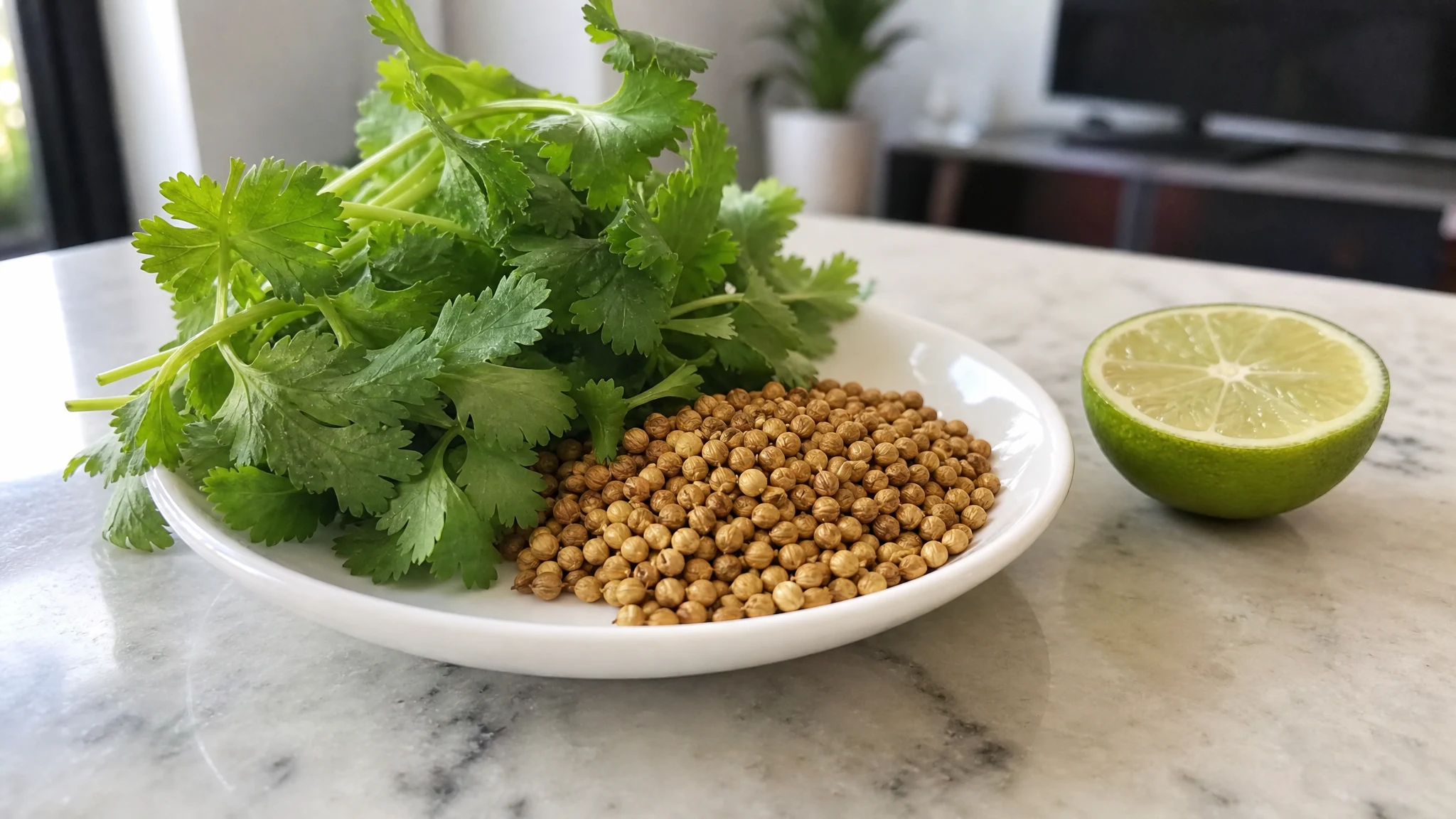
The most useful single paper is Veras et al., 2026, a scoping review of coriander oil and Candida in the mouth. It searched seven databases, found 245 studies and included 30. Its summary says no clinical trial and no in vivo experimental studies were found. What it did find were in vitro studies reporting activity against resistant strains and biofilms, and some synergy with other agents. The review also confirmed the chemistry that matters for our product: linalool leads in oil from seeds, fruits and flowers, while 1-decanol, decanal and 2E-decenol lead in leaf. A scoping review is a map of what exists, and this map says the interesting part has not been tested in people.
The leaf oil study, in kitchen units
The study closest to our oil is Barbosa et al., 2023, which distilled oil from coriander leaves and tested it against 11 Candida strains. The main constituents were octanal, decanal, dec-(2E)-enal and dodecanal, the same aldehyde family as our leaf oil. The concentrations that stopped or killed the yeast ranged from 31.25 to 250 micrograms per millilitre. Against a mixed-species biofilm, the biggest reduction, 70%, came at 80 milligrams per millilitre.
Translate those into the percentages we use for skin. 31.25 to 250 micrograms per millilitre works out to about 0.003% to 0.025%, which is very small. The biofilm dose, 80 mg/mL, is about 8%. Our dilution guidance for skin is 0.5% to 2% in a carrier oil, so the dose that cut the biofilm was around four times the top of that range, and it reduced the biofilm by 70%, not to zero. Skin dilution is set by comfort and irritation, not by a lab MIC, so the biofilm figure does not map onto a diluted product. In drops, using the rough convention of 20 drops to a millilitre, 2% in one ounce of carrier is about 12 drops, while 8% would be nearly 50.
A simple way to keep lab figures honest is to hold them up against something you can see. Take a one-ounce bottle of carrier oil and picture a dozen drops going in. That is the top of the range we suggest for skin, and it already smells strong. Now picture nearly fifty. Nobody would want to wear that, and the scent alone would clear a room.
Why this matters for anyone shopping
These results are useful to formulators and microbiologists who want to understand how aldehyde-rich oils behave, and that is a good reason to be curious about them. They are not a reason to use an essential oil for a fungal or yeast problem of any kind. If you have an infection or a persistent skin or oral problem, a physician or pharmacist is the right person to ask.
What we can say is simpler and more enjoyable. We sell cilantro essential oil, steam-distilled from leafy tops, for its green, herbaceous aroma with a citrusy edge. It works in diffusing, in a diluted massage or body oil, in soap and candle making, and as a fresh top note in a blend. If you are curious why a leaf oil and a seed oil behave so differently, our cilantro vs coriander oil guide is the place to start, and the bacteria post covers the equivalent lab results for bacteria.
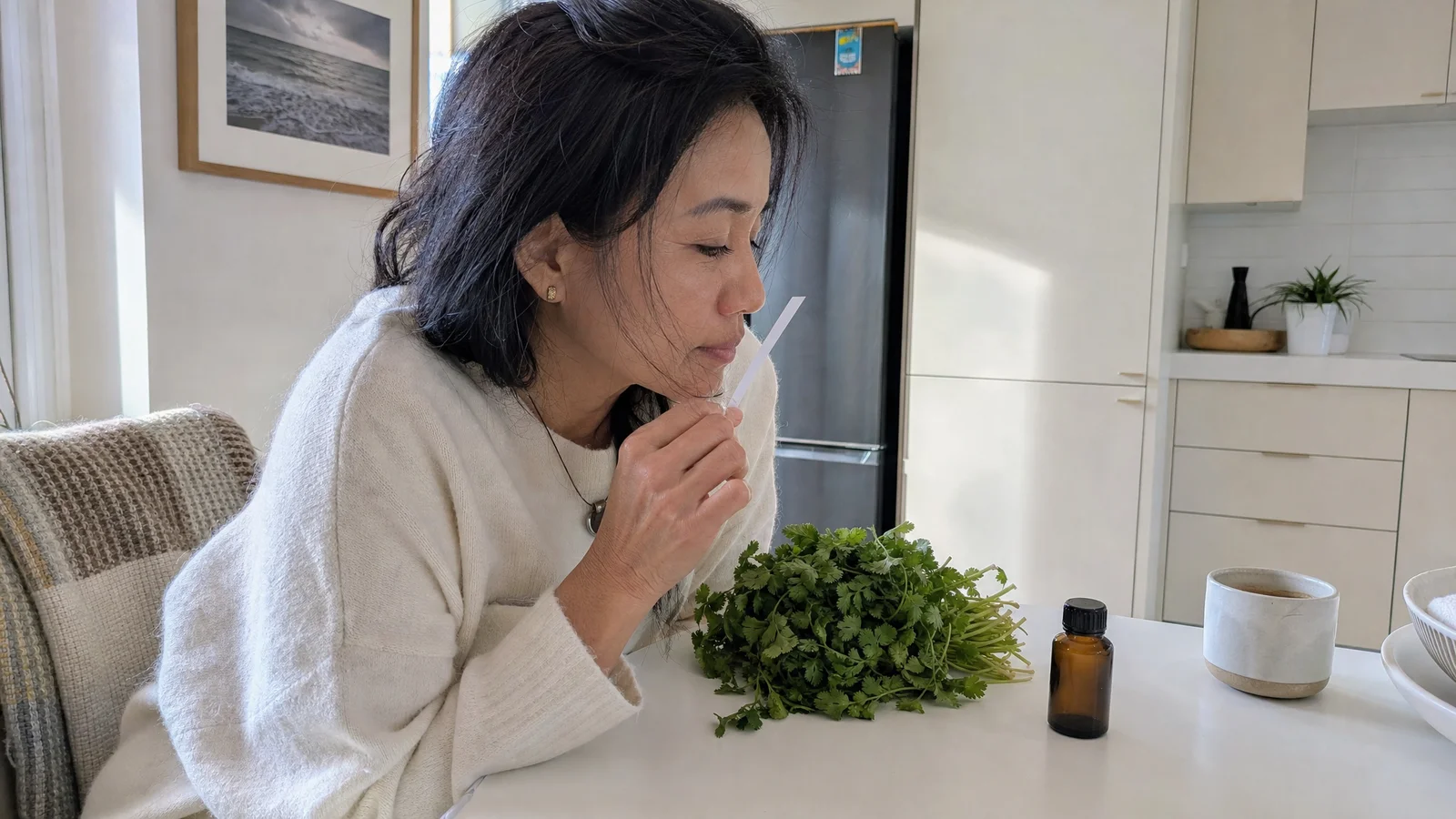
Open the bottle and you will notice how quickly the scent arrives. It is green and sharp, a bit like a crushed handful of herbs with a squeeze of citrus peel over the top. Put one drop on a paper strip and wave it once: it rushes up, then thins out sooner than you expect. That fast, bright arrival is why we like it as a top note, and it is a more honest introduction to the oil than any figure from a petri dish.
A note on reading headlines
Studies on plant extracts are often turned into "beats the drug" headlines. A useful habit when you see one is to check whether the material was an essential oil or an extract, which plant part it came from, and what it was tested on. That small check clears up most of the confusion about coriander, and our research roundup maps the rest of the field in the same way.
Four questions for any headline
- What was actually tested? An essential oil, a leaf extract, a single compound, or a whole herb in a meal.
- Which plant part? Seed and leaf oils come from the same species and still behave like different ingredients.
- Where was it tested? A dish in a laboratory is a long way from a person.
- What dose? Turn it into a percentage or a count of drops and see whether it still sounds like something anyone would do.
Those four questions take a minute and save a lot of disappointment. They also make reading research more fun, because you start to see what each paper really did.
Good lab work deserves to be read carefully, and a careful read is a more interesting one than the headline.
Cilantro Essential Oil
Cilantro Essential Oil from our own shop, in sizes from 0.5 oz to bulk.
From $13.99
Shop Now →