Can Cilantro Oil Preserve Food? Lab vs Kitchen
Every few months a headline says a plant oil "preserves food naturally." It is a lovely idea, and cilantro oil does turn up in the food-science papers behind it. Before anyone reaches for a bottle in the kitchen, though, it is worth looking at what those papers measured, because the answer is mostly a dish, a broth and a lot of arithmetic.
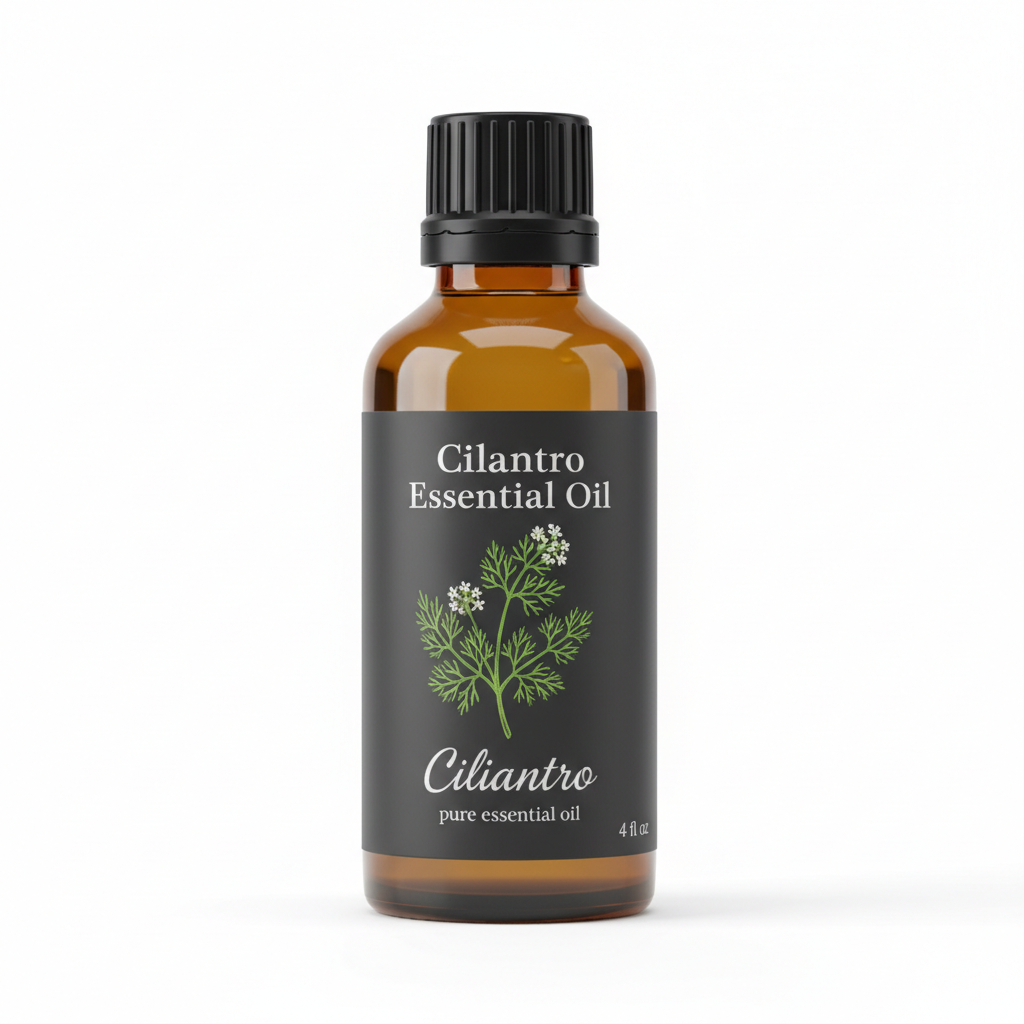
Cilantro Essential Oil
Our own Cilantro Essential Oil, in sizes from 0.5 oz to bulk.
From $13.99
Shop Now →A quick note on our own product: we sell cilantro essential oil as an aroma material for diffusing, diluted skin use and crafts. It is not labelled for food and we do not recommend taking it internally, so nothing here is a kitchen recipe.
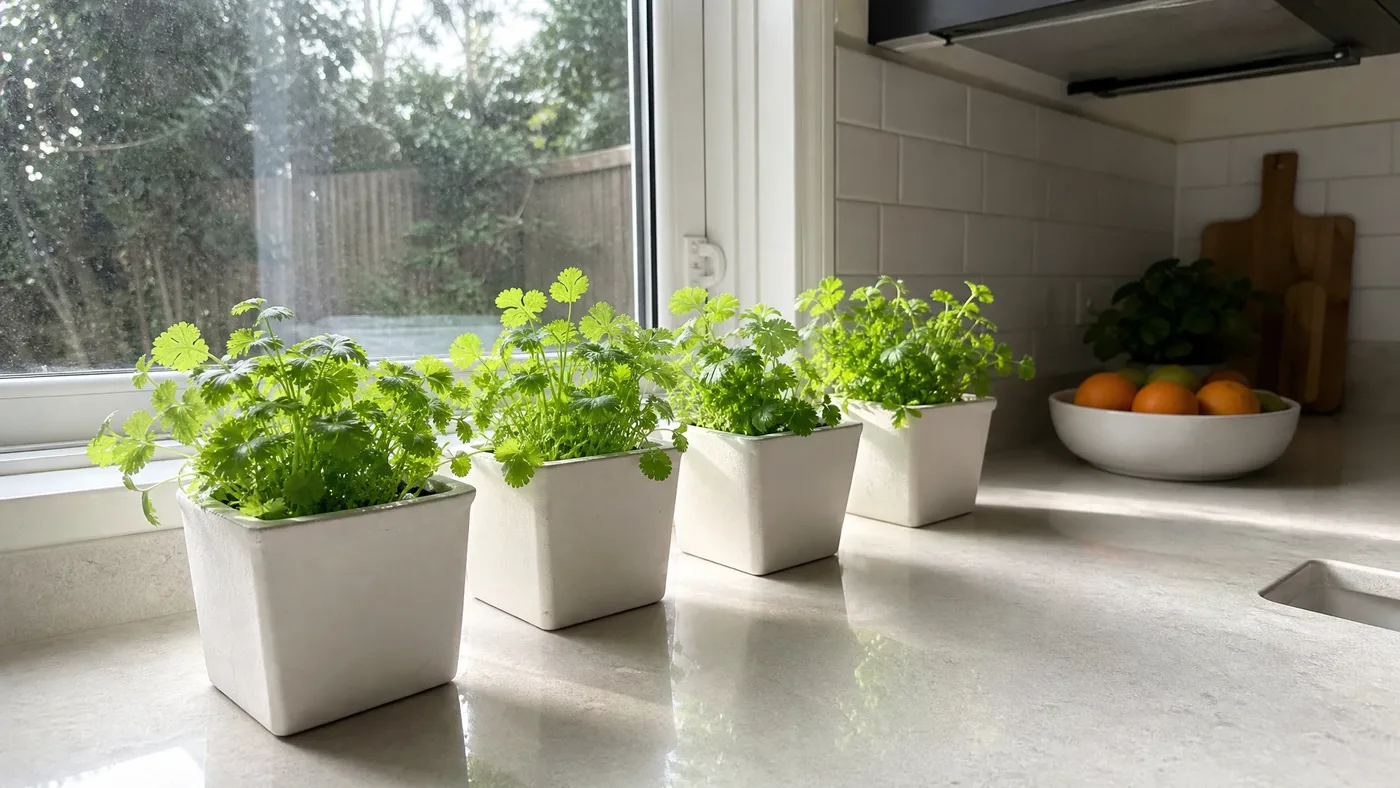
The fun part of this topic is how much of it is really about kitchen habits. Anyone who has grown herbs on a windowsill knows the drill: the plant is lovely for a week, then a handful goes limp in the fridge. It is natural to wish for a trick that fixes that, and an oil in a bottle sounds like one. The reality is more ordinary, and it is still useful.
What the lab found
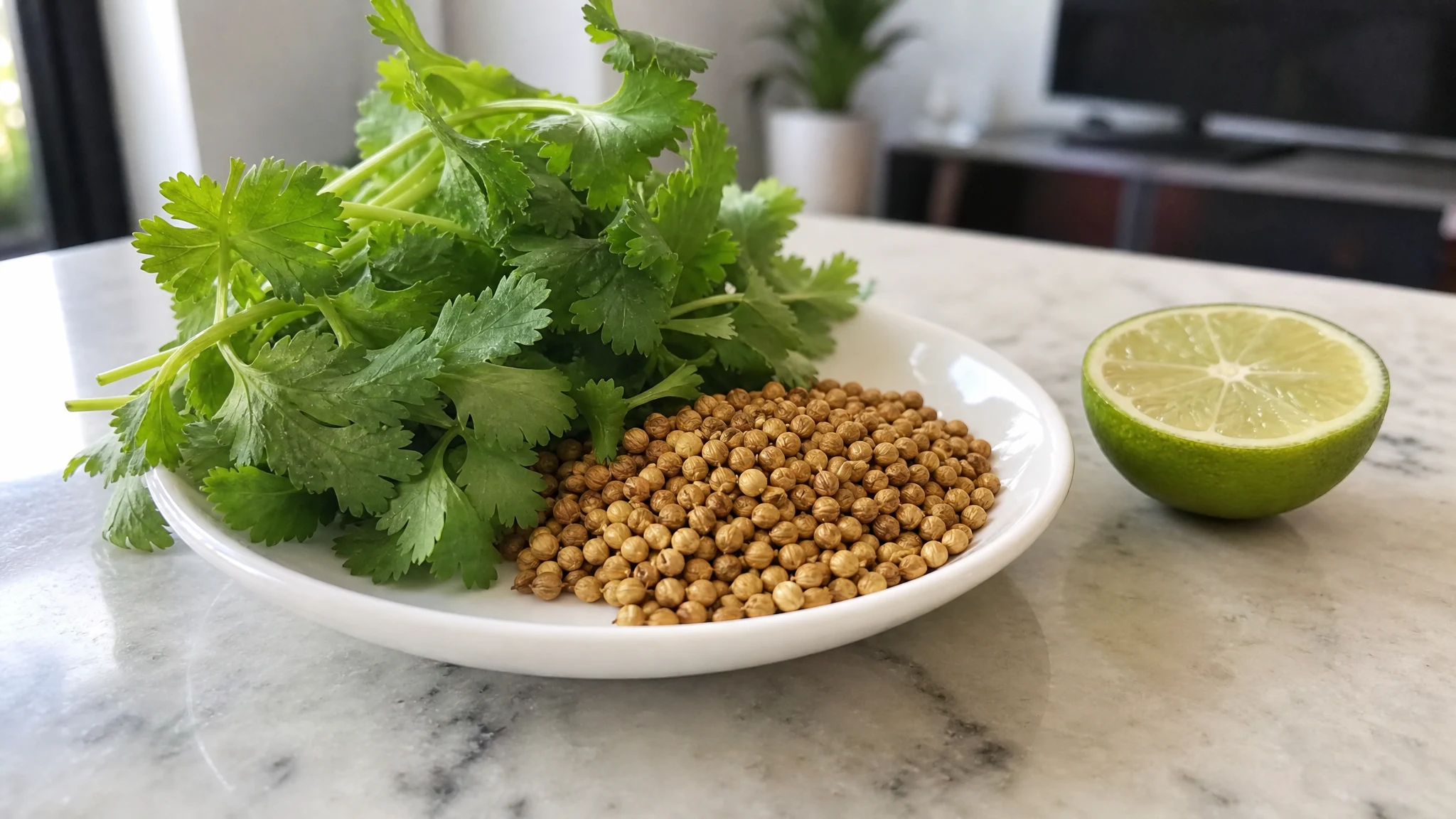
The key leaf oil paper is Delaquis et al., 2002. It compared oil from coriander seeds with oil from the leaves of immature plants, which is cilantro, and found the cilantro oil particularly effective against Listeria monocytogenes in laboratory tests of the lowest inhibiting concentration. It also found that distilled fractions often did better than the whole oil, and that mixing fractions could help, hinder or do nothing. That tells you the story is about chemistry in a controlled medium. Whether a whole oil would behave the same way in a real food is a separate question that the abstract does not answer.
A 2025 systematic review of coriander oil against foodborne bacteria began with 1,374 records and kept 7 studies. It found activity against both Gram-positive and Gram-negative food-origin bacteria (Farias et al., 2025). Seven is a small pool, and these are lab-type results again. The details are in our bacteria post.
Why a broth is not a bite
A review of essential oils in food puts the gap in plain numbers. In lab tests, oils worked at 0.2 to 10 microlitres per millilitre. In real foods such as meat, milk, vegetables and rice, the concentration needed was around 0.5 to 20 microlitres per gram, and the author concluded that "a higher concentration is needed to achieve the same effect in foods" (Burt, 2004). That review is about essential oils generally, not coriander.
Work that through with a little arithmetic of our own. At the top of that food range, 20 microlitres per gram is roughly 2% oil by volume. Cilantro leaf oil is forward and pungent even in a candle or a diffuser blend, so at 2% of a dish it would be an overwhelming mouthful of waxy aldehydes. That is reasoning, not a taste result, but it explains why "effective dose" and "pleasant food" rarely meet.
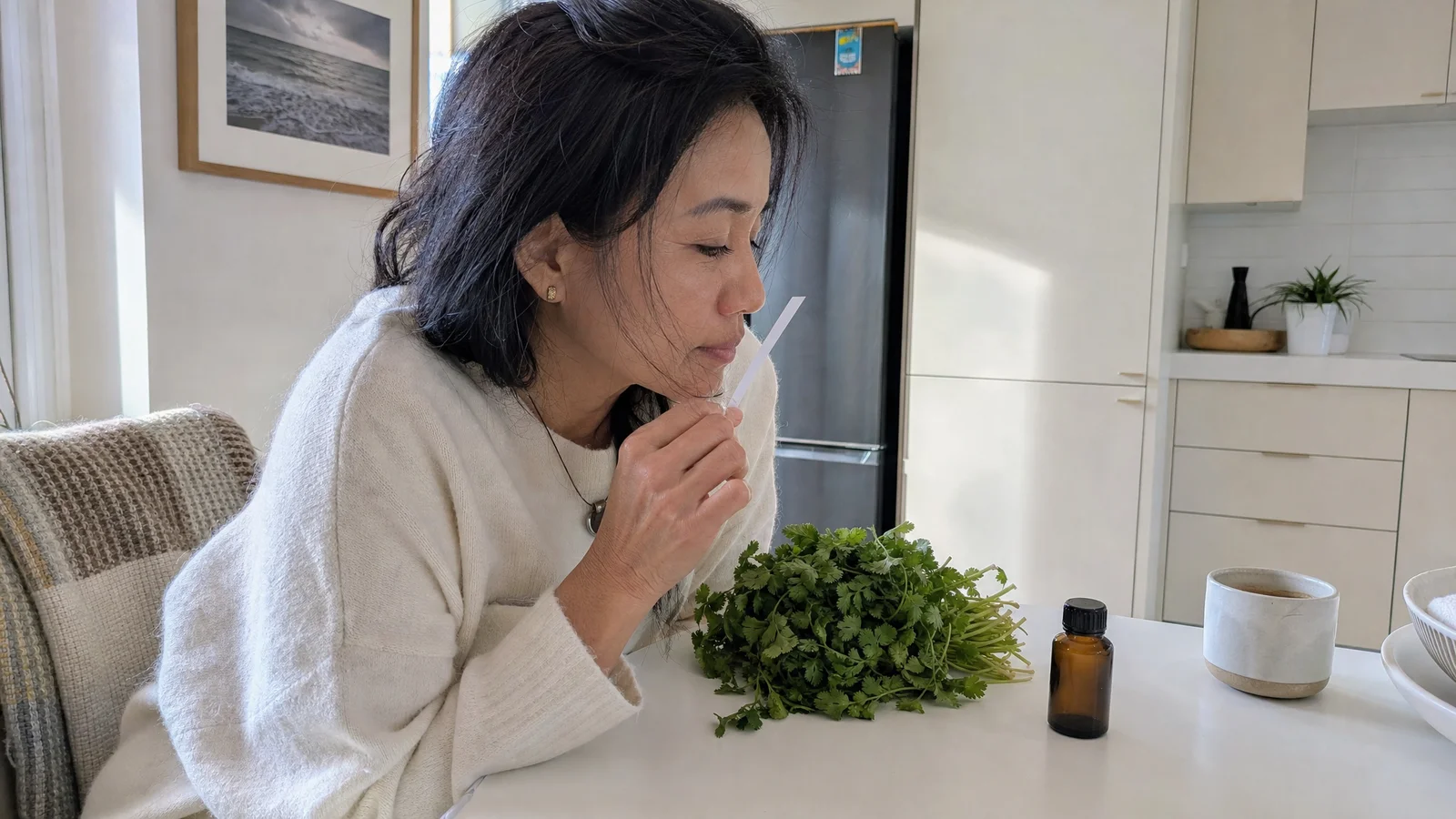
If you want a way to picture it, imagine a spoonful of soup and a single drop of the oil. Even one drop is a lot, since the scent is green, waxy and citrusy all at once, and it takes over the whole spoon. That is why the oil belongs in a diffuser, where a few drops spread across a room, and not in a bowl.
The safety rule that matters more than any of this
If you make herb-infused oils at home, a food-safety rule matters far more than any essential oil. The CDC advises refrigerating homemade oils made with garlic or herbs and throwing away unused oil after 4 days (CDC, home-canned foods and botulism). Spores of the botulism bacterium grow in low-oxygen, low-acid conditions, and a drop of essential oil is not a safety measure. Health Canada gives similar guidance, with a fridge at 4 C or colder and use within a week, and notes that spoiled oil can look, smell and taste normal (Health Canada, herbs in oil). Our freezing guide follows that kind of guidance for fresh cilantro, and we sell neither food nor culinary oils.
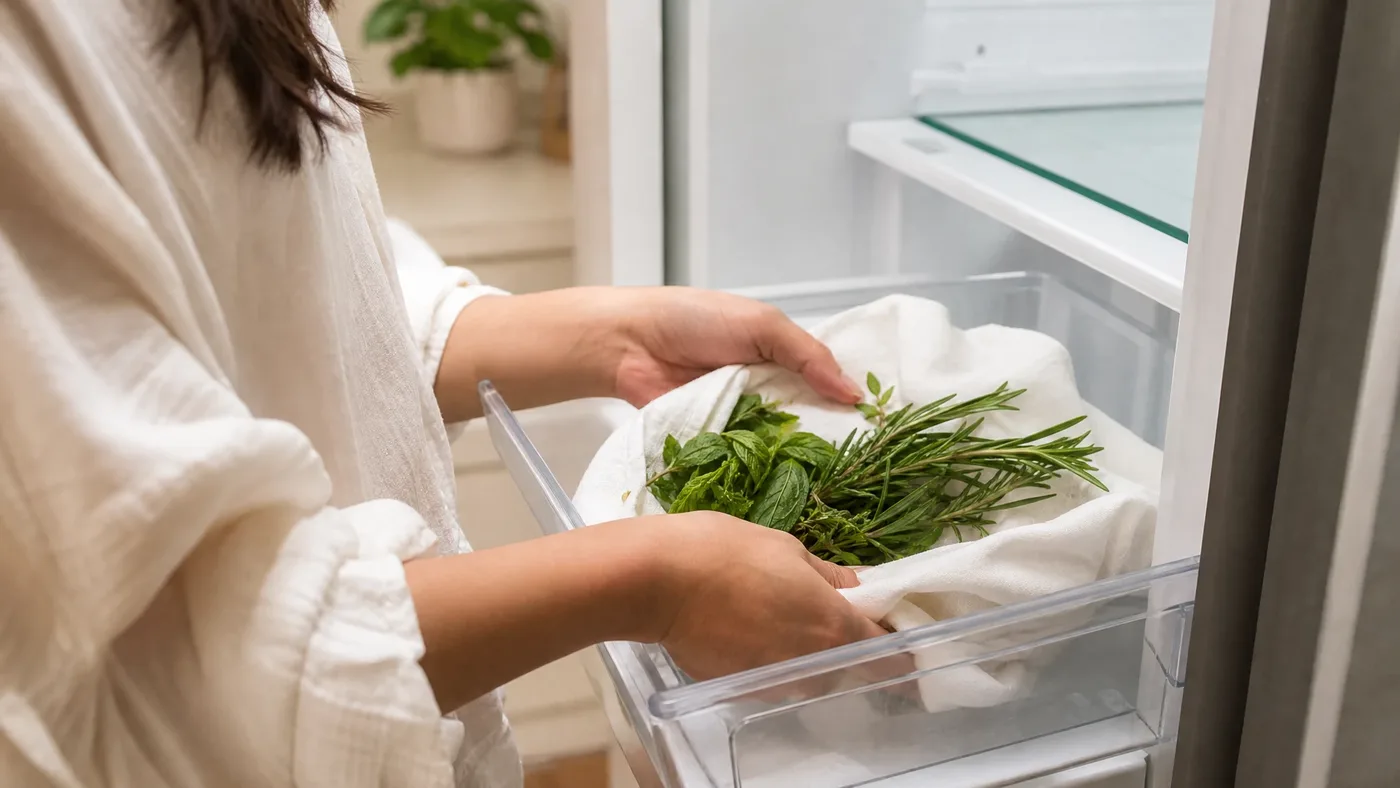
What does keep cilantro going in a home kitchen is simple. Wash and dry the leaves well, stand the stems in a jar of water like a small bouquet, or wrap the bunch loosely in a towel in the fridge. None of that needs a bottle, and all of it keeps the real flavor, which is what you wanted in the first place.
So where does that leave the oil?
In the places it does best. A bottle of cilantro essential oil is a fresh, green, citrus-edged top note for diffusing, perfumery and diluted massage oil, and a craft ingredient for soap and candles. Food safety and food claims belong to people who work in that field, and any food-related question should go to a qualified food scientist or your local health authority. For how we describe the oil's place in the cosmetic and fragrance world, our cosmetic versus drug claims post is a short read.
It is a satisfying plant to read about, and its best work happens outside the fridge.
Cilantro Essential Oil
Cilantro Essential Oil from our own shop, in sizes from 0.5 oz to bulk.
From $13.99
Shop Now →Sources & Further Reading
- Delaquis et al., 2002. Antimicrobial activity of dill, cilantro, coriander and eucalyptus oil fractions
- Farias et al., 2025. Coriander oil against foodborne pathogens: systematic review
- Burt, 2004. Essential oils: antibacterial properties and potential applications in foods
- CDC. Home-canned foods and botulism prevention
- Health Canada. Food safety tips for herbs in oil