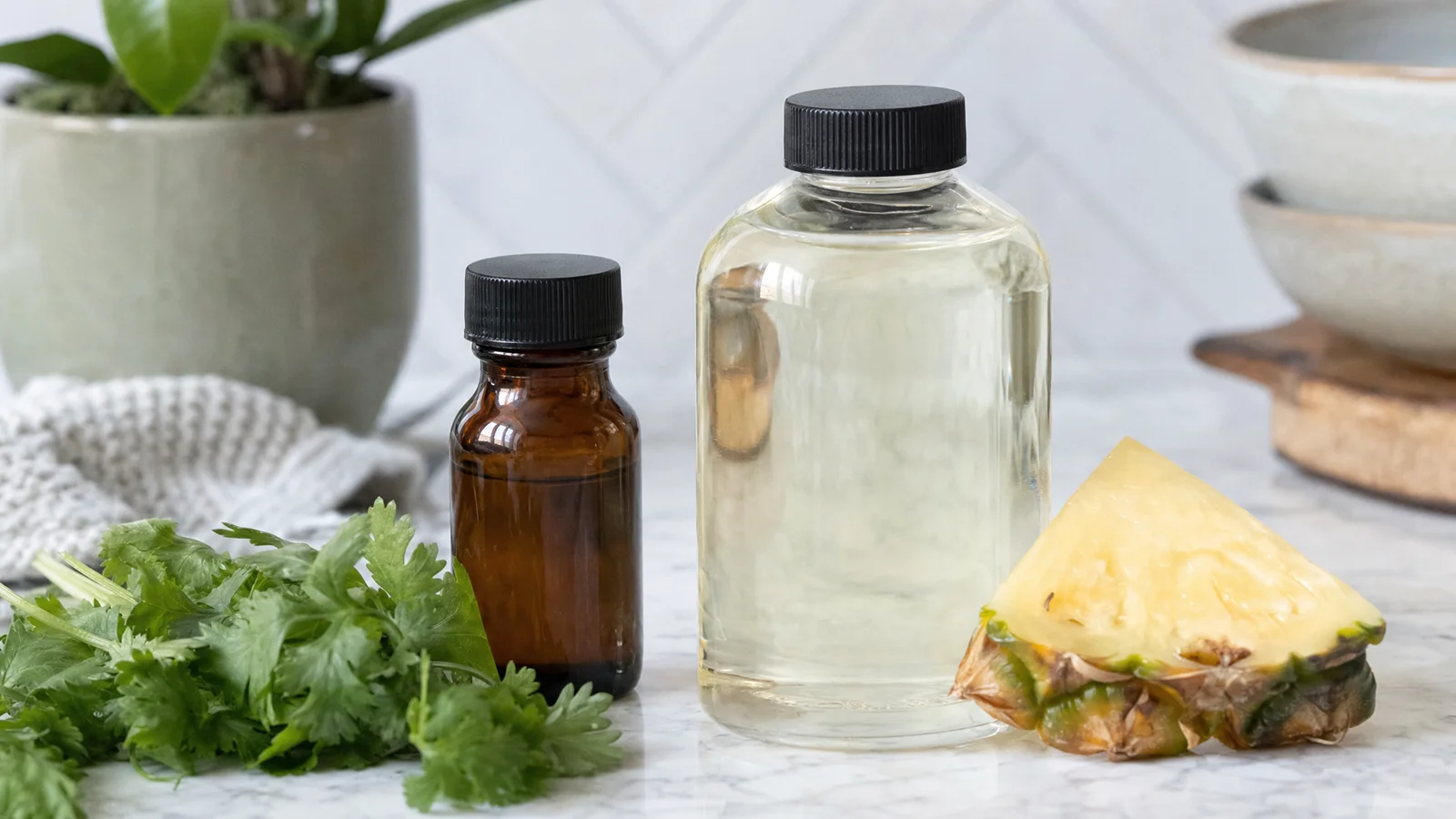
Essential Oil Claims: Cosmetic, Drug or Pesticide?
Essential oil rules turn less on the oil than on the sentence next to it. The same liquid can be a cosmetic, a drug or, in some cases, a pesticide, depending on what the seller says it is for. This is general information from the agency pages we read, not legal advice, and it is a US-only summary.
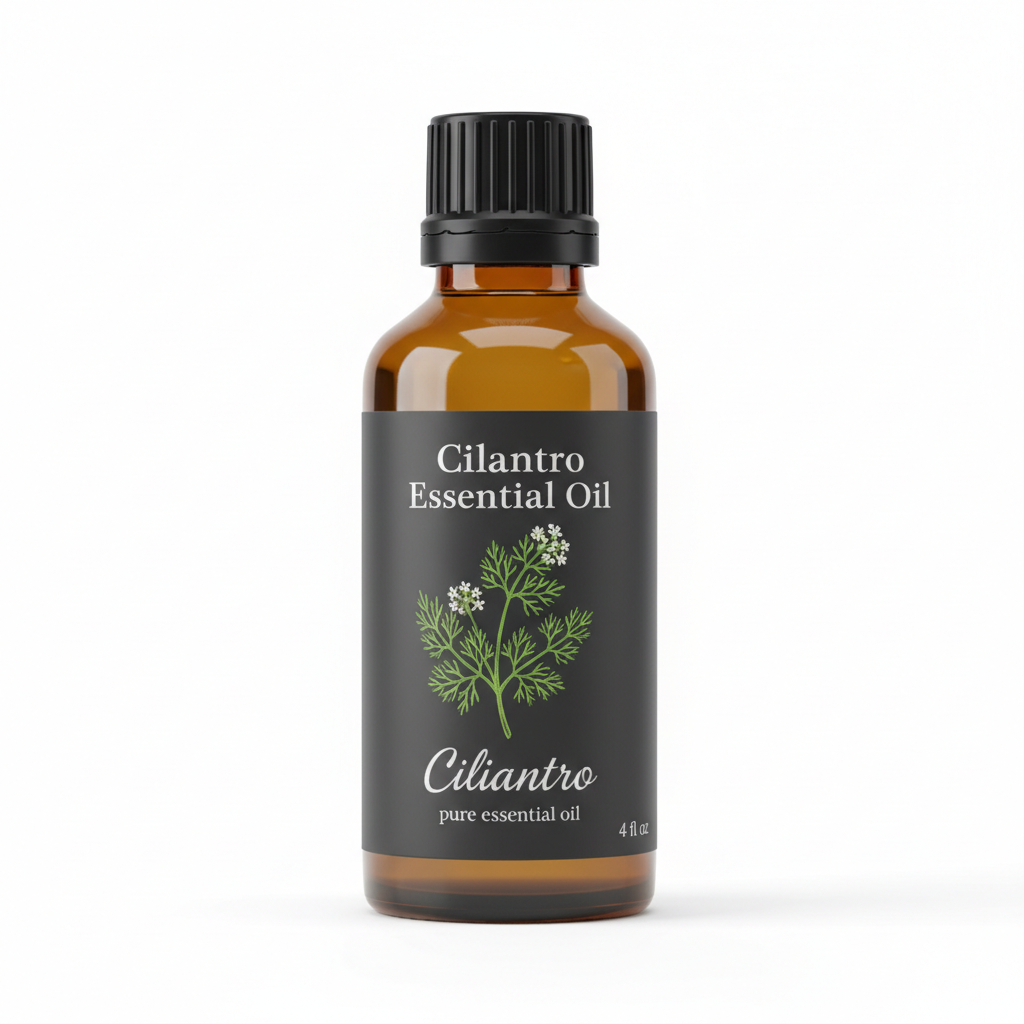
Cilantro Essential Oil
Our own Cilantro Essential Oil, in sizes from 0.5 oz to bulk.
From $13.99
Shop Now →The sorting rule is intended use
The FDA's page on cosmetics, drugs and soap says whether a product is a cosmetic or a drug "is determined by a product's intended use." It names essential oils directly. A fragrance marketed for promoting attractiveness is a cosmetic, while one marketed with aromatherapy claims, such as helping the consumer sleep or quit smoking, meets the definition of a drug. In the same way, a massage oil intended to lubricate the skin and impart fragrance is a cosmetic, and one intended for a therapeutic use is not.
The FDA's aromatherapy page adds how intent gets judged: from claims in labeling, on websites and in advertising, and from what consumers expect the product to do, looked at as a whole rather than one phrase in isolation. It lists claims about health problems, depression, anxiety or sleep as drug claims, and it says the fact that an ingredient comes from a plant does not keep it from being regulated as a drug.
Put simply, lavender sold as a room fragrance and lavender sold as a sleep aid are different products in law, though the liquid is identical.
Why plain language is easier
There is a quiet freedom in describing an oil by what it is like. Ours is green, bright and herbaceous with a citrusy edge, a top note, pale yellow to nearly colorless and thin as water. You can say all of that, plus how to dilute it, and the reader has everything useful without a single sentence that sounds like a promise about their body. When we write about our oil, that is where we start, and it rarely feels like a limit.
Three sentences, three places
| A sentence on a page | Where it points |
|---|---|
| A bright, green, citrus-edged aroma for diffusing and perfumery | Fragrance and scent language, cosmetic-style |
| Diffuse at bedtime for deeper sleep | A sleep claim, the example the FDA names as a drug claim |
| Keeps disease-carrying mosquitoes away | A pest claim tied to disease, so pesticide rules apply |
The sentences are our own illustrations, not quotations from any seller. We look at two such claims in detail in our articles on the detox idea and insect repellence.
Your words, everywhere
Because the FDA looks at claims across labeling, websites and advertising, a practical habit helps: read every product page, caption, newsletter and affiliate script as though it were label copy, and take out any sentence that names a body function, a condition or a disease-carrying pest. That includes what other people write about your product when you reshare it.
Pesticide rules and labeling basics
The EPA's minimum-risk exemption allows certain products to skip registration, with conditions. One is that the label cannot state or imply that the product controls or reduces organisms that threaten human health (EPA conditions). States may add their own rules.
For cosmetics, the FDA's page on labeling claims says the law does not require FDA approval before a cosmetic goes on the market and that FDA has no list of approved or accepted claims, yet claims must be truthful and not misleading. The agency also says firms are legally responsible for the safety of their products, and the ingredient list on a retail product must follow the rules in 21 CFR 701.3, where ingredients appear in descending order and fragrance may be declared as such.
A habit worth building
Before you publish anything, read it the way a stranger would. Does this page make someone think the oil is meant to fix something? A short checklist helps:
- Does the sentence describe scent, color or how to use the oil? That is usually comfortable ground.
- Does it name a body part, a feeling to be changed, a condition or a pest? Rewrite it.
- Is it a line someone else wrote, such as a friend's comment or a reshared post? It still sits on your page, so it still counts.
How we handle it
We describe our cilantro leaf oil by its aroma and its uses, and we make no medical claims for it. Our skin guidance is a practical dilution, 0.5% to 2% in a carrier, with a patch test first. If you make products from our oil, perhaps through our wholesale or bulk options, the claims on your labels and pages are yours to get right, and an attorney or regulatory consultant should look at the exact wording before you publish a claim about a body function, a disease or a pest. For another label word that causes confusion, see what the word therapeutic means on a label.
These pages change, and enforcement depends on facts we cannot see, so treat this as a map rather than a ruling.
Cilantro Essential Oil
Cilantro Essential Oil from our own shop, in sizes from 0.5 oz to bulk.
From $13.99
Shop Now →Sources & Further Reading
- FDA. Is it a cosmetic, a drug, or both? fda.gov
- FDA. Aromatherapy. fda.gov/cosmetics/cosmetic-products/aromatherapy
- FDA. Cosmetics labeling claims. fda.gov
- FDA. FDA authority over cosmetics. fda.gov
- EPA. Conditions of minimum risk pesticides. epa.gov
- eCFR. 21 CFR 701.3, designation of ingredients. ecfr.gov