Does Cilantro Oil Repel Mosquitoes? The Lab Study
Cilantro oil keeps mosquitoes away: it is a claim you will see in plenty of places, and it does have a real study behind it. The study is worth reading closely, because what it tested is quite different from a bottle of cilantro leaf oil, and we do not sell ours as a repellent.
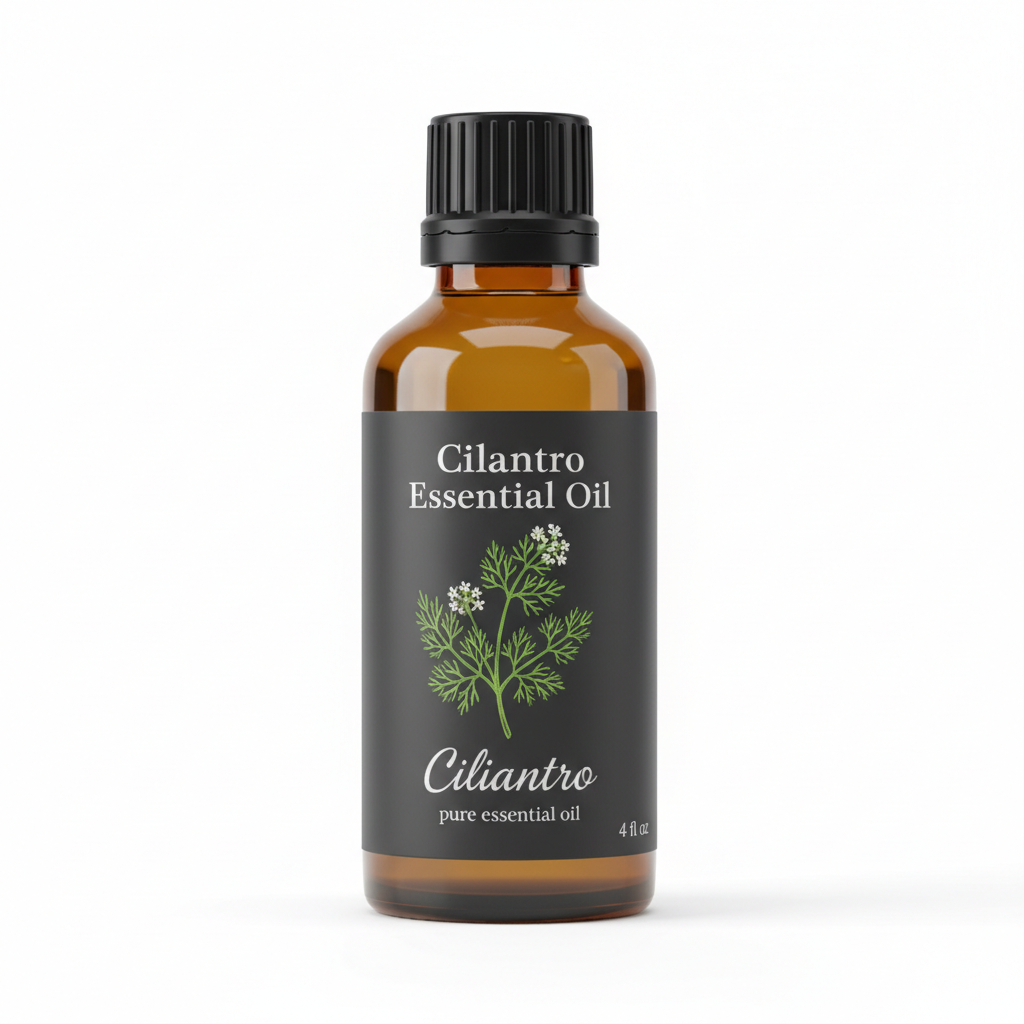
Cilantro Essential Oil
Our own Cilantro Essential Oil, in sizes from 0.5 oz to bulk.
From $13.99
Shop Now →Summer evenings make people reach for anything with a plant on the label, and that is understandable. A porch with a lamp and a pitcher of something cold is a wonderful place to be, and so is a table scented with something green. The trouble starts only when we ask the scent to do a job it was never sold for.
What the lab did
Researchers led by Benelli took essential oil from the fruits, the seeds, of Coriandrum sativum and tried it on the Asian tiger mosquito, Aedes albopictus (Parasitology Research, 2013). The oil was 83.6% linalool. On larvae, it was toxic at a concentration of 421 ppm for half of them. In skin trials, the dose that repelled half the mosquitoes was tiny, and at the highest dose, 0.2 microlitres per square centimetre of skin, protection lasted longer than 60 minutes. The authors thought the findings could help in developing new and safer products.
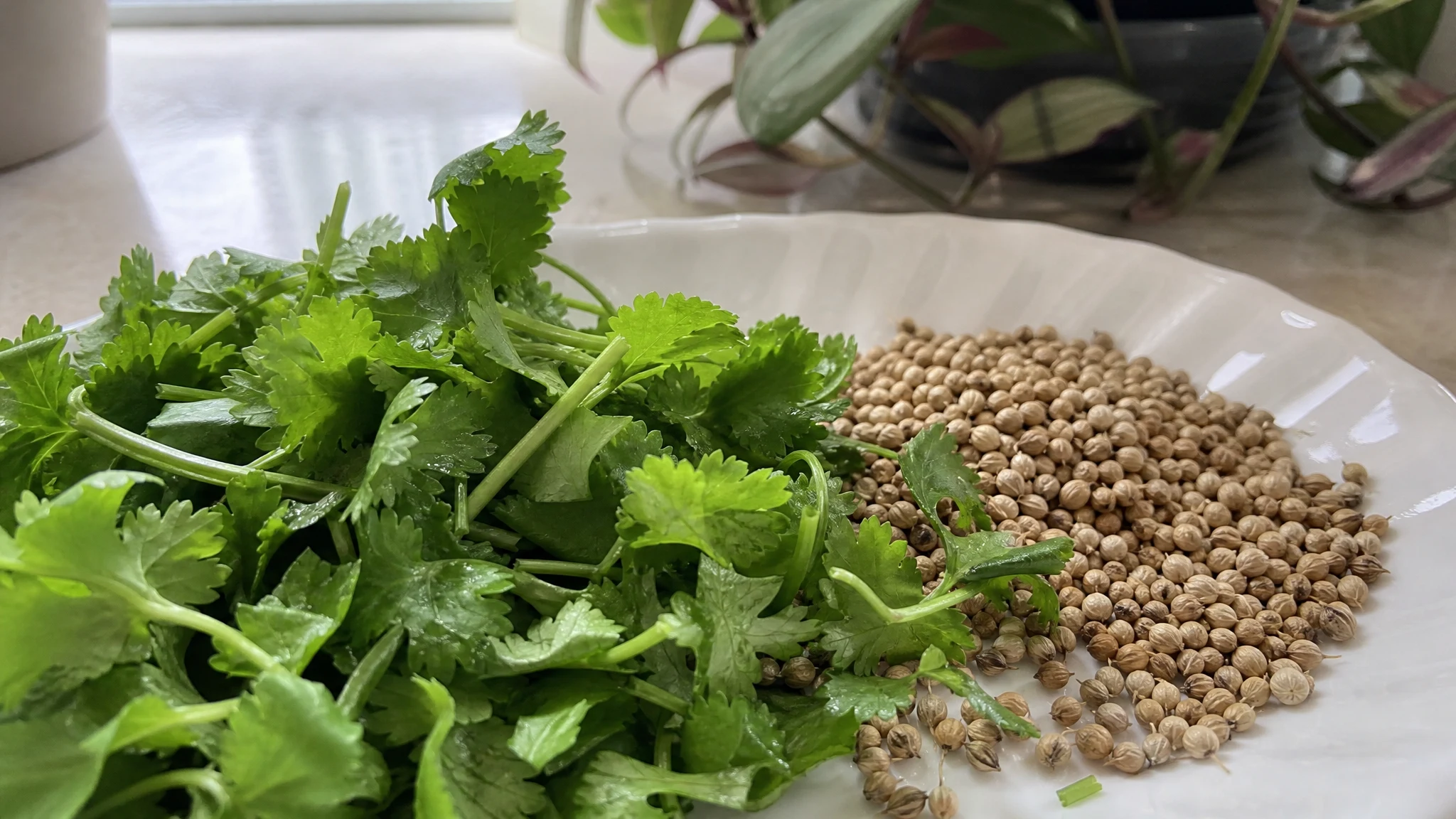
If you enjoy the history of plants, the study is a nice reminder that coriander has two faces. Its leaves are a fresh herb at the end of a dish, and its seeds are a warm spice in the spice rack. The oils from each are as different as their kitchen roles, so a result for one never carries over automatically to the other.
It is a nice result. Four details help you read it fairly:
- Seed, not leaf. Leaf oil is aldehyde-led, while this oil was mostly linalool, and whether leaf oil behaves similarly is an open question we have found no study on. Our cilantro versus coriander guide explains the difference.
- One species, a laboratory model, not a tick and not the mosquitoes that spread other diseases.
- One time. The 60-minute figure is for the top dose, and "longer than 60 minutes" may mean only that the test stopped there.
- Undiluted oil. The top dose was neat oil on skin. A skin blend at our recommended 2% would deliver about fifty times less per square centimetre if spread the same way. That is our arithmetic, not a result from the paper, but it shows why a dish result and a real-world result are different sentences.
Why this is also a rules question
In the US, a product sold to repel insects is regulated as a pesticide, and the EPA keeps a list of its registered repellent products (EPA, find the repellent that is right for you). Its minimum-risk route, for certain products that need no registration, has conditions. One of them says the label cannot state or imply that the product will control or reduce organisms that threaten human health, or insects carrying specific diseases (EPA, conditions for minimum risk pesticides). The claim a traveler cares most about, protection from disease-carrying insects, is the one a minimum-risk product is not permitted to make. See our claims article for how that fits into the wider picture.
Our suggestions below are plain on purpose, because this is a topic where a clear plan beats a clever one.
What we suggest
- Where insects carry disease, choose an EPA-registered repellent and ask a physician or travel clinic about your destination. That is not a job for an oil seller.
- For the garden table, a cilantro leaf oil diffusion is a fragrance choice. We make no repellent claim for it, and we would not count on it to keep anything off you.
- If you want to use it on skin anyway, dilute it, patch test first (our dilution guide shows how), keep it away from eyes, and ask a pediatrician before using it around young children.
Pregnant readers should ask an OB-GYN or midwife about any repellent, and anyone with reactions to fragrance should check with a dermatologist or allergist. Pets are a question for a veterinarian, and our safety guide has more.
If you want to enjoy the scent outdoors anyway, try a small amount in a diffuser on a covered porch, well away from where pets and children sit. Notice how it plays against a warm evening: lime, ginger and black pepper are good partners, and a bright, herbal note can make a patio feel a little like a garden.
The green, citrusy smell is the real charm of this oil, and it is plenty good enough for a summer evening on its own merits.
Cilantro Essential Oil
Cilantro Essential Oil from our own shop, in sizes from 0.5 oz to bulk.
From $13.99
Shop Now →Sources & Further Reading
- Benelli G et al., 2013. Larvicidal and repellent activity of the essential oil of Coriandrum sativum L. fruits against Aedes albopictus. Parasitol Res. PubMed 23263388
- EPA. Find the insect repellent that is right for you. epa.gov
- EPA. Conditions of minimum risk pesticides. epa.gov