5 Cilantro Oil Myths, Sorted Out
Cilantro oil collects confident claims the way a windowsill collects herb pots. Some are half true, a few are misleading, and one or two are worth knowing about before you buy. Here are the ones we hear most, sorted.
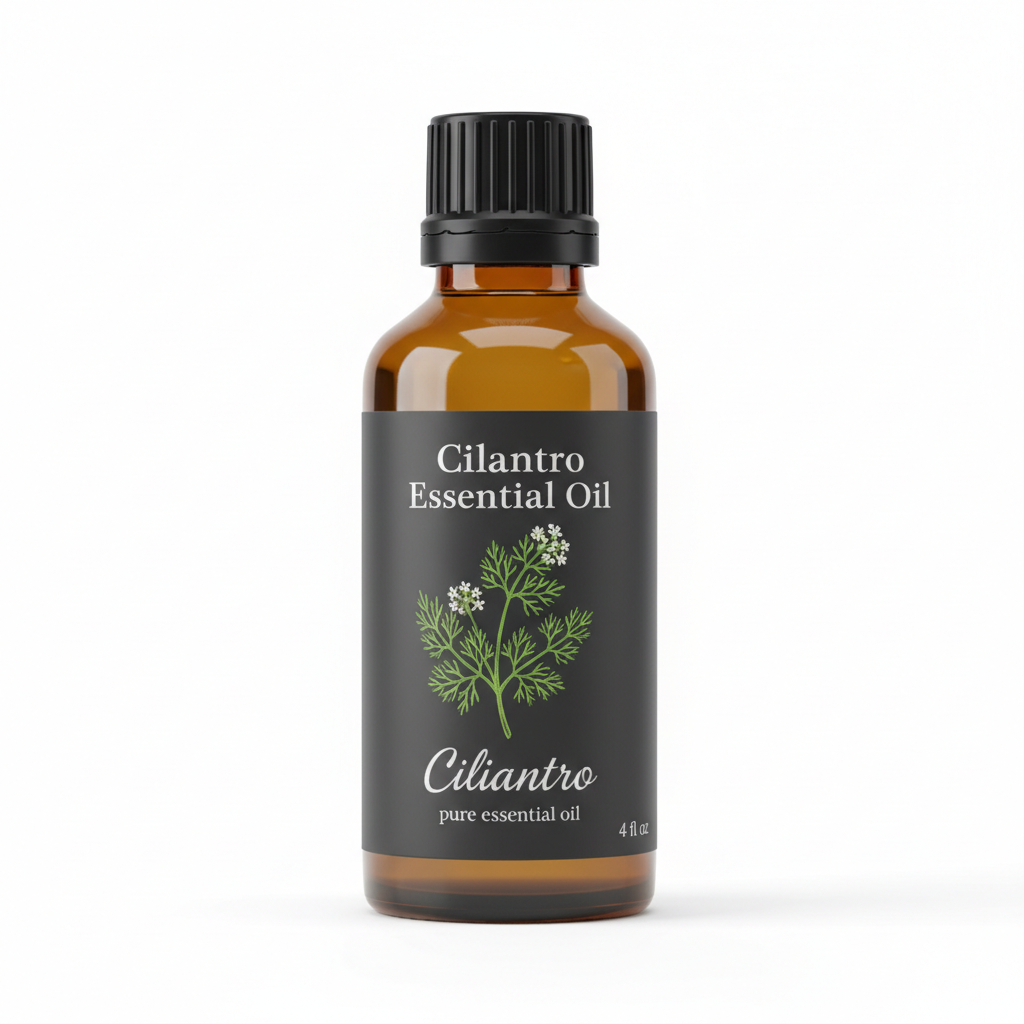
Cilantro Essential Oil
Our own Cilantro Essential Oil, in sizes from 0.5 oz to bulk.
From $13.99
Shop Now →Myth: a bottle of cilantro oil is a bottle of cilantro oil
Plants vary, and so do the oils distilled from them. A 2026 study grew 48 coriander accessions from 19 countries at a single site in Korea and steam-distilled the aerial parts of each. Most were led by the aldehyde (E)-2-decenal, but a few were led by linalool instead (Kim and Kim, Molecules, 2026). Another study, which hydrodistilled leaf for four hours, found a fatty acid at the top of the list (Bhuiyan et al., 2009). Same plant species, different place and method, different oil.
The practical lesson is to trust your nose and the paperwork, not the name on the label. When you get a new bottle, take a moment to smell it: it should read as bright and green with a citrusy edge, a top note, and you will quickly learn what that smells like to you.
That is why we like to be specific. We sell one oil, steam-distilled from the leafy tops, and our Certificate of Analysis for one batch lists density, refractive index and optical rotation. If you need GC/MS figures before you buy, ask us in writing through the contact page, and our GC/MS guide shows what to look for.
Myth: more drops means a better result
With a strongly aromatic oil, more usually means too much. Cilantro oil is pungent enough to dominate a blend quickly, which is why we suggest starting with far less than you expect. The skin range we recommend is 0.5% to 2% in a carrier, which in an ounce of carrier is roughly 3 to 12 drops, counting about 20 drops to the millilitre. Past that, you are only raising the dose; nothing we know of says a stronger dilution smells better. Our dilution article shows the math, and the safety guide covers who should check with a dermatologist first.
It is easy to get carried away with a scent you love. A good test is to smell the finished blend after an hour. If you can only smell cilantro, you used too much, and the next version should have fewer drops and a partner such as lime or ginger to round it out.
Myth: it is on a food safety list, so it is safe on skin
The US regulation that lists essential oils generally recognized as safe, 21 CFR 182.20, is a food regulation. Its entry reads simply "Coriander" with the botanical source Coriandrum sativum L., and it is about the intended use, which is flavoring food. It does not speak to leave-on skin products or to inhaling an oil, and it does not say which plant part is meant. We write about what that list leaves out in our GRAS article. Our oil is for aroma and external cosmetic use, never for internal use, and a physician is the person to ask about anything taken by mouth.
Myth: cilantro oil is a kitchen ingredient
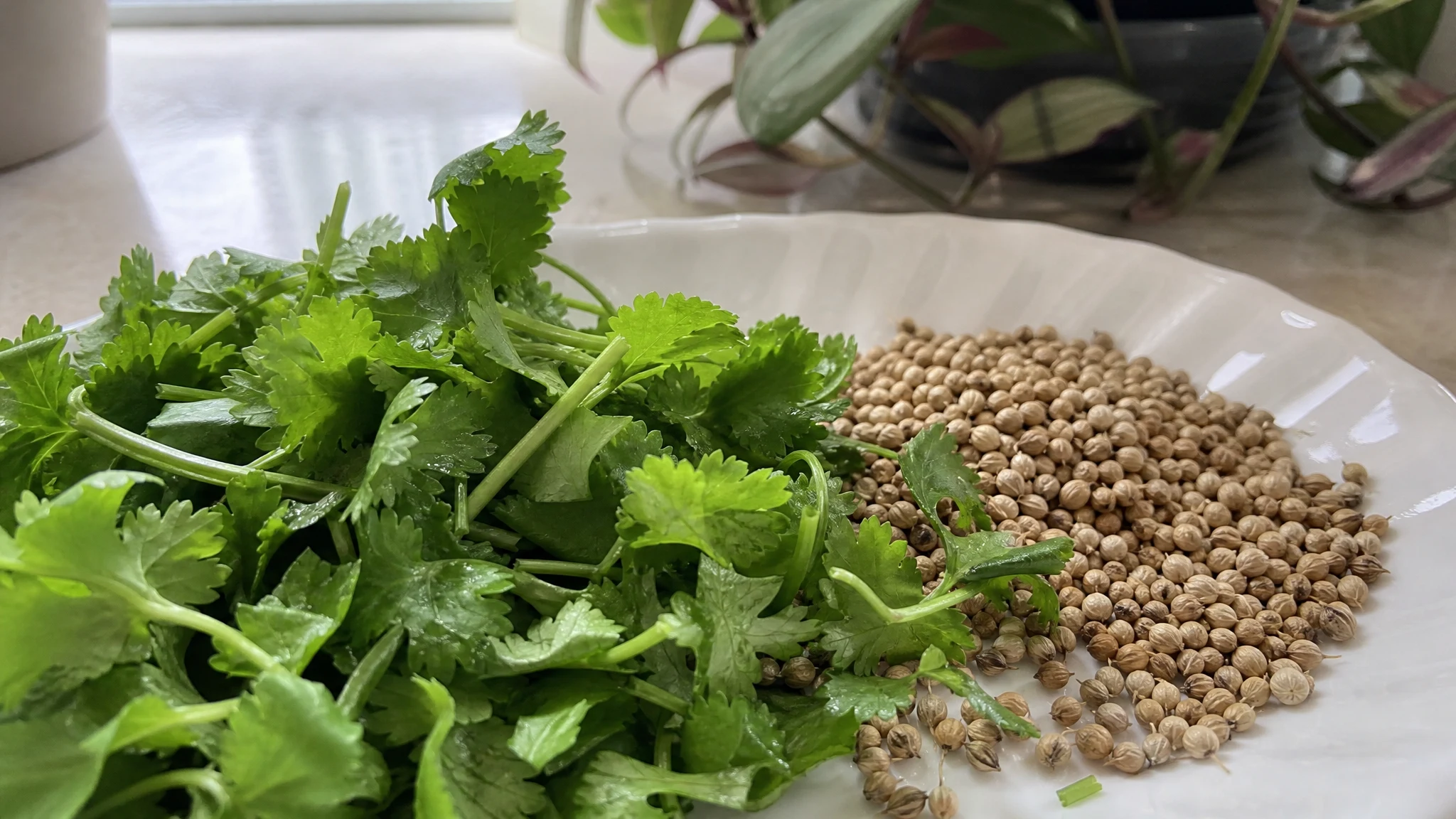
Cilantro oil in the kitchen sense is herb infused into cooking oil, which is a completely different thing from a distilled essential oil. We sell the second kind, so for flavor use the fresh herb, or an infused oil from a food source. The difference is laid out in essential oil versus infused oil.
Fresh herb in the kitchen is one of life's great pleasures, and it deserves to stay there. The oil is for the diffuser, the craft table and the diluted body oil, and nothing is lost by keeping the two apart.
Myth: natural means nothing in it can bother you
The FDA states there is no regulatory definition for "essential oils" under its cosmetics rules, and that plant-derived ingredients are treated the same way as any others. Natural describes where something comes from, not how your skin will react. Patch test, dilute, and see an allergist if fragranced products have bothered you before. Our patch test guide walks you through it.
Bonus myth: everyone smells it the same way
Scent is personal. Some people find this oil fresh and lively, and some find it soapy or harsh. If you are not sure which camp you are in, smell it on a strip before you plan a whole project around it. That small step saves a lot of regret, and it is why we like the smallest bottle for a first try.
The nicest thing about this oil needs no myth at all: it smells like a cut bunch of fresh herbs with a citrus edge, and it is happiest when used in small amounts.
Cilantro Essential Oil
Cilantro Essential Oil from our own shop, in sizes from 0.5 oz to bulk.
From $13.99
Shop Now →Sources & Further Reading
- Kim and Kim, 2026. Molecules 31(11):1950. PMC13257553
- Bhuiyan et al., 2009. Bangladesh Journal of Pharmacology 4:150-153. banglajol.info
- eCFR. 21 CFR 182.20, essential oils, oleoresins and natural extractives. ecfr.gov
- FDA. Fragrances in cosmetics. fda.gov/cosmetics/cosmetic-ingredients/fragrances-cosmetics