Cilantro Oil at Bedtime? Why Leaf Oil Smells So Lively
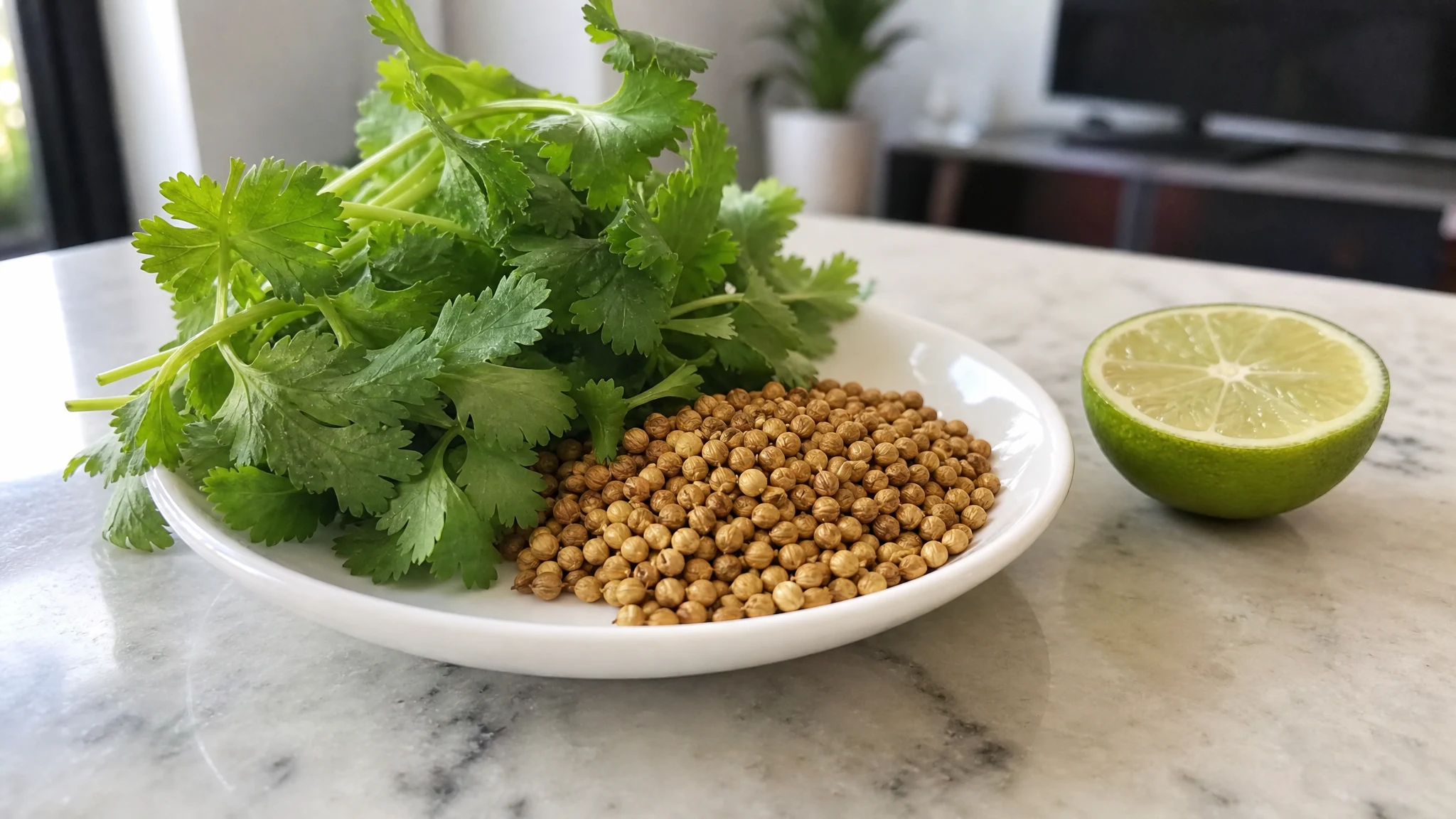
If you landed here because coriander is described as calming, here is the short version: the calming story belongs mostly to the seed. Coriander seed oil is built on linalool, the same molecule people mention when they talk about lavender. Cilantro leaf oil, the one we sell, is built on waxy aldehydes and smells green, bright and a little citrusy. It is a lively scent, and not an obvious bedside companion.
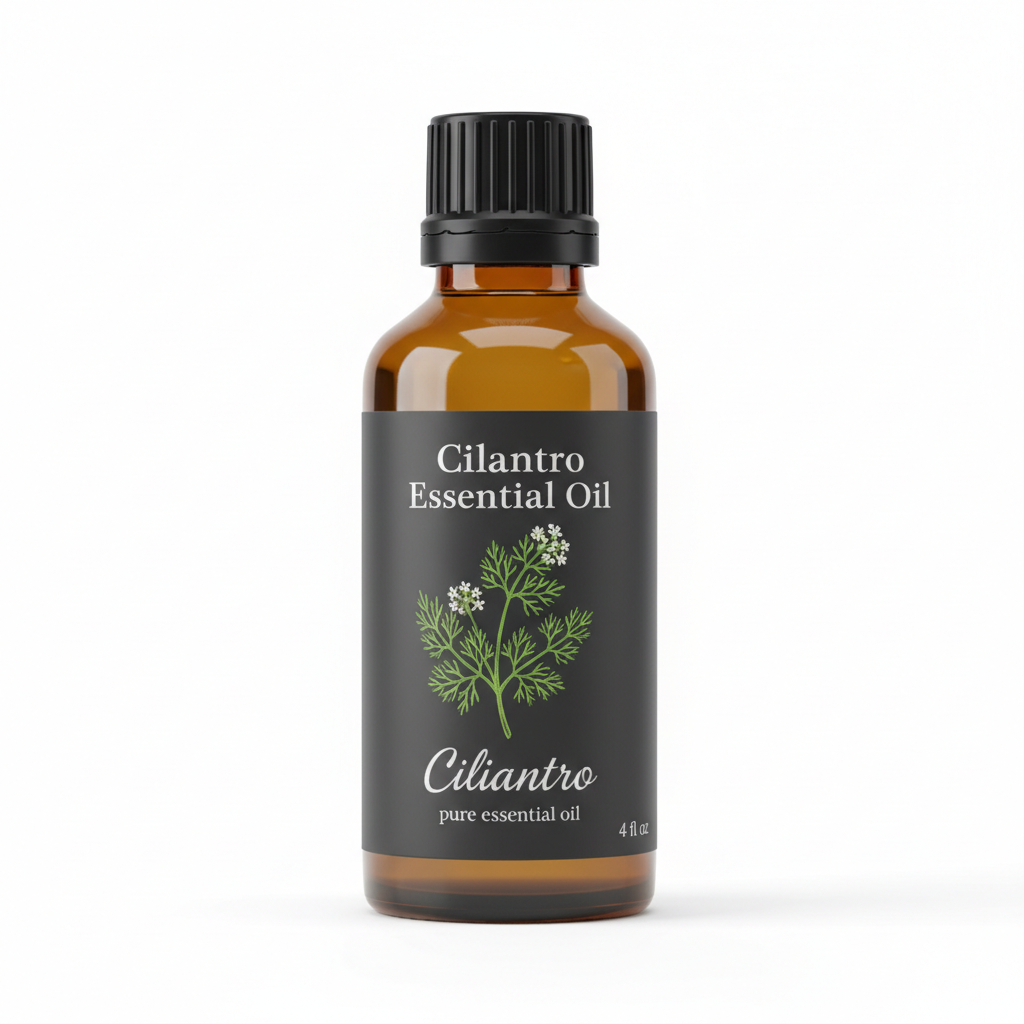
Cilantro Essential Oil
Our own Cilantro Essential Oil, in sizes from 0.5 oz to bulk.
From $13.99
Shop Now →Think of it as a morning-light scent, the sort you would put in a sunny kitchen or a bright workroom rather than beside a pillow.
Where the calming reputation comes from
The studies people cite are animal studies on seed. One of the better known gave mice a hydroalcoholic extract of coriander fruit at 50, 100 and 200 mg/kg and compared them with diazepam in four anxiety tests. The two higher doses behaved much like the drug in those tests, the lowest did nothing, and the authors said more work was needed to find out which constituents were responsible (Mahendra and Bisht, 2011).
It is worth reading what that does and does not describe. The material was an alcohol-water extract of the seed, not a distilled essential oil, and the route was an oral dose in a mouse, not a scent in a room. Nobody breathes in anything like a milligram-per-kilogram dose from a diffuser. As a finding about the plant it is interesting. As a promise about a bottle of leaf oil, it simply does not reach.
Leaf and seed smell different for a reason
The 2026 Candida scoping review that surveyed 30 coriander oil studies puts the chemistry plainly: linalool dominates oils from seeds, fruits and flowers, while 1-decanol, decanal and 2E-decenol lead in leaf (Veras et al., 2026). Those leaf molecules give the oil its fresh, herbaceous, citrus-edged character, which people tend to like or dislike strongly. We would rather you start with the smallest size to see which camp you are in. Our scent profile describes the aroma in more detail.
A fun way to get to know it is to smell it next to something you already own. Hold a lime or an orange peel in one hand and a drop of the oil on a strip in the other. You will notice the citrus edge in the oil, and then the green, waxy backbone that no peel has. Add a crushed fresh herb if you have one, and you start to hear the oil as a chord rather than a single note.
What smell research does show
The best-studied aroma in this area is lavender: a 2019 meta-analysis pooled 37 randomised trials with 3,964 participants for its quantitative part (Donelli et al., 2019). That is a different plant, many different formats and a wide mix of settings, so it tells us about lavender and not about cilantro.
A smaller study helps put all scent research in context. In a room scented with lavender, neroli or a placebo odour, 90 women were told the smell was relaxing, stimulating or nothing at all, and heart rate and skin conductance followed what they had been told (Campenni et al., 2004). Expectation, in other words, does a lot of the work. The practical point is a friendly one: a scent you enjoy can be a lovely part of your evening, and that does not depend on any particular chemistry argument.
So what is cilantro leaf oil for?
We sell it as an external cosmetic oil with a fresh green aroma. It is a top note, quick to arrive and quick to fade, and it pairs naturally with lime, lemongrass, black pepper, ginger, petitgrain and bergamot. If you want a clean, herbal brightness in a room or a blend, that is where it shines. Our diffusing guide suggests how little to start with, because it dominates a blend quickly.
- Pick the room. A kitchen, an entry hall or a craft room suits a lively scent better than a bedroom.
- Pick the moment. Morning and afternoon let the brightness do its work, and you can ventilate before the evening.
- Pick the amount. Start with fewer drops than you think, wait ten minutes, and add only if the room still seems quiet.
If what you are after is calm itself, or help with sleep or worry, that is a question for a physician or a qualified mental health professional, not an essential oil of any kind. We make no sleep or stress claim for our oil, and the same rule applies to every oil in a cosmetic shop; our cosmetic versus drug claims post explains why. For the seed and leaf difference in full, see cilantro vs coriander oil.
Some scents are meant to wake a room up, and this one is happy to do that job well.
Cilantro Essential Oil
Cilantro Essential Oil from our own shop, in sizes from 0.5 oz to bulk.
From $13.99
Shop Now →Sources & Further Reading
- Mahendra and Bisht, 2011. Anti-anxiety activity of Coriandrum sativum in mouse models
- Veras et al., 2026. Coriander essential oil on Candida: scoping review (composition by plant part)
- Donelli et al., 2019. Effects of lavender on anxiety: systematic review and meta-analysis
- Campenni et al., 2004. Role of suggestion in odor-induced mood change