Cilantro Infused Oil at Home: Methods and Safe Storage
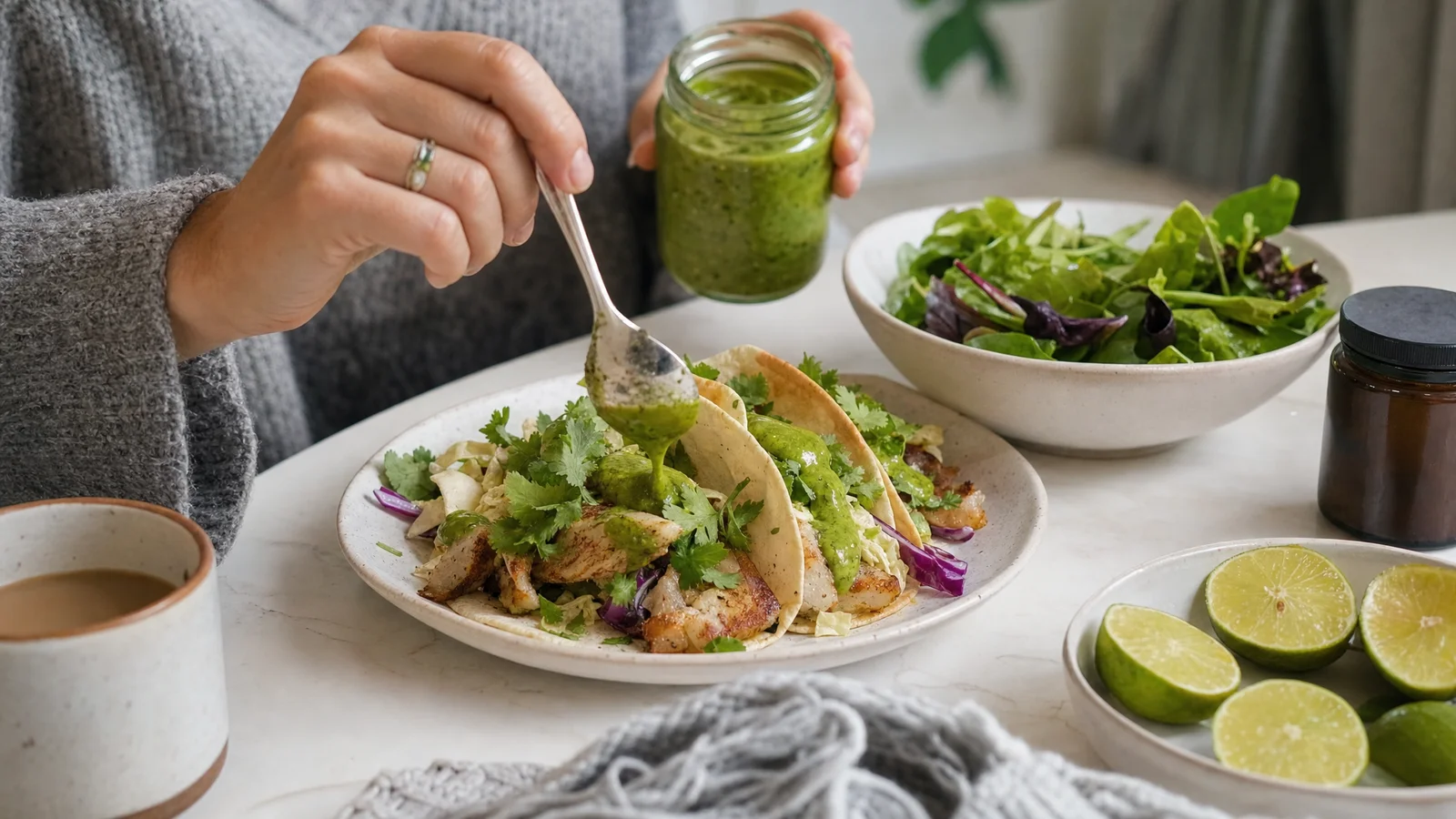
Cilantro infused oil is a lovely thing to have in the fridge for a week of tacos, grilled fish or rice bowls, and the good news is that the rules for making it are simple. They are also stricter than most recipe blogs let on, so this guide is built around the one decision that matters: which method fits how you cook, and how long what you make will keep.
Cilantro Essential Oil
Our own Cilantro Essential Oil, in sizes from 0.5 oz to bulk.
From $13.99
Shop Now →Which cilantro oil are you after?
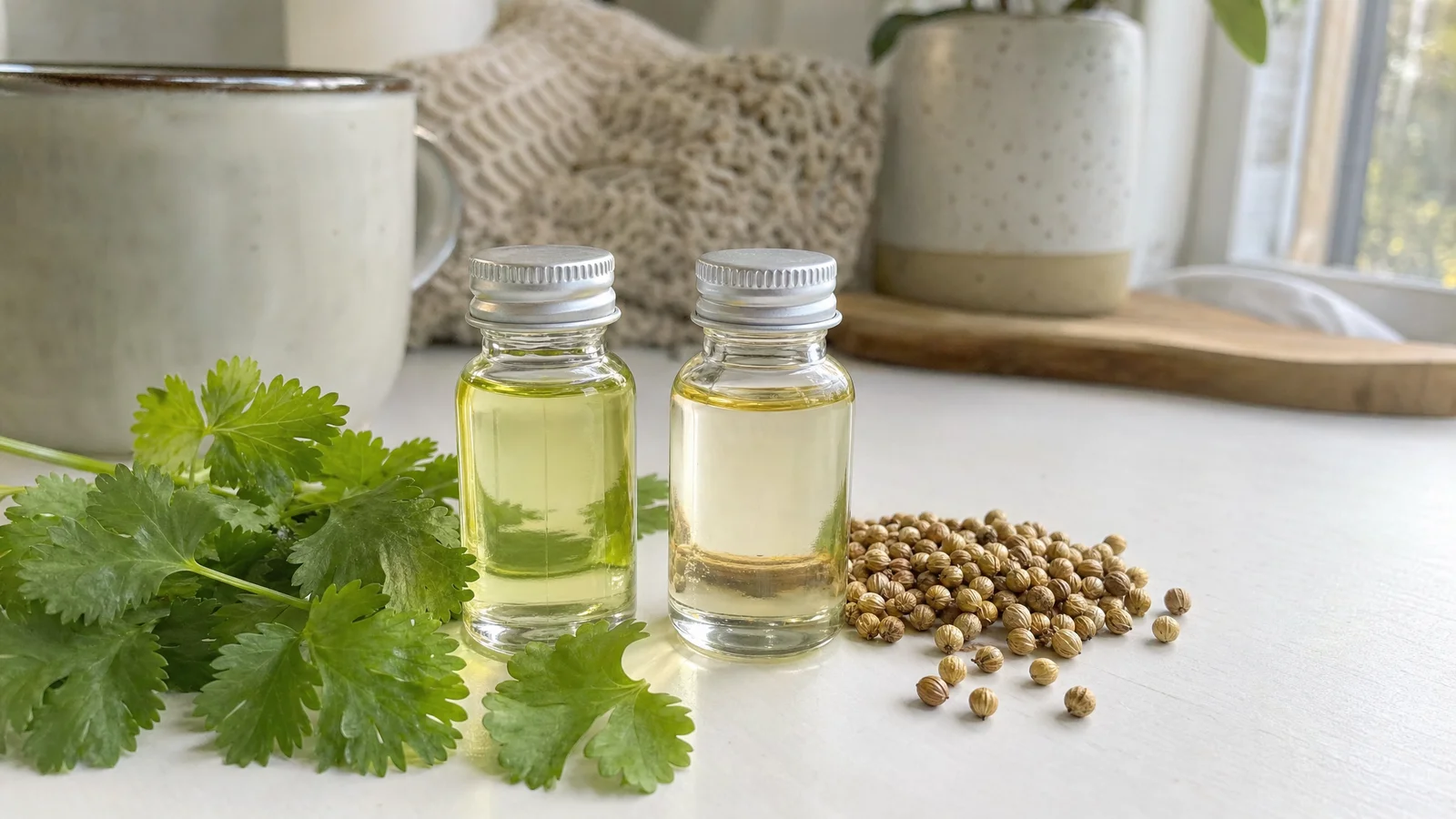
The name covers two unrelated things. One is a cooking oil that has absorbed flavor from the leaves, which is what this guide is about. The other is the steam-distilled essential oil we sell, which is for aroma and diluted skin use and is not for the kitchen. If your goal is a drizzle for dinner, you do not need anything from us. The difference is explained in our comparison of the two, and our ingestion post covers why the essential oil is not an ingredient.
The one thing to understand first
Fresh herbs are moist, low in acid and can carry soil bacteria, and oil is a low-oxygen environment. The University of Georgia Extension explains that spores of Clostridium botulinum that may be on the plant can germinate and make toxin under those conditions (Schwan, UGA Extension Circular 1334, 2024). Health Canada adds the detail that makes this memorable: spoiled oil may look, smell and taste normal (Health Canada). So the usual kitchen test of sniffing the jar tells you nothing, and the date on the label does the work instead.
The US CDC's rule for home cooks is short: refrigerate homemade oils made with garlic or herbs, and throw away unused oil after 4 days (CDC). Health Canada allows a week, so the agencies differ slightly. We would follow the shorter number, because the cost of a smaller batch is a handful of leaves.
Method one: fresh leaves, small batch, cold
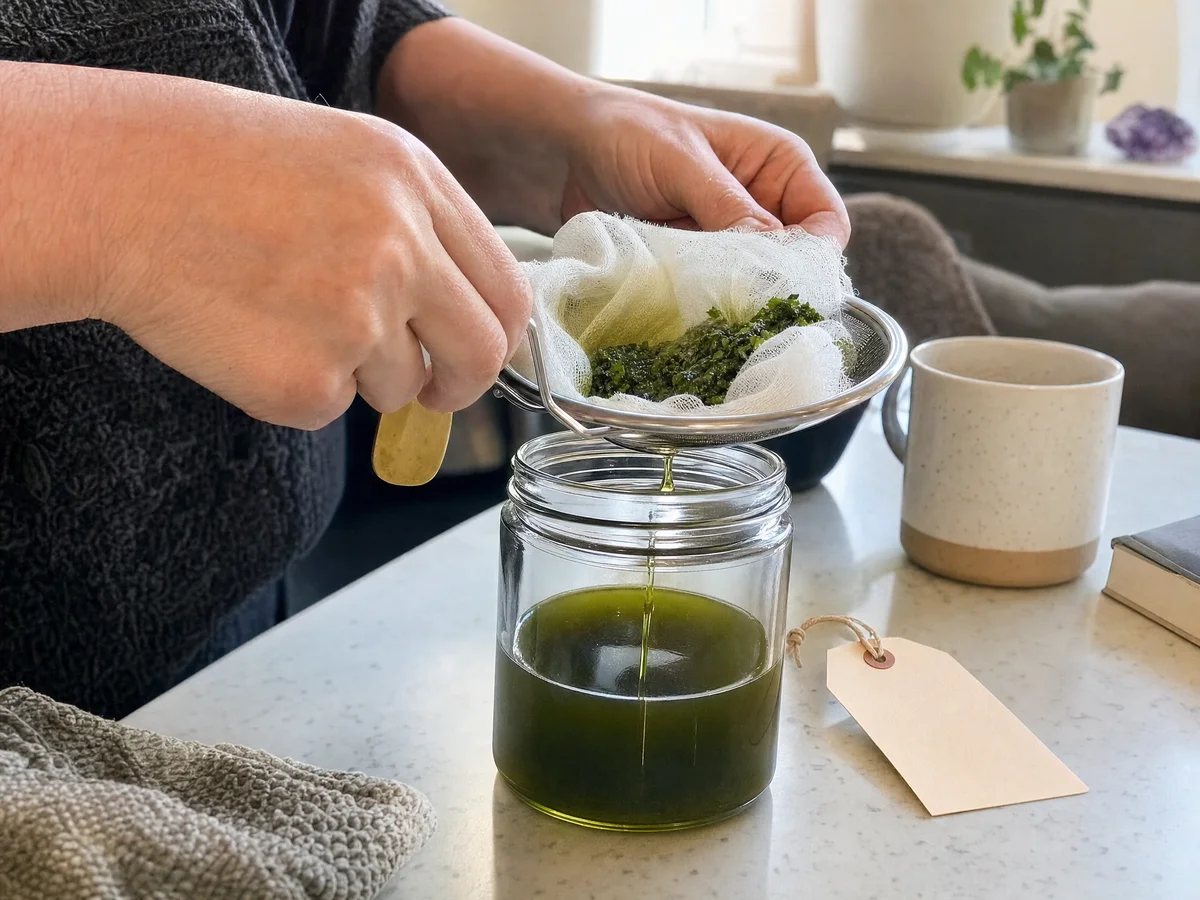
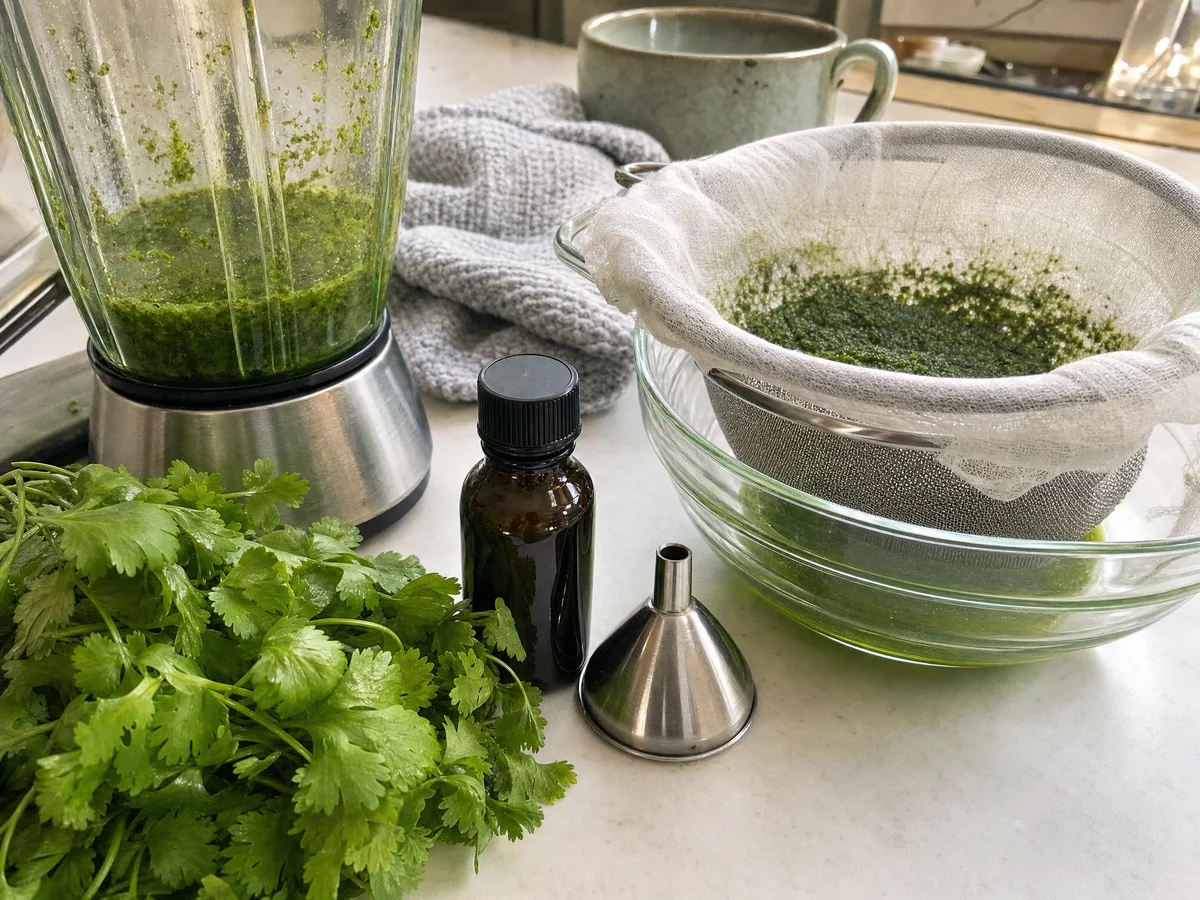
This is the one most people want, because cilantro's flavor lives in the fresh leaf. The UGA circular's route for fresh or dried herbs is to heat the oil to 180 F, combine it with the herbs, keep the result in the refrigerator, and discard it after 4 days or freeze it until use.
- Make only what you will finish in 4 days. A few tablespoons beats a cup.
- Write the date on the jar.
- Never leave it on the counter to infuse. Health Canada says never to store herbs in oil at room temperature.
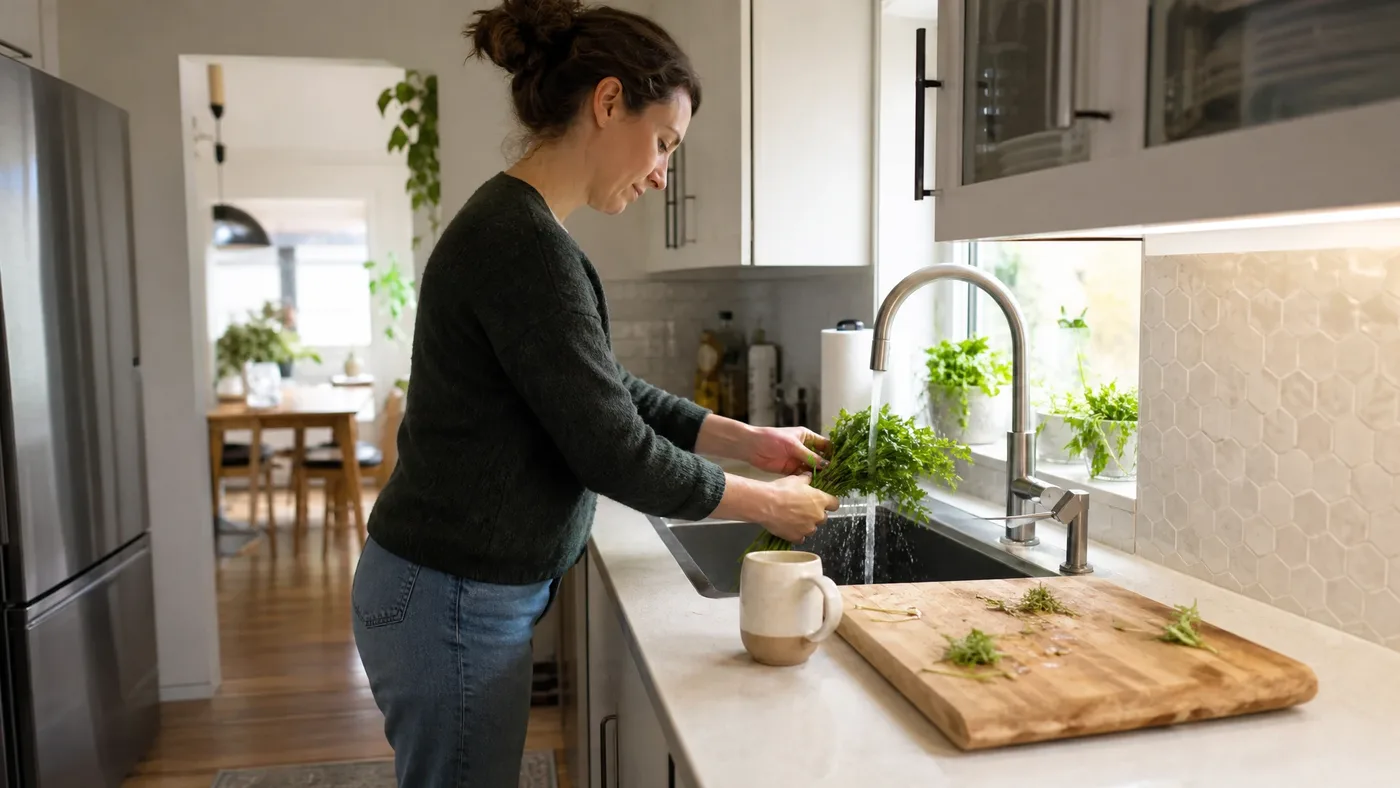
- Pat the leaves dry first, because extra water works against both flavor and safety.
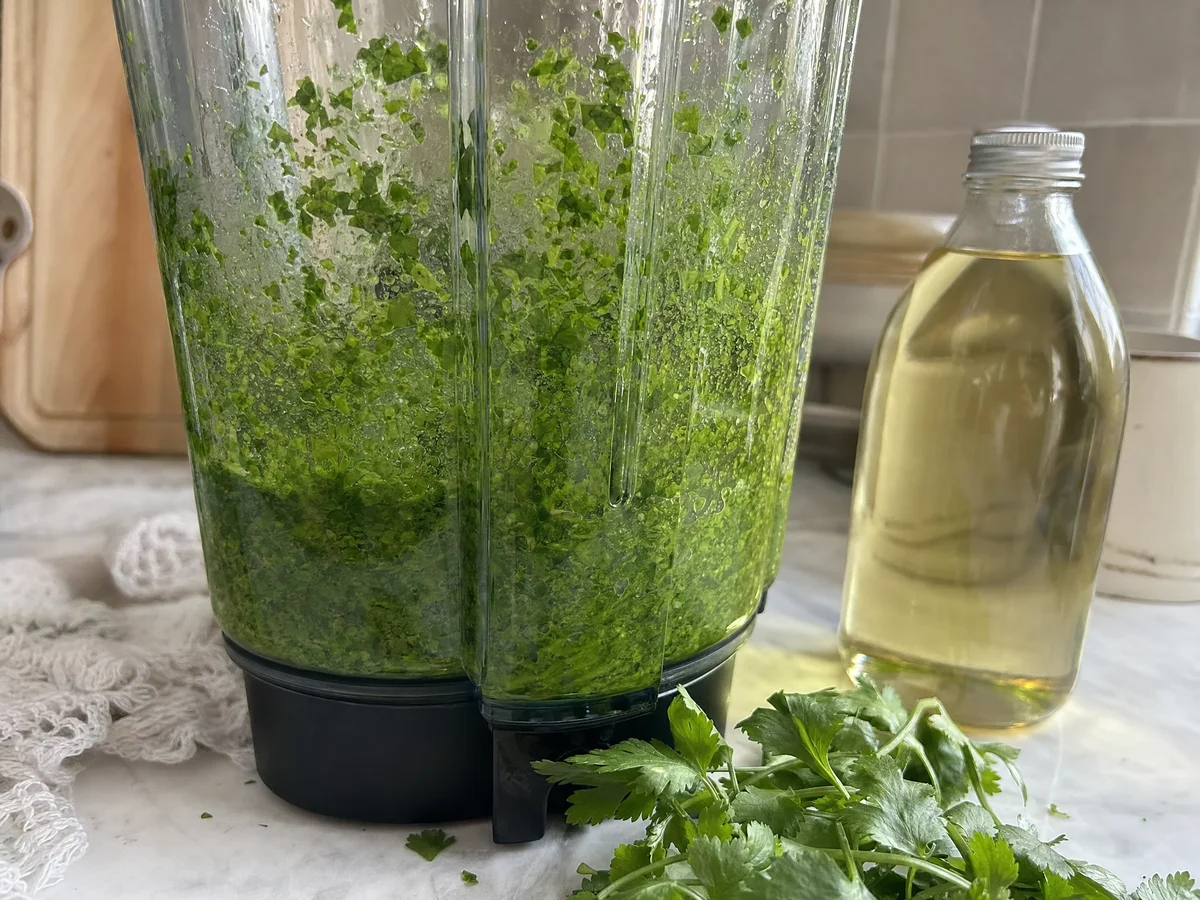
One thing worth knowing, offered as reasoning rather than a sourced fact: pouring 180 F oil over fresh leaves cooks their surface, so the flavor moves toward cooked herb. If a bright raw taste is your goal, a blended sauce eaten the same day, like our cilantro olive oil sauce, is the better fit.
Method two: dried leaves, longer life
University of Maine Extension calls dried garlic and herbs the safest home method, since dried material lacks the moisture bacteria need. Its steps are to heat the oil to 180 F, pour it over the dried herb in a clean container and cap it, and not to store the oil for more than three months (Bulletin 4385). That is general dried-herb guidance, not specific to cilantro, and it does not say how the result tastes, so the fresh method is the one to try first if flavor is your priority.
Method three: acidifying, and where cilantro fits
The UGA circular also describes a room-temperature route that begins with soaking the fresh ingredient in a citric acid solution, 1 tablespoon of citric acid in 2 cups of water, to reach a pH of 4.2 or lower. Its instructions cover garlic, basil, oregano and rosemary only, and it says vinegar or lemon juice cannot stand in for the citric acid. Cilantro is not on the list. So we do not have a tested way to make a shelf-stable fresh cilantro oil at home, and a pantry-stable bottle on a store shelf relies on commercial processing that a home kitchen does not have.
Whichever route you choose, keep the practical side simple. Use a clean jar that you have washed in hot soapy water, a dry spoon, and a label you can read at a glance. Smell and taste are not guides here, so the date on the jar is your only reliable signal.
Quick guide
| You want | Do this | Keep it |
|---|---|---|
| Bright green flavor tonight | Blend a raw sauce | Fridge, discard by day 4 |
| A bottle for the week | Method one, small batch | Fridge, 4 days |
| A longer-lived oil | Dried herb per UMaine | Up to 3 months |
| Flavor for later | Freeze it | Freezer |
Who might skip it
If you will not reliably refrigerate and date the jar, or you are preparing food for an infant, a pregnant relative or someone with a weakened immune system, check with a physician or registered dietitian first. For most of us, the easier route is chopping cilantro fresh, or freezing it, and adding it to warm oil in the pan at the last moment. If you were hoping to flavor food from our bottle, that bottle (find it in our shop) is for scenting, and we make nothing for the plate. If scenting is what you are after, bulk sizes and our guide to buying cilantro essential oil in bulk cover the larger end. For cilantro scent in a candle, soap or diffuser, our storage guide for the essential oil is the one to read, and it does not apply to the kitchen oil.
Make it small, date the jar and keep it cold, and you can enjoy a week of green drizzle with a clear conscience.
Cilantro Essential Oil
Cilantro Essential Oil from our own shop, in sizes from 0.5 oz to bulk.
From $13.99
Shop Now →Sources & Further Reading
- Schwan CL, UGA Extension, 2024. How to Safely Make Infused Oils (Circular 1334). fieldreport.caes.uga.edu/C1334
- US CDC. Preventing botulism: home-canned foods. cdc.gov/botulism
- Health Canada, 2013. Food safety tips for vegetables and herbs in oil. canada.ca
- University of Maine Cooperative Extension. Bulletin 4385. extension.umaine.edu/4385e