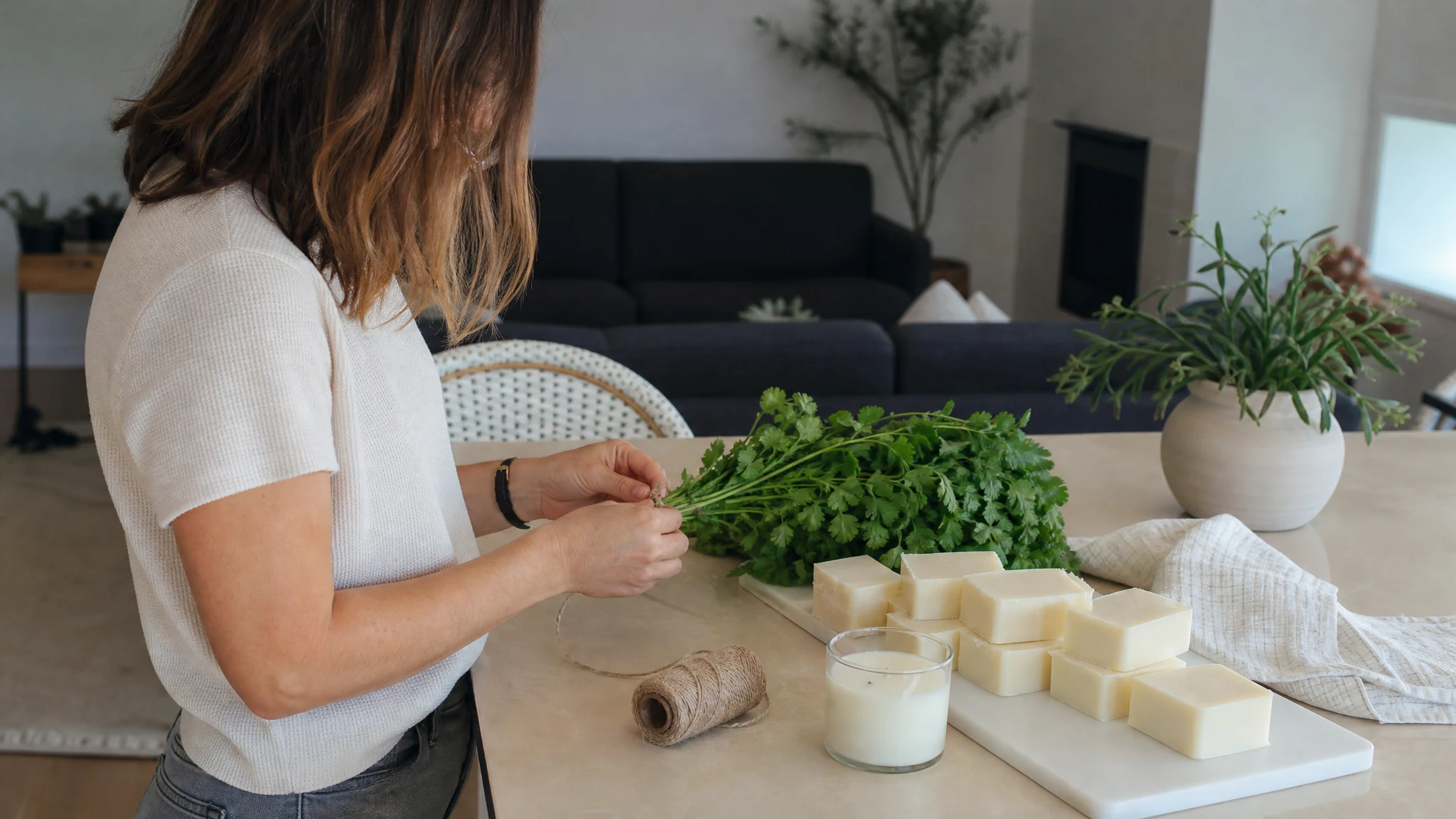
Craft Projects for Cilantro Oil: What Works Best
Cilantro oil is not the easiest oil to craft with. It is pungent, built mostly from aldehydes, and it takes over a blend fast. That makes it a lovely fit for a few projects where you control the dose, and a poor fit for others.
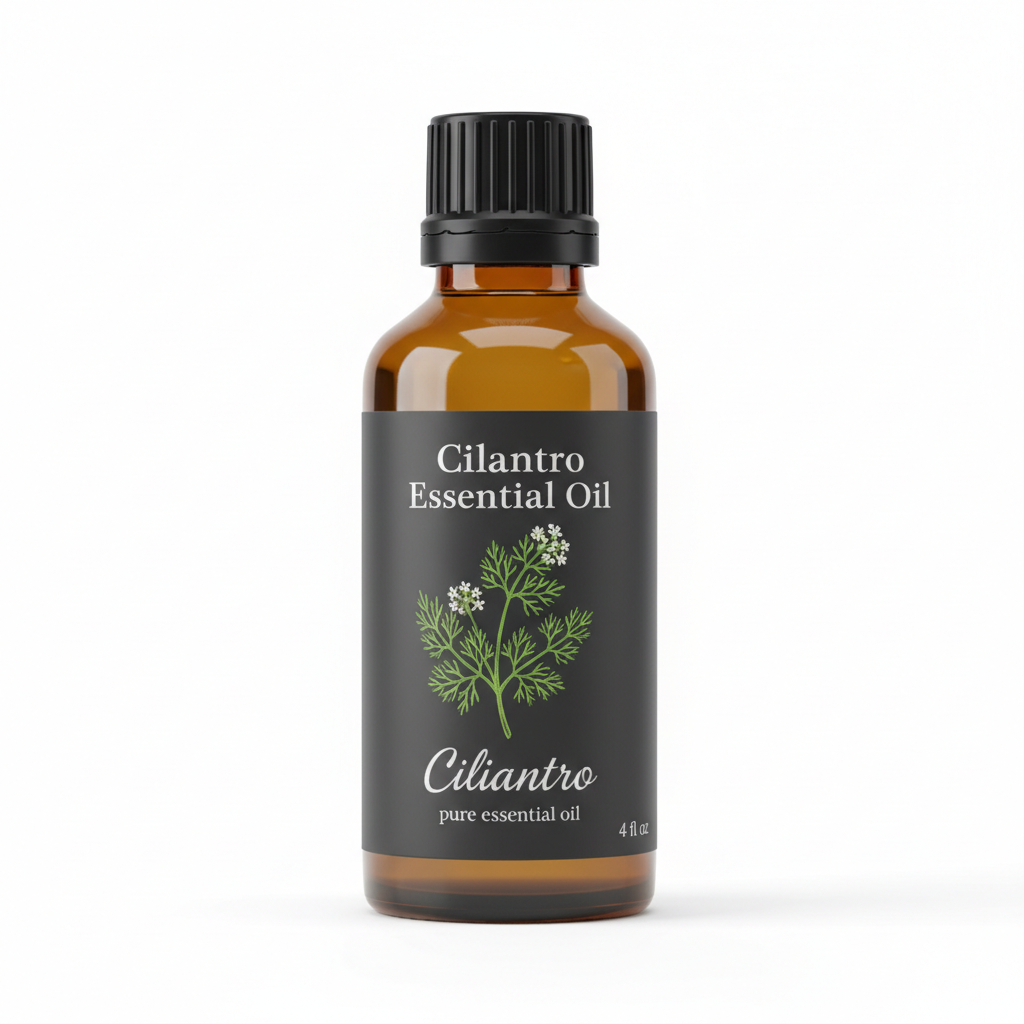
Cilantro Essential Oil
Our own Cilantro Essential Oil, in sizes from 0.5 oz to bulk.
From $13.99
Shop Now →Our ranking
From best fit to trickiest: sachets and dry scent, solid perfume, candles, then soap. Anything involving fabric, paper or wearable skin products needs the most care. We sell the oil only, so wax, wicks, lye, soap base and carriers come from a craft supplier. For the kitchen and household side, see our uses post.
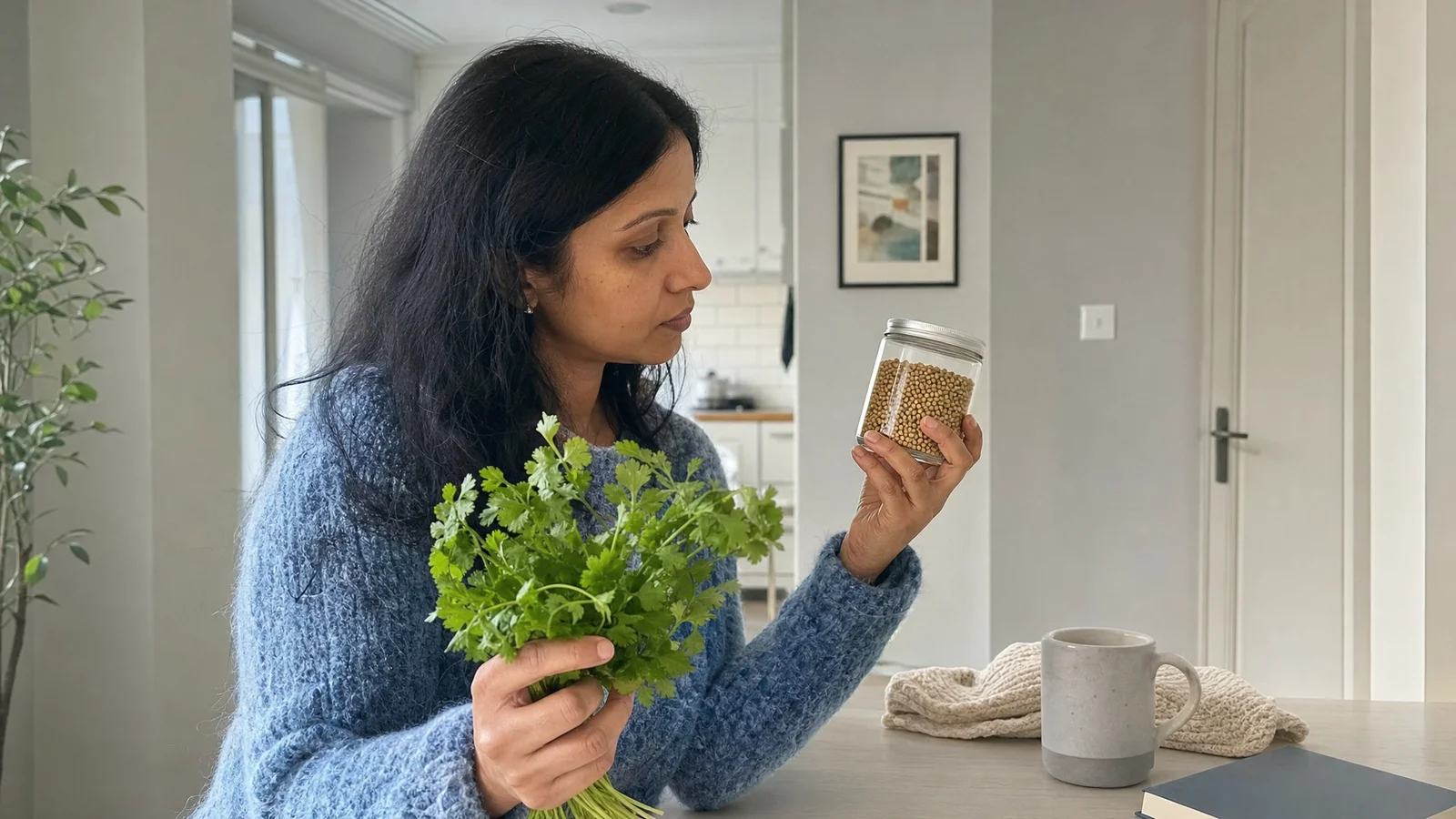
Before any project, spend a minute just smelling the oil. Hold the bottle a hand's width from your nose rather than right under it, and you will notice the green, citrusy edge first. A short sniff tells you more than a long one, since this is a scent that tires the nose quickly.
Why it behaves differently
In a study of four coriander leaf cultivars, distilled oil was dominated by decanal, (E)-2-decenal, (E)-2-dodecenal and (E)-2-tetradecenal, together roughly 59% to 65%, while the fresh-cut note of the living leaf was largely absent (Kumar et al., Front Plant Sci, 2022). So the oil is waxy, citrusy and fatty-green rather than "fresh cut herb", as our composition guide explains. We describe it as a top note, the part that leaves first, which shapes every project below.
Sachets and dry scent
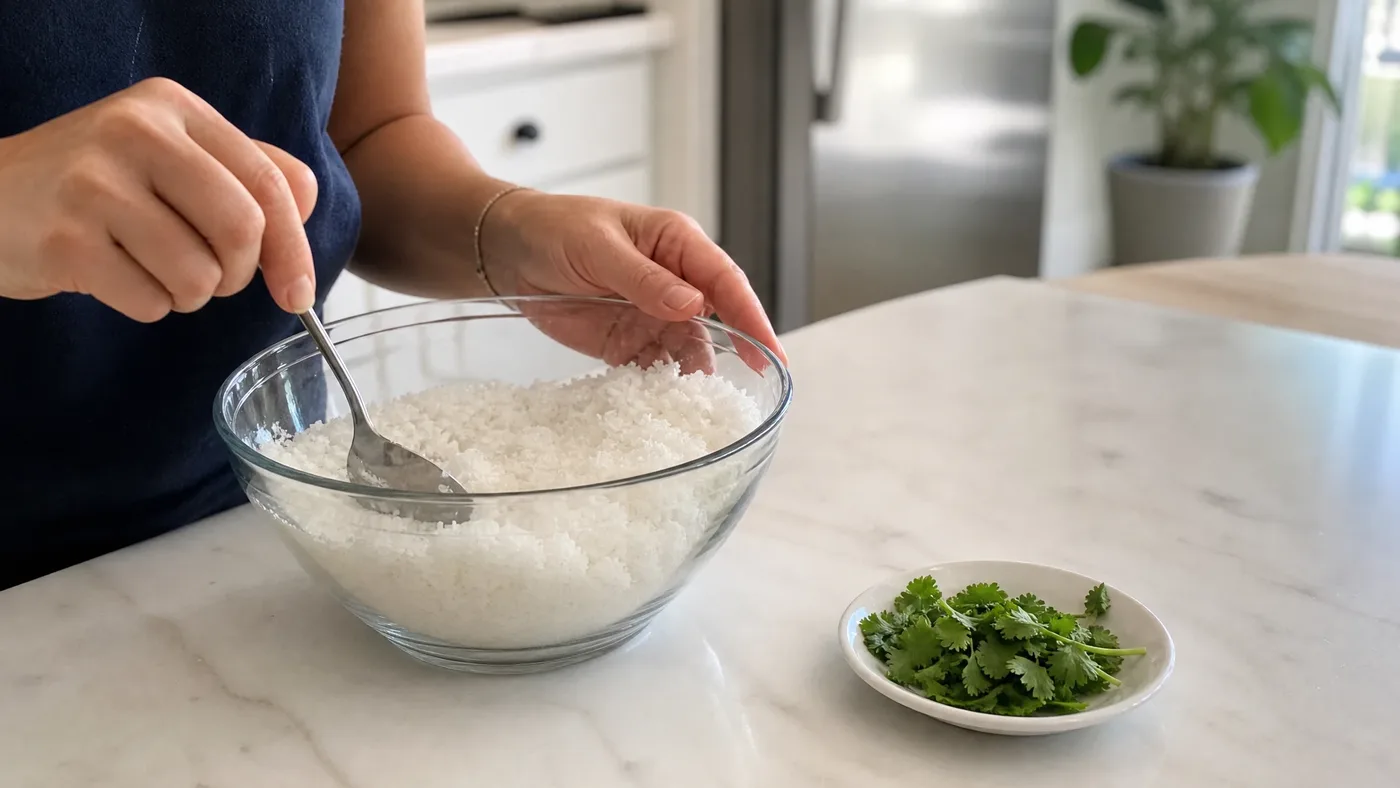
A few drops on a cotton pad or an unglazed ceramic bead in a closed pouch is the simplest use: no heat, no lye, no skin contact. Because it is a top note, expect it to fade, so pair it with something slower (we recommend lime, lemongrass, black pepper, ginger, petitgrain or bergamot as partners) and refresh it. Use few drops. Keep sachets away from children and pets, and call a veterinarian if an animal chews one.
A sachet is also a lovely first project because it is easy to adjust. Add a drop, smell it the next day, and add another only if you want more. Little linen bags, cotton pads and unglazed beads all work, and a drawer or a closet makes a quiet place to let them sit.
Solid perfume or balm
As a top note, the oil suits a small share of a balm made from a carrier and wax. Keeping it water-free sidesteps the preservative question. For dilution, the Tisserand Institute guidelines give 0.5% to 1.2% for facial products and 1% to 3% for body oils, and our own guidance is 0.5% to 2%; with this oil we would stay toward the low end (Tisserand Institute). Our dilution guide runs the percentages and the perfume post has a worked formula. Patch test first, and ask a cosmetic chemist before you sell anything.
Candles
Candle makers add fragrance as a percentage of wax weight, and we have no verified maximum for cilantro oil, so use your wax supplier's limits. One useful number: decanal has a closed-cup flash point of 83 C (181 F) in a Sigma-Aldrich safety sheet quoted by PubChem, so add the oil at the cooler end of your wax's recommended range, not into smoking wax. On whether burning scented candles affects indoor air, a chamber study of four waxes and five fragrances found most pollutants below guideline values, with exceptions for nitrogen dioxide, acrolein and benzo[a]pyrene (Salthammer et al., 2021), and an industry-authored emissions study concluded no known health risk in normal use (Petry et al., 2014). Neither used cilantro oil. Burn a small candle in a ventilated room, trim the wick and never leave it unattended. A top note throws weakly when hot, so many makers blend it with a heavier material.
Cold-process soap
Lye comes first: the NIOSH Pocket Guide lists a ceiling exposure limit of 2 mg/m3 for sodium hydroxide and notes skin and eye burns, so goggles, gloves and ventilation come before scent (NIOSH). We found no source on whether cilantro oil's aldehydes survive saponification, so we give no usage rate. Start with a small test bar, record the percentage you used, and expect the scent may fade. Melt and pour base is the lower-stakes way to start because it needs no lye.
Whatever you choose, give each project its own label and a short note about the amount used. Craft tables fill up quickly, and a month from now you will not remember which little tin was which.
Sprays, fabric and paper
Essential oil does not dissolve in water, so a spray needs a solubiliser or alcohol and often a preservative; our room spray post covers it. Do not spray oil directly on fabric, wood or paper. For a scented card, put a drop on a separate felt insert behind it.
Paper projects reward restraint more than any other. A card or a bookmark with a tiny amount of scent on a hidden insert is charming, while an overloaded one is mostly a smell of wax and oil. Aim for something you only notice when you lift it close.
What to skip
Do not use it in anything eaten or put in the mouth, because we say not to take it internally (see the ingestion post). Check with a veterinarian or pediatrician before making melts or candles for homes with cats or small children; our pets and kids posts cover what sources say. And because the oil divides noses, buy the smallest bottle first.
Start with a sachet, move to a small anhydrous balm, and treat soap as an experiment worth a single bar.
Cilantro Essential Oil
Cilantro Essential Oil from our own shop, in sizes from 0.5 oz to bulk.
From $13.99
Shop Now →Sources & Further Reading
- Kumar S. et al., 2022. Chemical composition of fresh leaves headspace aroma and essential oils of four coriander cultivars. Front Plant Sci. pubmed.ncbi.nlm.nih.gov/35251089
- Tisserand Institute. Dilution guidelines. tisserandinstitute.org/safety/dilution
- PubChem, decanal (CID 8175). pubchem.ncbi.nlm.nih.gov/compound/8175
- Salthammer T. et al., 2021. Emissions from burning scented candles in a chamber. pubmed.ncbi.nlm.nih.gov/33964641
- Petry T. et al., 2014. Scented candle emissions and consumer exposure. pubmed.ncbi.nlm.nih.gov/24582651
- NIOSH Pocket Guide to Chemical Hazards, sodium hydroxide. cdc.gov/niosh/npg/npgd0565