Cilantro Oil in Candles: How a Top Note Behaves
Cilantro oil is a bright, green, herbaceous top note with a citrusy edge, and top notes are the first part of any scent to leave the room. That is the whole story of putting it in a candle: it smells vivid on a paper strip, but a candle is a hot, long, room-filling experience, and a fast-evaporating, pungent oil behaves differently there than it does in a diffuser.
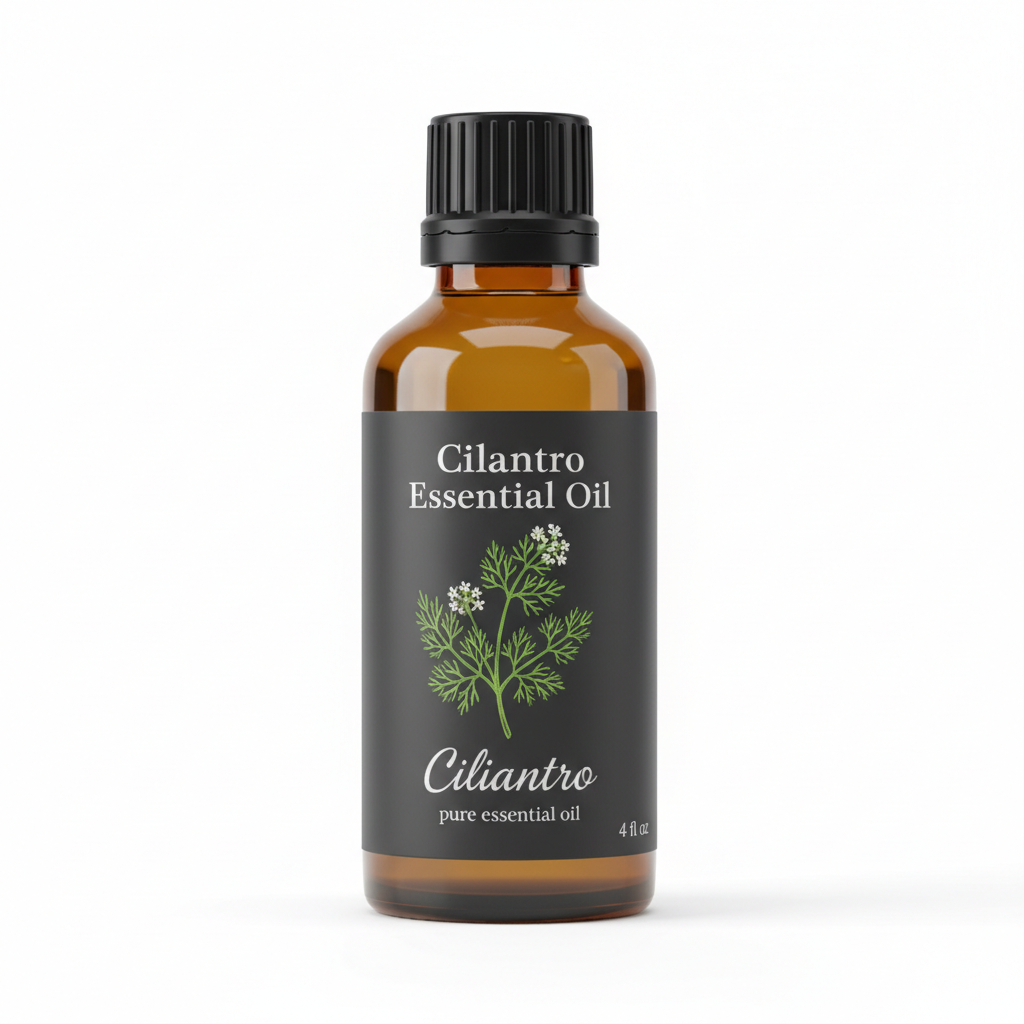
Cilantro Essential Oil
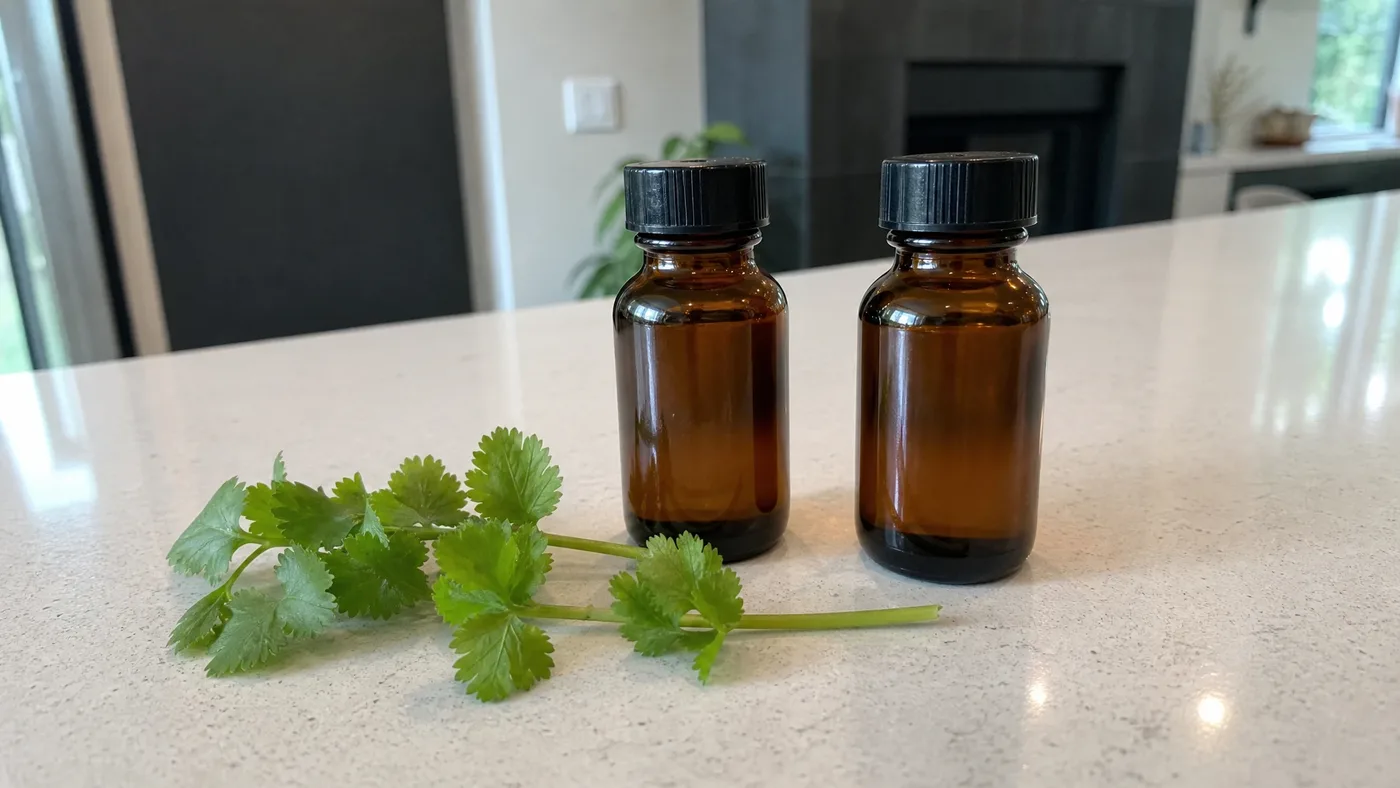
Our own Cilantro Essential Oil, in sizes from 0.5 oz to bulk.
From $13.99
Shop Now →What a top note does under heat
Top notes are the most volatile part of a fragrance. In a lit candle, that suggests the scent may show up quickly in the melt pool and then fade sooner than a heavier material would. We would plan for an early peak and test for the rest rather than assume it lasts. It is also a strong, divisive aroma, and a candle cannot be switched off from the other side of the house, so smell it on a strip with a few people first, and read what cilantro oil smells like if you want a sense of how it reads.
One easy way to imagine it is to think of the first minute after you walk into a bakery. The big, bright smell hits you at the door and then settles into the background. A top note in a candle can do something similar: lovely at the first light, then quieter. That is not a flaw, just how light, fast scents behave, and it helps to plan around it.
Your wax maker sets the numbers
Three things decide how a candle burns: the wax, the wick and the fragrance load. Wax suppliers publish a maximum fragrance load and a recommended pour or add temperature for each of their waxes, and that sheet is your ceiling. We do not sell wax, wicks or containers, so those come from a candle-supply shop, and we will not guess a percentage on their behalf.
It also helps to know that essential oils are not engineered for burning the way candle fragrance oils are, and some behave differently in a wick. Our post on fragrance oil versus essential oil explains the difference. If your process needs a flash point or a safety data sheet, ask us in writing through the contact page rather than assuming.
If you have never tried a candle with an essential oil, it is a gentle craft to start, and an honest one. You will smell the wax first, the oil second, and the room third. Keeping the batch small keeps the lessons small too.
A small test beats a big pour
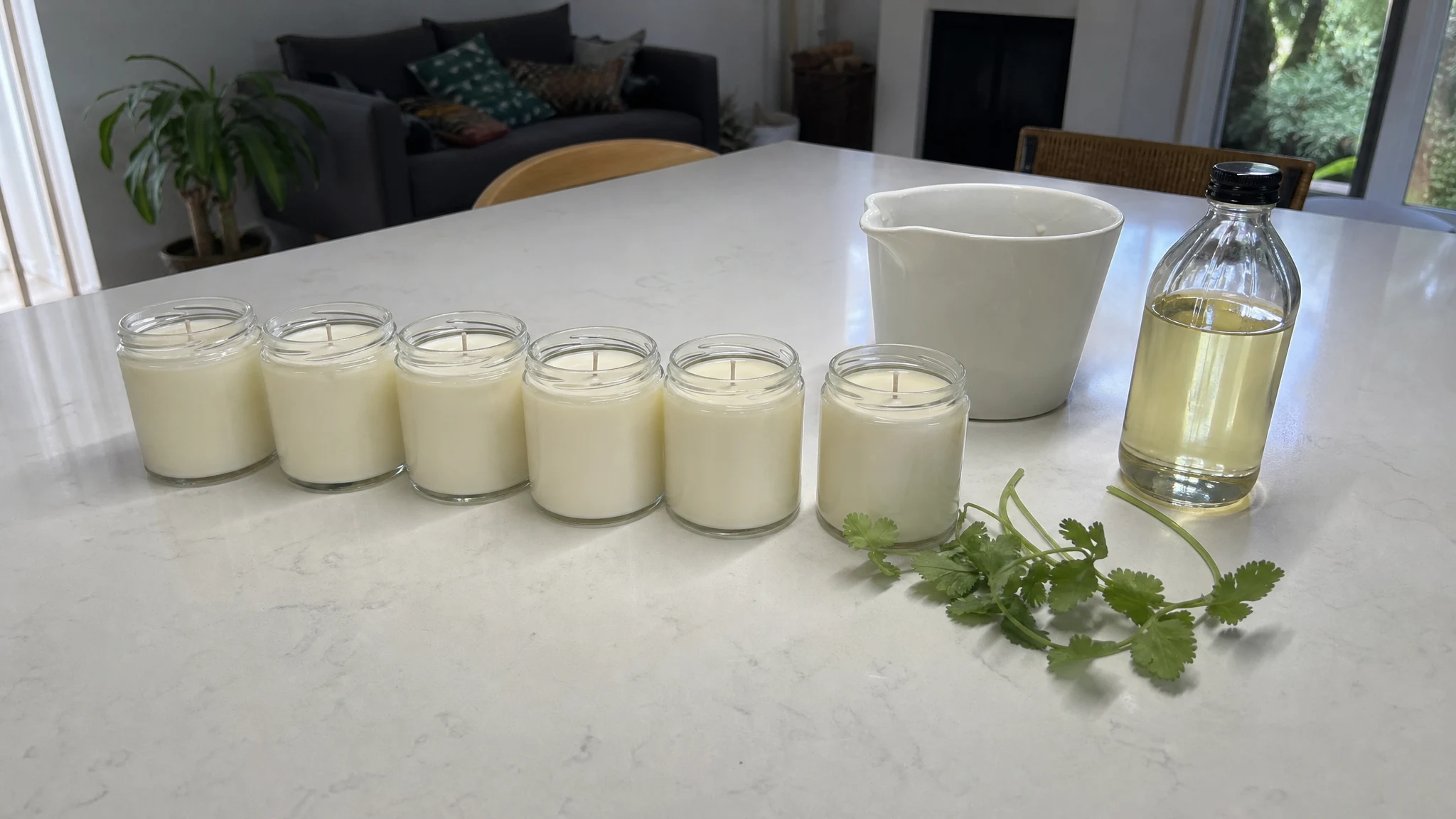
- Start with our smallest bottle. Half an ounce is enough for several test candles (see the size guide).
- Change one thing at a time: same wax, wick and container, with two or three fragrance loads below your wax maker's ceiling.
- Let the candles cure, then judge cold and lit, at 15 minutes, an hour and the end.
- Watch the wick and the pool. Soot, a mushrooming wick or a drowned flame mean the formula needs work, whatever the scent.
- Record the lot reference from the bottle so you always know which batch went into which pour.
Temperature matters too. Oil added to very hot wax can flash off its volatile top note before you pour, and oil added too cool may not blend in properly, which is why the maker's add temperature is worth following closely.
Between pours, wipe your tools, cap the bottle and open a window. Cilantro oil lingers on spoons and thermometers more than you might expect, and you do not want a leftover note showing up in the next candle.
What emissions research says
Two studies are worth knowing for anyone who burns or sells scented candles, with the caveat that neither tested cilantro oil. Salthammer and colleagues (2021) burned candles in an 8 cubic meter chamber, using four wax types and five fragrances across 24 experiments. Modeled indoor concentrations were mostly well below guideline values, with exceptions for nitrogen dioxide, acrolein and benzo[a]pyrene. Petry and colleagues (2014) modeled emissions in a standard dwelling and concluded scented candles pose no known health risk under normal use, though their authors include fragrance and consumer-product industry affiliations, which is useful context.
Our reading is that burning wax and wick contribute more to what a candle puts in the air than the fragrance does, though fragrance still matters to anyone who reacts to it. Candles are a poor match for rooms with cats, birds or people with breathing difficulties, whatever the scent, so see our pets post and ask a veterinarian.
Think about where the candle will live, too. A lively green scent is lovely in a kitchen, a hallway or a workroom. In a small closed room, the same scent can feel like too much, so plan a spot with air moving through it.
If you sell candles
Labeling, warnings and product standards for candles vary by where you sell, and the FDA does not regulate candles as cosmetics, so check with a product-safety adviser or your insurer. Our candle and soap maker's buying guide covers what to ask any oil seller.
If an herb-green candle with dependable burn performance matters most, a fragrance oil made for candles may serve you better. If you love the real thing, test small and let your nose be the judge.
Cilantro Essential Oil
Cilantro Essential Oil from our own shop, in sizes from 0.5 oz to bulk.
From $13.99
Shop Now →