
Essential Oil Claims: Cosmetic vs Drug Rules Explained
What an essential oil can legally be said to do depends less on the oil than on the sentence next to it. In the United States the same bottle can be a cosmetic, a drug, or a pesticide depending on what the seller says it is for, and each category has different rules. This is general information from the agency pages we read, not legal advice; for your own labels, ask an attorney or a regulatory consultant.
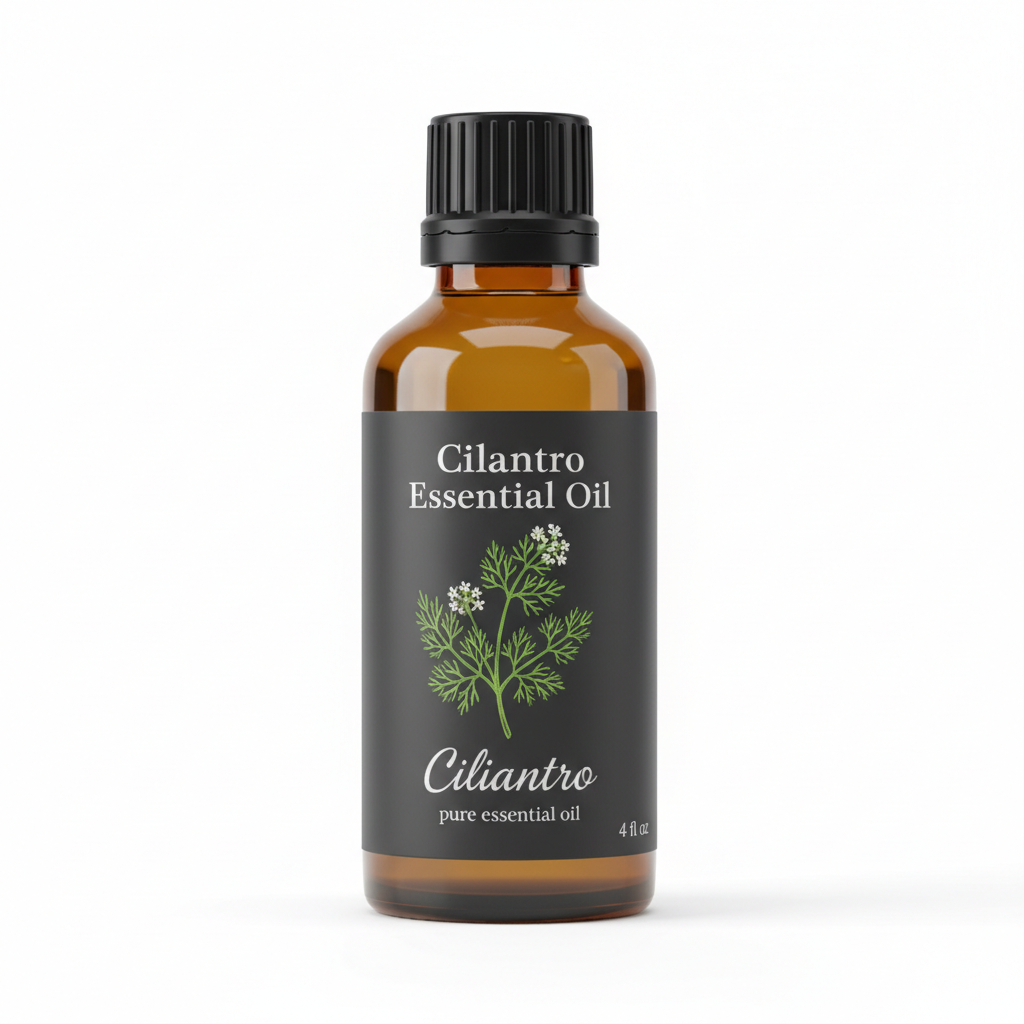
Cilantro Essential Oil
Our own Cilantro Essential Oil, in sizes from 0.5 oz to bulk.
From $13.99
Shop Now →Start with the sorting rule: intended use
FDA's page Is It a Cosmetic, a Drug, or Both? (Or Is It Soap?) says that "whether a product is a cosmetic or a drug under the law is determined by a product's intended use." Intended use is read from three things: claims on the label, in advertising, on the internet or other promotional material; consumer perception, which "may be established through the product's reputation"; and ingredients with a well-known drug use. The page gives the aromatherapy case directly: a fragrance marketed for promoting attractiveness is a cosmetic, while a fragrance marketed with "aromatherapy" claims, such as helping the consumer sleep or quit smoking, is a drug because of its intended use. A product can be both, and then it must meet the requirements for both.
The practical consequence is that the oil itself is irrelevant to the test. Lavender sold as a room fragrance and lavender sold as a sleep aid are different products in law, though the liquid is identical.
Illustrations: one oil, three kinds of sentence
The phrasings below are our own illustrations of the pattern, written for this article. They are not quotes from any seller.
| Sentence on a page | Where it lands, by the FDA page above |
|---|---|
| "Bright, green, citrus-edged aroma for diffusing and perfumery." | Describes smell and use as a fragrance: cosmetic-style. |
| "Diffuse at bedtime for deeper sleep." | A sleep claim, the aromatherapy example FDA names: drug claim. |
| "Cleanses your body of heavy metals." | A body-function claim about a medical condition: drug claim, and one FDA's chelation page addresses directly. |
| "Keeps the mosquitoes that carry dengue away." | A pest claim tied to disease: pesticide rules (EPA), not cosmetic rules. |
The last two are the claims behind two of our sibling articles, on the heavy-metal idea and on insect repellence.
What the enforcement looks like
FDA's June 2022 warning letter to Young Living Essential Oils (FDA warning letter 615777) is a useful example because it went beyond the company's own pages. FDA said the products were unapproved new drugs and misbranded, citing claims on the company's websites and on its consultants' social media posts. Examples it quoted included a consultant's Instagram line that lemongrass "poses a very strong argument for being the 'go-to' when you find yourself not feeling well" and a website line that a muscle rub "soothes sore muscles in seconds." FDA also cited the company's compensation plan and the redirection of consumers from consultant sites to company sites as part of how the products were marketed, and it gave the company 15 working days to respond, warning of possible seizure and injunction. For a small seller, the lesson is that a claim you did not write but that people sell under your name can still count as evidence of intended use.
Reasoning from that, a seller who wants to stay on the cosmetic side has a checklist that costs nothing: read every product page, caption, email, review you repost and affiliate script as if it were label copy, and delete any sentence that names a body function, a condition or a pest that carries disease.
The FTC layer: substantiation applies to every claim
Separate from FDA, the FTC's Health Products Compliance Guidance says advertisers need "competent and reliable scientific evidence" for health claims, which generally means randomised, controlled human clinical testing. It states that animal and in vitro studies, anecdotal evidence and testimonials are generally insufficient on their own, that the research must match the advertiser's specific product, dose and formulation, and that a disclaimer does not rescue a deceptive claim. That matters for essential oils, where most studies are on a different plant part, an extract, a cell culture or a mouse. Our own articles on sleep and stress show the gap: the coriander anxiety studies we found were in mice and used seed or fruit extracts.
The pesticide layer and the cosmetic labeling layer
EPA's minimum-risk (25(b)) exemption requires that the active ingredients are only those listed in 40 CFR 152.25(f)(1) and that the label "cannot state or imply that the product can or will control or reduce organisms that pose a threat to human health"; states may add their own registration (EPA). In that list, we found cedarwood, citronella, lemongrass, peppermint and rosemary oils, not coriander or cilantro.
For products that stay cosmetics, FDA's Cosmetics Labeling Guide lists an identity statement, net quantity of contents, the name and business address of the manufacturer, packer or distributor, an ingredient declaration in descending order of predominance (with fragrance, flavor and trade-secret ingredients handled separately), and a warning statement "whenever necessary or appropriate to prevent a health hazard." A cosmetic whose labeling is "false or misleading" is misbranded.
The Modernization of Cosmetics Regulation Act of 2022 added duties on top. FDA's MoCRA page lists facility registration renewed every two years, listing of each marketed cosmetic with its ingredients, records supporting safety, reporting of serious adverse events within 15 business days, and fragrance allergen labeling requirements to be established. It also describes an exemption for certain small businesses from some of these requirements (GMP, registration and listing), which does not cover products meant to be injected or taken internally or that regularly contact the eye's mucous membrane. We are not telling you whether you qualify; that is a question for a regulatory consultant.
Dietary supplement "structure/function" claims are a different statutory category again. Essential oils sold for skin or air are not supplements, and nothing in this article is advice for a seller who wants to put oil in a capsule.
How our own pages handle it
Our /our-oil/ page states "no medical claims," and the shop page's safety copy is about dilution (0.5% to 2%, roughly 3 to 12 drops per ounce of carrier), patch testing, and keeping the oil away from eyes, children and pets and out of internal use. We sell one cilantro leaf oil, undiluted, with a Certificate of Analysis on the shop page. We have no legal or regulatory staff and nobody here is an attorney; this article reports what the agencies publish. If you are a maker thinking about wholesale quantities, see buying in bulk for makers, and for the word "therapeutic grade," see what that label means.
Limits
These pages change, and enforcement depends on facts we cannot see. This is a US-only summary, it covers only the agencies named, and it does not cover state law or other countries. Before you publish a claim about a body function, a disease, or a pest, have an attorney or regulatory consultant look at the exact words.
Cilantro Essential Oil
Cilantro Essential Oil from our own shop, in sizes from 0.5 oz to bulk.
From $13.99
Shop Now →Sources & Further Reading
- FDA. Is it a cosmetic, a drug, or both? (Or is it soap?). fda.gov
- FDA, 2022. Warning letter to Young Living Essential Oils (615777). fda.gov warning letters
- FTC. Health Products Compliance Guidance. ftc.gov
- EPA. Conditions for minimum risk pesticides. epa.gov
- FDA. Cosmetics Labeling Guide. fda.gov
- FDA. Modernization of Cosmetics Regulation Act of 2022 (MoCRA). fda.gov
- FDA. Questions and answers on unapproved chelation products. fda.gov