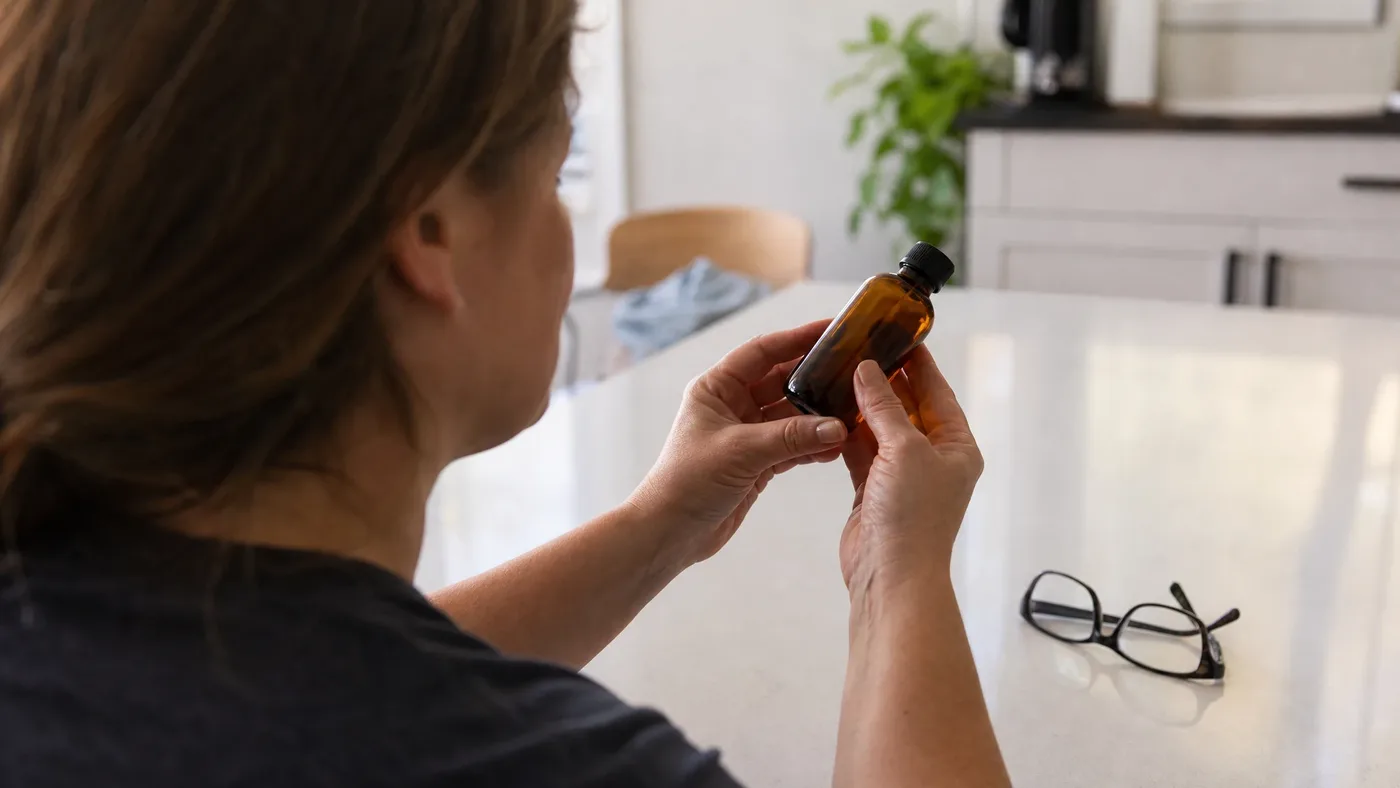
What Therapeutic Grade Means on an Essential Oil Label
No official grade called "therapeutic grade" exists for essential oils, so the phrase cannot tell you anything a lab report, a lot number or a botanical name cannot tell you better. We say that as sellers of a cilantro leaf oil whose own shop page carries the words "100% Pure," and the second half of this article explains why we would rather you ignore those words, ours included, and read the Certificate of Analysis instead.
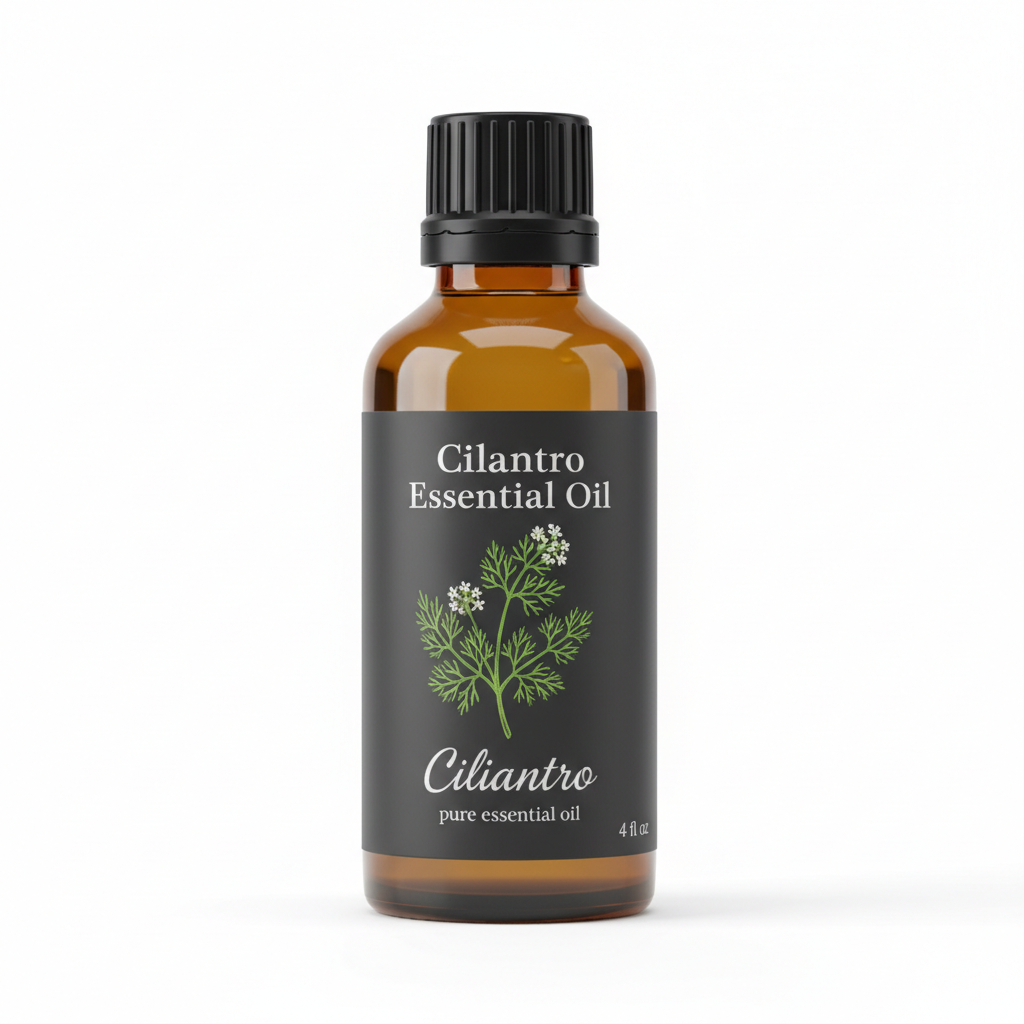
Cilantro Essential Oil
Our own Cilantro Essential Oil, in sizes from 0.5 oz to bulk.
From $13.99
Shop Now →The verdict, with the evidence for it
Robert Tisserand wrote on his own site in 2010: "there is no independent, industry standard that is known as 'therapeutic grade.'" (Tisserand, 2010). That is one author's blog statement, not a regulation, so check it against the regulators. The FDA's page on cosmetic labeling claims says the agency "does not have a list of approved or accepted claims for cosmetics," that labeling "must be truthful and not misleading," and that the Federal Trade Commission regulates advertising claims (FDA, Cosmetics Labeling Claims). That page does not define "natural," "organic," "hypoallergenic," "pure" or "dermatologist tested" either. Reasoning from those two statements together: a grade word on a bottle is the seller's own description, and the only external check on it is the general rule against misleading claims.
We searched for a government or standards-body definition of the phrase and found none, but absence of a source we could open is not proof that no private scheme exists. Some companies publish their own internal specifications under their own names; those are company standards, not a grade anyone independent audits, and this article names no brand.
Reasoning about what such a grade would have to be: a specification works by naming measurable limits, such as which compounds must lead and in what range, so that a lab can say pass or fail. "Therapeutic" names an effect in a person, and an effect has to be shown in studies of that oil in people. We did not find such human studies for cilantro leaf oil, which is why the words on a bottle cannot stand in for them.
Why "therapeutic" is the wrong word on a cosmetic-oil label anyway
The FDA's aromatherapy page says these products are regulated mainly by intended use, judged from labeling, websites, advertising and what consumers expect. It lists claims such as relieving colic, easing pain or helping you sleep as drug claims, and states that a plant origin does not exempt a product from drug rules (FDA, Aromatherapy). Reasoning from that: a seller who advertises a "therapeutic" oil is inviting the question of what it is meant to treat, and a retailer who makes no medical claims, as we do not, has no reason to use the word. We sell a fragrance and craft oil. If you are looking for something to address a symptom or a condition, an essential oil label is the wrong place to look, and a physician or pharmacist is the right one.
What does exist: standards for named oils
Quality specifications do exist, but they are written oil by oil, and they say nothing about therapeutic effect. For coriander, the ISO listing we found is ISO 3516:1997, "Oil of coriander fruits (Coriandrum sativum L.)," a five-page standard listed as current (DIN Media listing of ISO 3516). The title matters: fruits. The standard is for seed oil, which is a different oil from our leaf oil. We did not find an ISO standard for coriander leaf oil in our searches, and the full text of ISO 3516 is sold, so we have not read its limits and quote none.
This is the point at which a cilantro buyer can be misled by a perfectly good standard. A bottle labelled "coriander" and said to meet a recognised specification may be a fruit oil whose main compound is linalool, at 60 to 73% in the three fruit oils analysed by Machado et al., Plants, 2023, while the aerial-part oils in the same study were led by 2-trans-decenal (37 to 63%) and n-decanal (13 to 30%). Compliance with a standard for one plant part says nothing about the other. Our cilantro versus coriander guide covers the naming problem.
Where we stand on "100% Pure"
Our shop page uses the phrase "100% Pure." We have to be honest about what it is: a description of the product we sell, which is a single oil with no carrier oil, additives or fillers, and not a grade, a regulatory category or a measurement. Nothing in the FDA page we read defines the word. So we ask you to rely on the Certificate of Analysis the shop page publishes, not on any word on any label, ours included. Reading that certificate is the subject of our GC/MS reading guide.
What to ask for instead of a grade
Tisserand's post points to ISO standards as the closest existing benchmark and advises asking suppliers for gas chromatography/mass spectrometry traces. His separate supplier guide treats batch-specific GC/MS from a third-party laboratory as a green flag and no analysis at all, even on request, as a red flag (Tisserand Institute, supplier guide). Turned into a table of what each label word buys you:
| What the label says | What it establishes | What to ask for |
|---|---|---|
| "Therapeutic grade" | Nothing independent; a seller's descriptor | Skip the word; ask for the items below |
| "100% pure" | A seller's description; no definition on the FDA labeling-claims page | Batch report and the seller's statement of what is in the bottle |
| "Organic" | Farming claim, certification-dependent | The certificate (see organic versus conventional) |
| Botanical name and part | Which plant and which part of it | "Coriandrum sativum, leaf," not "coriander" |
| Lot number | Ties a report to a bottle | Lot on the bottle matching the lot on the report |
| GC/MS report | Relative composition on the day it was run | Third-party laboratory, method line, retention indices |
Our own pages say an independent laboratory analyses each batch to confirm leaf character, and that bottles carry dates and a lot reference. That is a process we can describe. It is not a grade, and it does not say anything about what the oil would do for you.
Limits and who to see
A report tells you what is in a bottle; it does not tell you whether that oil is right for a particular person. Our oil is for fragrance and craft use, diluted to 0.5% to 2% for skin (roughly 3 to 12 drops per ounce of carrier), patch tested first, kept away from eyes, children and pets, and never taken internally. If a product tells you to swallow or apply an essential oil neat on the strength of a grade, that instruction is the seller's, not a regulator's or a standard's. For questions about a skin reaction, ask a dermatologist or allergist. For questions about pregnancy, infants or a medication, ask an OB-GYN, midwife, pediatrician or pharmacist. For a pet, ask a veterinarian. Our cosmetic versus drug claims article goes further into the regulatory line.
If you came to compare bottles, the most useful single habit is to treat every adjective on a label as unverified until a lot number and a laboratory report back it.
Cilantro Essential Oil
Cilantro Essential Oil from our own shop, in sizes from 0.5 oz to bulk.
From $13.99
Shop Now →Sources & Further Reading
- Tisserand R, 2010. Dear Massage Magazine (therapeutic grade oils). roberttisserand.com
- FDA. Cosmetics Labeling Claims. fda.gov/cosmetics/cosmetics-labeling/cosmetics-labeling-claims
- FDA. Aromatherapy. fda.gov/cosmetics/cosmetic-products/aromatherapy
- DIN Media. ISO 3516:1997 Oil of coriander fruits (Coriandrum sativum L.) listing. dinmedia.de/en/standard/iso-3516
- Machado AM et al., 2023. Chemical Variability of the Essential Oils from Two Portuguese Apiaceae. Plants 12(14):2749. PMC10384636
- Tisserand Institute. Eight green and red flags when looking for your ideal essential oil supplier. tisserandinstitute.org/essential-oil-suppliers