
Wholesale Cilantro Essential Oil: Buying in Bulk for Makers
Scaling up production changes everything about how you shop. What works fine when you're ordering a single 10-milliliter bottle becomes impractical the moment you're formulating lip balms, soaps, or diffuser blends by the kilogram. Bulk cilantro essential oil sits in a specific niche: it's less common in wholesale catalogs than lavender or peppermint, which means the quality range among suppliers is wider and the due-diligence work falls more squarely on you.
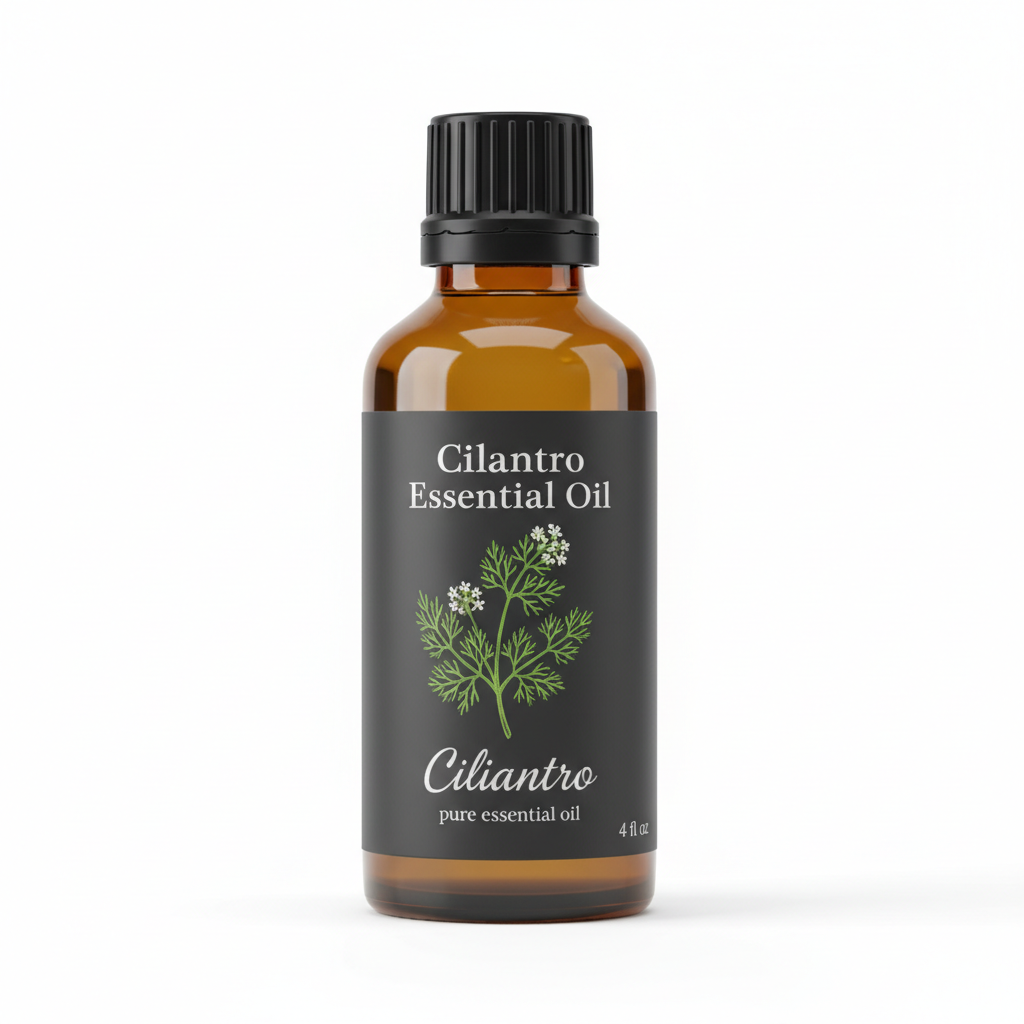
Cilantro Essential Oil
Our own Cilantro Essential Oil, in sizes from 0.5 oz to bulk.
From $13.99
Shop Now →This guide is written for cosmetic formulators, candle makers, soap artisans, and small-batch product brands who need reliable, consistent cilantro oil bulk sourcing. We'll cover what quality actually looks like at the wholesale level, how to compare suppliers side by side, which red flags to walk away from, and where serious buyers tend to shop.
If you're still figuring out what cilantro essential oil is and how it differs from coriander seed oil, start with the complete guide to coriander leaf essential oil before diving into bulk purchasing decisions.
Understanding What You're Actually Buying
Cilantro essential oil is steam-distilled from the fresh leaves and stems of Coriandrum sativum, the same plant that produces coriander seed. The leaf oil and the seed oil are chemically distinct and smell nothing alike. Leaf distillate carries the bright, green, slightly aldehydic character that most people recognize as fresh cilantro. Seed oil is warmer and woodier.
This distinction matters at the wholesale level because some suppliers use the terms interchangeably or mislabel their stock. Always verify that a listing specifies leaf (or herb) distillation and includes the Latin name Coriandrum sativum alongside the plant part.
The primary volatile compounds in genuine leaf-distilled cilantro oil include decanal, decenal, and other aliphatic aldehydes, which are responsible for its signature scent profile. A reputable wholesaler will provide GC/MS (gas chromatography/mass spectrometry) data that confirms this composition. If that data isn't available on request, look elsewhere.
Quality Indicators to Evaluate Before You Commit
Documentation and Testing
At the wholesale level, documentation isn't optional. Any supplier worth your purchase order should provide:
- GC/MS report: Confirms the chemical profile matches genuine cilantro leaf oil. Each batch should have its own report, not a generic one posted once on the website.
- Certificate of Analysis (COA): Lists specific gravity, refractive index, optical rotation, and other physical parameters. These numbers should fall within accepted reference ranges for Coriandrum sativum leaf.
- Country of origin: India, Russia, and Eastern Europe are common sourcing regions for cilantro leaf oil. Knowing the origin helps you assess consistency between orders.
- Lot or batch number: Traceability is a basic quality-assurance expectation. If a supplier can't tell you which batch you received, that's a problem for your own production records.
Organoleptic Assessment
Before placing a large wholesale cilantro oil order, request a sample. Smell and visual inspection tell you a great deal. The color should be pale yellow to nearly colorless. The scent should be green, fresh, and distinctly herb-like. A musty, rancid, or overly sharp chemical note usually signals poor distillation, old stock, or adulteration with synthetic aldehydes.
If a supplier doesn't offer samples for evaluation, that's worth noting. Most reputable wholesale operations understand that bulk buyers need to validate quality before committing to significant quantities.
Key Features to Compare Across Suppliers
Not all wholesale listings are structured the same way. Here's what to look at when you're comparing options across different suppliers.
| Feature | What to Look For | Watch Out For |
|---|---|---|
| Minimum order quantity (MOQ) | Flexible tiers (100g, 500g, 1kg, 5kg) | Rigid high MOQs with no sample option |
| Price per kilogram | Transparent tiered pricing published online | Vague "contact for quote" with no baseline |
| GC/MS availability | Batch-specific reports provided on request or download | Generic or undated reports, no batch reference |
| Packaging options | Aluminum drums, dark glass, or UN-rated containers for larger volumes | Plastic bottles for quantities above 500g |
| Shelf life and storage info | Clear best-by dating, storage recommendations included | No expiry information provided |
| Country of origin disclosed | Specific country named on COA and product page | "Various origins" or no disclosure |
Supplier Tiers: What Your Budget Actually Gets You
Entry-Level Wholesale (Budget Tier)
Some suppliers offer bulk cilantro essential oil at lower price points, typically through marketplace platforms or smaller importers. These can work well for makers who are still testing formulations and need volume without a large capital commitment. The trade-off is usually less documentation, limited lot traceability, and occasionally inconsistent batches.
For this tier, always request a sample before scaling up. Use entry-level suppliers to prototype, not to fulfill finished product orders.
Mid-Range Wholesale (Quality-Focused)
This is where most serious makers land. Mid-range wholesale cilantro oil suppliers typically offer transparent GC/MS data, reasonable MOQs (often starting around 500 grams to 1 kilogram), and clearer sourcing disclosures. Pricing sits at a premium over budget sources, but the consistency justifies it once you're producing at scale.
Look for suppliers who specialize in botanical extracts rather than generalist chemical distributors. Specialists tend to have better quality controls and more knowledgeable customer service teams.
Premium and Certified-Origin Wholesale
At the top tier, you'll find suppliers who offer certified-organic bulk cilantro essential oil, single-origin sourcing from named farms or cooperatives, and full traceability documentation. These suppliers often serve cosmetic brands with clean-label requirements or retailers who market origin stories to their customers.
Premium pricing is significant, sometimes two to four times the mid-range cost per kilogram. Whether that premium is justified depends entirely on your brand positioning and your customers' expectations.
Red Flags to Walk Away From
The wholesale essential oil market has its share of suppliers who cut corners. Here are the signs that should make you pause before ordering.
- No GC/MS available: Any supplier who can't or won't provide testing data for a batch is asking you to take their word for composition and purity. That's not a reasonable ask at the wholesale level.
- Prices dramatically below market: Genuine steam-distilled cilantro leaf oil has a real cost of production. If a price seems implausibly low, the oil is likely adulterated, mislabeled, or old stock being cleared out.
- Coriander seed oil listed as cilantro oil: This happens more often than you'd expect. Read the botanical name and plant part carefully. Seed and leaf are different products with different scent profiles.
- No sample policy: Reputable wholesalers understand that bulk buyers evaluate before committing. A flat refusal to provide samples, even at cost, suggests low confidence in the product.
- Vague or inconsistent labeling: If the product page says one country of origin and the COA says another, or if the botanical name is missing entirely, consider that a sourcing transparency failure.
- Plastic packaging for large volumes: Essential oils are solvent-like in nature and can leach compounds from unsuitable plastics over time. Large volumes should be shipped in aluminum, stainless steel, or dark glass containers rated for essential oils.
How Much Should You Order?
This is a practical question that matters more than many makers realize. Cilantro essential oil has a relatively short shelf life compared to resins or woody oils. Oxidation changes the scent profile, and that matters in finished products where you need batch-to-batch consistency.
A general guideline for working stock: order what you expect to use within 12 to 18 months. Store sealed containers in a cool, dark environment away from heat and light. Refrigerated storage can extend usable life, but always allow the oil to return to room temperature before opening to avoid condensation inside the container.
If you're still calibrating how much volume you need for different project types, the cilantro essential oil sizing guide breaks down typical usage rates across common formulations.
Where Makers Actually Buy Bulk Cilantro Essential Oil
Several categories of supplier serve the wholesale market for cilantro oil bulk purchases.
Specialty Essential Oil Wholesalers
Companies that focus specifically on essential oils and aromatic ingredients typically offer the best combination of quality documentation, sourcing transparency, and knowledgeable support. They understand botanical sourcing in a way that generalist chemical distributors often don't. Names like Jedwards International, Essential Wholesale, and similar dedicated importers are worth exploring for North American buyers.
Direct-Import Brokers
Some buyers work directly with import brokers who source from distilleries in India or Eastern Europe. This route can offer better per-kilogram pricing at high volumes, but it requires more due diligence on your part. You'll need to handle your own quality verification and importation logistics.
Marketplace Platforms
Platforms like Alibaba list dozens of cilantro oil suppliers, many offering very competitive pricing. The quality range is enormous. Use these platforms for discovery and initial contact, but vet every supplier rigorously before ordering. Request samples, ask for GC/MS data, and verify business credentials independently.
Domestic Distributors
For makers in the United States, buying from a domestic distributor (rather than importing directly) simplifies logistics, reduces lead times, and often makes returns or quality disputes easier to manage. You'll typically pay a margin over direct-import pricing, but the operational simplicity can be worth it at smaller wholesale volumes.
For a more detailed checklist to use when evaluating any supplier online, the cilantro oil online ordering checklist walks through each step in order.
Formulation Considerations at Bulk Scale
A few practical notes before you finalize your first large order.
Cilantro leaf oil is a top note with moderate to good tenacity. In cold-process soap, the scent can fade significantly due to heat and saponification. Plan usage rates accordingly, and consider blending with fixative notes if longevity matters in your finished product.
In leave-on cosmetic applications, always follow appropriate dilution guidelines for the product type. Rinse-off products like shampoos or cleansers tolerate higher concentrations than leave-on lotions or serums. When in doubt, consult your formulation references and conduct patch-testing protocols as part of your standard product development process.
Cilantro oil blends well with lemon, lime, bergamot, coriander seed, ginger, and various green and herbal notes. Its photosensitivity profile is generally considered low compared to expressed citrus oils, but always verify with your supplier's safety data and current IFRA guidelines for your specific application.
Building a Supplier Relationship That Lasts
The best wholesale relationships aren't transactional in the narrow sense. They're ongoing. Once you find a supplier whose documentation is solid, whose samples pass evaluation, and whose pricing fits your production economics, consider that relationship as worth maintaining.
Communicate clearly about your volume needs and timelines. Ask about harvest-season availability, since cilantro leaf distillation is seasonal in some sourcing regions and batch availability can shift. A supplier who keeps you informed about crop variations and lot differences is one who takes quality seriously.
Your production quality is only as consistent as your ingredient sourcing. That's true at any scale, and it becomes more consequential with every kilogram you add to your orders.