
Cilantro Essential Oil Sizes: Which Bottle Should You Order First?
So you've decided to order cilantro essential oil, and now you're staring at a product listing that offers 5 ml, 10 ml, 15 ml, 1 oz, 4 oz, and 16 oz options. Which one makes sense for a first purchase? The answer depends on a few things: how you plan to use it, how familiar you already are with this particular oil, and what quality standards you're willing to hold a supplier to. This guide walks through all of it.
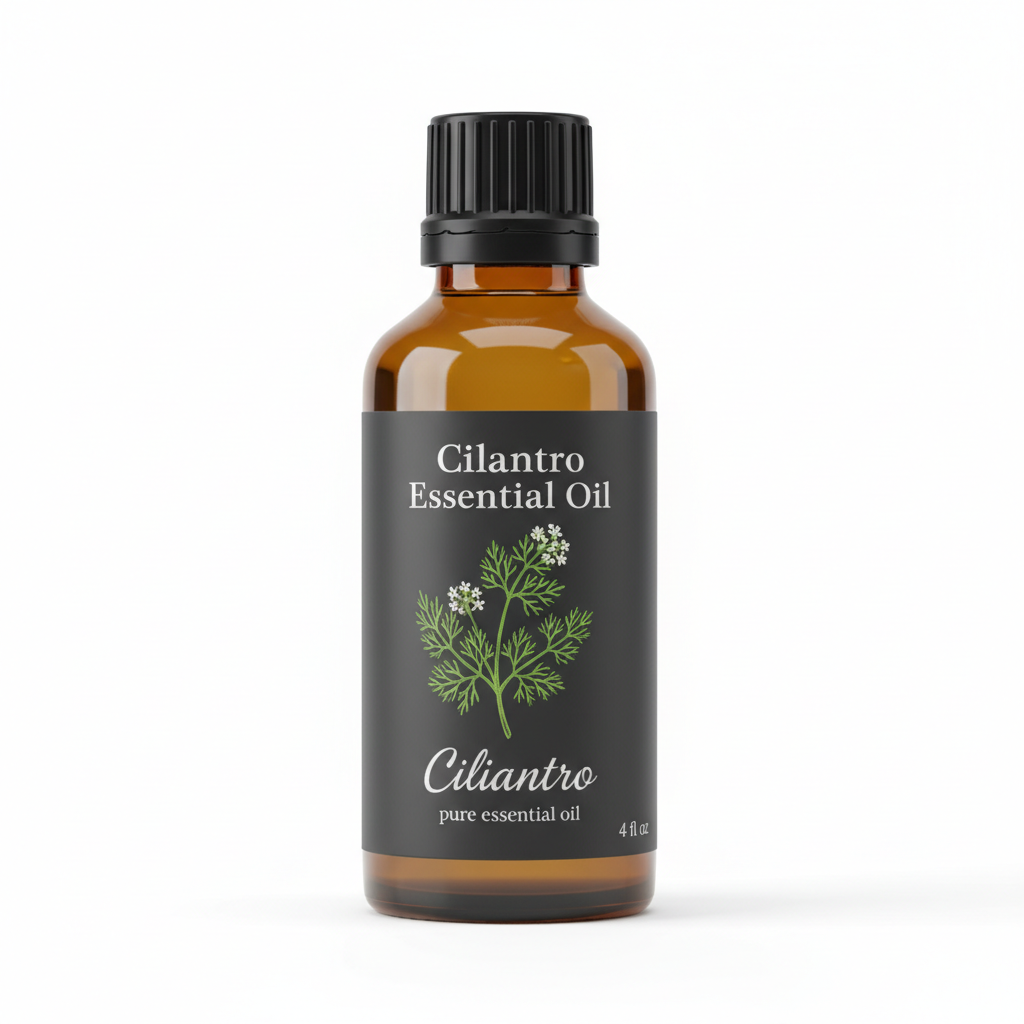
Cilantro Essential Oil
Our own Cilantro Essential Oil, in sizes from 0.5 oz to bulk.
From $13.99
Shop Now →Cilantro essential oil (distilled from fresh Coriandrum sativum leaves, not the seeds) is genuinely one of the more elusive oils on the market. It has a short shelf life relative to many other botanicals, which makes the size question more important here than it would be for, say, lavender or peppermint. Buying too much too soon is a real risk worth planning around.
Why Cilantro Oil Size Matters More Than You Think
Fresh-leaf cilantro essential oil is steam-distilled from the green aerial parts of the coriander plant. That bright, green, slightly citrusy character comes from volatile compounds that are genuinely delicate. Once a bottle is opened, oxidation begins. Most quality suppliers recommend using cilantro oil within 12 to 18 months of opening, and some push that closer to 12 months for peak aromatic quality.
This means a 4 oz bottle sitting half-used for two years is not giving you its best. For home aromatherapy blending, diffuser work, or personal care formulation at a small scale, a larger bottle can easily outlast its aromatic prime before you finish it. The economics shift, however, if you are a soap maker, candle crafter, or small-batch cosmetics formulator working through meaningful volume every few months.
Size selection is really a question of intended use volume matched against realistic turnover time.
The Standard Cilantro Essential Oil Bottle Sizes
5 ml (approximately 100 drops)
This is the sampler size. A 5 ml cilantro essential oil bottle is ideal when you are evaluating a new supplier for the first time, or when you want to test how the oil performs in a specific formula before committing to more. At 100 drops, you can run several trial blends and still have oil left over. The cost per ml is highest at this size, but the low absolute price limits your financial exposure if the oil turns out to be a poor fit.
10 ml
A practical step up. Some suppliers skip this size entirely, but when it's available it suits home users well. Enough oil to develop a signature diffuser blend and experiment with a few cosmetic applications without the pressure of racing through a larger volume.
15 ml (0.5 oz, approximately 300 drops)
The most common retail size for essential oils broadly, and a solid first-purchase size for cilantro oil once you've confirmed you enjoy the scent profile. If you diffuse regularly or use the oil in weekly skincare or hair care blends, a 15 ml bottle at typical dilution rates will last a reasonable three to six months for a single user.
1 oz (30 ml)
This is where the price-per-ml economics start to work in your favor. A 1 oz cilantro oil purchase makes sense for formulators who have already tested a supplier's quality at a smaller size and are ready to scale a recipe. It also suits households with multiple users or those who blend frequently for gifting or personal use at higher volumes.
4 oz and Larger
At 4 oz and above, you're moving into small-batch production territory. These sizes make strong sense for artisan makers, but they come with a firm caveat: know your turnover rate before ordering. If you're new to working with cilantro oil specifically, resist the urge to buy large just because the per-ounce price is attractive. For a deeper look at bulk ordering considerations, the guide on wholesale cilantro essential oil buying for makers covers supplier vetting and MOQ negotiation in much more detail.
Quality Indicators: What to Look for Before You Order Cilantro Oil
Bottle size is only part of the decision. The oil inside the bottle matters far more. Here are the non-negotiable quality signals to check before placing an order.
Botanical Accuracy on the Label
The label should clearly state Coriandrum sativum as the botanical name, with the plant part listed as leaf (or herb, or aerial parts). If the label says only "coriander" without specifying leaf, or if it appears to conflate leaf oil with seed oil, treat that as a concern. Coriander seed essential oil is a very different product with a different aroma profile. You can read more about that distinction in the complete guide to coriander leaf essential oil.
GC/MS Testing Documentation
Gas chromatography/mass spectrometry (GC/MS) testing is the industry standard for verifying essential oil composition. A reputable supplier will provide a batch-specific GC/MS report, either posted publicly on their site or available on request. Be skeptical of suppliers who offer only a generic Certificate of Analysis without batch-specific data. Cilantro leaf oil has a distinctive chemical profile dominated by aldehydes (particularly (E)-2-decenal and related compounds) that a GC/MS report will reflect.
Country of Origin and Distillation Method
Quality cilantro leaf oil is produced in several regions including India, Eastern Europe, and parts of Latin America. The country of origin is worth noting not because one is universally superior to another, but because this information signals transparency. A supplier willing to share sourcing details is generally a supplier investing in traceability. Steam distillation from fresh leaf material is the standard method; cold-press and solvent extraction are not typical for this oil.
Packaging
Amber or dark violet glass is the appropriate packaging for essential oils. Cilantro oil is particularly sensitive to light degradation, so any product sold in clear glass or plastic bottles raises an immediate flag. The bottle should have an orifice reducer (the insert that controls drop size) for precise use at the smaller retail sizes.
Scent Profile Description
A good supplier will describe the aroma honestly. Fresh cilantro essential oil smells green, slightly citrusy, and distinctly herbal, with some users noting a warm, almost fatty undertone at the base. If a product description is vague or simply says "fresh and clean" without any specificity, that's a minor caution. If the oil you receive smells flat, musty, or predominantly soapy in an off way, those can be signs of age or poor storage.
For a full breakdown of what to ask a supplier before you buy, the article on quality checks for buying cilantro essential oil goes through a supplier evaluation checklist in detail.
Key Features to Compare Across Products
| Feature | What to Look For | Red Flag |
|---|---|---|
| Botanical name | Coriandrum sativum, leaf specified | No botanical name, or only "coriander" |
| GC/MS report | Batch-specific, publicly available or on request | Generic CoA only, no batch number |
| Packaging | Amber or violet glass with orifice reducer | Clear glass or any plastic container |
| Country of origin | Stated clearly on label or product page | No origin information at all |
| Distillation method | Steam distilled from fresh leaf material | Method not disclosed |
| Shelf life / batch date | Lot or batch date visible or available | No date information, indefinite shelf life claimed |
| Adulteration risk | 100% pure, unadulterated, no added carriers | "Blended," "fragrance blend," or unusually low price |
Top Picks by Use Case and Price Point
First-Time Buyer: 5 ml to 10 ml Sampler
If you have never worked with cilantro leaf oil before, a 5 ml or 10 ml bottle from a supplier with accessible GC/MS documentation is the smartest entry point. The investment is low, the risk is low, and you'll have a realistic sense of whether the aroma suits your blending goals before spending more. Look for suppliers who sell at this size without significant price penalties per ml, since some will charge a steep premium for small sizes that doesn't reflect a quality advantage.
Regular Home Blender: 15 ml
For someone who already enjoys herbal and green notes in their diffuser blends or personal care products, 15 ml hits a practical middle ground. The cost per ml is more reasonable than a 5 ml, and you'll have enough to explore the oil in multiple applications. This is likely the right size for your first confirmed purchase with a supplier you've already vetted.
Artisan Maker: 1 oz to 4 oz
Soap makers, natural perfumers, and small-batch cosmetics formulators will find the 1 oz size a reasonable working stock once they're confident in a supplier's consistency. At 4 oz, you're likely getting a meaningful per-ml discount. The key question is whether you'll use it within 12 to 18 months of opening. If your production volume supports that, the larger size makes sound financial sense.
Budget-Conscious Buyer: What "Low Price" Actually Means
Cilantro leaf oil is not a cheap oil to produce. Fresh leaf material has a low oil yield relative to seed material, which is why genuine cilantro leaf essential oil costs more than coriander seed oil. If you find a cilantro leaf oil priced similarly to common oils like sweet orange or eucalyptus, that is a genuine quality concern. The price may reflect adulteration, mislabeling (seed oil sold as leaf oil), or synthetic fragrance blending. Cheap is not always a deal here.
Red Flags to Avoid When You Order Cilantro Oil
- No GC/MS data available: Any supplier unwilling to share testing documentation for an essential oil is a supplier worth skipping.
- Indefinite shelf life claims: No pure essential oil lasts forever. A product page claiming years of shelf life without qualification suggests the seller does not understand what they're selling.
- Fragrance oil mislabeled as essential oil: Synthetic fragrance compounds are sometimes sold with misleading labeling. Check for the word "fragrance oil" in the fine print, and confirm the listing says "100% pure essential oil."
- No botanical information: A legitimate essential oil listing will always include the Latin name and plant part. Its absence is a meaningful omission.
- Unusually soapy or synthetic scent on arrival: Fresh cilantro leaf oil has a complex, recognizable aroma. If your bottle smells one-dimensional or chemically sharp, trust that instinct and contact the supplier.
- Clear glass or plastic packaging: Light and air are the enemies of volatile oils. Proper packaging is a basic quality signal.
Where to Buy Cilantro Essential Oil
Reputable independent essential oil suppliers with transparent sourcing practices are generally the best starting point. Look for companies that specialize in essential oils rather than general wellness retailers who carry oils as a secondary product category. Specialty suppliers are more likely to rotate stock regularly (important for a volatile oil like cilantro leaf), provide batch-specific testing, and have knowledgeable customer support.
Large online marketplaces can work, but require more careful vetting on your part. On any marketplace platform, prioritize sellers who are the verified brand rather than third-party resellers, since storage and handling conditions for resold product are harder to assess.
Farmers markets and local apothecaries can be excellent sources if the vendor produces or sources the oil directly and can speak to its origin. Ask questions. A seller who knows their product will welcome them.
Practical tip: Before ordering a larger cilantro essential oil bottle from any new supplier, place a small test order first. Many quality suppliers offer sample sizes precisely because they want you to confirm the oil meets your standards before you commit to volume. This is both good business on their part and good sense on yours.
Matching Bottle Size to Your Real Needs
Choosing your first cilantro essential oil bottle comes down to honest self-assessment. How often will you realistically use this oil? What are you making or blending? Have you worked with this supplier before?
For most first-time buyers, a 5 ml to 15 ml bottle from a well-documented supplier is the right call. It limits risk, gives you a genuine working experience with the oil, and positions you to order with more confidence the second time around. Once you know the scent suits your work and the supplier delivers consistent quality, scaling up to 1 oz or beyond makes straightforward sense.
Fresh-leaf cilantro oil is worth taking the time to source well. The aromatic payoff, that vivid, green, unmistakably herbal character, is unlike anything you'll get from the seed distillate or a synthetic approximation. Start at a size that lets you explore without pressure, and build from there.