
How to Buy Cilantro Essential Oil: Quality Checks for a Rare Oil
Cilantro essential oil is genuinely uncommon. Most shoppers searching for it encounter coriander seed oil instead, and the two are very different products with different aromas, different chemical profiles, and different uses. If you want the bright, green, intensely herbal character of the fresh leaf, you need to know exactly what you are shopping for before you spend a cent. This guide walks through every quality checkpoint worth knowing, from botanical nomenclature on the label to the reputation of the distiller.
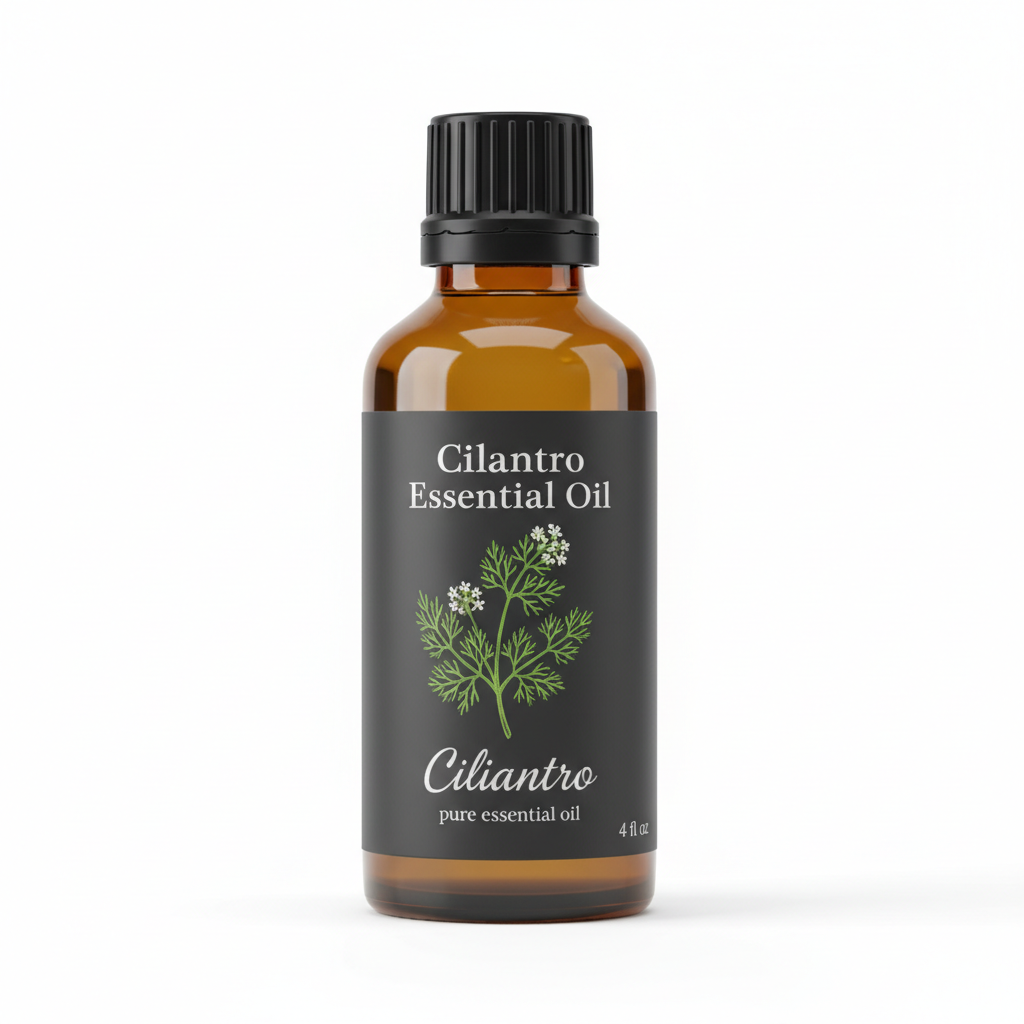
Cilantro Essential Oil
Our own Cilantro Essential Oil, in sizes from 0.5 oz to bulk.
From $13.99
Shop Now →For a full introduction to what cilantro oil is, how it differs from coriander seed oil, and how it is produced, start with the complete guide to coriander leaf essential oil. Once you understand the oil itself, this buyer's guide will make much more sense.
Why Cilantro Essential Oil Is Hard to Find
The scarcity of genuine cilantro (leaf) essential oil comes down to yield. Distilling the fresh aerial parts of Coriandrum sativum produces a very small volume of oil relative to the plant material used. The seed, by contrast, is rich in linalool and surrenders its oil easily. Most commercial growers are focused on spice production, not leaf distillation. The result is that true fresh-leaf oil is produced in limited batches by a small number of specialist distillers, primarily in Europe, parts of Asia, and South America.
Limited supply creates a predictable problem in the retail market: mislabeling, adulteration, and substitution are all more common with rare oils than with commodity oils. Knowing how to evaluate what you are buying is not optional when it comes to cilantro oil. It is the whole job.
The First Quality Check: Botanical Name and Plant Part
A high-quality cilantro essential oil label will state the full Latin binomial: Coriandrum sativum. That much it shares with coriander seed oil. The critical distinction is the plant part, which must read "leaf," "herb," or "aerial parts." If the label says "seed" or simply "fruit," you have coriander seed oil, not cilantro oil.
Some suppliers use the term "cilantro" loosely to mean coriander in general. Do not assume the word "cilantro" alone is enough. Look for explicit plant-part disclosure. Any reputable supplier will include it.
What the Label Should Show
- Botanical name: Coriandrum sativum
- Plant part: Leaf, herb, or aerial parts
- Country of origin
- Extraction method: Steam distillation (the only standard method for this oil)
- Lot or batch number
- GC/MS or third-party testing availability
If any of these items are missing, that is a signal to dig deeper before purchasing.
Understanding GC/MS Testing
Gas chromatography/mass spectrometry (GC/MS) testing is the industry standard for verifying the chemical composition of an essential oil. A published GC/MS report shows the percentage breakdown of every detectable compound in the oil. For cilantro leaf oil, key compounds typically include (E)-2-decenal, decanal, and other aliphatic aldehydes that give the oil its characteristic green, soapy-bright aroma. Linalool, which dominates coriander seed oil, should be present only in modest amounts.
When you shop for pure cilantro oil, ask whether GC/MS reports are available. Many quality-focused suppliers post them directly on product pages or provide them on request. A supplier unwilling to share testing data is not a supplier to trust with a rare, expensive oil.
Some suppliers also provide optical rotation, specific gravity, and refractive index data. These physical constants help confirm authenticity and are worth looking for at higher price points.
Aroma as a Quality Indicator
If you have ever bruised a fresh cilantro leaf, you know the smell: intensely green, a little citrus-edged, and slightly pungent. Genuine cilantro essential oil should evoke that same quality in concentrated form. The aroma is polarizing for exactly the same reasons the herb is polarizing. That is actually a reassuring sign.
What you should not detect is a sweet, floral, woody, or heavily camphoraceous note. Those characteristics point toward coriander seed oil or a blend. A vaguely "herby" oil that smells more generic than specific is worth questioning.
If you can, request a sample before committing to a large bottle. Several reputable suppliers offer 1 ml or 2 ml samples at low cost. This is especially worthwhile because cilantro leaf oil is an acquired scent for many people, and you want to confirm you enjoy working with it before investing in a larger volume. For help deciding on bottle size, see which bottle size is right for your needs.
Sourcing and Origin
Country of origin matters for two reasons: quality consistency and traceability. Cilantro leaf oil is produced in relatively small volumes in countries including India, France, Russia, and parts of Central and South America. Each origin can produce excellent oil, but the quality varies significantly by distiller.
French-distilled cilantro leaf oil has a strong reputation in the perfumery world and tends to command higher prices. Indian-origin oil is more widely available and ranges from excellent to unreliable depending on the supplier. When a supplier lists origin transparently and can speak to their distiller relationship, that transparency is itself a quality signal.
Certified organic origin is worth seeking if you intend to use the oil in skin care formulations or in a diffuser in enclosed spaces. Organic certification does not guarantee superior aroma, but it does provide a documented supply chain and reduces the chance of pesticide residue carryover in the oil.
Key Features to Compare When Shopping
| Feature | What to Look For | Red Flag |
|---|---|---|
| Botanical accuracy | Coriandrum sativum, leaf/herb | "Coriander" with no plant part listed |
| Testing documentation | GC/MS report available on request or published | No testing data at all |
| Aroma description | "Green, aldehydic, fresh herb" language | "Sweet, floral, spicy" description |
| Origin disclosure | Specific country named | "Various origins" or no country listed |
| Packaging | Dark glass (amber or cobalt), tight-seal cap | Clear plastic, loose cap, no UV protection |
| Pricing | Reflects rarity (generally higher than common oils) | Suspiciously cheap per milliliter |
| Supplier reputation | Established botanical supplier, transparent sourcing | No contact information, marketplace-only listings |
Red Flags to Avoid
Shopping for cilantro essential oil quality requires some skepticism. Here are the patterns that should prompt you to walk away.
Prices That Are Too Low
Genuine cilantro leaf oil is not cheap. A 5 ml bottle from a reputable source typically costs more than the equivalent volume of lavender or peppermint oil. If you find a 10 ml bottle priced the same as a common commodity oil, something is off. The oil may be diluted in a carrier, mislabeled coriander seed oil, or simply counterfeit.
Vague or Missing Labeling
Labels that say only "cilantro oil" with no botanical name, no plant part, and no country of origin should be treated with caution. Professional suppliers label precisely because their customers need to know precisely.
No Testing Transparency
Any supplier of pure essential oils operating at a professional level will have GC/MS data available. If a supplier has no testing information, does not respond to testing inquiries, or actively deflects the question, that is a significant concern.
Fragrance Oil Substitutes
Some listings sold as "cilantro oil" are actually synthetic fragrance oils designed to mimic the scent of cilantro. Fragrance oils have their own legitimate uses, but they are not essential oils and will not behave the same way in cosmetic formulations or a diffuser. Read listings carefully for the words "fragrance oil," "parfum," or "scented oil."
Bulk Resellers Without Sourcing Information
Large general-purpose fragrance and cosmetic ingredient resellers sometimes carry cilantro leaf oil, but without traceability back to a distiller. This is not always a disqualifier, but it does mean you are relying entirely on the reseller's quality control rather than a transparent supply chain.
Price Tiers: What to Expect at Each Level
Entry Level (Budget Picks)
At the lower end of the genuine-oil market, you will find 5 ml to 10 ml bottles from mid-tier essential oil brands, often sourced from India or China. These oils can be perfectly usable for diffusion and home fragrance blending, provided the supplier lists botanical details and offers some form of testing documentation. Expect to pay roughly $8 to $18 for a 5 ml bottle at this tier. Scrutinize the label carefully and consider requesting a sample first.
Mid-Range (Best Value for Most Buyers)
The mid-range sits with established botanical ingredient suppliers catering to formulators and small cosmetic producers. These suppliers typically publish GC/MS data, disclose origin specifically, and maintain consistent batch quality. Pricing for a 5 ml bottle runs from about $18 to $35 depending on origin and certification. Organic-certified oils from reputable distillers generally land in this tier. This is the sweet spot for most buyers who want confidence in quality without paying a premium for perfumery-grade material.
Premium and Perfumery Grade
At the top of the market, you find small-batch, single-origin cilantro leaf oils sourced directly from artisan distillers, often in France or by specialist European botanical houses. These oils come with full physical constant data, detailed origin documentation, and sometimes the name of the specific distillation facility. A 5 ml bottle can cost $40 or more. For professional perfumers and high-end cosmetic formulators, the price is justified by consistency and traceability. For casual home use, it is likely more than necessary.
Where to Buy Cilantro Essential Oil
The channel you buy through matters as much as the brand.
Specialist Botanical Suppliers
Companies whose entire business is sourcing and selling essential oils and botanical extracts are the most reliable channel for rare oils. They have the supplier relationships, the testing infrastructure, and the incentive to maintain accuracy. Look for suppliers with a physical address, a customer service contact, and a clearly stated sourcing or quality policy on their website.
Cosmetic Ingredient Distributors
If you are formulating skin care or hair care products, cosmetic ingredient distributors often carry cilantro leaf oil alongside carrier oils, waxes, and other raw materials. Quality at these suppliers is generally good because their customers (professional formulators) demand documentation. Minimum order quantities can be higher, but pricing per milliliter tends to be better.
Online Marketplaces
General online marketplaces are a mixed environment. Reputable specialist suppliers do sell through major platforms, and that can be convenient. But marketplace listings also make it easy for low-quality or mislabeled products to reach shoppers who are not yet familiar with what to look for. If you buy through a marketplace, prioritize sellers with established storefronts, detailed product descriptions with full botanical information, and responsive customer service. Check whether the listing matches what the brand's own website says about the product.
For a thorough pre-purchase checklist specifically for online orders, see the complete online ordering checklist for cilantro oil.
Local Retailers and Natural Food Stores
Brick-and-mortar natural product stores occasionally carry cilantro essential oil, though it is not common on retail shelves. If you do find it locally, apply all the same label-reading criteria described above. The ability to smell the oil in store can be helpful, but it is not a substitute for checking botanical documentation.
Storage and Shelf Life: A Quick Buyer's Note
Cilantro leaf oil is relatively high in aldehydes, which makes it more prone to oxidation than oils dominated by alcohols or terpenes. This is worth factoring into your purchase decision. Buying a large bottle for occasional use is not ideal if the oil will sit open for months. Smaller bottles that you can use up within six to twelve months are a better approach for most home users.
Always store cilantro oil tightly capped, away from heat and direct light, in a cool location. Refrigeration can extend shelf life if you are working with larger volumes. Check for any change in aroma over time: an oxidized aldehyde-rich oil will smell flat, rancid, or chemically harsh rather than bright and green.
A Final Word on Due Diligence
Buying cilantro essential oil well is mostly a matter of slowing down and reading carefully. The label, the testing data, the supplier's sourcing transparency, and the price relative to market norms will tell you most of what you need to know before you commit. Take a few extra minutes on each of these points and you are very unlikely to be disappointed.
The oil itself, when it is genuine and well-distilled, is one of the more interesting raw materials available to home formulators and fragrance enthusiasts. Its intensity and specificity make it a genuine standout in blending work. Getting the quality right from the start makes all the difference in what you can do with it.