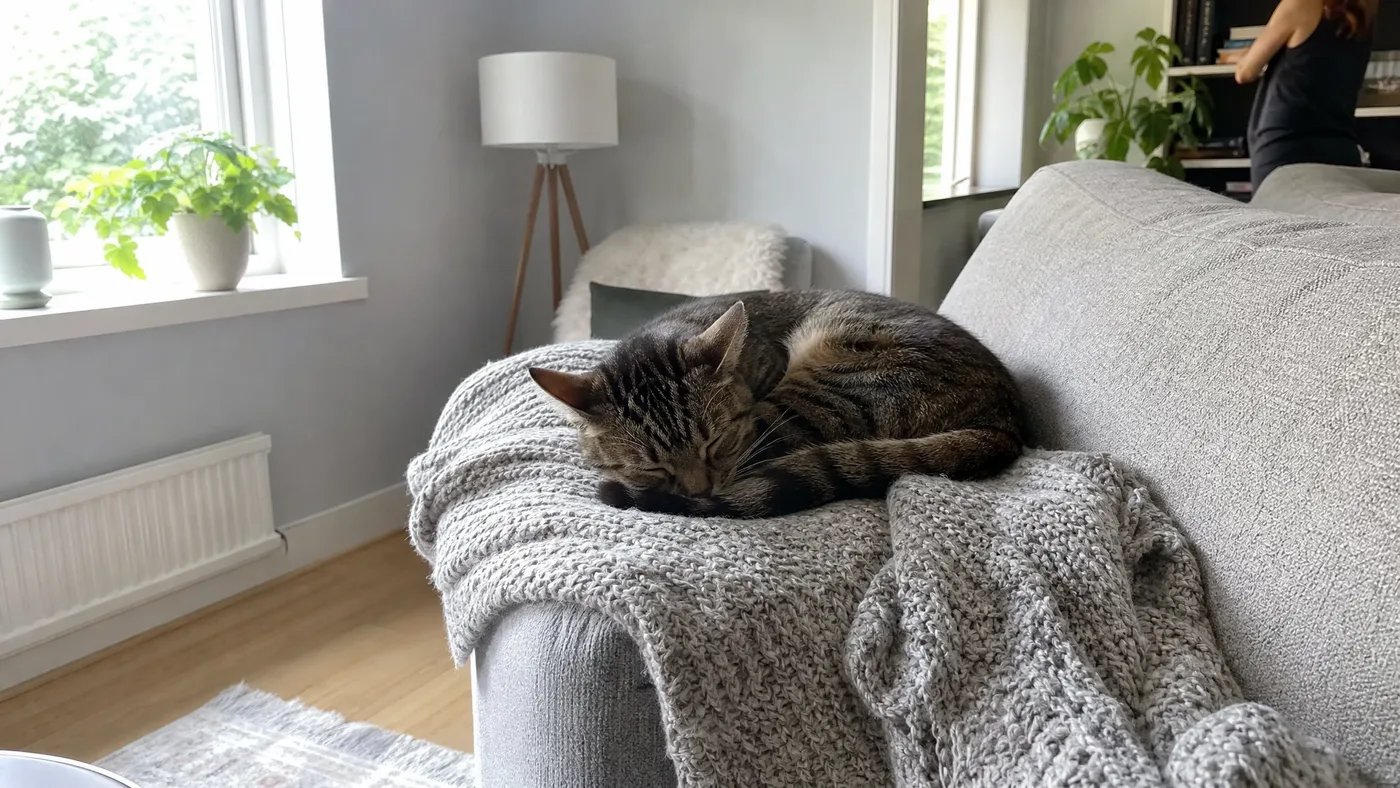
Cilantro Essential Oil and Pets: A Cat-First Sources Guide
Cilantro the plant is listed as non-toxic to dogs, cats and horses. Cilantro essential oil is a different thing, and nobody has published a study of it in pets. We sell the oil undiluted, our shop copy says to keep it out of reach of children and pets, and the rest of this page is a cat-first account of what the animal-poison sources say, where the evidence stops, and who to call: your veterinarian.
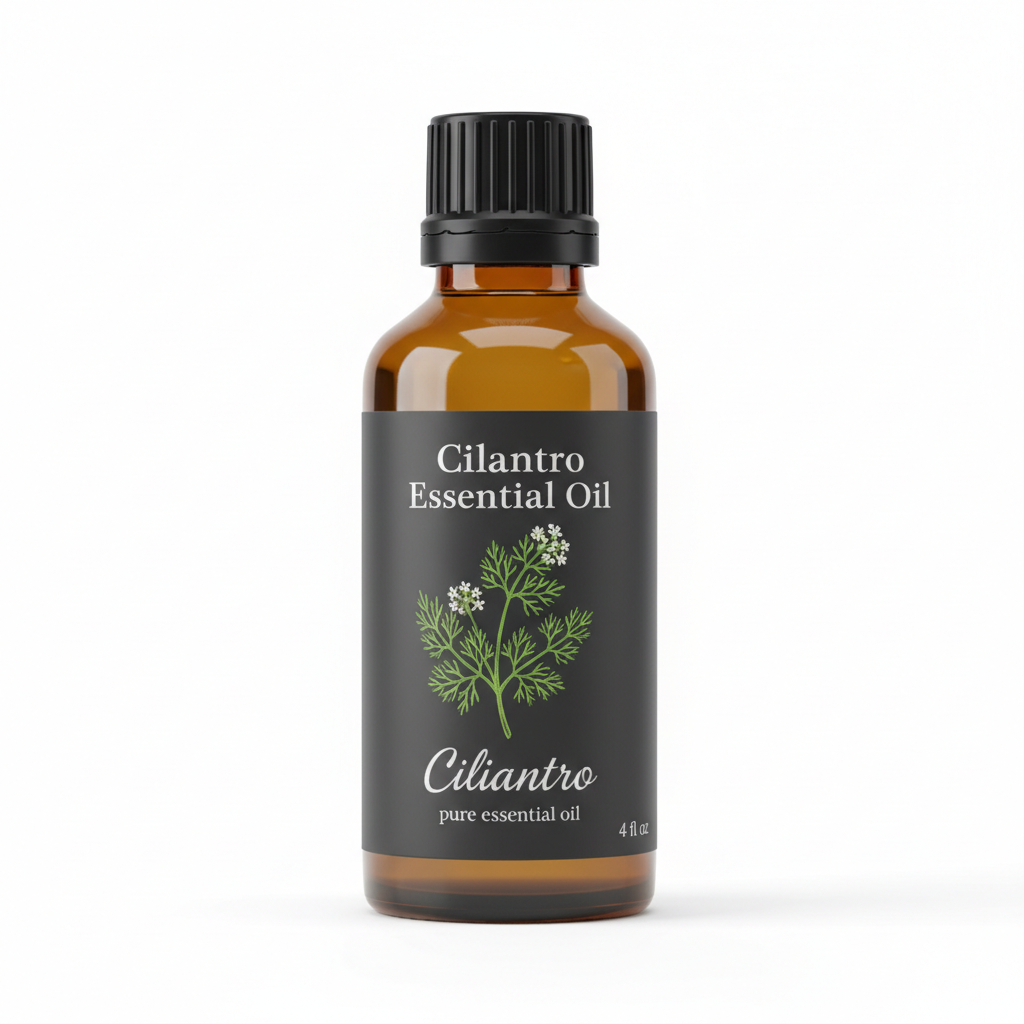
Cilantro Essential Oil
Our own Cilantro Essential Oil, in sizes from 0.5 oz to bulk.
From $13.99
Shop Now →The plant listing is not the oil listing
The ASPCA's toxic and non-toxic plants entry for cilantro (Coriandrum sativum, also coriander, Chinese parsley or dhania) reads "Non-Toxic to Dogs, Non-Toxic to Cats, Non-Toxic to Horses". That describes the plant. An essential oil is the volatile fraction of a plant concentrated into a bottle: on one leaf-oil yield figure of 0.12% (worked through here), a single drop carries the oil of roughly 40 g of leaf. The ASPCA's own page on essential oils, "The Latest Home Trend Harmful to Your Pets", says plainly: "In their concentrated form (100%), essential oils can absolutely be a danger for pets." The plant listing therefore tells you nothing about a 100% oil, and no source I read lists cilantro leaf oil at all, in either direction.
Cats first, and why
A 2011 paper in PLoS One by Shrestha, Court and colleagues traced the cat's unusual sensitivity to phenolic drugs such as acetaminophen and aspirin, and to structurally related toxicants in the diet and environment, to pseudogenization of the gene for UGT1A6, a major phenol-detoxification enzyme. The authors estimated the mutation became fixed between 35 and 11 million years ago, and found all living members of the cat family sampled have a dysfunctional UGT1A6. A 2013 review by Court in Veterinary Clinics of North America evaluates the wider evidence that cats metabolise some drugs differently from dogs and humans, and says more work is needed.
Neither paper tested an essential oil. The step from "cats lack a phenol-clearing enzyme" to "cats are at risk from essential oils" is made by veterinary toxicology groups, and the Pet Poison Helpline's cat page makes it, adding that higher concentrations pose greater risk and that concentrated oils should never be applied directly to a cat. It lists oils that poison cats, including wintergreen, sweet birch, citrus (d-limonene), pine, ylang ylang, peppermint, cinnamon, pennyroyal, clove, eucalyptus and tea tree.
Here is where I will not lean on the chemistry. The mechanism studied is phenols. Our own pages describe our leaf oil as aldehyde-dominated, not phenol-dominated (the Certificate of Analysis on the shop page has the batch detail). Reasoning from that alone, one could argue the cat mechanism is a poor fit. But the Pet Poison Helpline's list includes d-limonene, which is not a phenol, so the cat risk is not only a phenol story, and I would not treat the chemistry as a pass. The honest status is: unknown, with a mechanism that is plausible enough to be cautious.
Dogs
In the Shrestha survey of 22 other carnivore taxa, only the brown hyena and the northern elephant seal showed inactivating UGT1A6 mutations, so the cat defect is not a general carnivore trait, and dogs are commonly described as less sensitive than cats. The ASPCA still says concentrated oils can be dangerous to them, and that unsteadiness, depression and low body temperature can follow. The best-documented case is tea tree: the ASPCA says concentrated tea tree (melaleuca) oil may cause problems with only seven or eight drops. At 20 drops per mL, a figure used in NHS Lanarkshire's dosing table, that is about 0.4 mL. A 1994 report by Villar and colleagues from the National Animal Poison Control Center described melaleuca oil applied to the skin of dogs and cats: typical signs were depression, weakness, incoordination and muscle tremors, mostly after skin application at inappropriately high doses, and supportive care brought recovery in 2 to 3 days. It was a case review of calls, not a controlled study, and it concerned a different oil.
Diffusing in a shared room
Two sources, two nuances:
- The ASPCA's Animal Poison Control Center says short-term diffuser use in a secured area the pet cannot get into is "not likely to be an issue", pets with breathing problems should avoid diffusers, and the same applies to birds, rabbits, guinea pigs and hamsters.
- The Pet Poison Helpline separates diffuser types. Passive ones (reed, heat, fan) mainly risk airway irritation unless oil gets on the animal or is swallowed. Active ones (ultrasonic and nebulizing) release oil microdroplets that can settle on fur and be swallowed during grooming, even at a distance in the same room.
Reasoning from those two, the practical gap is between "a room the cat cannot enter" and "a room the cat shares", and a nebulizer in a shared room is the case the second source worries about. Our diffuser blends post has no pet advice and should be read with this one. A surface or fabric spray is similar: the ASPCA notes pets that have walked through oils can be affected. Reasoning from that, an oil-containing spray on floors or counters a cat walks across, such as the kind in our room spray recipe post, leaves a residue that can reach paws and then the mouth. We have not tested any pet exposure.
Signs, and who to call
The ASPCA lists unsteadiness, depression and, in severe cases, low body temperature, with vomiting and diarrhea after swallowing. The Pet Poison Helpline's cat page lists drooling, vomiting, tremors, wobbliness, breathing difficulty, low heart rate, low body temperature and liver failure, and watery eyes or nose, coughing or wheezing after inhalation. It says to move the cat to fresh air at once and seek emergency veterinary care if signs do not quickly resolve.
- ASPCA Animal Poison Control Center: (888) 426-4435
- Pet Poison Helpline: (855) 764-7661, available 24/7
Both are listed on the pages I read, and a veterinarian is the first call if the animal is unwell. Our oil was not made for animals, and we do not recommend putting it on them, whatever the species.
Limits and where this leaves a buyer
If you share a home with a cat, keep the bottle shut away, do not use it on the animal, and ask your veterinarian before running a diffuser where the cat lives. If you have birds or small animals, the ASPCA's guidance is to avoid diffusers. This is a sources-based summary, not veterinary advice. The wider safety picture is in cilantro essential oil safety, and children in the same household are covered in the kids guide.
Cilantro Essential Oil
Cilantro Essential Oil from our own shop, in sizes from 0.5 oz to bulk.
From $13.99
Shop Now →Sources & Further Reading
- ASPCA. Cilantro (Coriandrum sativum), toxic and non-toxic plants. aspca.org/node/49731
- ASPCA. The Latest Home Trend Harmful to Your Pets. aspca.org/news
- Pet Poison Helpline. Essential Oils and Cats. petpoisonhelpline.com
- Shrestha et al., PLoS One, 2011. Evolution of a major drug metabolizing enzyme defect in the domestic cat. PubMed 21464924
- Court, Vet Clin North Am Small Anim Pract, 2013. Feline drug metabolism and disposition. PubMed 23890237
- Villar et al., Vet Hum Toxicol, 1994. Toxicity of melaleuca oil and related essential oils applied topically on dogs and cats. PubMed 8197716
- NHS Lanarkshire, 2025. Guideline: Aromatherapy (dosing table). rightdecisions.scot.nhs.uk