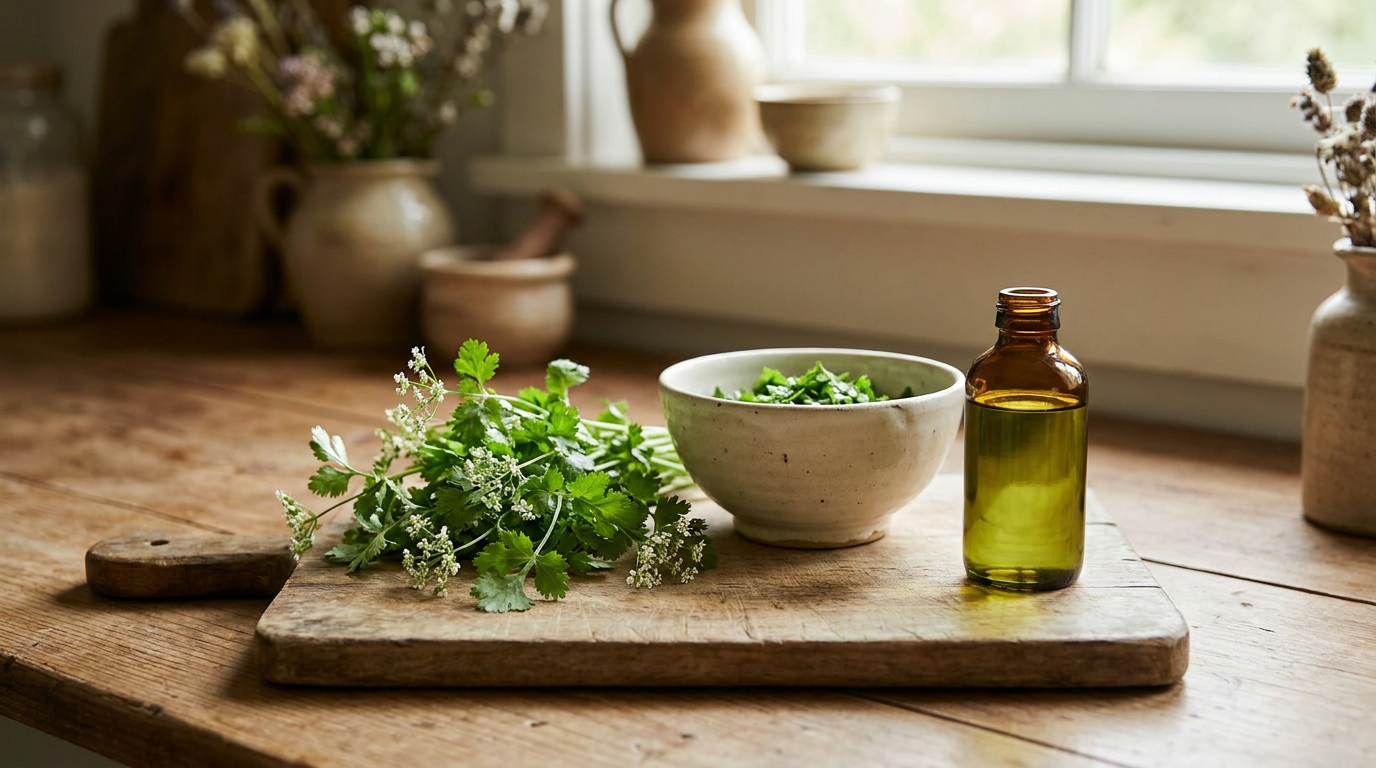
The Garden Fresh Blend: A Cilantro Essential Oil Room Spray Recipe
Cilantro essential oil smells nothing like the leafy herb sitting in your produce drawer, and that surprises most people the first time they open a bottle. Instead of that sharp, soapy-green bite fresh cilantro is known for, the essential oil leans brighter and more citrusy, with a crisp, almost dewy quality underneath. It's one of the more unusual materials in a home fragrance cabinet, and a room spray is one of the easiest, lowest-commitment ways to get to know it. You're not blending a serum or building a roll-on you'll wear against your skin all day. You're mixing a handful of ingredients, shaking a bottle, and misting a room to see how the scent unfolds in your own space.
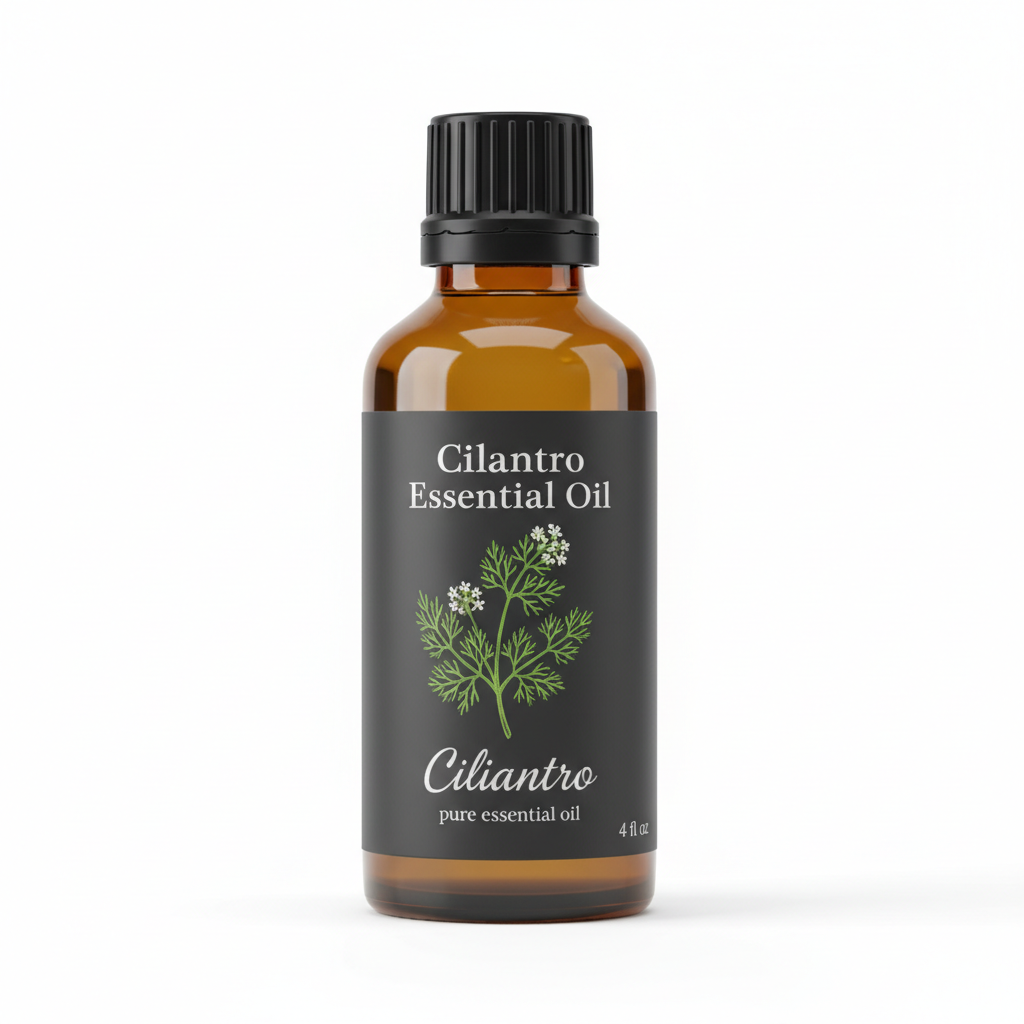
Cilantro Essential Oil
Our own Cilantro Essential Oil, in sizes from 0.5 oz to bulk.
From $11.99
Shop Now →This recipe walks through a straightforward cilantro essential oil room spray recipe, including a green herbal room spray recipe variation for anyone who wants to lean further into the plant's fresh, garden character. We'll cover exact measurements, a cilantro essential oil blend ratio that keeps the scent balanced rather than sharp, and the safety information you need before you start misting.
Recipe Snapshot
| Difficulty | Beginner |
|---|---|
| Prep Time | 10 minutes |
| Yield | 4 oz (120 ml) spray |
| Shelf Life | Up to 6 months, stored properly |
Why a Room Spray First
If you're new to cilantro essential oil, a room spray is a forgiving place to start. Diffuser blends can be finicky about ratios, and skin-applied blends require more caution around dilution and individual sensitivity. A room spray sits in between: you get to experience the aroma at full strength in the air without any of it touching your skin. If the scent isn't for you, you've used a small amount of oil and you can adjust the next batch.
Cilantro pairs well with citrus notes like lime and grapefruit, with green, woody notes like petitgrain and cypress, and with a touch of something warmer underneath, like sandalwood, to keep the blend from smelling one-dimensional. The recipe below uses a simple two-oil pairing so the cilantro has room to shine, with a substitution list further down for building your own version.
Ingredients
- 3 oz (90 ml) distilled water
- 1 oz (30 ml) witch hazel or high-proof vodka (this acts as a dispersant, helping the oil mix into the water instead of floating on top)
- 18 drops cilantro essential oil
- 10 drops lime essential oil
- 4 oz (120 ml) glass spray bottle, ideally amber or cobalt to protect the contents from light
- Small funnel (optional, for easier pouring)
This ratio works out to roughly a 1.5% dilution of essential oil in the finished spray, which is a reasonable, moderate strength for a room spray meant to scent the air rather than sit on fabric or skin. If you'd like a lighter, more subtle version, cut the essential oil down to 20 drops total. If you want a stronger, more room-filling spray, you can go up to 35 to 40 drops total, but don't exceed that in a bottle this size.
Step-by-Step Instructions
- Sanitize your bottle. Rinse the glass spray bottle with hot water, or wipe the inside with a small amount of rubbing alcohol on a cotton swab, and let it air dry fully before you start. Any residue left behind can affect how the spray holds up over time.
- Add the witch hazel or vodka first. Pour it directly into the empty bottle. Adding your dispersant before the water gives the essential oil something to bind to right away instead of pooling on the surface.
- Add the essential oils. Drop in the cilantro and lime oil directly into the witch hazel or vodka. Give the bottle a gentle swirl before adding the water, so the oils have a moment to combine with the dispersant.
- Add the distilled water. Use a funnel if your bottle has a narrow neck. Fill to about half an inch below the top to leave room for the sprayer mechanism.
- Cap and shake well. Screw the sprayer top on tightly and shake for a full 15 to 20 seconds. The mixture won't look perfectly uniform. That's normal for a water-based spray; the oil and water will separate again between uses.
- Label the bottle. Write the contents and the date you made it directly on the bottle or on a small adhesive label. This matters more than it sounds like it would, especially if you end up with a few different sprays on your shelf.
- Shake before every use. Because the oil and water separate over time, always give the bottle a firm shake right before spraying to redistribute the oil evenly.
How to Use It
Hold the bottle about two feet from the surface you're spraying and mist in a light, sweeping motion. This spray works well as a linen spray on sheets and pillowcases (test on an inconspicuous corner of the fabric first, since witch hazel and essential oils can occasionally mark delicate materials), as an air freshener in entryways and bathrooms, or misted lightly over curtains. Avoid spraying directly onto wood furniture, as the alcohol content can affect certain finishes.
Cilantro Essential Oil Blend Ratio: Building Your Own
Once you've made the base recipe once, you'll have a feel for how strong 18 drops of cilantro reads in a 4 oz bottle. From there, a useful cilantro essential oil blend ratio to keep in mind is roughly 2 parts cilantro to 1 part supporting note. Cilantro is bright and a little sharp on its own, so it benefits from a partner rather than standing alone. Some combinations to try:
- Citrus-forward: cilantro and grapefruit, 2:1
- Green and grounded: cilantro and petitgrain, 2:1, with a single drop of cedarwood added at the end
- Herbal garden: cilantro, a drop of clary sage, and lime, roughly 2:1:1
Keep your total drop count within the same range as the base recipe (18 to 40 drops per 4 oz), just adjust how those drops are divided among your chosen oils.
Green Herbal Room Spray Recipe Variation
For a version that leans more into cilantro's fresh, growing-season character rather than its citrus edge, swap the lime for a green note. Replace the 10 drops of lime with 6 drops of petitgrain and 4 drops of vetiver. Petitgrain adds a leafy, slightly bitter green quality, while the small amount of vetiver rounds out the base so the scent doesn't read as flat or thin. This green herbal room spray recipe variation tends to smell more like a garden after rain than a citrus stand, and it works particularly well misted in a home office or reading nook.
Safety Information
Please read this section fully before making or using this spray.
- Dilution: This recipe keeps the total essential oil concentration at roughly 1.5% to 2% of the finished spray, which is an appropriate range for a room and linen spray. Do not increase the essential oil amount beyond what's listed without understanding how concentration affects a blend, and never apply this spray directly to skin. It is formulated as an air and fabric spray only.
- Patch test first: Before misting this spray onto sheets, upholstery, or clothing, spray a small, hidden section of the fabric and let it dry fully. Check the spot after a few hours to confirm there's no discoloration or lasting odor change before using it more broadly.
- Ventilation: Spray in a room with some air movement, such as an open window or a running fan, rather than in a fully sealed, small space.
- Around children and pets: Keep essential oils and finished blends out of reach of children. If you share your home with pets, especially cats, research the specific oils in your blend before diffusing or spraying around them, as sensitivity varies significantly by species.
- Pregnancy and nursing: If you are pregnant or nursing, speak with a qualified healthcare provider before using essential oil blends in your home, as guidance can vary by oil and by individual circumstance.
- Sensitive individuals: If you or someone in your household has a history of skin or respiratory sensitivity to fragrance, introduce this spray gradually and in a well-ventilated space, and discontinue use if you notice any discomfort.
- Sourcing quality: Use a cilantro essential oil from a supplier who provides batch-specific testing information (often called a certificate of analysis). This matters more for a spray you'll be breathing in regularly than it might for a single occasional use.
This recipe is intended for aromatic use in the home only. It is not intended to diagnose, and it does not replace guidance from a qualified healthcare provider.
Storage and Shelf Life
Store your finished spray in a cool, dark place, away from direct sunlight and away from heat sources like a windowsill or a radiator. Light and heat are the two biggest factors that shorten how long a blend stays pleasant. An amber or cobalt glass bottle helps block UV light even if you keep it somewhere with ambient brightness.
Because this recipe is water-based, it has a shorter shelf life than an oil-only blend. Expect the spray to perform well for about 3 to 6 months. After that window, the scent may start to fade or shift, and the witch hazel or vodka component can begin to lose its effectiveness as a dispersant. If you notice any change in color, a cloudy appearance that doesn't clear when shaken, or an off smell, discard the batch and mix a fresh one rather than continuing to use it.
Making smaller batches more often, rather than one large bottle meant to last a year, tends to give the best results with any water-based spray.
Variations and Substitutions
- No witch hazel on hand? High-proof vodka or Everclear works as a substitute dispersant in equal measure. Avoid using rubbing alcohol in a spray meant for linens, since it carries a stronger odor of its own.
- Prefer a completely alcohol-free version? Replace the witch hazel with an equal amount of a natural solubilizer made for essential oils (available from most essential oil suppliers), which helps the oil disperse in water without alcohol.
- Want more shine and less green? Increase the citrus portion of the blend and reduce the cilantro slightly, closer to a 1:1 ratio, for a lighter, brighter spray.
- Making it seasonal: Add a single drop of clove bud or cinnamon leaf in the cooler months for a warmer undertone, or a couple of drops of peppermint in summer for a cooler, crisper finish. Add these in very small amounts, one drop at a time, since both are strong.
- Bigger batch: To scale this recipe up to an 8 oz bottle, simply double every ingredient, keeping the same 3-to-1 ratio of water to witch hazel.
A Few Final Notes
Cilantro essential oil isn't a common pick for beginner blenders, which is exactly what makes it worth trying. It doesn't behave like lavender or eucalyptus, the two oils most home blenders reach for first, and that unfamiliarity is part of the appeal. Give the base recipe a try before branching into the variations, so you have a reference point for how the oil smells on its own before you start layering it with other notes. Keep your batches small, store them out of the light, and you'll get a good sense of whether this is a scent you want to keep reaching for.