
Why Does Cilantro Smell Like Soap to Some People?
Few herbs divide a room quite like cilantro. To one person, it smells bright, green, and citrusy. To another, it smells unmistakably of dish soap. If you have ever wondered why this happens, you are in good company. Scientists, chefs, and aromatherapy enthusiasts have all asked the same question. The answer lives somewhere in your DNA, your nose, and the fascinating aroma chemistry of a single, remarkably complex plant.
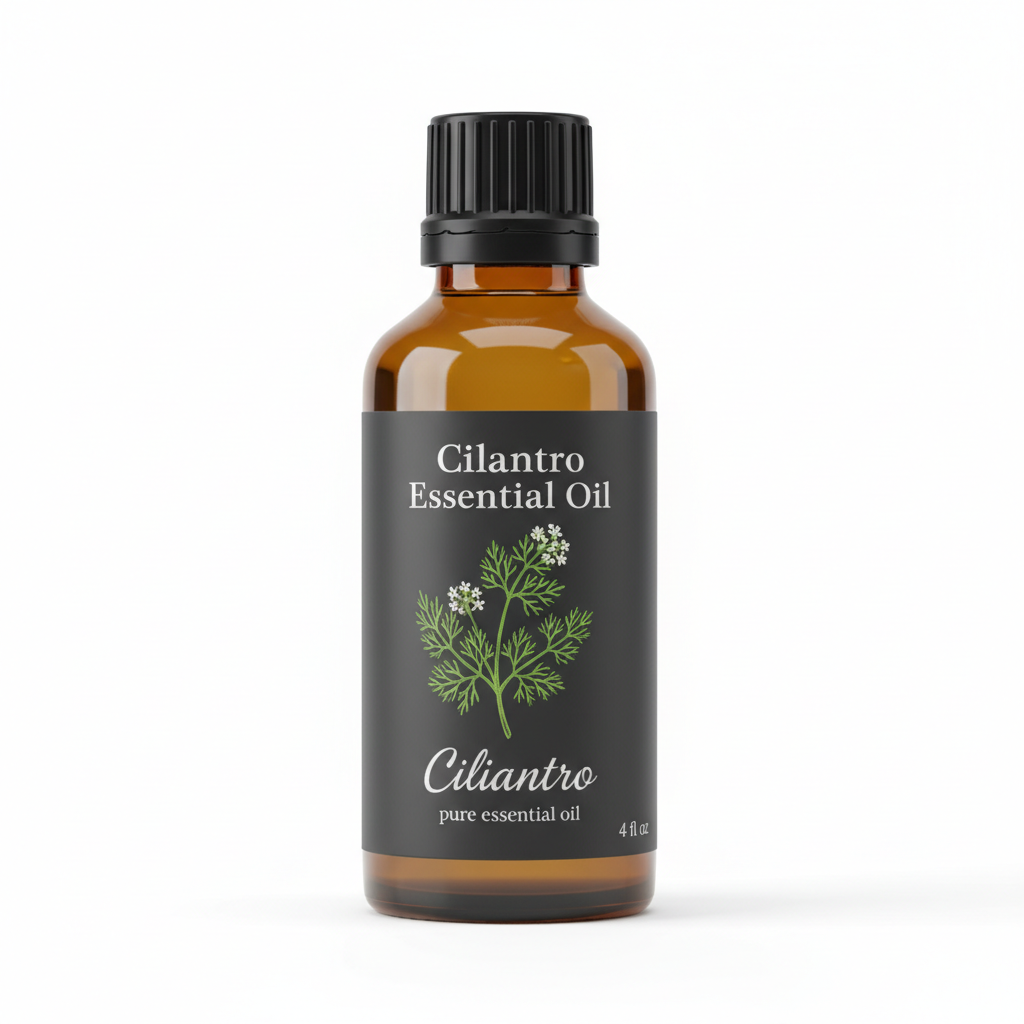
Cilantro Essential Oil
Our own Cilantro Essential Oil, in sizes from 0.5 oz to bulk.
From $13.99
Shop Now →This FAQ page gathers the most common questions about the cilantro soap phenomenon, organized by topic so you can jump to what matters most to you.
The Science Behind the Soap Perception
Why does cilantro smell like soap to some people?
The short answer is genetics. Certain people carry a variation in an olfactory receptor gene that makes them highly sensitive to aldehydes, a family of chemical compounds found naturally in cilantro leaves. Those aldehydes happen to be the same compounds used in many soaps and detergents, so the brain essentially files the scent under "soap" rather than "herb."
What is the cilantro soap gene?
Researchers have identified a gene variant near the OR6A2 olfactory receptor gene as the primary suspect in why cilantro smells like soap to a significant portion of the population. People who carry this variant are more sensitive to the specific aldehyde molecules responsible for cilantro's distinctive aroma. The variant does not make cilantro smell bad in any objective sense; it simply routes the signal differently through the brain's odor-processing system.
Is the cilantro soap gene real, or just a popular myth?
It is real, and it is well-documented in genetic research. A large-scale study published through 23andMe examined the preferences of over 25,000 people and found a statistically significant association between the OR6A2 gene variant and cilantro aversion. That said, genetics is not the only factor at play; familiarity, culture, and individual sensitivity all contribute.
What percentage of people experience cilantro as soapy?
Estimates vary depending on the study and the population sampled, but figures typically range from about 4 to 14 percent of people in surveys. East Asian and Caucasian respondents tend to report the soapy perception more frequently than South Asian or Latin American respondents, which aligns with both genetic population data and cultural exposure patterns.
Can both genetics and environment influence the perception?
Yes. Genetics may create the predisposition, but repeated exposure can shift how the brain interprets a scent over time. Some people who initially found cilantro soapy report that the perception softened after years of eating it regularly. The brain is remarkably adaptable when it comes to scent memory and association.
Cilantro Aroma Chemistry: What Is Actually in the Smell
What compounds give cilantro its scent?
Fresh cilantro leaf contains a complex mixture of volatile compounds, with aliphatic aldehydes making up a significant portion of the aromatic profile. The most prominent of these include (E)-2-decenal and (E)-2-dodecenal, both of which are also used in the fragrance and cleaning industries. Alongside those aldehydes, you will also find linalool, a soft floral compound, and a range of terpenes that add green and citrusy facets to the overall scent.
Why do the same compounds appear in soap and in a herb?
Aldehydes are widespread in nature and are valued in fragrance manufacturing precisely because they are effective and affordable. Soap makers have used aldehyde-based compounds for decades to create clean, fresh scents. Cilantro just happens to produce those same molecules biologically, which is why the two smell so similar to people whose noses are tuned to detect them strongly.
Is cilantro essential oil different from fresh cilantro leaves in terms of aroma chemistry?
Yes, noticeably so. Cilantro essential oil distilled from the fresh leaf preserves much of the aldehyde character found in the raw herb, which is part of what makes it such a faithful aromatic representation of the plant. However, the concentration and ratio of individual compounds can shift depending on the distillation method, the harvest timing, and the origin of the plant material. Some leaf-distilled oils emphasize the green, aldehydic top notes more than others.
Does cooking cilantro change its aroma chemistry?
Significantly. Heat degrades the volatile aldehydes quickly, which is why cooked cilantro tastes and smells much milder than raw. For people who find fresh cilantro soapy, the cooked version is often far more tolerable. This chemical shift is also why cilantro essential oil, which is distilled rather than heated, retains a much brighter, greener, and more aldehydic character than cilantro-infused cooked food.
How does cilantro leaf oil differ from coriander seed oil aromatically?
They come from the same plant but smell almost nothing alike. Cilantro leaf oil versus coriander seed oil is a comparison worth understanding before you purchase either one. The seed oil is dominated by linalool, giving it a warm, floral, slightly spicy character, while the leaf oil is sharper, greener, and more aldehydic. Someone who loves coriander seed oil may find cilantro leaf oil surprisingly pungent by comparison.
Who Is Most Likely to Experience the Soap Effect
Is disliking cilantro always genetic?
Not always. Some people may simply find the flavor or aroma too intense without carrying the relevant gene variant. Strong aldehydic notes can be overwhelming at high concentrations even for people without a genetic sensitivity. Cultural unfamiliarity, a negative first experience, or individual variation in overall scent sensitivity can all produce a dislike that has nothing to do with OR6A2.
Are some ethnicities more likely to carry the gene variant?
Research suggests that the variant linked to soapy cilantro perception appears at higher frequencies in East Asian and some European populations than in South Asian, Middle Eastern, or Latin American populations. This loosely correlates with regions where cilantro has been a staple culinary ingredient for centuries, suggesting that cultural exposure over generations may have played some role, though the relationship is not perfectly causal.
Can children perceive cilantro as soapy even if their parents do not?
Yes. Gene variants are inherited independently, and a child can carry combinations that neither parent expresses fully. A child might also perceive cilantro as soapy due to heightened general sensitivity to strong volatile compounds, which can moderate as the olfactory system matures. Early exposure tends to normalize a wide range of scents, including intense aldehydic ones.
Is the soap perception the same for fresh leaves, dried flakes, and essential oil?
Not necessarily. Dried cilantro contains far fewer volatile aldehydes because drying degrades them substantially. Fresh leaves and cold-process or steam-distilled essential oils retain the highest concentrations of those compounds, so they are most likely to trigger the soapy perception in sensitive individuals. If you are exploring cilantro essential oil and find fresh cilantro soapy, it is worth approaching the oil with some caution at full concentration.
Cilantro Essential Oil and the Soap Question
If I dislike cilantro because it smells like soap, will I also dislike cilantro essential oil?
Quite possibly, though it depends on the individual and on how the oil is used. At high concentrations, cilantro leaf essential oil is very aldehydic and green, which could amplify the soapy perception. In a diffuser blend at low percentages, or used as a trace accent in a fragrance formula, the aldehydic character becomes a facet rather than the whole experience and may read as fresh and citrusy rather than soapy to many people.
Do perfumers use cilantro essential oil intentionally for its aldehydic quality?
Absolutely. Aldehydic notes have a long and respected history in fine fragrance. Perfumers sometimes incorporate cilantro leaf oil specifically because it delivers a natural, green, slightly aldehydic lift that synthetic aldehydes cannot fully replicate. The same quality that some people register as "soap" is prized in fragrance composition as a clean, airy, photorealistic green note.
How does cilantro essential oil perform in aromatherapy blending for people who are sensitive to the soapy note?
Starting with a very small proportion, such as one to two drops in a larger blend, can let the green brightness of the oil come through without the aldehydic intensity dominating. Pairing it with warm, rounded base notes like sandalwood or vetiver can balance the sharp top notes considerably. Testing on a scent strip before committing to a full blend is a practical first step.
Is the soapy quality of cilantro considered a flaw in essential oil quality?
No. A well-distilled cilantro leaf oil will naturally carry those aldehydic notes because they are intrinsic to the plant's chemistry. If anything, a flat or odorless cilantro leaf oil would suggest poor distillation practice or over-aged product. The aldehydic character is a quality indicator, not a defect, even if it is polarizing to some noses.
Practical Considerations for Cilantro Oil Enthusiasts
If I want to explore cilantro essential oil but am worried about the soap note, where should I start?
A scent strip test at a very diluted concentration is the most sensible entry point. You might also try blending it immediately with complementary oils, such as lemon, lime, or bergamot, which can harmonize with the aldehydic green character and shift your perception. Many people who initially find the oil sharp come to appreciate it once it is integrated into a fuller composition.
Does cilantro have two names that sometimes create confusion when buying oils?
Yes, and it is worth being aware of this before you purchase. Cilantro and coriander are two names for the same plant species, but essential oils labeled "coriander" almost always refer to the seed, not the leaf. If you are specifically looking for the fresh, green, aldehydic leaf oil, check the botanical name on the label: Coriandrum sativum leaf, not fruit or seed.
Can I use cilantro essential oil in natural perfumery even if I am sensitive to soapy notes?
Many perfumers with a sensitivity to the soapy quality of fresh cilantro still work with the oil successfully because the context of a full fragrance blend changes how individual components are perceived. The olfactory system evaluates smells as a whole rather than as isolated parts, so an oil that reads as soapy in isolation may read as "interesting and green" within a layered composition.
Are there other natural ingredients that smell similar to cilantro due to shared chemistry?
Several plants produce overlapping aldehyde profiles. Violet leaf absolute is one example: it shares some green, aldehydic facets with cilantro leaf and is well-regarded in fine fragrance despite being quite polarizing on its own. Galbanum resin is another aldehydic green note that sometimes draws comparisons. Understanding cilantro's chemistry can open up a broader appreciation for this entire family of sharp, green, and yes, occasionally soapy botanical aromas.
Is there any way to change whether I perceive cilantro as soapy?
Some people report that repeated, low-level exposure over time softens the soapy perception, likely because the brain's scent-processing system recalibrates with familiarity. This is not guaranteed, and no technique has been proven to reliably override the genetic predisposition. That said, approaching the scent with curiosity rather than aversion, and experiencing it in different contexts and concentrations, may gradually shift how your nose interprets it.