
Cilantro vs Coriander: Why One Plant Has Two Names
If you have ever stood in a grocery store wondering whether the bunch of leafy green herbs and the jar of golden seeds are related, you are not alone. The cilantro vs coriander question trips up cooks, gardeners, and essential oil enthusiasts alike. The short answer is that they are the same plant. The long answer is a little more interesting, and it involves geography, language, perfumery, and the curious way a single botanical can smell completely different depending on which part you harvest.
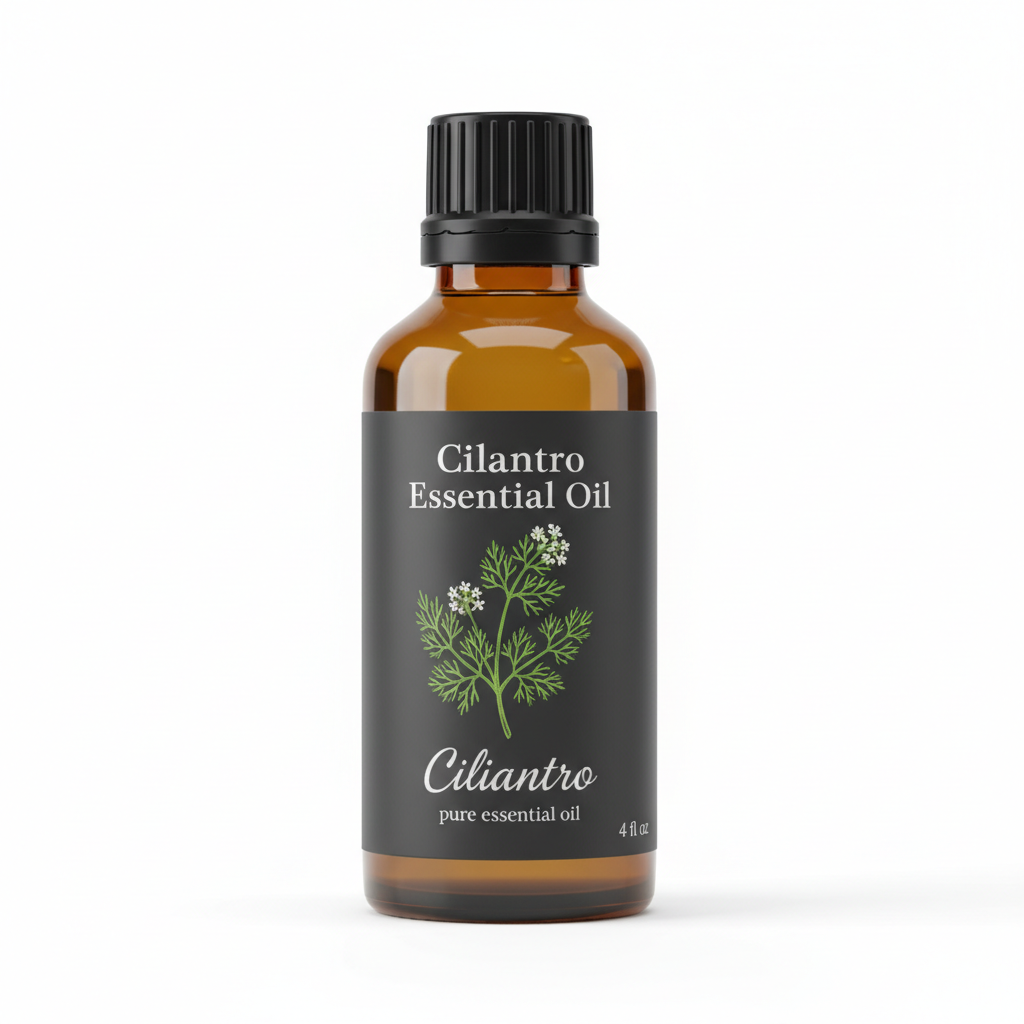
Cilantro Essential Oil
Our own Cilantro Essential Oil, in sizes from 0.5 oz to bulk.
From $13.99
Shop Now →Below, we have gathered the most common questions about the cilantro coriander difference and organized them by theme. Whether your curiosity is culinary, botanical, or rooted in fragrance and cosmetics, you will find your answer here.
The Basics: Same Plant, Different Names
1. Are cilantro and coriander actually the same plant?
Yes, completely. Both names refer to Coriandrum sativum, a flowering herb in the Apiaceae family. The confusion arises because different parts of the world settled on different names for different parts of the plant, and those naming conventions never fully synchronized.
2. So where does each name come from?
"Coriander" comes from the Old French coriandre, which traces back to the Latin coriandrum and ultimately to the Greek koriannon. "Cilantro" is the Spanish word for the same plant, borrowed into American English as the fresh leaf became popular through Latin American and Tex-Mex cuisine. The word traveled with the food.
3. Which name is correct?
Both are correct. It depends on where you are and what part of the plant you mean. In the United States, "cilantro" almost always refers to the fresh leaves and stems. "Coriander" typically refers to the dried seeds or the ground spice made from them.
4. How do other countries handle the naming?
In the United Kingdom, Australia, and most of Europe, "coriander" covers everything: the leaves, the seeds, and the plant itself. In India, the leaves are often called "coriander leaves" or "dhaniya patta," while the seeds are simply "coriander." American English is somewhat unique in adopting "cilantro" specifically for the leafy stage of the plant.
5. Is there a single internationally recognized botanical name?
Yes. Botanists worldwide use Coriandrum sativum for the species, regardless of language. The essential oil distilled from the seeds is officially listed as Coriandrum sativum seed oil in INCI (International Nomenclature of Cosmetic Ingredients) databases, while leaf-derived oil may appear as cilantro oil or coriander herb oil depending on the supplier.
Coriander Leaf vs Seed: How They Differ
6. Do the leaves and seeds taste and smell the same?
Not at all, and this surprises many people when they first learn they come from the same plant. The fresh leaves have a bright, citrusy, slightly green aroma that some people find vibrant and others find polarizing. The dried seeds have a warm, nutty, faintly floral scent that is far more universally popular in cooking and perfumery.
7. What causes such a dramatic scent difference within one plant?
The coriander leaf vs seed difference comes down to chemistry. Fresh cilantro leaves are rich in aldehydes, particularly decenal and dodecanal compounds, which produce that sharp, green, citrus-forward character. The seeds, by contrast, develop high concentrations of linalool as they mature and dry, giving them a softer, rounder, more floral profile. It is the same plant expressing entirely different chemistry at different life stages.
8. Can you substitute one for the other in recipes?
Culinarily, they are not interchangeable. Fresh cilantro leaves bring brightness and cannot be replaced by coriander seed without fundamentally changing a dish. Likewise, the warm depth of ground coriander seed does not have a simple fresh-leaf substitute. When a recipe says "coriander," read the context carefully to determine which part of the plant is meant.
9. What about in fragrance and cosmetics?
In perfumery and aromatherapy-adjacent cosmetic applications, coriander seed oil is the more commonly used ingredient because of its smooth linalool-dominant profile. Cilantro leaf oil (distilled from fresh leaves) offers a sharper, greener aromatic note. Both appear in formulations, but for quite different effects. You can read a deeper comparison in our cilantro vs coriander oil ultimate guide.
Growing the Plant
10. Does the plant look different at the leaf stage vs the seed stage?
Significantly so. Young cilantro plants produce broad, fan-shaped leaves with deeply lobed edges, similar in appearance to flat-leaf parsley. As the plant bolts (sends up a flower stalk), the leaves become feathery and finely divided. After the small white or pink flowers fade, the round green seeds form and eventually dry to a pale tan color.
11. Do leaf-focused growers and seed-focused growers tend the plant differently?
Yes, quite deliberately. Growers harvesting for fresh leaves pinch off flower stalks to slow the plant's progression to seed, extending the leafy stage as long as possible. Growers cultivating for seed production do the opposite: they let the plant bolt freely, encouraging it to flower and set seed. The crop goal shapes every decision in the field.
12. Can you grow cilantro from coriander seeds you already have in your spice cabinet?
Sometimes. Whole dried coriander seeds from the spice aisle can germinate, though their viability varies depending on how they were dried and stored. Seeds sold specifically for sprouting or planting tend to perform more reliably. For detailed guidance on getting the most from your seeds, our article on growing cilantro for flavor and fragrance walks through the full process.
Essential Oils: Which One Comes From Which Part?
13. What is coriander essential oil?
Coriander essential oil is steam-distilled from the dried, mature seeds of Coriandrum sativum. It is primarily composed of linalool, which gives it a warm, woody-floral character. It is widely used in perfumery, cosmetic formulations, and flavoring applications.
14. What is cilantro essential oil, then?
Cilantro essential oil is steam-distilled from the fresh leaves and stems of the same plant, harvested before or during the early flowering stage. It carries that vivid green-citrus character of fresh cilantro leaves. Because fresh plant material yields less oil than dried seed, cilantro leaf oil tends to be less commonly available and is often more expensive per unit volume.
15. Is cilantro oil used in perfumery?
It appears in perfumery as a green, herbaceous top note, though it is less common than coriander seed oil. Its sharp, aldehydic quality can add lift and freshness to a blend, and perfumers sometimes use it to evoke the scent of a kitchen garden or fresh herbs in sunlight. A small amount goes a long way.
16. Are there quality differences to look for when buying either oil?
Absolutely. For coriander seed oil, look for suppliers who disclose the country of origin (Russia, Ukraine, and India are major producers) and provide GC/MS (gas chromatography/mass spectrometry) reports confirming linalool content. For cilantro leaf oil, freshness matters especially, since the volatile aldehydes that define its aroma can degrade over time. Our comprehensive oil guide covers sourcing and quality markers in detail.
The Soap Smell Question
17. Why do some people say cilantro smells like soap?
This is a genuine and fascinating quirk of human genetics. A subset of the population carries a variation in a group of olfactory receptor genes (particularly OR6A2) that makes them highly sensitive to the aldehydes present in cilantro leaves. To those individuals, the same compounds that smell citrusy and fresh to others register as unmistakably soapy. It is not a personal failing or a taste preference issue. It is a literal difference in receptor wiring.
18. Does the same soap-smell phenomenon happen with coriander seeds?
Rarely, and far less intensely. Because the dried seeds are dominated by linalool rather than aldehydes, people who are aldehyde-sensitive often find coriander seed oil and ground coriander quite pleasant, even if fresh cilantro is difficult for them. The chemistry shift between leaf and seed is significant enough to change the experience entirely for those individuals. We explore this in more depth in our article on why cilantro smells like soap to some people.
Culinary and Cultural Context
19. In which global cuisines do cilantro leaves appear most prominently?
Fresh cilantro leaves are central to Mexican, Central American, Indian, Thai, Vietnamese, and many Middle Eastern cuisines. They typically appear raw or added at the very end of cooking, since heat quickly diminishes their volatile aromatic character. The herb is used so widely across such different food cultures that it is genuinely one of the most consumed fresh herbs in the world.
20. Where does coriander seed play a major role?
Coriander seed is a foundational spice in Indian curry powders, Moroccan ras el hanout, Ethiopian berbere, and pickling spice blends across Northern Europe. It also appears in Belgian-style wheat beers, where it contributes a faintly citrusy warmth alongside orange peel. The seed's versatility across both savory and slightly sweet applications makes it one of the most globally traded spices.
21. Is there a version of the plant bred specifically for leaves, and another for seeds?
Yes. Plant breeders have developed cultivars optimized for different purposes. Slow-bolt varieties like 'Leisure' and 'Calypso' stay in the leafy stage longer and are preferred for fresh herb production. Varieties cultivated for seed yield tend to bolt quickly and produce more abundant seed heads. The cilantro coriander difference is not only a naming question but a horticultural one as well.
Using Both in Cosmetics and Home Blending
22. Can I use cilantro or coriander seed oil in a DIY skincare product?
Both oils can be incorporated into cosmetic formulations, though they should always be properly diluted before skin contact. A common starting point for essential oil dilution in leave-on products is 1 percent or less, and a patch test on a small area of skin is strongly recommended before broader use. If you have sensitive skin or are pregnant, please consult a qualified healthcare provider before adding any new essential oil to your routine.
23. What scent families pair well with coriander seed oil in a blend?
Coriander seed oil's linalool-rich warmth blends beautifully with other floral and woody notes: lavender, sandalwood, bergamot, and frankincense are all natural companions. It also works with lighter citrus oils where you want a hint of herbal depth without sharpness. Blending by scent family is a good starting framework, though the best results often come from small-scale experimentation.
24. What about cilantro leaf oil in a diffuser blend?
Cilantro leaf oil can bring a lively, green freshness to a diffuser blend, particularly in warmer months when you want an aromatic atmosphere that feels garden-like and bright. Start with a very small proportion, perhaps one drop to several drops of a softer base note, since its sharp aldehydic top note can easily overpower a blend. It pairs interestingly with lime, ginger, and earthy vetiver for a layered herbal-citrus effect in your space.
25. Is there any reason to choose one oil over the other for a particular cosmetic goal?
The choice depends almost entirely on the scent character you are after. If you want warmth, roundness, and a soft floral-herbal quality, coriander seed oil is your starting point. If you want vivid green brightness and a sharper herbal note, cilantro leaf oil is the more suitable choice. Neither is inherently superior. They are simply different aromatic expressions of one remarkable plant, and both deserve a place in a thoughtfully stocked collection.
A quick reference: When a recipe or formula says "coriander," check whether it means seed or leaf. When a label says "cilantro oil," confirm it was distilled from the leaves, not the seeds. The cilantro vs coriander difference is mostly a language question, but in the kitchen and the formulation lab, getting the right part of the plant matters.