
What Does Cilantro Essential Oil Smell Like? A Green Scent Profile
Cilantro essential oil has a reputation for being polarizing. People who love fresh cilantro leaves tend to find the oil captivating: bright, green, slightly citrusy, and unmistakably herbal. But even among cilantro enthusiasts, the oil often surprises. It smells like the herb, yes, but also like something more concentrated, more botanical, almost waxy at the edges. Understanding what cilantro oil smells like at a chemical level helps explain why the scent behaves the way it does in blends, in diffusers, and on skin.
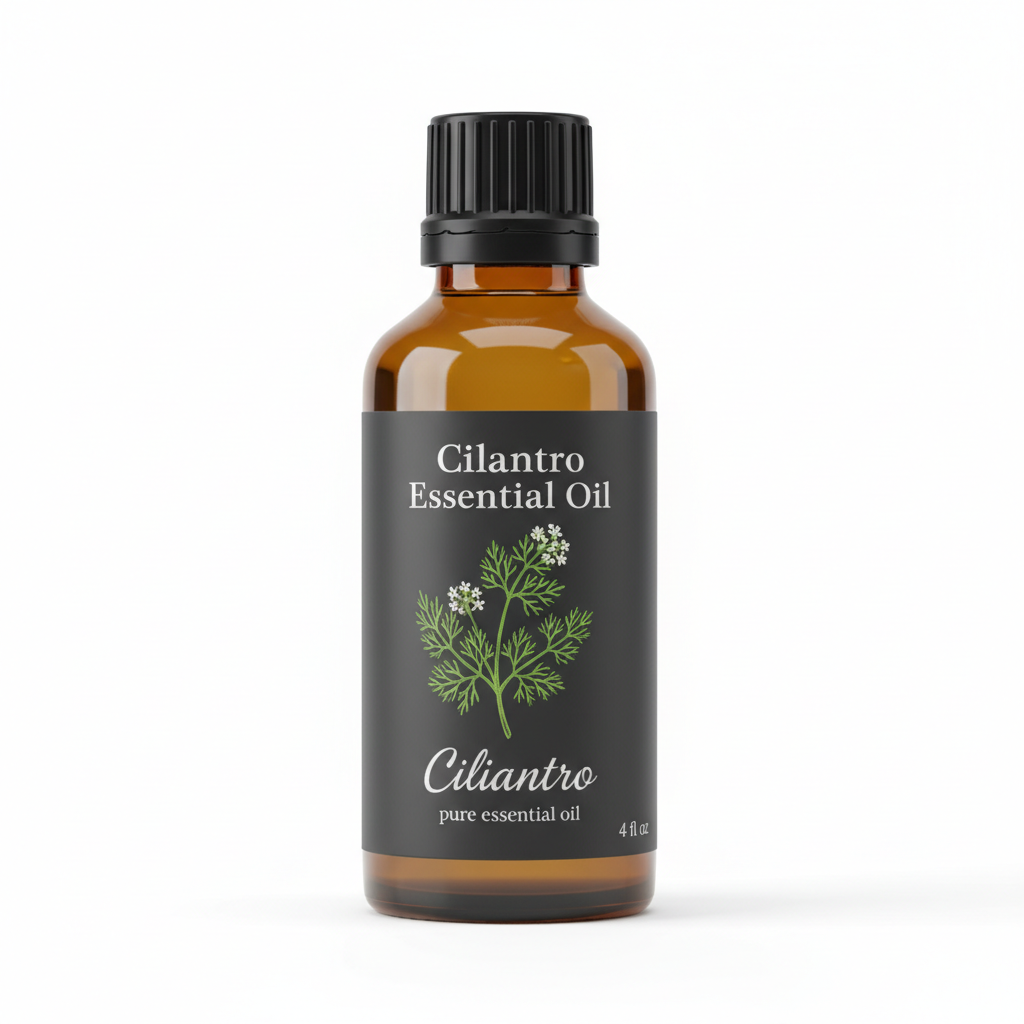
Cilantro Essential Oil
Our own Cilantro Essential Oil, in sizes from 0.5 oz to bulk.
From $13.99
Shop Now →This deep dive covers the aromatic compounds responsible for that distinctive green herbal aroma, what the research community has observed about those compounds, how to evaluate quality when you are sourcing the oil, and what safety considerations apply before you use it.
First: Cilantro Oil vs. Coriander Seed Oil
Before going any further, one distinction matters enormously: cilantro essential oil is distilled from the leaves and stems of Coriandrum sativum. Coriander seed oil comes from the dried seeds of the same plant. They smell almost nothing alike. The seed oil is warm, woody, faintly spicy, and dominated by linalool. The leaf oil is intensely green, aldehydic, and fresh. If you have ever searched for cilantro oil scent information and landed on coriander seed oil descriptions, that is the source of the confusion.
For a broader orientation to the plant and its oils, the complete guide to cilantro and coriander leaf essential oil covers the full picture. Here, the focus stays on scent chemistry.
The Chemical Composition of Cilantro Leaf Oil
The aromatic character of any essential oil is a direct expression of its volatile organic compounds. Cilantro leaf oil has a notably different chemical fingerprint from most culinary herb oils, and that fingerprint explains a great deal about why it smells the way it does.
Aldehydes: The Dominant Force
The most distinctive feature of cilantro leaf oil chemistry is its high aldehyde content. Research suggests that aldehydes, particularly a group of long-chain aliphatic aldehydes, can make up anywhere from 60% to over 80% of the oil's total composition depending on geographic origin, harvest timing, and distillation method.
The primary aldehydes identified in published analyses include:
- (E)-2-decenal: A green, fatty, waxy aldehyde often described as reminiscent of fresh leaves and cut grass with a slightly soapy edge.
- decanal: Bright, citrusy, and clean. This compound also appears in citrus peel oils and contributes a recognizable freshness.
- (E)-2-dodecenal: A longer-chain aldehyde with a heavier, more persistent quality. Some researchers describe it as the compound most associated with the characteristic "cilantro" scent perception.
- dodecanal: Fatty, waxy, and slightly floral at low concentrations.
- undecanal: Softer, clean, slightly powdery.
These aldehydes are the same family of compounds responsible for why some people perceive fresh cilantro as smelling like soap. The aldehyde group interacts with certain olfactory receptors in ways that can trigger soapy or metallic associations in some noses. If that phenomenon interests you, there is a dedicated exploration of why cilantro smells like soap to some people that covers the genetics and receptor science in more detail.
Secondary Compounds
Beyond the aldehydes, cilantro leaf oil contains smaller but perceptible amounts of other volatiles that round out the profile:
- Linalool: A soft, floral-woody alcohol also found in lavender and many other herb oils. It is typically present in modest amounts in the leaf oil (much more prominent in the seed oil).
- Monoterpenes: Including gamma-terpinene and p-cymene, which contribute a subtle dry, herbal undertone.
- Camphor: Present in small percentages in some chemotypes, adding a faintly medicinal greenness at the base.
- Terpinen-4-ol: A compound associated with an earthy, damp-soil quality that grounds the brighter top notes.
The exact ratios of these compounds shift based on cultivar, climate, soil, and when in the plant's growth cycle the harvest occurs. Young, pre-flowering leaves tend to yield oil with a higher proportion of the green aldehydes. More mature plant material may produce a slightly different balance.
How the Scent Behaves: Top, Mid, and Base Notes
Cilantro leaf oil is primarily a top-note oil. Its volatility is high. The green aldehydes that define its character are relatively light molecules that evaporate quickly, which means the scent opens dramatically and then softens.
On first exposure, the green herbal aroma hits with clarity: fresh, bright, a little sharp. Within a few minutes, the waxy and fatty facets of the longer-chain aldehydes become more perceptible as the lightest molecules disperse. What remains after twenty minutes or so is quieter and slightly earthy, supported by the linalool and the monoterpene fraction.
This top-heavy volatility profile has practical implications for blending. Cilantro leaf oil tends to open a blend rather than anchor it. Perfumers and aromatherapy formulators who want it present in the dry-down typically use it at higher concentrations or fix it alongside longer-lasting base-note oils.
What Research Suggests About Key Compounds
Published phytochemical research on Coriandrum sativum leaf oil is not as extensive as the literature on coriander seed oil, but several studies have characterized the leaf oil's composition using gas chromatography-mass spectrometry (GC-MS) analysis. These analyses consistently identify the long-chain aldehyde fraction as dominant, though the percentages vary considerably across samples from different countries of origin.
Some research suggests that the specific aldehyde profile in cilantro leaf oil may vary enough between geographical chemotypes to produce noticeably different aromatic experiences. Oil distilled from cilantro grown in India, for example, has shown different aldehyde ratios compared to samples from Morocco or China in some comparative analyses. This is worth knowing as a buyer: the country of origin printed on a bottle is not purely a sourcing footnote. It can meaningfully affect how the oil smells.
Research also suggests that the aldehyde compounds present in cilantro leaf oil are relatively reactive. They can oxidize more readily than, for example, the terpene alcohols common in lavender or the esters in bergamot. This oxidation changes the scent profile over time and is one reason proper storage matters for this particular oil.
Sourcing and Quality Indicators
Because cilantro leaf oil's character is almost entirely dependent on its aldehyde content, adulteration is easy and not uncommon. Cheap leaf oils can be stretched with synthetic aldehydes or diluted with carrier fractions. There are several things worth looking for when evaluating quality.
GC-MS Testing
A reputable supplier should provide or make available a GC-MS report for each batch. This report shows the actual chemical composition of the oil you are buying. For cilantro leaf oil, look for a dominant aldehyde fraction, with (E)-2-decenal, (E)-2-dodecenal, and decanal among the leading compounds. An oil where linalool is the primary constituent is almost certainly mislabeled or blended with seed oil.
Organoleptic Evaluation
Smell the oil directly on a scent strip. Genuine, quality cilantro leaf oil should be immediately recognizable as the herb. It will be sharp and green at first, with that characteristic waxy-fatty quality. If it smells primarily sweet, floral, or woody without a clear green herbal opening, question the composition.
Color and Viscosity
Cilantro leaf oil is typically pale yellow to colorless. It is a thin, mobile oil with low viscosity. Cloudiness or unusual color can indicate poor distillation, contamination, or age-related oxidation.
Distillation Method
Steam distillation is the standard method for producing cilantro leaf oil. The process of steam distilling cilantro essential oil is worth understanding if you care about how production conditions affect the final scent. Low-temperature, properly timed distillation tends to preserve the delicate green aldehydes better than high-pressure or extended distillation runs.
Storage Indicators
Ask or check for the batch distillation date, not just a "best by" date. Cilantro leaf oil is best used within one to two years of distillation when stored properly: dark glass, cool temperature, tightly sealed. An oil stored in clear glass or warm conditions may already be partially oxidized by the time it reaches you.
Safety Profile and Contraindications
Cilantro leaf oil is generally considered safe for cosmetic and aromatic use when properly diluted, but the aldehyde-heavy composition brings some specific considerations.
Skin Sensitization
Aldehydes as a chemical class are among the more common causes of skin sensitization in essential oils. The International Fragrance Association (IFRA) and the Research Institute for Fragrance Materials (RIFM) have established usage guidelines for aldehyde-containing fragrance materials. For leave-on cosmetic applications, dilution rates for aldehyde-rich oils are typically conservative: many formulators recommend staying at or below 0.5% to 1% in leave-on products and conducting a patch test before wider application.
Always perform a patch test before using any new essential oil on skin. Apply a small diluted amount to the inner forearm, leave it for 24 hours, and observe for any response before broader use.
Photosensitivity
Cilantro leaf oil does not contain the furocoumarins associated with phototoxic citrus oils (such as expressed bergamot or lime), so phototoxicity is not a primary concern. That said, general good practice applies: avoid high concentrations of any essential oil on skin exposed to direct sun.
Oxidation Risk
As noted earlier, the aldehyde fraction oxidizes relatively readily. Oxidized essential oils carry a higher sensitization risk than fresh oils. This makes proper storage and using oil within its optimal window more important for cilantro leaf oil than for more stable oil types.
Pregnancy and Children
As a general precaution applied across most concentrated essential oils: use during pregnancy and around young children warrants consultation with a qualified healthcare provider before proceeding.
Dilution Guidelines
For reference, standard dilution benchmarks used in the industry:
| Application Type | Suggested Dilution Range |
|---|---|
| Leave-on skin products | 0.5% or below (for aldehyde-rich oils) |
| Rinse-off skin products | Up to 1% |
| Diffuser blending | A few drops in standard water volume |
| Fragrance blending (not for skin) | Varies by formulation |
These are starting points. If you have any known sensitivities to fragrance materials or aldehydes specifically, begin at the lower end and adjust with care. When in doubt, consult a qualified aromatherapist or healthcare provider.
Putting the Scent in Context
The cilantro oil scent is genuinely unusual in the world of botanical extracts. Most herb oils center on terpenes or esters. Cilantro leaf oil centers on aldehydes, which gives it that sharp, green, slightly fatty character that reads as unmistakably fresh in a way that few other oils can replicate.
It is not a soft oil. It does not blend into a formula and disappear. It announces itself clearly, which is exactly what makes it valuable in the right context: a verdant top note in a green fragrance, a bright lift in a facial mist, or a clarifying element in a diffuser blend built around earthier base notes.
Knowing the chemistry behind that assertive presence helps you use it with intention. The aldehydes are the story. Everything else in the oil is context.