
Pineapple and Cilantro: Why This Fruity Herbal Pairing Works
Some scent combinations make immediate sense. Lavender and vanilla. Eucalyptus and mint. But pineapple and cilantro? At first glance, it reads more like a salsa recipe than a fragrance formula. Look closer at the chemistry, though, and the logic becomes clear. These two aromatic profiles share overlapping molecular territory, and that shared ground is exactly what makes the pineapple cilantro scent pairing so cohesive and so interesting to work with.
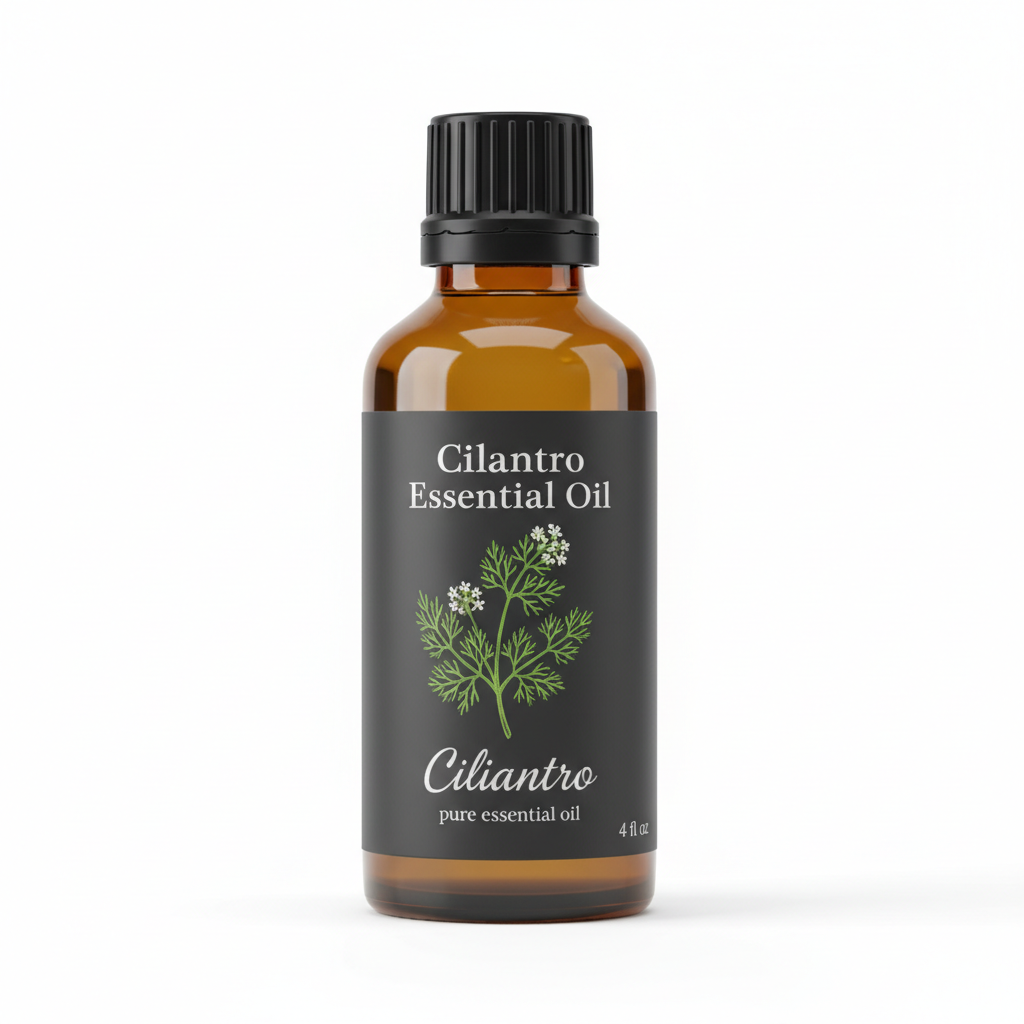
Cilantro Essential Oil
Our own Cilantro Essential Oil, in sizes from 0.5 oz to bulk.
From $13.99
Shop Now →This deep dive unpacks the compounds at play, explores what researchers have observed about the individual aromatic components, and offers practical guidance on sourcing and safety for anyone working with pineapple cilantro fragrance oil in cosmetic or aromatic applications.
Starting with Cilantro: The Aromatic Chemistry of the Leaf
Cilantro essential oil, distilled from the fresh leaves of Coriandrum sativum, occupies a genuinely unusual chemical space. It is not the same oil as coriander seed. The seed oil is dominated by linalool and has a soft, floral-woody character. The leaf oil tells a completely different story.
The dominant compounds in cilantro leaf essential oil include a series of aldehydes, particularly decanal, 2-decenal, 2-dodecenal, and related C10 and C12 chain-length aldehydes. These aldehydes are responsible for what many people describe as the sharp, green, almost citrusy edge of fresh cilantro. They also happen to be structurally related to some of the same aldehyde families found in tropical fruit aromatic profiles, which is a key piece of the pairing puzzle.
Research published in phytochemical journals has identified over 40 volatile compounds in cilantro leaf oil across different growing regions. The precise ratio shifts depending on harvest timing, climate, and distillation method. Early-harvest oils tend to carry higher aldehyde concentrations, producing that bright, almost aggressive green note. Oils distilled from mature leaves often show softer, more rounded profiles. For fragrance work, that distinction matters considerably.
Want a fuller picture of the leaf oil on its own? Our complete guide to cilantro essential oil walks through the botany, extraction methods, and aromatic characteristics in depth.
The Pineapple Side: Esters, Furanones, and Tropical Brightness
Fresh pineapple (Ananas comosus) does not yield a true essential oil through steam distillation. What the fragrance industry refers to as pineapple fragrance is either a nature-identical reconstruction or an aroma extract, built from compounds identified in pineapple's complex volatile signature.
Pineapple aroma is largely driven by esters and furanone derivatives. Key compounds include:
- Methyl hexanoate and ethyl hexanoate: Light, fruity esters with a fresh, tropical character.
- Allyl hexanoate: A sharper ester note often described as pineapple-like in isolation.
- 2,5-Dimethyl-4-methoxy-3(2H)-furanone (DMMF): One of the most studied contributors to ripe pineapple aroma, observed at very low concentrations but with significant aromatic impact.
- Methyl 3-(methylthio)propanoate: A sulfur-containing compound that adds a slightly savory, tropical edge at trace levels.
- Delta-octalactone and gamma-caprolactone: Creamy lactone notes that soften the overall profile.
Research into pineapple headspace volatiles has consistently identified the furanone fraction as central to the recognizable ripe fruit character. The esters provide brightness and lift. The lactones add a rounded, almost buttery base. Together, they create a scent that reads as tropical, juicy, and inviting.
Where the Chemistry Converges
The reason the pineapple cilantro scent pairing works is not accidental. Both profiles contain straight-chain aliphatic compounds: aldehydes in the cilantro, esters and lactones in the pineapple. These compound families share a waxy, clean, slightly fatty character in their molecular backbone, even when their surface aroma expressions differ dramatically.
Perfumers and flavor chemists have long noted that green, leafy aldehydes can act as bridges between herbal and fruity accords. The C10 aldehydes in cilantro leaf oil carry a facet that reads as simultaneously green and faintly citrusy, which gives them an unusual versatility. When paired with tropical fruit esters, the aldehydes do not clash. Instead, they extend the top note character of the fruity accord and add complexity.
Think of it in terms of contrast and continuity. The pineapple brings sweetness, warmth, and tropical brightness. The cilantro introduces a green, herbal sharpness that prevents the composition from becoming cloying. The two elements share enough molecular DNA to feel cohesive, while remaining distinct enough to create genuine aromatic interest.
Some perfumers describe this dynamic as a "lift and anchor" relationship. The cilantro lifts the composition with its sharp, clean edge. The pineapple anchors it with body and sweetness. Neither overpowers the other when the proportions are well-calibrated.
Research Observations on Key Compounds
Several of the compounds found in both aromatic profiles have attracted research attention, though it is important to note that most studies focus on isolated compounds under specific conditions. Findings should be understood as observations rather than definitive conclusions about finished fragrance products.
Linalool, present in trace amounts in some cilantro leaf oil samples, has been the subject of numerous sensory studies. Some research suggests that linalool-containing compositions may contribute to a perception of calm in aromatic environments, based on self-reported survey data. This is an observational finding tied to atmospheric context, not a clinical outcome.
The C10 aldehyde family, particularly decanal, has been studied for its olfactory characteristics and its behavior in fragrance blends. Research suggests that decanal at low concentrations enhances the perceived brightness of adjacent fruity notes, a phenomenon sometimes called "aldehyde boosting" in perfumery literature.
Regarding the ester compounds common to pineapple reconstructions, sensory evaluation research suggests that ethyl hexanoate is reliably associated with tropical and fruity perceptions across diverse cultural groups, making it a robust aromatic signal in cross-market fragrance design.
Safety Profile: What You Need to Know Before You Blend
Working with any fragrance material responsibly means understanding the safety parameters before you start. Here is what current guidance indicates for the components most relevant to pineapple cilantro fragrance oil formulations.
Cilantro Leaf Essential Oil
The Research Institute for Fragrance Materials (RIFM) and the International Fragrance Association (IFRA) have established usage guidelines for cilantro leaf oil. The aldehyde content is the primary consideration. Aldehydes are known skin sensitizers at elevated concentrations, which means proper dilution is essential for any leave-on cosmetic application.
- Recommended maximum usage rate for leave-on skin products: Consult current IFRA guidelines, as rates vary by product category (facial, body, hands).
- Patch testing: Always perform a patch test before broad skin application of any formulation containing cilantro leaf oil. Apply a small amount to the inner forearm and observe for 24 hours before proceeding.
- Photosensitivity: Some green leaf oils contain compounds that may increase skin sensitivity to UV exposure. Avoid direct sun exposure on areas where leave-on cilantro oil formulations have been applied.
- Pregnancy and nursing: Consult a qualified healthcare provider before using essential oil-containing products during pregnancy or while nursing.
- Children: Essential oil formulations are not appropriate for use on or around young children without professional guidance.
Pineapple Fragrance Components
Synthetic fragrance reconstructions and nature-identical pineapple aroma materials vary widely by supplier. Always request a Safety Data Sheet (SDS) and IFRA compliance statement from your fragrance supplier before incorporating any pineapple fragrance oil into a formulation.
Ester-based fragrance materials are generally considered low sensitization risk at standard usage rates, but individual components within a proprietary pineapple fragrance blend may have specific restrictions. Verification at the component level is best practice.
Soap Making Considerations
For soap applications, both the cilantro note and the pineapple fragrance components require evaluation for acceleration behavior in cold-process formulations. Some aldehyde-containing oils accelerate trace quickly. Testing in a small batch before full production is strongly recommended. For more on working with cilantro oil specifically in soap formulas, see our guide to cilantro oil in soap making.
Sourcing and Quality Indicators
The quality of your finished pineapple cilantro fragrance oil depends heavily on the quality of the individual components you start with. Here is what to look for.
For Cilantro Leaf Essential Oil
The best cilantro leaf oils come from producers who specify the plant part (leaf, not seed), the country of origin, and the distillation method. Key markers of quality include:
- Gas chromatography/mass spectrometry (GC/MS) reports: A reputable supplier will provide these. Look for a clear aldehyde profile with decanal and 2-decenal as leading components.
- Harvest timing disclosure: Oils distilled from young leaves versus mature leaves have noticeably different aromatic profiles. Know what you are buying.
- Color and clarity: High-quality cilantro leaf oil is typically pale yellow to nearly colorless. Significant darkening may indicate oxidation or adulteration.
- Aroma consistency: Fresh, green, and bright with that distinctive herbal-citrus sharpness. Off-notes that read as musty or earthy suggest quality concerns.
For Pineapple Fragrance Oil
Since true pineapple essential oil does not exist, you are evaluating a formulated product. Quality indicators here focus on:
- Supplier transparency: Does the supplier disclose the fragrance family, compliance status, and any restricted materials? Transparency is a baseline quality signal.
- Longevity and stability: A well-formulated pineapple fragrance holds its top note brightness over time rather than fading rapidly to a flat, sweet base.
- IFRA compliance certificate: This document confirms the fragrance has been formulated within industry safety guidelines for specific product categories.
Blending in Practice: Ratios and Context
When constructing a pineapple cilantro fragrance oil for diffusion or cosmetic use, the starting point most blenders find workable is a ratio that keeps the cilantro note subordinate to the pineapple. A starting approximation of 70 to 30 (pineapple to cilantro) lets the fruit character carry the composition while the herbal note adds definition without dominating.
From there, adjustments depend on the intended application. Diffuser blends can tolerate a stronger cilantro presence because the volatility differences between compounds level out over time in the air. Leave-on cosmetic products benefit from a lighter cilantro hand, both for scent balance and for managing aldehyde concentration at the skin level.
Citrus notes integrate beautifully into this pairing as a tertiary element. Yuzu, bergamot, and lime all amplify the brightness the pineapple begins and the cilantro extends. If you are building a broader aromatic composition, our exploration of citrus and cilantro combinations offers a useful framework for that next layer.
A Pairing Worth Understanding Deeply
The pineapple cilantro scent pairing earns its place in the aromatic toolkit not through novelty alone but through genuine chemical compatibility. Shared aldehyde and ester character creates cohesion. Contrasting aromatic personalities create interest. The result is a composition that smells simultaneously fresh, tropical, and green: a combination that feels unexpected until you understand why it works.
Quality sourcing, proper dilution, and a clear-eyed reading of the safety data are what separate a successful pineapple cilantro fragrance oil from one that underperforms or creates problems. Approach it with that rigor, and the pairing rewards the effort generously.