
Cilantro Oil in Soap Making: A Crisp Garden-Fresh Bar
There is something quietly satisfying about a handmade soap that smells like a kitchen garden in the morning. Cilantro essential oil brings exactly that quality: green, bright, slightly citrusy, and just a little earthy. It does not shout. It settles into a bar of cold-process soap and stays there, releasing a clean herbal lift every time you lather up.
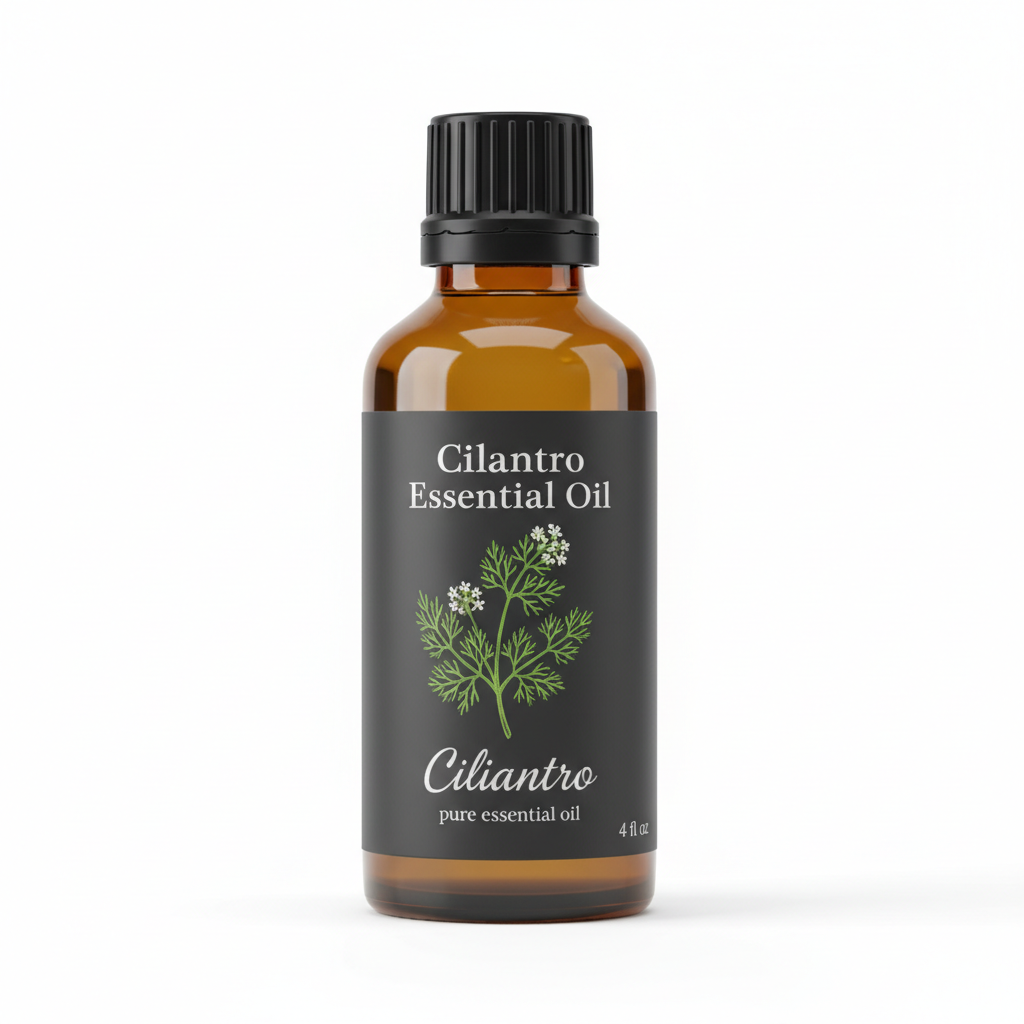
Cilantro Essential Oil
Our own Cilantro Essential Oil, in sizes from 0.5 oz to bulk.
From $13.99
Shop Now →This recipe is built around that scent. The goal is a hard, conditioning bar with a fresh herbal character that holds up through saponification and still smells recognizably like cilantro when you unmold it a week later. It takes some patience, a bit of careful chemistry, and a good source of oil. The result is worth the process.
Before you dive in, it is worth understanding what makes cilantro essential oil behave the way it does in a soap base, so you can make informed decisions about how much to use and when to add it.
Before You Begin: A Note on This Recipe
This is a cold-process soap recipe. Cold-process soap involves lye (sodium hydroxide), which is a caustic alkali. When lye is handled correctly, it is safe and produces a beautiful bar. When it is not handled correctly, it causes serious skin and eye burns. Please read every safety instruction in this article before you purchase any ingredients.
This recipe is designed for people who have made cold-process soap at least once before. If this is your first time working with lye, start with a simpler single-oil recipe, get comfortable with the process, and return to this one. Calling this a beginner project would not be honest.
Difficulty level: Intermediate
Active prep time: 45 to 60 minutes
Hardening time: 4 to 6 weeks
Yield: Approximately 8 bars (roughly 3.5 ounces each)
Ingredients
Oils and Butters
- 10 oz (283 g) olive oil (conditioning, slow to trace)
- 8 oz (227 g) coconut oil (lather and hardness)
- 4 oz (113 g) shea butter (skin feel and bar hardness)
- 2 oz (57 g) castor oil (stable lather boost)
Lye Solution
- 3.36 oz (95 g) sodium hydroxide (lye), calculated for a 5% superfat
- 8 oz (227 g) distilled water
Fragrance
- 0.84 oz (24 g) cilantro essential oil (approximately 3% of total oil weight)
Optional Colorants and Additives
- 1 teaspoon spirulina powder (green tint, added at light trace)
- 1 tablespoon sodium lactate (optional, helps unmold faster in cooler weather)
- 1 teaspoon kaolin clay (optional, adds slip and may help the scent hold)
A quick note on the essential oil quantity: 3% is the recommended maximum usage rate for cilantro essential oil in a rinse-off product like soap. The scent is potent in the bottle, but it does fade during the saponification process and the hardening period. Some soap makers find the scent quite subtle after setting. If you want a stronger herbal scent character, the variation section below covers blending options.
Equipment You Will Need
- Digital kitchen scale (accurate to 0.1 oz or 1 g)
- Two heat-safe pitchers or large measuring cups (one for lye solution, one for oils)
- Stick blender
- Rubber or silicone spatulas
- Soap mold: a 9-inch silicone loaf mold works well for this batch size
- Thermometer (infrared or probe style)
- Safety goggles, chemical-resistant gloves, long sleeves
- Dedicated soap-making bowls and tools (never reuse these for food)
- White vinegar nearby for neutralizing any lye spills
Step-by-Step Instructions
Step 1: Prepare Your Work Area
Work in a well-ventilated space. Put on your safety goggles and gloves before you open the lye container. Keep children and pets out of the area. Set your white vinegar nearby. Lye fumes when first mixed with water are brief but sharp, so good airflow matters.
Step 2: Make the Lye Solution
Measure your distilled water into a heat-safe pitcher. Measure your lye into a separate dry container. Always add lye to water, never water to lye. Slowly pour the lye into the water while stirring. The solution will heat up quickly and produce fumes briefly. Stir until fully dissolved. Set aside to cool to between 90°F and 110°F (32°C to 43°C).
Step 3: Melt and Combine Your Oils
Melt the coconut oil and shea butter together gently. You can use a double boiler or short microwave bursts on low power. Once melted, add the olive oil and castor oil. Stir to combine. Allow the oil blend to cool to between 90°F and 110°F (32°C to 43°C). Both your lye solution and your oils should be within about 10 degrees of each other before you combine them.
Step 4: Combine Lye and Oils
With your gloves and goggles still on, slowly pour the lye solution into the oil blend. Do not pour oils into lye. Stick blend in short pulses, alternating with hand stirring, until you reach a light trace. Light trace looks like thin pancake batter: the mixture coats the back of a spoon and a drizzle across the surface leaves a faint line before sinking back in.
Step 5: Add Optional Additives
If you are using kaolin clay, disperse it in a tablespoon of one of your oils before adding. If you are using spirulina, mix it with a small amount of the traced soap batter first to avoid clumping, then fold it back in. Stick blend briefly to incorporate.
Step 6: Add the Cilantro Essential Oil
Add your measured cilantro essential oil at light trace. Stick blend briefly, then hand stir. Cilantro essential oil can accelerate trace in some batches, so work with intention once you add it. Do not walk away. Stir to medium trace, which looks like thick pudding, and move quickly to the mold.
Step 7: Pour and Insulate
Pour the batter into your mold. Tap the mold gently on the counter to release air bubbles. Smooth the top with a spatula. Cover loosely with a piece of cardboard or a silicone mat, then wrap the mold in a towel or place it in a turned-off oven. This insulation encourages the gel phase, which produces a more translucent, glossy bar. Leave undisturbed for 24 to 48 hours.
Step 8: Unmold and Cut
After 24 to 48 hours, check the soap. It should feel firm. If it is still soft or tacky, give it another 12 hours. Once firm, unmold and cut into bars using a soap cutter or a sharp knife. Handle the fresh-cut bars with gloves: newly made soap still contains residual lye until fully set.
Step 9: Set
Place bars on a rack with space between them. Store in a cool, dry location away from direct sunlight. Allow to set for a minimum of 4 weeks. Six weeks produces a harder, longer-lasting bar with a scent profile that holds noticeably better through the setting period. The scent will mellow and settle during this period.
Safety Warnings
Lye Safety
Sodium hydroxide is a caustic material. Skin contact causes burns. Eye contact is a medical emergency. Always wear goggles and gloves. If lye contacts skin, flush immediately with large amounts of cool water for at least 15 minutes. Seek prompt medical attention for any eye exposure. Keep lye in a sealed container away from moisture.
Essential Oil Dilution and Skin Safety
The 3% usage rate in this recipe falls within the guidelines published by the International Fragrance Association (IFRA) for rinse-off products. Do not exceed this rate. Using more essential oil does not guarantee a stronger scent in finished soap, and excess usage increases the risk of skin sensitivity.
Cilantro essential oil is generally considered well-tolerated at appropriate dilutions. However, citrus-forward essential oils and some green herb oils can cause sensitivity in certain individuals. Perform a patch test on finished, fully set soap before general use: apply a small amount of lather to the inside of your wrist, rinse, and wait 24 hours to observe any response.
Who Should Avoid This Product
People with known sensitivities to plants in the Apiaceae family (which includes cilantro, parsley, and carrot) may wish to avoid this soap or patch test carefully. Those with known essential oil sensitivities should consult a qualified healthcare provider before use. This soap is formulated for external use only. Keep away from eyes. Discontinue use if any irritation develops.
Pregnancy and Other Considerations
Some essential oils are not recommended during pregnancy. If you are pregnant or nursing, consult a qualified healthcare provider before using products containing cilantro essential oil.
Storage Instructions and Shelf Life
Store finished, set bars in a cool, dry location away from direct sunlight and humidity. A simple kraft paper wrap or an open wooden soap dish works well. Avoid airtight packaging, which traps moisture and shortens bar life.
The shelf life of this soap is primarily governed by its oils. Olive oil is quite stable. The finished bars should remain in good condition for 12 to 18 months if stored properly. Watch for a yellow-orange discoloration (called DOS, or dreaded orange spots) which indicates rancidity from one of the oils going off. This is more common in high-water formulations and in humid storage conditions.
The cilantro herbal soap scent will be most pronounced in the first few months and may fade gradually over time. This is normal behavior for botanical essential oils in soap.
Variations and Substitutions
Strengthen the Herbal Scent
Cilantro essential oil is not the most tenacious in cold-process soap. To build a more lasting herbal character, blend it with supporting notes. A combination of 70% cilantro, 20% litsea cubeba, and 10% cedarwood produces a green-citrus-woody profile that holds noticeably better through the setting period. You can also explore the pineapple and cilantro scent pairing as inspiration for a tropical-fresh variation using a complementary fragrance blend alongside the essential oil.
Fragrance Oil Option
If scent retention is your priority, consider using a cilantro-based fragrance oil in place of or blended with the essential oil. This is worth exploring before you commit to a large batch. The differences between these two options are covered in detail in this comparison of cilantro fragrance oil vs. essential oil. Fragrance oils are formulated for stability in soap and typically last longer through the saponification process.
Oil Substitutions
If shea butter is unavailable, mango butter or kokum butter are suitable replacements at the same weight. Avocado oil can substitute for a portion of the olive oil if you want a slightly faster trace and a softer skin feel. Castor oil should stay at or below 10% of total oil weight to avoid a sticky bar.
Color Variations
Spirulina gives a soft sage-green tone that suits the herbal scent character. French green clay produces a warmer, more muted green. For a clean white bar that lets the scent speak for itself, simply omit all colorants.
Swirl Design
If you want a two-tone effect, divide the batter after adding the essential oil. Color one half with spirulina and leave the other natural. Pour in alternating streams and use a skewer to pull a loose swirl pattern. Work quickly because cilantro oil soap batter can move toward medium trace faster than you expect.
A Few Final Notes on Sourcing
The quality of your cilantro essential oil shapes the final character of this bar more than any other single ingredient. A high-quality, properly distilled oil sourced from fresh cilantro leaf will carry a bright, genuinely green aroma into your soap. A lower-quality oil may smell flat, musty, or faintly chemical before it even reaches the saponification process.
Look for oils that specify they are distilled from the leaf rather than the seed. Coriander seed oil is a related but distinct product with a different aroma profile. For more background on what distinguishes a quality leaf distillation from other coriander-derived oils, the complete guide to cilantro essential oil covers sourcing, distillation methods, and what to look for on a certificate of analysis.
This bar takes time. The process asks for your full attention during the active steps and then asks you to step back and wait. Four to six weeks of setting feels like a long time until you hold the finished bar in your hand and catch that first crisp lift of cilantro oil soap scent rising from the lather. Then it makes complete sense.