
Cilantro Fragrance Oil vs Essential Oil: What Is in the Bottle?
Pick up two bottles labeled "cilantro" at a craft supplier and they may smell nothing alike. One might be bright and green, almost grassy, with that signature soapy-herbal bite. The other could be sweeter, rounder, blended with tropical or citrus notes. Same label, completely different contents. Understanding why starts with a simple question: is it a fragrance oil or an essential oil?
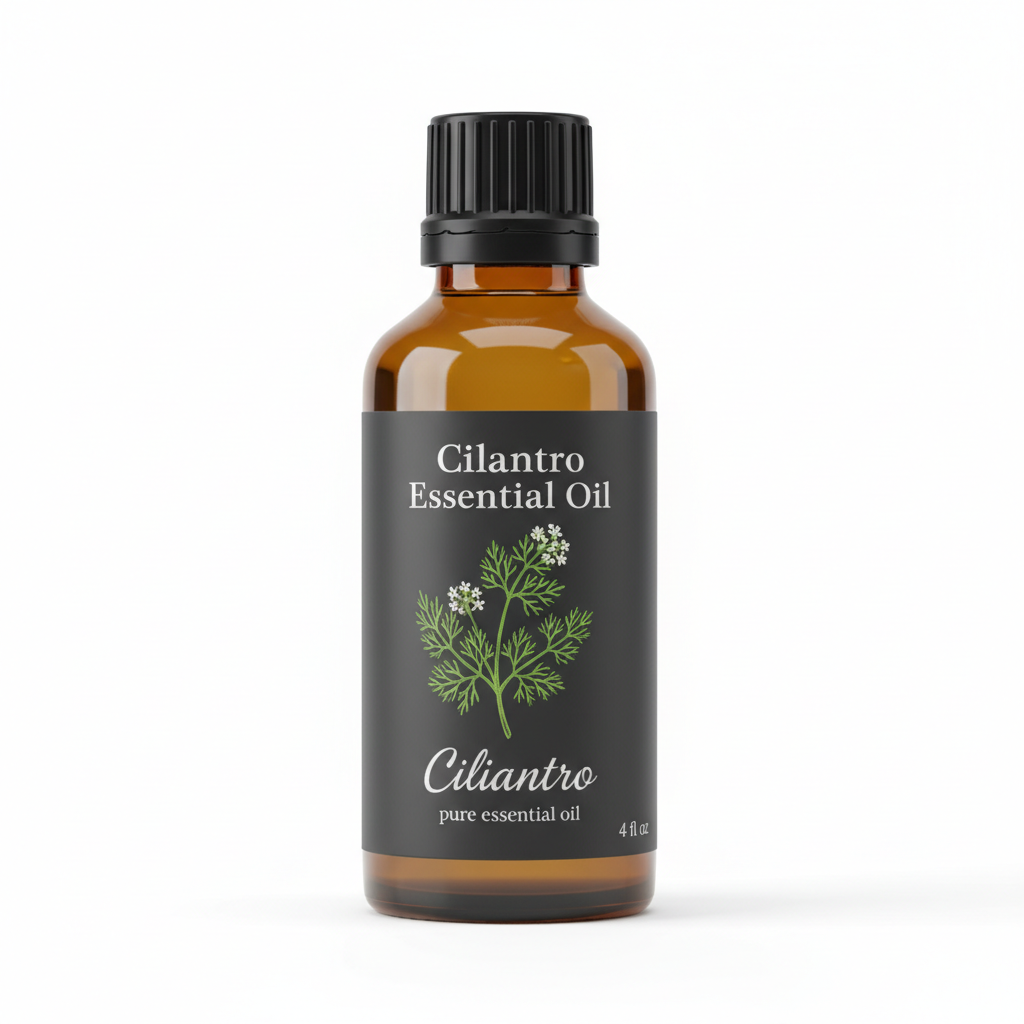
Cilantro Essential Oil
Our own Cilantro Essential Oil, in sizes from 0.5 oz to bulk.
From $13.99
Shop Now →This comparison breaks down both options honestly. There is no universal winner here. The better choice depends entirely on what you are making, what experience you want, and what you are willing to spend. Let's open both bottles and see what is actually inside.
The Fundamental Difference: Source and Composition
What Is Cilantro Essential Oil?
Cilantro essential oil is steam-distilled directly from the fresh leaves and stems of Coriandrum sativum. The process captures the volatile aromatic compounds naturally present in the plant. No synthetic molecules are added. What you get is a complex, living snapshot of the herb itself.
The scent profile is distinctive: green, slightly soapy, herbaceous, with subtle citrus undertones. Some people love it immediately. Others find it polarizing, which is honest. Cilantro's aroma is not a crowd-pleaser the way lavender or vanilla tends to be. That specificity is part of its appeal for makers who want something genuinely different.
Because it is a single-source botanical extract, the composition can shift slightly from batch to batch depending on harvest region, season, and distillation conditions. If you care about consistency at scale, that variability matters. For a deeper look at what goes into a quality bottle, the article how to buy cilantro essential oil: quality checks for a rare find covers sourcing and evaluation in detail.
What Is a Cilantro Fragrance Oil?
Fragrance oils are formulated blends, typically combining both synthetic aroma compounds and sometimes small amounts of natural isolates. A perfumer or flavorist designs the scent profile deliberately, aiming to evoke an idea of cilantro rather than reproduce its exact botanical chemistry.
The result can be quite good. Some cilantro fragrance oils are impressively accurate. Others take liberties. Pineapple cilantro fragrance oil, for example, is a popular soap-making blend that pairs a tropical, fruity sweetness with herbal green notes. That combination does not exist in nature. It is a creative composition, and for certain applications it works beautifully. But it is not cilantro essential oil, and calling it such would be misleading.
Fragrance oils are engineered for performance in specific applications: cold-process soap, soy candles, lotion bases. Formulators test them for acceleration, ricing, discoloration, and scent throw. That tested, predictable performance is a genuine advantage in production environments.
Side-by-Side Comparison
| Attribute | Cilantro Essential Oil | Cilantro Fragrance Oil |
|---|---|---|
| Source | Steam-distilled from fresh Coriandrum sativum leaves | Synthetic and/or blended aroma compounds, lab-formulated |
| INCI Label | Coriandrum sativum leaf oil | Fragrance (parfum) or listed blend components |
| Scent Accuracy | True-to-plant; green, herbal, soapy-citrus | Varies by formulation; may include creative departures |
| Scent Stability in Soap | Can fade; some volatility in hot process or high-pH environments | Generally more stable; formulated for soap performance |
| Candle Scent Throw | Moderate to low; lighter molecules dissipate quickly | Typically stronger; engineered for throw in wax |
| Skin Safety Requirements | Dilution required; dermal limits apply (IFRA guidelines) | Dilution required; check supplier's skin-safe designation |
| Batch Consistency | Slight variation possible by harvest | High consistency; replicated formula each batch |
| Cost | Higher per ounce; raw material is labor-intensive | Lower per ounce; synthetic components reduce cost |
| "Natural" Positioning | Suitable for natural or botanical product lines | Not suitable for natural claims |
| Typical Applications | Skincare, diffusing, aromatherapy blends, natural cosmetics | Candles, soap, body products, bath bombs, reed diffusers |
Pros and Cons: Cilantro Essential Oil
Pros
- Botanical authenticity. The scent is the actual plant. For makers positioning their products as natural or plant-derived, this matters on the label and in the story.
- Complex, nuanced aroma. Real cilantro essential oil carries a layered scent profile that synthetic versions rarely replicate fully. It has character.
- Appropriate for skin-focused formulations. When properly diluted, it can be incorporated into facial serums, body oils, and cosmetic products where botanical origin is relevant.
- Diffuser-ready. In a cold-air diffuser, cilantro essential oil delivers a crisp, green herbal atmosphere that is genuinely pleasant for a kitchen workspace or a bright morning routine.
Cons
- Scent can fade in rinse-off products. In cold-process soap especially, the lighter volatile compounds may not survive saponification well. The finished bar may smell faint compared to what you added.
- Higher cost. Quality cilantro essential oil requires more raw material per ounce than many common oils. Expect to pay accordingly.
- Limited availability. Not every supplier carries it, and quality varies considerably across the market.
- Polarizing scent. Some customers simply do not enjoy the raw herb aroma. Know your audience before centering a product line around it.
Pros and Cons: Cilantro Fragrance Oil (Including Pineapple Cilantro Blends)
Pros
- Reliable performance in challenging bases. Fragrance oils designed for soap, wax, or resin are tested for those specific environments. You get predictable behavior in your production process.
- Stronger scent throw. For candles and room-scenting products, fragrance oils generally outperform essential oils in staying power and projection.
- Creative versatility. A pineapple cilantro fragrance oil opens up unexpected scent directions. The combination of fruity and herbal can be genuinely appealing for summer product lines or novelty soaps.
- Consistent from batch to batch. Reformulation is rare with established fragrance oil suppliers, which makes scaling production easier.
- Lower cost at volume. For high-production-volume makers, the cost difference between fragrance oil and essential oil is significant over hundreds of units.
Cons
- Cannot be labeled as natural. Fragrance oils disqualify a product from natural, organic, or botanical marketing claims. That is a real limitation for certain retail positioning.
- Less botanical complexity. Synthetic aroma compounds can approximate a scent, but they tend to be flatter. Experienced noses often notice the difference.
- Ingredient transparency can be limited. Fragrance is a legally protected trade secret designation in many jurisdictions, meaning full ingredient disclosure to consumers is not required. Some buyers find this uncomfortable.
- Quality varies dramatically by supplier. A low-cost pineapple cilantro fragrance oil may behave unpredictably in your soap base. Testing before committing to a large order is essential.
Best For: Matching the Product to the Purpose
Use Cilantro Essential Oil When:
- You are formulating a natural or botanical skincare product and the label needs to reflect that positioning accurately.
- You want to diffuse a fresh, garden-green herbal scent at home or in a workspace setting.
- You are building a personal care line where botanical origin is part of your brand story.
- You are making a salt scrub, body oil, or leave-on moisturizer where the skin-contact profile of a true plant extract matters.
- You want to blend it with other essential oils (lime, lemongrass, bergamot) for a layered, complex aromatic blend.
For anyone just getting started with this ingredient, the complete guide to coriander leaf essential oil is an excellent foundation before placing your first order.
Use Cilantro Fragrance Oil (or Pineapple Cilantro Fragrance Oil) When:
- You are making cold-process or hot-process soap and need a scent that survives saponification reliably.
- You are producing soy or coconut wax candles and need a strong hot throw.
- Your product concept calls for a creative, blended profile rather than a pure botanical reproduction.
- Cost control is a production priority and you are working at meaningful volume.
- You want a consistent, repeatable result across large batch runs.
If soap-making is your primary interest, it is worth reading cilantro oil in soap making: a crisp, garden-fresh bar, which addresses both essential oil and fragrance oil performance in that specific context.
A Note on Safety for Both
Neither fragrance oils nor essential oils are automatically gentle simply because they smell pleasant. Both require proper dilution before any skin contact. For essential oils, standard cosmetic dilution guidelines apply: typically 1 to 3 percent in a carrier for leave-on products, and always conduct a patch test before wider application. Fragrance oils carry their own IFRA compliance documents; a reputable supplier will provide these upon request.
Do not apply either undiluted to skin. Keep both away from children and pets, and store them away from heat and direct sunlight to preserve their integrity.
The Verdict
If authenticity and botanical origin are central to your project, cilantro essential oil earns its higher price point. It delivers a real, nuanced scent that a fragrance oil simply cannot duplicate, and it belongs on a natural product label without compromise.
If you are making candles, high-volume soap, or products where scent performance and cost efficiency matter more than botanical origin, a quality cilantro fragrance oil (or a well-formulated pineapple cilantro fragrance oil) is the more practical choice. It will behave predictably, smell consistent, and hold up through the production process better than most essential oils in those same applications.
The two are not competing products so much as different tools for different goals. Know what you are making, know who you are making it for, and choose accordingly. Both have a legitimate place on the maker's shelf.