
Coriander Seed Oil vs Cilantro Leaf Oil: Price and Scent Compared
One plant. Two very different oils. If you have spent any time browsing essential oil suppliers, you have probably noticed that "coriander seed oil" and "cilantro leaf oil" are sometimes listed side by side, sometimes used interchangeably, and occasionally mislabeled altogether. The confusion is understandable. Both oils come from Coriandrum sativum, the same species. But the part of the plant used for distillation changes everything: the scent, the chemistry, the rarity, and the price.
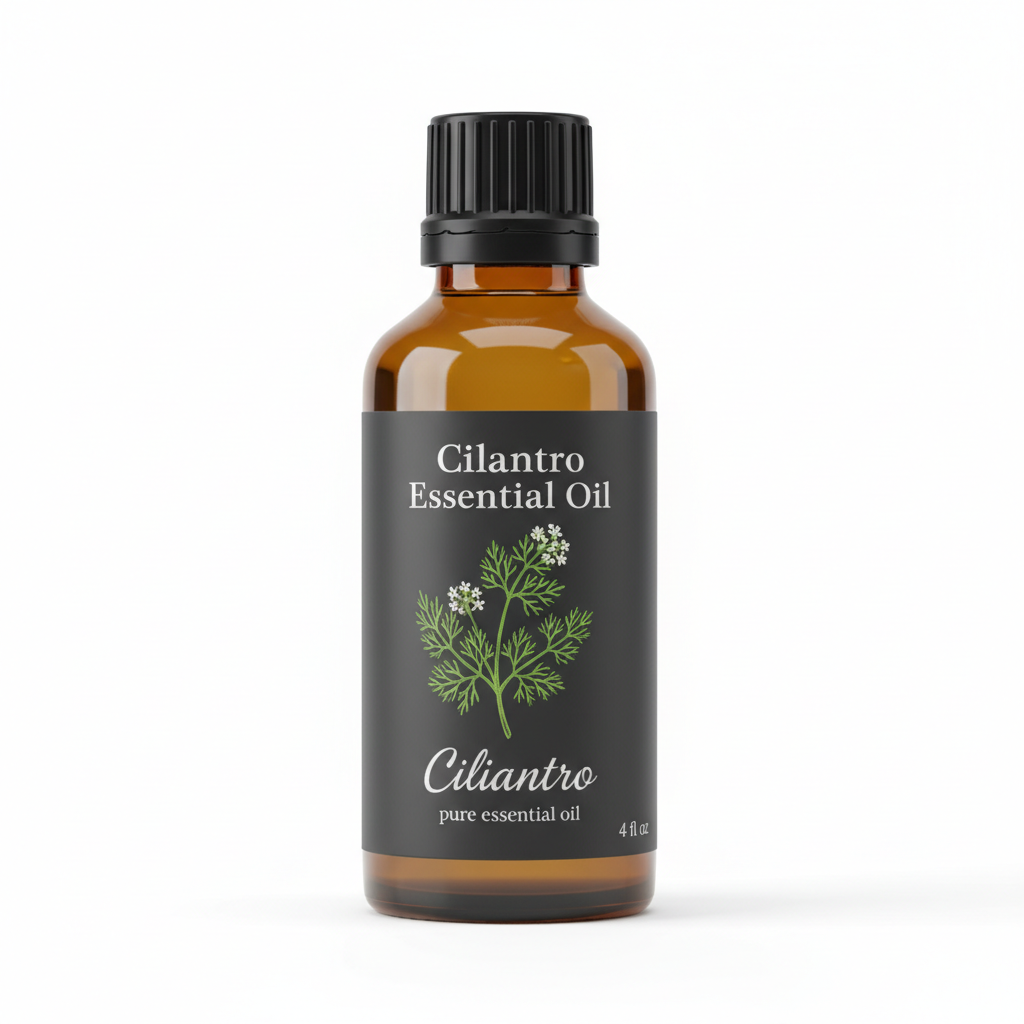
Cilantro Essential Oil
Our own Cilantro Essential Oil, in sizes from 0.5 oz to bulk.
From $13.99
Shop Now →This guide breaks down both oils honestly, so you can spend your money on the right one for your actual needs.
First, a Quick Botanical Orientation
"Cilantro" typically refers to the fresh green leaves and stems of Coriandrum sativum, the name most common in North America and Latin America. "Coriander" usually refers to the dried seeds of that same plant, the name favored in Europe, South Asia, and the spice trade. When an essential oil is distilled from the seeds, it is called coriander seed oil (sometimes written as "cilantro seed oil" in American markets). When it is steam-distilled from the fresh leaves, it is called cilantro leaf oil or cilantro essential oil.
For a deeper look at the naming history and botanical relationship between these two oils, see our guide: Cilantro vs Coriander Oil: The Ultimate Guide to One Plant.
The Scent Profiles: Where They Diverge Completely
This is where most buyers are genuinely surprised. Despite sharing a parent plant, the two oils smell almost nothing alike.
Coriander Seed Oil
Coriander seed oil is widely regarded as approachable and pleasant on first sniff. The aroma is warm, softly spicy, and faintly sweet, with woody undertones and a gentle citrus lift. Perfumers often describe it as sitting between a spice note and a floral note. It is smooth rather than sharp. In a diffuser, it reads as cozy and grounding without being heavy. In fragrance blending, it works as a middle note that smooths transitions between brighter top notes and deeper base notes.
The dominant compound in coriander seed oil is linalool, a naturally occurring alcohol also found in lavender and bergamot. That single fact explains a great deal about the oil's character. Linalool content in quality coriander seed oil typically runs between 60 and 80 percent. This gives it a softness that most people find immediately wearable.
Cilantro Leaf Oil
Cilantro leaf oil is a different experience entirely. If you have ever crushed a fresh cilantro leaf between your fingers and found the smell striking, green, almost soapy, you already know part of what to expect. The leaf oil captures that quality and intensifies it. It is sharp, herbaceous, and intensely fresh. Some people find it exhilarating. Others need time to warm up to it.
The chemistry here is dominated by aldehydes, particularly decanal and dodecanal. These compounds are responsible for the characteristic cilantro scent that divides opinion at dinner tables and in fragrance studios alike. The leaf oil also contains linalool, but at much lower concentrations than the seed oil. The result is a scent that reads as green, bright, and botanical rather than warm and floral-spicy.
In blending, cilantro leaf oil is used sparingly as a top note. A small percentage adds vibrancy and lift. A heavy hand overwhelms.
Structured Comparison: Key Attributes at a Glance
| Attribute | Coriander Seed Oil | Cilantro Leaf Oil |
|---|---|---|
| Botanical source | Coriandrum sativum (dried seeds) | Coriandrum sativum (fresh leaves and stems) |
| Scent character | Warm, spicy-sweet, slightly floral, smooth | Sharp, green, herbaceous, intensely fresh |
| Dominant compounds | Linalool (60-80%) | Aldehydes (decanal, dodecanal), lower linalool |
| Fragrance family | Spicy-floral, middle note | Green-herbaceous, top note |
| Availability | Widely available from major suppliers | Less common; sourcing requires care |
| Typical price range (per 5ml) | $6 to $18 | $15 to $45+ |
| Typical price range (per 30ml) | $18 to $50 | $40 to $120+ |
| Common cosmetic uses | Skincare blends, perfumery, massage oils | Diffusion, specialty fragrance, artisan cosmetics |
| Blending difficulty | Beginner-friendly, forgiving | Requires restraint; easy to over-apply |
| Shelf life (approximate) | 3 to 5 years when stored properly | 2 to 3 years; aldehydes can oxidize faster |
Cilantro Leaf Oil Price: Why Does It Cost More?
Cilantro leaf oil price surprises many buyers who expect a common herb to yield an affordable oil. The gap between leaf and seed prices comes down to yield and logistics.
Coriander seeds are shelf-stable, dense, and easy to transport in bulk. They have been traded as a commodity spice for centuries, and distillation infrastructure for seeds is well established across major producing regions including Eastern Europe, India, and Morocco. Yields per kilogram of raw material are relatively generous.
Fresh cilantro leaves are the opposite in almost every way. They are perishable. Distillation must happen quickly after harvest or volatile compounds are lost. The oil yield from fresh leaf material is low, meaning large quantities of plant matter are needed to fill a small bottle. This increases both the cost of raw material and the complexity of production. Fewer distillers specialize in it, which keeps supply limited and prices higher.
When you see cilantro leaf oil priced comparably to coriander seed oil, that is a signal worth investigating. It may indicate a diluted product, an adulterated oil, or a mislabeled seed oil. For guidance on spotting these issues before you buy, our article on How to Buy Cilantro Essential Oil: Quality Checks for a Rare Find covers what to look for.
Pros and Cons: Coriander Seed Oil
Pros
- Approachable, versatile scent that blends easily with florals, citrus, and woods
- Widely available from reputable suppliers, making comparison shopping straightforward
- Lower price point makes it practical for regular use in lotions, serums, and diffuser blends
- High linalool content gives it a smooth, skin-friendly character in diluted cosmetic applications
- Longer effective shelf life due to more stable compound profile
- Good documentation and GC/MS data available from established suppliers
Cons
- Does not replicate the fresh, green scent of cilantro leaf; if that is what you want, this is not the substitute
- Market includes many low-quality offerings, so sourcing still requires attention
- The warm-spicy character does not suit every fragrance concept or cosmetic application
Pros and Cons: Cilantro Leaf Oil
Pros
- Authentic, vivid green-herbaceous scent that cannot be replicated by seed oil or synthetics
- Distinctive character makes it a genuine point of difference in artisan fragrance and botanical skincare branding
- Appeals strongly to customers who love fresh, culinary-herb-inspired scent profiles
- Works beautifully as a top note accent when used at low percentages in a blend
Cons
- Higher price point increases formulation cost, particularly for larger batch production
- Scent is polarizing; not universally loved, which matters if you are creating products for a broad audience
- Shorter shelf life requires attentive storage (dark, cool, tightly sealed) and smaller purchase quantities
- Limited supplier options make quality verification more challenging
- Easy to over-use in blends; heavy-handed application can make a formula smell unbalanced
Best For: Matching Each Oil to Your Use Case
Choose Coriander Seed Oil If You Are:
- Building a skincare line where you want a botanically sourced, cosmetically elegant ingredient at a manageable cost per unit
- Formulating a perfume blend and need a warm, spicy-floral middle note that bridges citrus top notes with wood or resin base notes
- New to essential oil blending and want a forgiving, pleasant-smelling oil to practice with without a large financial commitment
- Diffusing daily and prefer a cozy, comforting atmosphere in your home or workspace
- Making body oils or massage blends where a smooth, subtly spiced background note is the goal
Choose Cilantro Leaf Oil If You Are:
- A fragrance specialist or perfumer seeking an authentic green top note with genuine botanical character
- Developing a product line with a culinary-herb or fresh-garden positioning, where the scent story matters as much as the formula
- An experienced blender comfortable working with potent, assertive top notes at low usage rates
- Sourcing for a specialty diffuser blend where fresh, green, and distinctive is the exact atmosphere you want to create
- Creating small-batch artisan products where a higher ingredient cost is offset by premium positioning
A Note on "Cilantro Seed Oil" Labeling
You will occasionally see products labeled "cilantro seed oil" rather than "coriander seed oil." In most cases, these are the same product, just using the American English name for the plant rather than the European spice-trade name. The oil inside the bottle is distilled from Coriandrum sativum seeds either way.
Where this labeling gets murky is when a supplier uses "cilantro seed oil" to imply a connection to the fresh-leaf aroma that buyers associate with cilantro. Read the product description carefully. A genuine seed oil will list linalool as the primary compound. If a "cilantro seed oil" claims to smell strongly like fresh cilantro leaves, ask for GC/MS documentation before purchasing.
It is also worth knowing the difference between these essential oils and infused oils that use cilantro as a botanical ingredient. Those are a separate category with different applications and very different chemistry. Our article on Cilantro Essential Oil vs Cilantro Infused Oil: Which Should You Choose? explains where each one fits.
Verdict: Which Oil Is Worth Your Money?
For most buyers, coriander seed oil is the practical starting point. It is accessible, versatile, well-documented, and genuinely useful across a wide range of cosmetic and aromatic applications. If you want to incorporate the beautiful, warm-spicy character of this plant into your blends or products without a steep investment, seed oil delivers real value.
Cilantro leaf oil earns its higher price tag for the right buyer. The scent is irreplaceable if authenticity and freshness are your goals. It is a specialist ingredient, not an everyday one. Approach it with intention, use it at low concentrations, and source it carefully from a distiller who can provide batch-specific documentation.
Neither oil is objectively superior. They are simply different, pulled from different parts of the same remarkable plant, carrying different compounds, and built for different creative purposes. Knowing which one you actually need before you buy is the best investment you can make.
Safety Note: All essential oils should be diluted properly before skin contact. A typical safe dilution for leave-on cosmetic applications is 1 to 2 percent in a carrier oil or lotion base. Always perform a patch test before using any new essential oil on a larger area of skin. Keep essential oils away from eyes and mucous membranes. If you are pregnant, nursing, or have any health concerns, consult a qualified healthcare provider before adding essential oils to your routine. Essential oils are not substitutes for professional medical care.