
Cilantro Essential Oil vs Cilantro Infused Oil: Which Should You Buy?
Both products carry the name "cilantro oil," but they are fundamentally different things. One is a concentrated aromatic extract distilled from fresh herb leaves. The other is a carrier oil that has absorbed cilantro's flavor and mild scent through gentle infusion. Picking the wrong one for your purpose is a genuinely easy mistake, and it can cost you time, money, and a batch of whatever you were making.
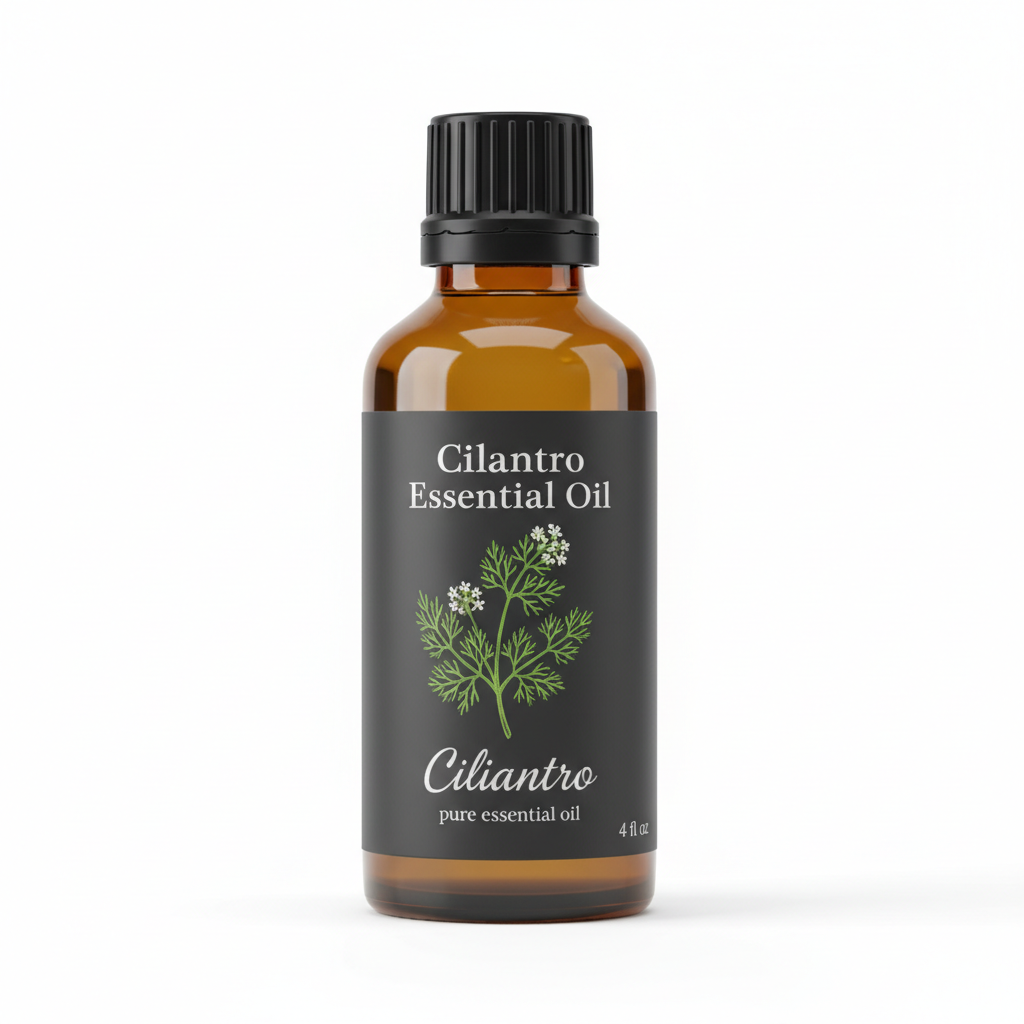
Cilantro Essential Oil
Our own Cilantro Essential Oil, in sizes from 0.5 oz to bulk.
From $13.99
Shop Now →This guide breaks down both options honestly so you can make the right call before you buy.
What Each Product Actually Is
Cilantro Essential Oil
Cilantro essential oil is produced by steam-distilling the fresh leaves and stems of Coriandrum sativum. The process captures the plant's volatile aromatic compounds in a highly concentrated liquid form. The yield is low, which is part of why genuine leaf-distilled cilantro essential oil is relatively rare on the market. What you get in that small dark bottle is intensely green, sharp, and distinctly herbal. A single drop goes a long way.
It is used in cosmetic formulations, perfumery, diffuser blends, and topical skin-care products (always properly diluted). It is not a cooking ingredient. The concentration is far too high for culinary use, and many essential oils are not food-grade products at all.
If you want to learn more about what to look for when purchasing, our guide on how to buy cilantro essential oil: quality checks for a rare find covers the sourcing and labeling details that actually matter.
Cilantro Infused Oil
A cilantro infused oil is made by steeping fresh or dried cilantro leaves in a neutral carrier oil, most commonly olive oil, over a period of hours or days. The carrier absorbs the herb's flavor compounds and some of its aromatic character. The result is a pourable, ready-to-use oil with a gentle cilantro presence that belongs squarely in the kitchen.
Cilantro infused olive oil is particularly popular in culinary applications: finishing dishes, dressings, marinades, and drizzling over grains or roasted vegetables. The infusion process is also something home cooks can do themselves with basic equipment.
For a full walkthrough of the process, see our article on cilantro infused oil: the complete kitchen guide to making your own.
Head-to-Head Comparison Table
| Attribute | Cilantro Essential Oil | Cilantro Infused Olive Oil |
|---|---|---|
| Production method | Steam distillation of fresh leaves | Cold or warm infusion in carrier oil |
| Primary use | Aromatic, cosmetic, topical (diluted) | Culinary: finishing, dressing, cooking |
| Safe to ingest? | No (not food-grade; extremely concentrated) | Yes, when made and stored properly |
| Concentration level | Very high (50+ pounds of herb per ounce) | Mild to moderate |
| Scent intensity | Powerful, sharp, green-herbal | Gentle, fresh, fades over time |
| Shelf life | 1 to 2 years (stored correctly) | 1 to 4 weeks (refrigerated) |
| DIY-friendly? | Not for home production (requires distillation equipment) | Yes, easily made at home |
| Skin application | Yes, when diluted to 1 to 2% in carrier oil | Possible, though formulated differently |
| Typical price range | Higher per bottle due to yield and rarity | Lower; DIY option is very affordable |
| Packaging | Small dark glass bottle (5 to 15 mL) | Larger glass bottle or jar |
| Quality variables | Distillation method, harvest timing, origin | Carrier oil quality, herb freshness, infusion time |
Pros and Cons: Cilantro Essential Oil
Pros
- Highly concentrated aroma. A tiny amount delivers a vivid, bright cilantro note in diffuser blends and cosmetic formulas.
- Long shelf life. Stored in a cool, dark place in a tightly sealed dark glass bottle, it remains stable for one to two years.
- Versatile in cosmetic applications. It works in facial serums, body oils, hair care, and natural perfume blending when properly diluted.
- Portable and compact. A 10 mL bottle contains hundreds of uses at proper dilution rates.
- Consistent from batch to batch when sourced from a reputable supplier with clear GC/MS testing documentation.
Cons
- Not suitable for cooking. Essential oils are not food ingredients and should never be added to dishes.
- Requires careful dilution. Direct skin contact without a carrier oil can cause irritation. A patch test before wider use is always recommended.
- Genuinely rare. Authentic cilantro leaf essential oil (as opposed to coriander seed oil) is harder to find and easier to mislabel. Sourcing requires some research.
- Higher upfront cost. The low distillation yield makes it more expensive per bottle than most common essential oils.
- Not recommended during pregnancy or for young children without guidance from a qualified healthcare provider.
Pros and Cons: Cilantro Infused Olive Oil
Pros
- Made for the kitchen. It integrates naturally into cooking, finishing, and food preparation in a way no essential oil can.
- Accessible and affordable. You can make a high-quality batch at home with fresh cilantro and a good olive oil for just a few dollars.
- Adjustable intensity. Longer infusion times and more herb create a stronger flavor. You control the result.
- No special equipment needed. A jar, some fresh herb, and a warm spot or a few days in the refrigerator is enough.
- Dual role. A well-made cilantro infused olive oil works in food and can be used as a simple, gentle skin moisturizer for those who enjoy botanical body oils.
Cons
- Short shelf life. Oils infused with fresh herbs carry a moisture risk and should be refrigerated and used within two to four weeks. Improper storage raises food safety concerns.
- Scent fades quickly. The aromatic appeal diminishes faster than a concentrated essential oil.
- Variable quality. Commercial versions range widely. Some are barely flavored; others use low-grade olive oil as the base.
- Not a cosmetic concentrate. If you need the aromatic potency of cilantro for a perfume or serum, infused oil will not deliver the same profile.
"Best For" Recommendations by Use Case
You want to add cilantro flavor to food
Choose cilantro infused olive oil. Full stop. Use it as a finishing drizzle over hummus, stir it into salad dressings, or brush it on flatbread before serving. Essential oil has no place in this scenario. For more on navigating the culinary vs. aromatic divide, our piece on cilantro oil for cooking: choosing culinary vs aromatic is worth reading before you shop.
You want to add cilantro to a diffuser blend
Choose cilantro essential oil. Infused oil will not vaporize properly in a cold-air or ultrasonic diffuser and will leave residue. Essential oil is designed for exactly this purpose.
You are formulating a face serum or body oil
Choose cilantro essential oil, diluted to the appropriate ratio (typically 1% for facial use, up to 2% for body). Consult dilution guidelines from a certified aromatherapist or cosmetic formulator for your specific product.
You want a DIY project with minimal equipment or cost
Choose cilantro infused oil. Making your own is genuinely simple, satisfying, and inexpensive. Home distillation of essential oils is a different matter entirely and is not practical for most people.
You are building a natural perfume or scent blend
Choose cilantro essential oil. The aromatic complexity and concentration it provides are not replicable with an infused oil. Its sharp, green-herbal top note pairs well with citrus oils and earthy base notes.
You want something to last in the pantry for months
Choose cilantro essential oil for longevity. If you are set on an infused oil, buy in small quantities or make your own in small batches to minimize waste.
A Note on Labels and Mislabeling
One practical issue worth raising: the term "cilantro oil" is used loosely by many sellers. Some products labeled as cilantro essential oil are actually coriander seed oil, which comes from the dried seeds of the same plant and has a noticeably different, warmer, slightly woody scent profile. They are not interchangeable.
Similarly, some "infused oils" are artificially flavored with synthetic compounds rather than real herb. The label ingredients list is your clearest guide. A genuine infused oil should list only the carrier oil and the herb. An essential oil should list only Coriandrum sativum leaf as its botanical source, not seed.
The Verdict
The honest answer is that these two products serve almost entirely different purposes. They are not competing for the same job.
If your interest is aromatic, cosmetic, or perfumery-based, cilantro essential oil is the right choice. Buy from a supplier who provides GC/MS testing results, clearly states the plant part (leaf, not seed), and includes the country of origin on the label. The rarity of genuine leaf-distilled cilantro oil means quality control matters more here than with more common oils.
If your interest is culinary, cilantro infused olive oil is the clear choice. Making your own gives you the freshest result and full control over the base oil quality. If you prefer to buy ready-made, look for a short ingredient list, a reputable producer, and a recent bottling date.
Some buyers end up with both. There is no overlap between their uses, but there is a satisfying symmetry to having the same herb represented in your kitchen and in your cosmetic shelf, each in its proper form.