
Best Oils to Blend With Cilantro: A Buyer's Shortlist
Cilantro essential oil is one of the more nuanced players in a natural fragrance collection. Its green, slightly citrusy, faintly soapy character can feel polarizing on its own, but paired with the right companion oils it opens up into something genuinely beautiful. The challenge is knowing which oils actually work alongside it, and then finding quality versions of those oils worth spending money on.
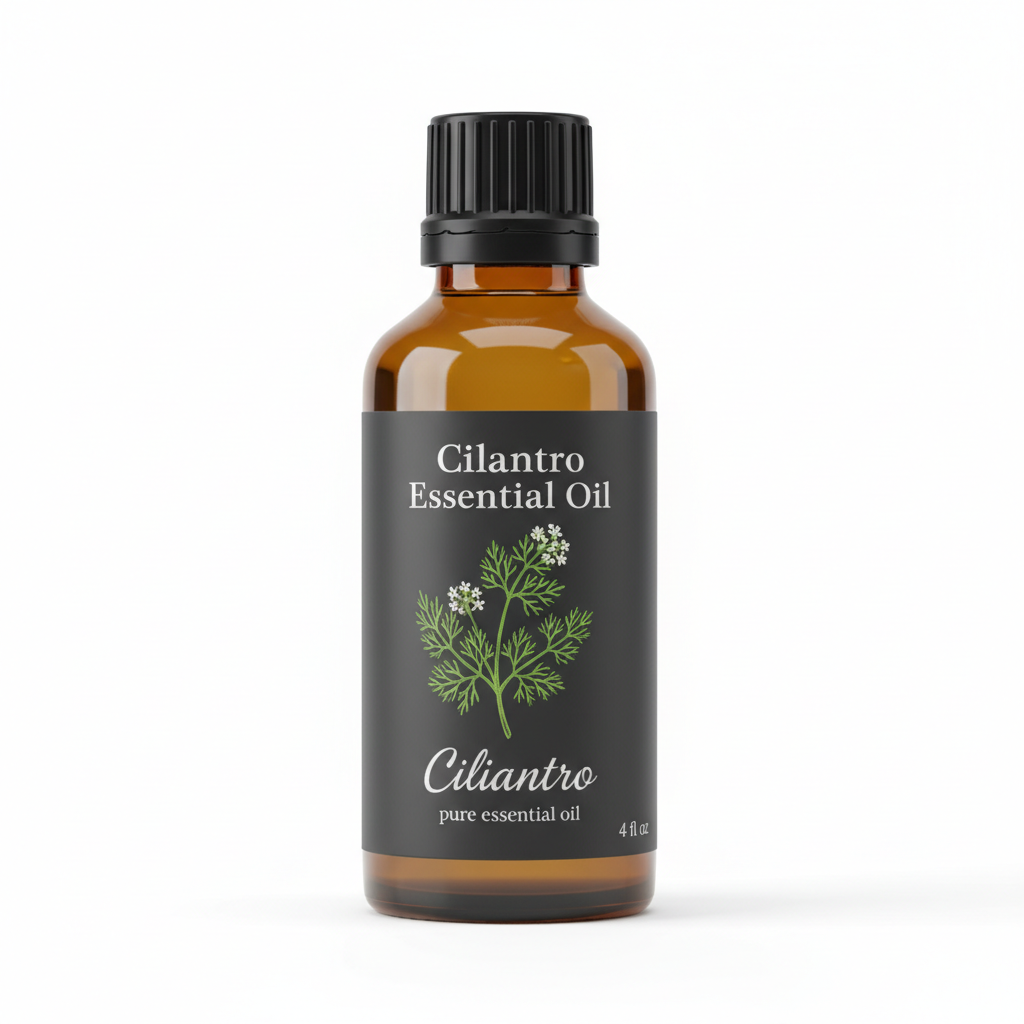
Cilantro Essential Oil
Our own Cilantro Essential Oil, in sizes from 0.5 oz to bulk.
From $13.99
Shop Now →This guide covers both. You'll find a curated shortlist of cilantro blending oils across different price points, along with the quality markers you should check before buying anything. If you're still getting familiar with cilantro oil itself, the complete guide to cilantro essential oil is a useful place to start.
Why Blending Cilantro Oil Takes Some Strategy
Cilantro (the leaf-distilled oil, distinct from coriander seed oil) has a volatile top note that moves fast. It's sharp and green for the first few minutes, then it softens. That two-phase behavior means you need blending partners that can bridge both moments: something bright enough to complement the opening and substantial enough to anchor the drydown.
The oils that work best tend to share at least one aromatic thread with cilantro. Citrus oils echo its brightness. Earthy woods ground it. Certain florals lift it without competing. Knowing this helps you shop with intention rather than just grabbing whatever happens to be on sale.
What to Look for Before You Buy: Quality Indicators
The blending oils you choose are only as good as the sourcing and production behind them. Here's what to check on any bottle before it goes in your cart.
GC/MS Testing Availability
Gas chromatography/mass spectrometry (GC/MS) testing shows the actual chemical profile of an oil batch. Reputable suppliers publish these reports or make them available on request. If a brand won't share testing data, that's a meaningful signal about transparency. For herbal oil pairings specifically, batch-level testing matters because constituent profiles can vary considerably by harvest year and region.
Botanical Name and Origin on the Label
Vague labeling is a red flag. The bottle should state the full Latin botanical name, the country of origin, and the plant part distilled. "Lime" isn't enough. Citrus aurantifolia, steam distilled, from Mexico tells you something real.
Packaging
Dark glass bottles (amber or cobalt) protect photosensitive constituents. Avoid any brand selling citrus or herbal oils in clear glass or plastic. The orifice reducer should fit snugly. Loose droppers are a storage and oxidation risk.
Scent Integrity
When you receive an oil, open it and smell the cap before the bottle. A sharp, off, or oddly chemical note often means oxidation or adulteration. Each oil has a characteristic freshness. Lime should smell genuinely juicy, not like lime-scented cleaner. Frankincense should have depth and a faint resinous sweetness, not a flat medicinal note.
Price Realism
Some oils are expensive to produce (rose, sandalwood, frankincense). Others are inexpensive because the raw material is abundant (sweet orange, litsea). If a frankincense or rose absolute is priced the same as a sweet orange, ask why. Unrealistically cheap pricing often signals adulteration or mislabeling.
Key Features to Compare When Buying Blending Oils
- Extraction method: Steam distillation vs. cold pressing vs. CO2 extraction each produce oils with different aromatic profiles. Cold-pressed citrus oils tend to be brighter but may contain phototoxic compounds. CO2 extracts often have richer, more complete scent profiles.
- Volatility class: Top notes evaporate quickly (citrus, light herbs). Middle notes linger longer (florals, some woods). Base notes anchor (resins, roots, heavy woods). A balanced blend across cilantro's arc needs middle and base support.
- Dilution recommendations: Some oils have usage rate recommendations from industry bodies like IFRA. Check these before blending, especially with florals and spice oils.
- Shelf life: Citrus oils oxidize faster than resins. Factor this in when buying volume. Buying a large bottle of lime only to use it in small batches means much of it may degrade before you finish it.
Top Picks: Oils That Blend With Cilantro
The following shortlist is organized by aromatic category, then by price tier within each. All picks are evaluated on sourcing transparency, labeling, user feedback on scent accuracy, and value for the quality delivered.
Citrus Oils: The Natural First Pairing
Cilantro's faint citrus thread makes lime, lemon, and yuzu its most intuitive companions. The green brightness of cilantro and the sparkling top note of a good lime oil feel almost like different facets of the same plant family.
| Oil | Price Tier | What to Look For | Watch Out For |
|---|---|---|---|
| Lime (steam distilled) | Budget-friendly | Bright, juicy scent; Mexican origin preferred; GC/MS available | Cold-pressed lime can be phototoxic; confirm distillation method |
| Lemon (steam distilled) | Budget-friendly | Clean, fresh, not sharp; Italian origin widely regarded as quality | Adulteration with synthetic limonene is common in budget lines |
| Yuzu | Mid-range to premium | Japanese origin; complex floral-citrus character; test for authenticity | Expensive to produce; very low-cost yuzu is likely adulterated |
For diffuser work, steam-distilled lime at a budget price point from a transparent supplier is the most practical starting point. It harmonizes immediately with cilantro in the diffuser. The cilantro diffuser blend guide walks through several tested ratios if you want specific drop counts.
Earthy and Woody Oils: Grounding the Blend
Because cilantro's top note is so volatile, blends without a base anchor can feel incomplete. Earthy and woody oils give the composition somewhere to land.
| Oil | Price Tier | What to Look For | Watch Out For |
|---|---|---|---|
| Cedarwood (Atlas or Virginia) | Budget-friendly | Warm, pencil-shaving character; Atlas tends to be smoother | "Cedarwood" can refer to several species with very different profiles; confirm species |
| Frankincense (Boswellia carterii) | Mid-range | Resinous, slightly citrusy base; Somali or Omani origin; batch testing shared | Highly adulterated category; avoid any brand without GC/MS data |
| Sandalwood (Santalum album or australianum) | Premium | Creamy, woody, low irritation profile; sustainable sourcing certification | Extremely prone to substitution with amyris or synthetic; only buy with documentation |
Frankincense is a particularly interesting partner for cilantro. The faint resinous-citrus quality in Boswellia carterii creates a grounding middle note that keeps the blend cohesive without pulling it toward the heavy or sweet.
Floral and Herbal Oils: Adding Complexity
These pairings reward a lighter hand. Florals in particular can overpower cilantro if the ratio tips too far, but used sparingly they add a dimension that citrus and wood alone can't provide.
| Oil | Price Tier | What to Look For | Watch Out For |
|---|---|---|---|
| Geranium (Pelargonium graveolens) | Mid-range | Rosy-green character; Egyptian or Bourbon origin; not too sweet | Overly sweet or soapy batches indicate poor quality or adulteration |
| Palmarosa | Budget-friendly to mid-range | Gentle rosy-grassy note; good value per milliliter; Indian origin common | Sometimes mislabeled or blended with synthetic geraniol; check testing |
| Basil (linalool type) | Budget-friendly | Herbal, slightly sweet; linalool-dominant variety is softer than estragole-dominant | Estragole-dominant basil has different safety guidelines; confirm chemotype on label |
Red Flags to Avoid
Some patterns consistently signal quality problems across the essential oil market. Keep this list visible when shopping.
- No botanical name on the label. This is a baseline requirement. Any supplier who doesn't list the full Latin name is not serious about quality.
- Suspiciously uniform pricing. If a supplier prices rose absolute the same as lemon, something is wrong. Real production costs vary enormously by plant and region.
- "Fragrance oil" or "nature identical" blended into single-oil listings. These are not essential oils. They may smell similar but behave differently in blends and on skin.
- No country of origin. Origin affects everything: constituent profile, agricultural practices, typical harvest quality.
- Vague sustainability claims without certification. Words like "sustainably harvested" mean nothing without third-party documentation, especially for at-risk species like sandalwood.
- Plastic pipettes or poor-quality droppers. These contact the oil directly and can leach compounds over time, or allow air exposure that accelerates oxidation.
Where to Buy
The best source depends on your budget, how much you're buying, and how much documentation you want access to.
Specialty Essential Oil Retailers
Brands that focus exclusively or primarily on essential oils tend to invest more in sourcing, testing, and labeling. Look for suppliers who publish GC/MS reports publicly on their website, name their distillation partners or farms, and have clearly stated return policies. This tier includes both direct-to-consumer brands and small wholesale operations.
Natural Food and Wellness Retailers
Physical retail stores allow you to smell before you buy, which has real value when you're assessing scent accuracy. Quality varies widely by brand carried, so bring your knowledge of what good labeling looks like. The same quality indicators apply.
Online Marketplaces
Convenient, but requires more diligence. Read seller feedback carefully. Look for sellers who provide batch-specific GC/MS reports in the listing, not just a generic quality statement. Be cautious of multi-listing sellers who offer dozens of oils at uniformly low prices without sourcing documentation.
Direct From Distillers
For premium oils like sandalwood or frankincense, buying directly from a known distiller or an importer with named sourcing relationships is the most reliable option. Prices may be higher, but you get genuine traceability. For commonly purchased oils that blend with cilantro, the quality check guide for buying cilantro oil outlines the same vetting approach applied specifically to the cilantro purchase itself, and the principles transfer directly to companion oils.
Building Your Shortlist
You don't need every oil on this guide. A practical starting shortlist for herbal oil pairings with cilantro might look like this:
- Steam-distilled lime (budget tier, immediate results in diffuser work)
- Atlas cedarwood (budget tier, excellent grounding base for blends)
- Frankincense, Boswellia carterii (mid-range, adds complexity and longevity)
- Geranium or palmarosa (mid-range, for blends that need a floral bridge)
That's four oils covering citrus, wood, resin, and floral. Combined with cilantro, they give you enough range to experiment across seasons, moods, and applications without a large initial investment.
Sourcing quality blending companions is an ongoing process. Suppliers change. Harvests vary. Keeping notes on which batches of which oils performed best alongside your cilantro oil is genuinely useful over time. The oils that blend with cilantro most successfully are usually the ones sourced with the same care as the cilantro oil itself: transparent, tested, and honestly labeled.