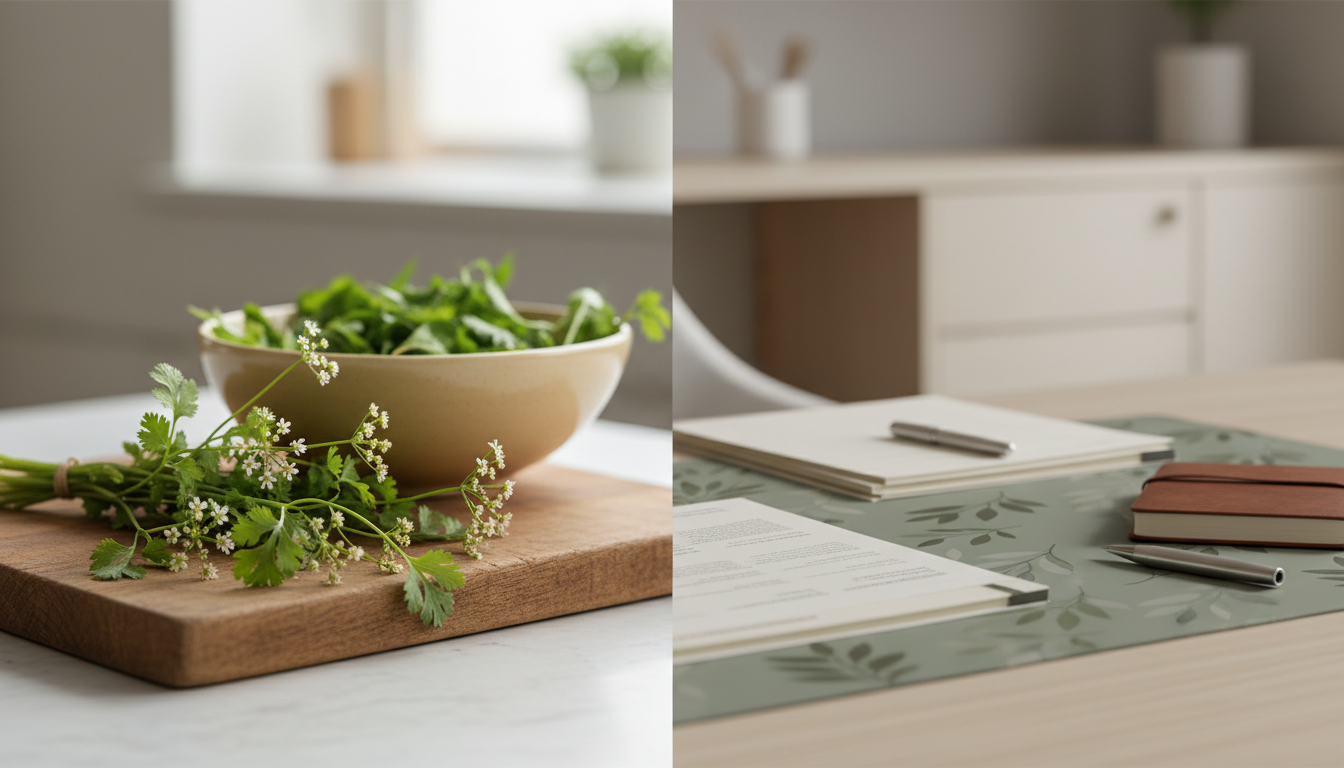
How to Make Cilantro Oil at Home: A Simple Blender Recipe
Fresh cilantro is one of those herbs that never quite survives the waiting. You buy a bunch, use a handful, and watch the rest go limp in the crisper drawer within days. A good homemade cilantro oil recipe solves that problem beautifully. By blending the leaves into a quality carrier oil, you capture that bright, grassy, citrus-edged fragrance before it fades, and you end up with something genuinely useful for your beauty rituals, your diffuser blends, or your skincare shelf.
Cilantro Essential Oil
Our own Cilantro Essential Oil, in sizes from 0.5 oz to bulk.
From $13.99
Shop Now →This guide walks you through the full blender method for making cilantro-infused oil at home. It is straightforward, requires no specialty equipment beyond what is likely already in your kitchen, and produces a vivid green oil with a scent that smells unmistakably like the fresh herb. We will also cover dilution ratios, patch testing, and safe storage, because making it well matters just as much as making it quickly.
A Quick Note on Terminology
Before diving in, a small but important clarification. The product you are making at home is a cilantro-infused oil, not a steam-distilled or cold-pressed essential oil. True essential oils are produced through industrial distillation processes that require specialized equipment and large volumes of plant material. What you can create in a home kitchen is a carrier oil that has been infused with the aromatic compounds, chlorophyll, and volatile notes from fresh cilantro leaves. The result is fragrant, useful, and genuinely lovely. It is simply a different category of product than a bottled essential oil.
For a deeper look at the kitchen-infusion process and its many applications, see our complete kitchen guide to making cilantro-infused oil.
At a Glance
| Detail | Info |
|---|---|
| Difficulty Level | Beginner-friendly |
| Active Prep Time | 15 minutes |
| Straining & Settling Time | 1 to 2 hours |
| Yield | Approximately 1 cup (240 ml) |
| Shelf Life | 2 to 4 weeks refrigerated |
| Primary Use | Cosmetic, aromatic, topical (diluted) |
Ingredients
- 2 packed cups of fresh cilantro (leaves and tender stems only; discard thick stalks). Choose bright green, unwilted bunches. The fresher the herb, the more vibrant the resulting oil.
- 1 cup (240 ml) of carrier oil. Light-textured options work best for this method. See the Variations section below for specific recommendations.
- Optional: 1 teaspoon of vitamin E oil. Added at the end, this helps slow oxidation and extend shelf life modestly.
Recommended Carrier Oils for This Recipe
- Fractionated coconut oil: stays liquid at room temperature, nearly odorless, absorbs cleanly into skin. A strong all-around choice for topical use.
- Sweet almond oil: light golden color, mild nutty scent, widely used in body and hair care. Avoid if you have tree nut sensitivities.
- Sunflower oil (high-oleic): very neutral scent, affordable, good skin compatibility. High-oleic varieties oxidize more slowly than standard sunflower oil.
- Jojoba oil: technically a liquid wax, so it resists rancidity better than most oils. Absorbs well and suits most skin types.
If your interest leans more toward the kitchen side of cilantro oil, our article on cilantro olive oil sauce covers food-safe applications with olive oil as the base.
Equipment You Will Need
- High-speed blender or food processor
- Fine-mesh strainer or sieve
- Cheesecloth or a clean nut milk bag
- Large measuring cup or spouted bowl (for straining into)
- Amber or dark glass bottle with a lid (4 oz or 8 oz)
- Small funnel (optional but helpful)
- Labels and a marker
Step-by-Step Instructions
Step 1: Wash and Dry the Cilantro Thoroughly
Rinse the cilantro under cool running water to remove any grit or residue. This step matters more than it might seem. Water and oil do not mix, and any moisture left on the leaves will shorten your oil's shelf life significantly and may encourage spoilage. After rinsing, spin the cilantro in a salad spinner, then spread it across a clean kitchen towel and pat it dry. Let it air-dry for at least 20 to 30 minutes if you have the time.
Step 2: Remove the Thick Stems
Pick the leaves and tender upper stems from the bunch. The thick lower stalks tend to add a more bitter, vegetal note and can also introduce extra moisture. Measure out 2 packed cups once you have separated the leaves.
Step 3: Blend the Cilantro with the Oil
Add the cilantro leaves and your measured carrier oil to the blender. Blend on high speed for 60 to 90 seconds. You are aiming for a smooth, uniformly green mixture. The blender's action breaks down the plant cells and releases the volatile aromatic compounds into the oil. The mixture will look almost like a thin green smoothie at this stage. That is exactly right.
Step 4: Strain the Oil
Line your fine-mesh strainer with two layers of cheesecloth and set it over your measuring cup or bowl. Pour the blended mixture into the lined strainer slowly. Let gravity do the initial work for about 15 to 20 minutes. Once most of the liquid has passed through, gather the cheesecloth edges and gently squeeze to extract the remaining oil from the plant pulp. Do not wring it aggressively; pressing slowly yields clearer oil.
Step 5: Let the Oil Settle
Pour the strained oil into a clean glass container and let it sit undisturbed for 30 to 60 minutes. Fine plant particles will settle to the bottom. If you want a cleaner, more stable final product, you can strain it a second time through fresh cheesecloth after this settling period.
Step 6: Add Vitamin E (Optional)
If you are using vitamin E oil, stir it in now. Use roughly 1 teaspoon per cup of finished oil. It functions as an antioxidant additive and may help slow oxidative degradation of the carrier oil over time.
Step 7: Bottle and Label
Using a small funnel, transfer the finished oil into your amber or dark glass bottle. Seal it tightly. Write the contents, the carrier oil used, and the date on your label. Store it correctly (see below) and use within the recommended window.
Storage Instructions and Shelf Life
Homemade cilantro oil is perishable. Because it contains fresh plant material rather than a distilled extract, it is susceptible to spoilage in a way that commercially produced essential oils are not.
- Refrigerate immediately after bottling. The cold environment significantly slows oxidation and microbial activity.
- Use within 2 to 4 weeks. The exact window depends on your carrier oil choice, how dry your cilantro was, and how consistently you keep it cold.
- Signs of spoilage include an off or sour smell (distinct from the sharp-green cilantro scent), cloudiness that does not clear after returning to room temperature, or any visible mold. Discard immediately if you notice any of these.
- Dark glass bottles matter. Light accelerates oxidation. Keep the bottle away from windowsills or bright countertops even when refrigerated.
For longer-term preservation strategies, including the option of freezing cilantro in oil using ice cube trays, our guide on how to preserve cilantro in oil goes into much more detail.
Safety Warnings and Skin Use Guidelines
Important: This section applies specifically to topical, cosmetic use of homemade cilantro-infused oil. This product is not intended to diagnose, prevent, or address any health condition. Consult a qualified healthcare provider before incorporating any new botanical product into your routine, particularly if you are pregnant, nursing, or have known sensitivities.
Patch Testing
Before applying cilantro-infused oil to a larger area of skin, always perform a patch test. Apply a small amount (about the size of a dime) to the inside of your wrist or elbow. Wait 24 hours and observe. Redness, itching, or any skin reaction means this oil is not suitable for your skin. Discontinue use and consult a healthcare provider if a reaction occurs.
Dilution Ratios for Topical Use
Homemade cilantro-infused oil is already diluted by nature of the blender method, since the plant material is blended into a carrier oil rather than concentrated through distillation. That said, some individuals may find the concentration in this recipe strong. If your skin feels sensitive during use, dilute further by blending a small amount of this infused oil with additional plain carrier oil at a 1:1 ratio before applying.
Contraindications and Cautions
- Citrus-family sensitivities: Cilantro shares some aromatic compounds with citrus plants. People who react to citrus-based botanical products may wish to proceed cautiously and patch-test carefully.
- Pregnancy and nursing: Consult your healthcare provider before using any concentrated botanical oil product.
- Children: Keep this and all botanical oil preparations away from children. Do not apply to children's skin without professional guidance.
- Eyes and mucous membranes: Avoid contact. Rinse thoroughly with clean water if accidental contact occurs.
- Nut-based carrier oils: If you choose sweet almond or another nut-derived carrier oil, be aware of potential sensitivities in yourself or anyone using the product.
- This oil is for external, cosmetic, and aromatic use only. It is not intended for internal use.
Variations and Substitutions
Herb Blends
Cilantro pairs naturally with a few other aromatic herbs. Adding a small handful of fresh flat-leaf parsley to the blender alongside the cilantro adds a slightly earthier, more complex green note without overwhelming the cilantro character. Fresh mint is another option, though it shifts the scent profile considerably toward a cooler, more menthol-adjacent direction.
Dried Cilantro Version
If fresh cilantro is unavailable, you can make a slow-infusion version using dried cilantro leaves and a warm-oil method. Combine 3 tablespoons of dried cilantro with 1 cup of carrier oil in a small saucepan. Warm over very low heat (well below any simmering point, around 120 to 140 degrees Fahrenheit) for 45 minutes to 1 hour. Strain and bottle as above. The scent will be milder and somewhat different from the fresh version, but still pleasant and distinctly herbal.
Citrus Addition
Adding a few strips of fresh lime or lemon zest to the blender alongside the cilantro brightens the aromatic profile noticeably. Use about half a teaspoon of fresh zest per cup of oil. Zest adds citrus volatile notes without contributing additional moisture the way juice would.
Garlic-Free Note
Many internet recipes for cilantro oil include garlic. This guide intentionally leaves it out, because garlic introduces significant food-safety considerations in an oil-infused preparation (related to the environment created when fresh alliums are submerged in oil). If you are interested in a cilantro-garlic combination for culinary purposes specifically, that preparation requires careful attention to storage time and temperature. Our guide to cilantro olive oil sauce addresses those considerations in a culinary context.
How to Use Your Homemade Cilantro Oil
In a Diffuser Blend
Note that infused oils are generally too viscous and contain too much plant matter for most ultrasonic diffusers, which are designed for true essential oils. However, you can add a few drops to an unheated reed diffuser base or to a personal aromatherapy inhaler for a softer, more diffuse green-herb scent experience.
As a Scalp and Hair Oil
Some people enjoy using herbal-infused oils as part of a pre-shampoo scalp ritual. Warm a small amount between your palms (refrigerated oil will feel cold directly from the bottle) and work it gently through the scalp. Leave it in for 20 to 30 minutes before shampooing. Patch-test first.
In a Body Oil Blend
Use your cilantro-infused oil as one component of a layered body oil. Because it already uses a carrier oil as its base, it blends seamlessly with other infused or plain carrier oils. A small amount of cilantro oil combined with a jojoba or rosehip base makes a bright, herbal-scented skin oil suited for a morning routine.
Aromatic Craft Projects
Infused botanical oils are sometimes incorporated into handmade cold-process soaps and balms, where the green color and herbal scent can be preserved if the formulation and setting conditions are right. The scent retention in finished soap tends to be modest, but the color and natural origin make it appealing for small-batch makers.
Final Thoughts on Making Cilantro Oil at Home
Learning how to make cilantro oil at home is genuinely one of the more rewarding small-batch botanical projects you can take on. The blender method is fast, the results are immediately visible (that vivid green color is deeply satisfying), and the scent is a faithful echo of fresh herb straight from the garden or market.
Keep your expectations grounded in what this preparation actually is: a fragrant, botanically rich infused oil with a short, refrigerator-dependent shelf life. Work in small batches. Label everything. Patch-test before any skin use. And enjoy the process of turning a humble bunch of cilantro into something that smells unmistakably alive.