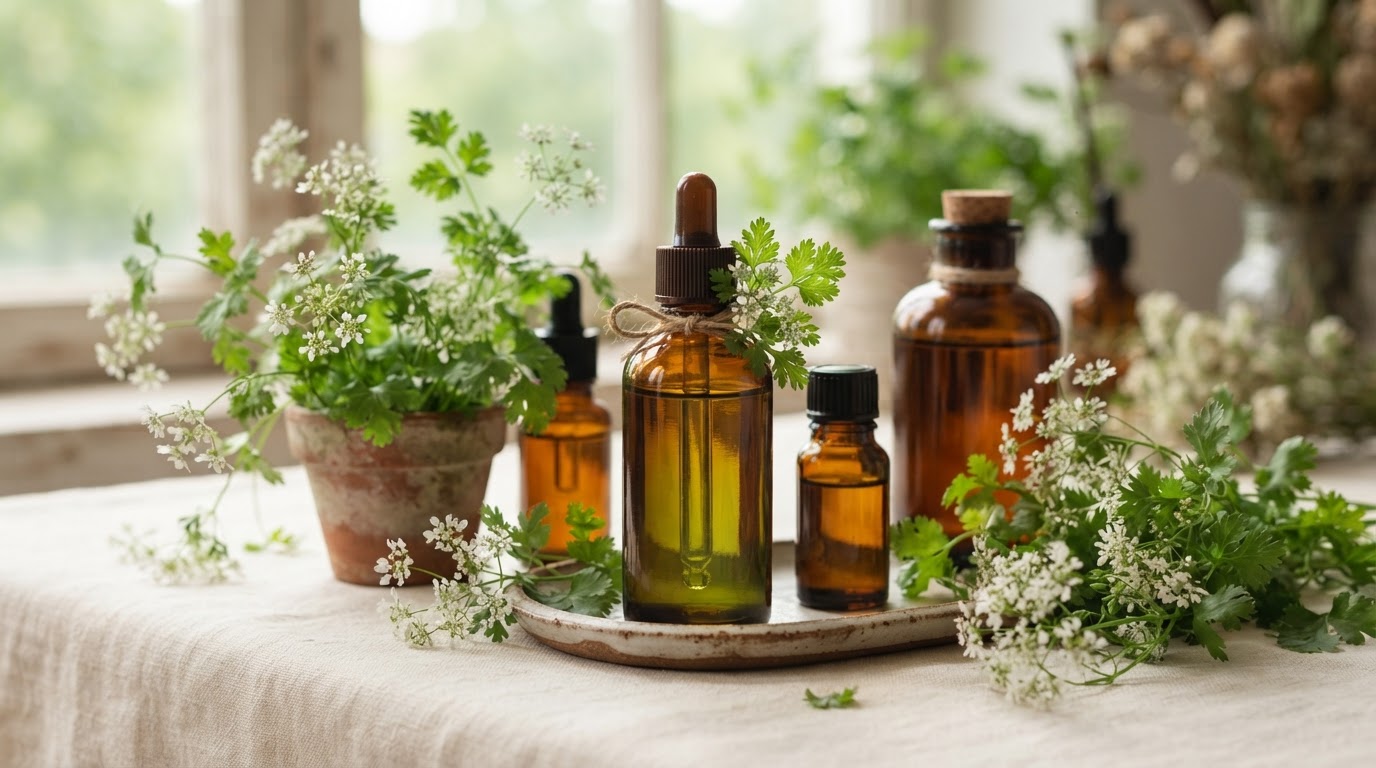
Cilantro vs Parsley Essential Oil: Two Green Herbal Scents Compared
If you've spent any time browsing herbal essential oils, you've probably noticed cilantro and parsley sitting near each other on the shelf, both green, both fresh, both a little polarizing. They come from related plants, they share a certain garden-bed brightness, and they get confused for one another more often than either deserves. But once you smell them side by side, the differences are obvious. This guide breaks down cilantro vs parsley essential oil across aroma, sourcing, cosmetic use, and value, so you can decide which one actually belongs in your collection, or whether you need both.
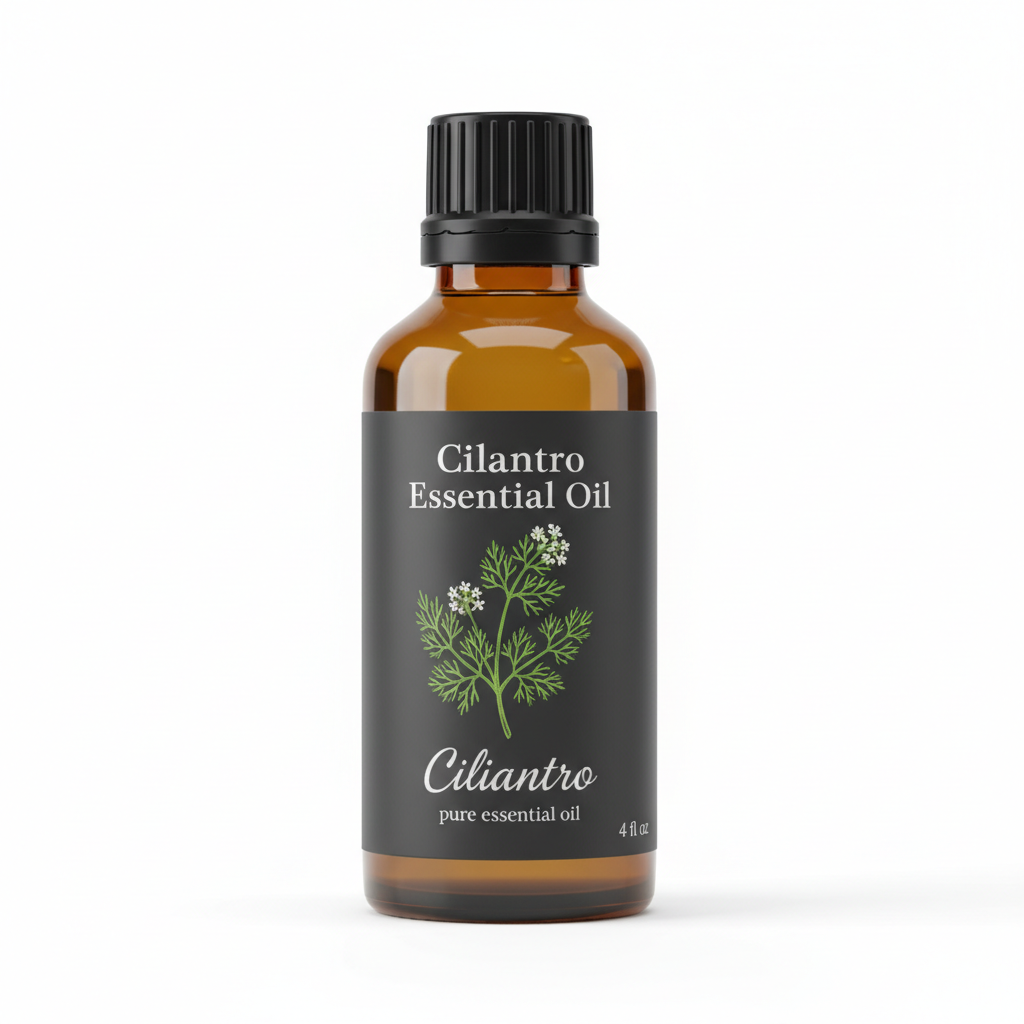
Cilantro Essential Oil
Our own Cilantro Essential Oil, in sizes from 0.5 oz to bulk.
From $11.99
Shop Now →Aroma Profile Compared
Cilantro essential oil is steam distilled from the leaves and stems of Coriandrum sativum, the same plant that gives us coriander seed (a different oil entirely, worth knowing if you're shopping by botanical name). The result is sharp, green, and a little soapy at first sniff, with a citrus-forward middle note that softens into something almost sweet as it dries down. It's polarizing in the same way the fresh herb is polarizing. Some noses read it as bright and appetizing; others pick up that soapy quality some people describe when they eat the leaf raw.
Parsley essential oil, distilled from Petroselinum crispum, reads greener and more herbaceous, with a peppery, almost hay-like undertone. It's less citrusy than cilantro and a touch more grounded, closer to what you'd expect from a garden clipping than a kitchen counter. Where cilantro tends to sit up front in a blend, parsley works more like a supporting note, filling in the green middle without demanding attention.
Neither oil smells much like a candle-aisle "herbal" fragrance. Both are unmistakably plant-derived, and that rawness is part of the appeal for people building green herbal essential oils compared for authenticity rather than polish.
At a Glance: Comparison Table
| Attribute | Cilantro Essential Oil | Parsley Essential Oil |
|---|---|---|
| Botanical source | Coriandrum sativum (leaf/stem) | Petroselinum crispum (leaf/stem) |
| Extraction method | Steam distillation | Steam distillation |
| Scent character | Sharp, green, citrus-tinged, soapy-bright | Herbaceous, peppery, hay-green |
| Scent intensity | Strong, front-of-blend | Moderate, supports other notes |
| Typical price point | Mid-range to premium | Mid-range |
| Common cosmetic use | Diffuser blends, perfumery accents, soap making | Diffuser blends, green florals, room sprays |
| Blends well with | Citrus oils, ginger, black pepper | Lavender, tea tree alternatives like eucalyptus, citrus |
| Skin sensitivity notes | Patch test recommended; can be irritating undiluted | Patch test recommended; avoid during pregnancy per label guidance |
| Shelf stability | 12 to 18 months, cool dark storage | 12 to 18 months, cool dark storage |
Sourcing and Quality: What to Look For
With both oils, sourcing matters more than the label suggests. Cilantro leaf oil is a smaller-volume crop than the seed-derived coriander oil, and low-quality suppliers sometimes blur the line between the two or stretch the batch with cheaper filler oils. Look for a supplier who lists the plant part (leaf, not seed) and, ideally, a country of origin and batch-specific GC/MS testing. Reputable sellers of Fresh Leaf, Captured cilantro essential oil will show this information without you having to ask.
Parsley essential oil sourcing follows similar rules. Because parsley is grown at scale for the culinary market, leaf oil suppliers are more common, but that also means more variability in quality. A parsley oil that smells flat or overly green-cut-grass, rather than peppery and complex, may be a sign of poor distillation timing or old stock. As with cilantro, batch testing and clear plant-part labeling are the two things worth checking before you buy.
Cosmetic and Aromatic Uses
Both oils are best known for diffuser and personal-scent applications rather than skin care staples, though both show up occasionally in small-batch soap and candle work.
Cilantro essential oil tends to shine in citrus-forward diffuser blends, where its bright top note plays well against sweeter or spicier oils. A few people use it in small amounts in natural perfumery for its unusual green-citrus signature, something hard to replicate with any other single oil. Because the scent is strong, it's typically used at a lower percentage than florals or woods in a blend.
Parsley essential oil works well as a background green note, rounding out floral or herbal blends without overpowering them. It's a common choice for people who want an herbal accent in a room spray or diffuser mix but find rosemary or eucalyptus too sharp. Its milder projection also makes it easier to layer with multiple other oils without one note fighting another.
A simple starting blend: 2 drops cilantro, 3 drops sweet orange, 1 drop ginger in a diffuser for a bright, green-citrus atmosphere. For a softer profile, swap in parsley for cilantro and add a drop of lavender.
Pros and Cons: Cilantro Essential Oil
Pros
- Distinctive, hard-to-replicate green-citrus scent profile
- Works well as a top note in perfumery and diffuser blends
- Pairs naturally with citrus, spice, and warm oils
- A genuinely different option if you're already using a lot of standard kitchen-herb oils and want variety
Cons
- Polarizing scent; the same "soapy" quality some people notice in the fresh leaf can carry into the oil
- Smaller supplier pool means more label diligence is needed
- Strong projection means it's easy to overuse in a blend
- Generally priced higher than more common herbal oils
Pros and Cons: Parsley Essential Oil
Pros
- Milder, easier to layer into blends without overwhelming other notes
- Widely available from culinary-adjacent growers, often at a lower price
- Herbaceous, grounded scent that reads as "green" without being sharp
- Good entry point for people new to herbal essential oils
Cons
- Less distinctive on its own; can read as generic "green" without a supporting oil
- Peppery undertone isn't for everyone in a diffuser setting
- Label guidance around use during pregnancy is worth reading closely before buying
- Quality varies more widely between budget and premium suppliers
Best For: Use Case Recommendations
Choose cilantro essential oil if:
You want a standout top note for a citrus or spice-forward blend, you're experimenting with natural perfumery and want a scent that isn't already on every shelf, or you're specifically looking for a cilantro essential oil alternative to synthetic green-citrus fragrance notes in a DIY project.
Choose parsley essential oil if:
You want a supporting green note that plays nicely with florals and other herbs, you're building a mellow evening diffuser blend for a calm-evening wind-down atmosphere, or you're newer to herbal oils and want something less assertive to start with.
Choose both if:
You're building out a full herbal collection and want range. Cilantro and parsley cover different ends of the "green herb" spectrum, sharp and citrus-bright versus soft and grounded, and having both gives you more flexibility than either alone.
Safety and Dilution Notes
Both oils are potent in their undiluted form and are intended for aromatic and cosmetic use only, not for ingestion or drug-like applications. For topical or skin-adjacent use (soap, lotion bars, roll-ons), follow standard dilution guidance: generally no more than 1 to 2 percent for adult skin-contact products, meaning roughly 1 to 2 drops of essential oil per teaspoon of carrier oil. Always do a small patch test on the inner forearm and wait 24 to 48 hours before broader use.
People who are pregnant, nursing, managing a known skin sensitivity, or caring for young children should check with a qualified healthcare provider before adding either oil to a routine, and should always review the supplier's specific safety data sheet for the batch in hand. Keep both oils away from the eyes and mucous membranes, store them out of reach of children and pets, and discontinue use if any irritation develops.
The Verdict
In a straight cilantro vs parsley essential oil comparison, there isn't a single winner, because the two oils aren't really competing for the same job. Cilantro is the more assertive, more distinctive choice, better suited to blends where you want a green-citrus note to lead. Parsley is the more versatile, budget-friendly option, better suited to supporting roles where you want green without sharpness.
If you only have room for one bottle and you're drawn to bright, citrus-adjacent scents, cilantro essential oil is the better investment, and it's a genuinely interesting alternative to more common oils if you're tired of reaching for the same lavender or eucalyptus every time. If you want something gentler that plays well with almost anything else in your collection, parsley is the safer, more forgiving starting point. Either way, buy from a supplier who's transparent about plant part, origin, and testing. With green herbal oils like these, sourcing quality matters as much as the choice between them.