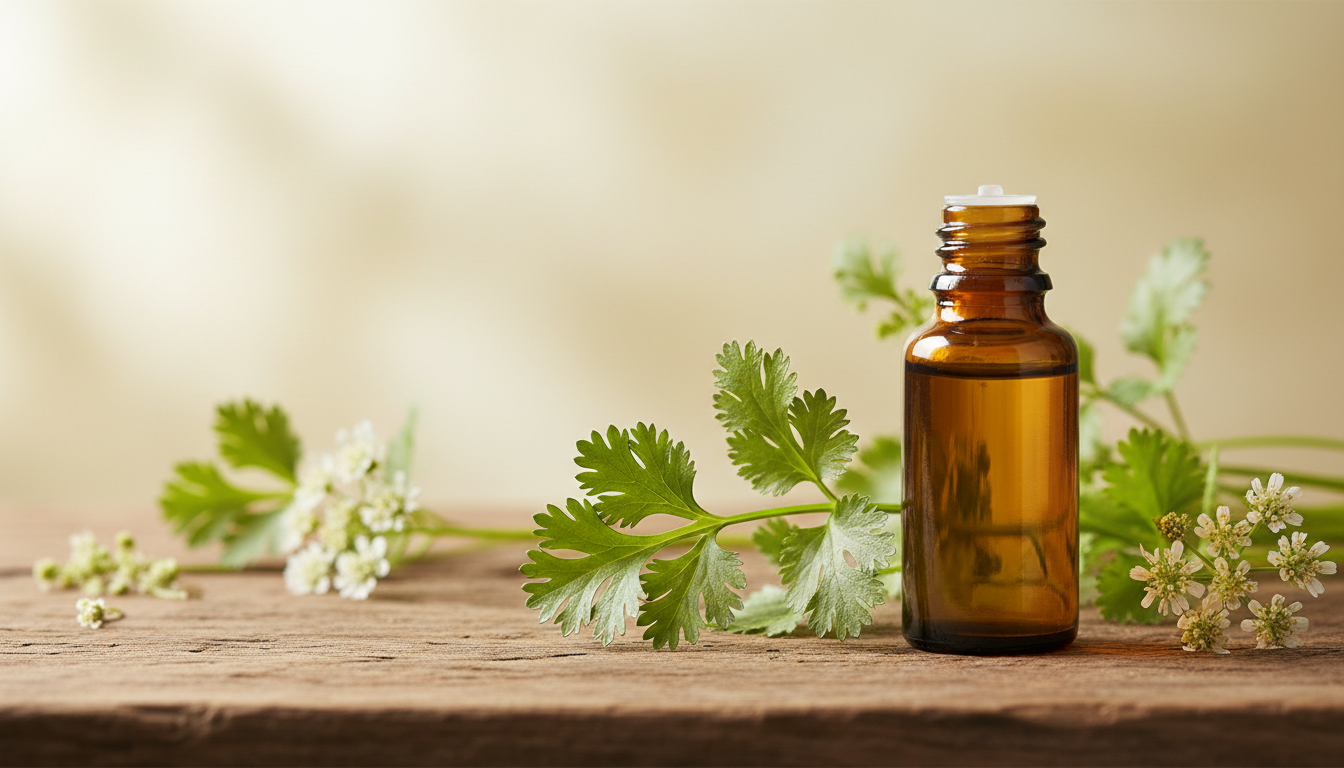
A Candle and Soap Maker's Buyer's Guide to Cilantro Essential Oil
Cilantro essential oil shows up on ingredient lists and inspiration boards constantly, and it deserves a place in a serious crafting bench. But buying cilantro essential oil for candles or soap is not the same as picking up a bottle at a farmers market booth. Crafters need to know what plant part was distilled, how consistent the batch is, and whether the oil will hold its scent through saponification or a hot wax pour. This guide walks through what to look for, what to compare, and where the real value sits at every price point, so you can make an informed purchase instead of a guess.
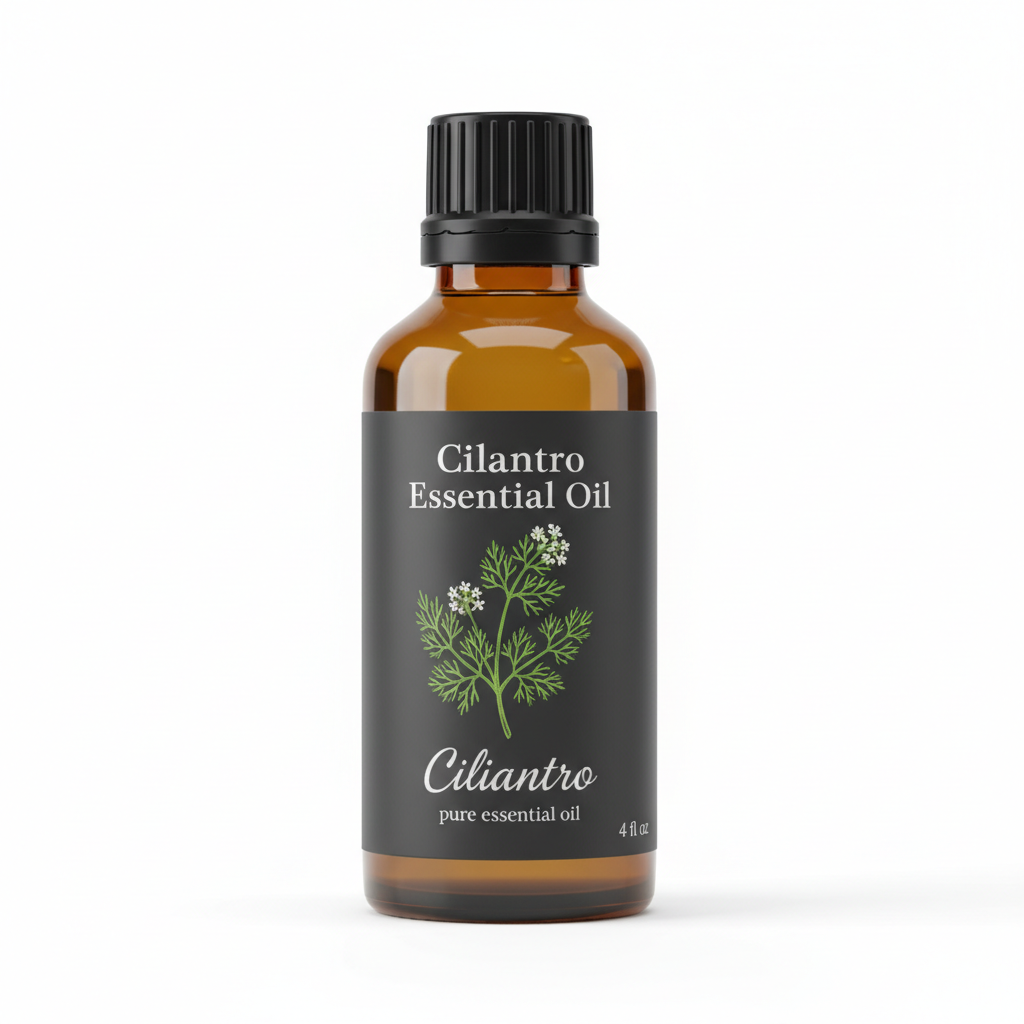
Cilantro Essential Oil
Our own Cilantro Essential Oil, in sizes from 0.5 oz to bulk.
From $11.99
Shop Now →Cilantro or Coriander? Get This Straight First
Before comparing suppliers, sort out a naming issue that trips up a lot of first-time buyers. Coriandrum sativum gives us two distinct essential oils depending on which part of the plant is distilled. The seeds produce coriander seed oil, a warm, slightly spicy, almost citrus-woody note. The fresh leaves and stems produce cilantro essential oil (sometimes labeled cilantro leaf oil), which is greener, sharper, and much closer to the herb's smell in your kitchen. A listing that says simply "coriander oil" with a photo of fresh cilantro leaves is worth a second look. If you want the bright, green, herbaceous character crafters usually mean by "cilantro," confirm the plant part on the label reads leaf, not seed or fruit.
This distinction matters more for candle and soap work than it might seem. The two oils have different volatility profiles, different flash points, and different behavior in a fragrance blend. Buying the wrong one won't ruin a batch outright, but it will not smell like what you planned for.
Quality Indicators to Check Before You Buy
A GC/MS Report You Can Actually Read
A GC MS report for cilantro essential oil (gas chromatography mass spectrometry) breaks the oil down into its individual chemical constituents and their relative percentages. For a genuine cilantro leaf oil, you'd expect a profile dominated by aldehydes, particularly decanal and (E)-2-decenal, which give the oil its distinctive fresh-cut, green character. A report that lists a wildly different constituent profile, or one that's clearly copy-pasted from a generic template with no batch number attached, is not proof of anything. Ask the supplier for the report tied to the specific lot you're buying, not a general "representative" document from a different harvest.
You don't need a chemistry background to use this. Cross-check the top three or four listed constituents against published reference ranges for cilantro leaf oil (widely available in perfumery and aromatic plant literature) and see whether the numbers are in the right neighborhood. Big mismatches are a signal to ask more questions, not necessarily proof of fraud, since natural variation happens between harvests, regions, and growing seasons.
Botanical Name and Plant Part on the Label
Every legitimate supplier lists the full Latin binomial, Coriandrum sativum, along with the plant part distilled. If a listing just says "cilantro oil" with no botanical name, that's a gap worth asking about directly.
Origin, Harvest Window, and Lot Number
Cilantro essential oil purity for crafters starts with traceability. A supplier who can tell you the growing region, the approximate harvest date, and assign a distinct lot number to that specific bottling is running a operation you can hold accountable if something seems off. Vague answers here, or a refusal to provide a lot number, are worth weighing against the price.
Extraction Method
Steam distillation is the standard method for cilantro leaf oil and what most crafters should expect. Some sellers use the word "extract" loosely to describe solvent-extracted or diluted products, which behave very differently in a soap or candle recipe than a true steam-distilled essential oil. Confirm the method in writing if the listing doesn't state it clearly.
Packaging and Storage
Cilantro oil, like most aldehyde-rich essential oils, is sensitive to light and heat. It should arrive in dark amber or cobalt glass, never clear glass or plastic, with a tight-fitting cap. If a bottle shows up in clear packaging or without a batch or fill date, treat that as a sign of a less careful operation, even if the oil itself turns out fine.
Key Features to Compare Across Suppliers
| Feature | Why It Matters for Crafters | What to Check |
|---|---|---|
| Plant part (leaf vs. seed) | Determines whether you get green cilantro character or warm, spicy coriander character | Label should say "leaf," "herb," or "aerial parts," not just "coriander" |
| GC/MS documentation | Verifies constituent profile and helps confirm the oil hasn't been stretched or substituted | Batch-specific report, not a generic template |
| Extraction method | Steam-distilled oils behave predictably in hot process; solvent-extracted products may not | Stated explicitly in the listing or on request |
| Country/region of origin | Growing conditions shift the aldehyde profile and overall scent intensity batch to batch | Named region, not just "imported" or "global sourced" |
| Bottle size options | Testing a small amount before committing to a pound saves money on a scent that may not perform how you expect | Availability of 1oz or smaller sample sizes |
| Price per ounce at volume | Candle and soap makers buying in bulk need the per-ounce cost to actually drop at larger sizes | Compare 1oz price against 4oz, 8oz, and 16oz pricing directly |
| Return or sample policy | Lets you test scent throw in your specific wax or soap base before a large purchase | Written policy, not just a verbal assurance |
Cilantro Oil in Candle Making: What to Expect
Buying cilantro oil for candles means thinking about flash point as much as scent. Cilantro leaf oil has a relatively low flash point compared to heavier base-note oils, which means it can volatilize quickly if added to wax that's too hot. Add it toward the lower end of your wax's recommended fragrance-load temperature range, generally after the wax has cooled somewhat from pouring temperature, to protect the top notes.
Load rates vary by wax type and by how green and sharp you want the final scent to read. Many candle makers start cilantro oil at the low end of their wax manufacturer's recommended fragrance load and adjust from a cured test candle rather than guessing at full load on a first batch. Because cilantro's aldehyde-driven brightness tends to fade faster than heavier, more resinous notes, some crafters blend it with a fixative note to help the green character hold longer through a burn. A cured, unburned sniff test after a few days will tell you more than a fresh-poured candle ever will, since scent throw often shifts as wax fully sets.
Cilantro Oil in Cold Process and Melt-and-Pour Soap
Cilantro essential oil for soap making has its own quirks worth planning around. In cold process soap, the alkaline saponification environment can shift and mute the top notes of aldehyde-heavy oils faster than in candles, so scent throw at trace often reads differently than scent throw in the cured bar weeks later. Many soap makers use cilantro in combination with more stable base or middle notes rather than as a standalone scent, precisely because the green top notes fade during cure.
Usage rate recommendations vary by supplier and by whether you're working in cold process, hot process, or melt-and-pour. A general starting point many crafters use for essential oils in cold process soap sits in the range of 0.5 to 1 ounce per pound of oils, then adjusted from there based on your specific batch and personal scent preference. Always run the specific oil through a fragrance calculator or your supplier's usage guidance rather than assuming cilantro behaves like lavender or eucalyptus, since aldehyde content changes both intensity and how the oil interacts with lye during saponification. A small test batch is worth the extra week of cure time before committing a full recipe to it.
Top Picks by Price Point
Budget Tier (roughly under $12 for a 1oz bottle)
At this price point, cilantro oil is usually a blended or heavily cut product, or sourced from a large commodity supplier with limited lot-level documentation. It can work fine for scent testing and low-stakes projects, but don't expect a GC/MS report tied to your specific bottle, and expect batch-to-batch variation. Fine for exploratory work, less reliable for a signature product line.
Mid-Range Tier (roughly $12 to $28 for a 1oz bottle)
This is where most serious hobby and small-batch crafters land. Expect a named growing region, a stated extraction method, and often a batch-specific or recent GC/MS report available on request. Our own Fresh Leaf, Captured cilantro essential oil sits in this range, sourced from a single growing region per harvest with lot-level documentation provided for every bottle sold, which is the level of transparency worth holding any mid-range supplier to.
Premium and Small-Batch Tier ($28+)
At the top end, you're typically paying for a smaller, more traceable harvest, sometimes a single-farm source, with full documentation as standard rather than on request. Worth it for a signature product where consistency and story matter to your customers. Not always necessary for general craft supply stock, where the mid-range tier usually covers the quality bar crafters actually need.
Red Flags to Avoid
- No botanical name or plant part listed. "Pure cilantro oil" with nothing else is a marketing phrase, not a specification.
- Price that's dramatically below the market range. Genuine steam-distilled cilantro leaf oil has a real production cost; a price far under comparable listings usually means dilution, a different plant part, or a synthetic blend.
- No GC/MS report offered, or a report that never changes across different purchase dates. Natural oils vary harvest to harvest; an identical report reused for years suggests it isn't tied to actual lots.
- Clear glass or plastic packaging. A supplier who doesn't protect a light-sensitive oil in transit likely isn't storing it correctly in the warehouse either.
- Vague sourcing language. Terms like "globally sourced" or "premium blend" without a named region are worth a follow-up question before you buy.
- No sample or small-size option before a bulk purchase. A supplier confident in their product usually lets you test it first.
Where to Buy Cilantro Essential Oil
Specialty essential oil suppliers who focus specifically on aromatic and cosmetic-grade botanicals, rather than general wellness retailers, tend to have the most consistent documentation practices, since traceability is core to their business rather than an afterthought. Look for suppliers who publish their sourcing regions and offer batch-specific GC/MS reports as a standard part of the listing, not a special request.
Craft-supply marketplaces can be a reasonable source for testing scent direction cheaply, but treat listings there with more scrutiny, since seller vetting varies widely and documentation is often thin or missing. Direct-from-distiller or single-region suppliers sit at the more expensive end but usually offer the clearest chain of custody from harvest to bottle, which matters most if you're building a product line customers will reorder.
Whichever route you choose, buying a small test size before committing to a pound or more is almost always worth the extra few dollars per ounce. Scent throw in your specific wax or soap base is something you can only really confirm by running it yourself.
A Simple Pre-Purchase Checklist
- Confirm the botanical name (Coriandrum sativum) and plant part (leaf, not seed) on the label.
- Ask for a GC/MS report tied to the specific lot number you'd be purchasing.
- Verify the extraction method is steam distillation.
- Check that the bottle ships in amber or cobalt glass with a fill date or lot code.
- Compare price per ounce across at least three suppliers before committing to a bulk size.
- Order a small test size first and run it through a cured candle or a fully cured soap bar before scaling up.
Cilantro essential oil rewards a little homework. A supplier willing to hand over a lot-specific GC/MS report, name their growing region, and ship in proper glass has usually done the harder work of quality control already, which is exactly what candle and soap makers are paying for when the price climbs above the bargain bin.